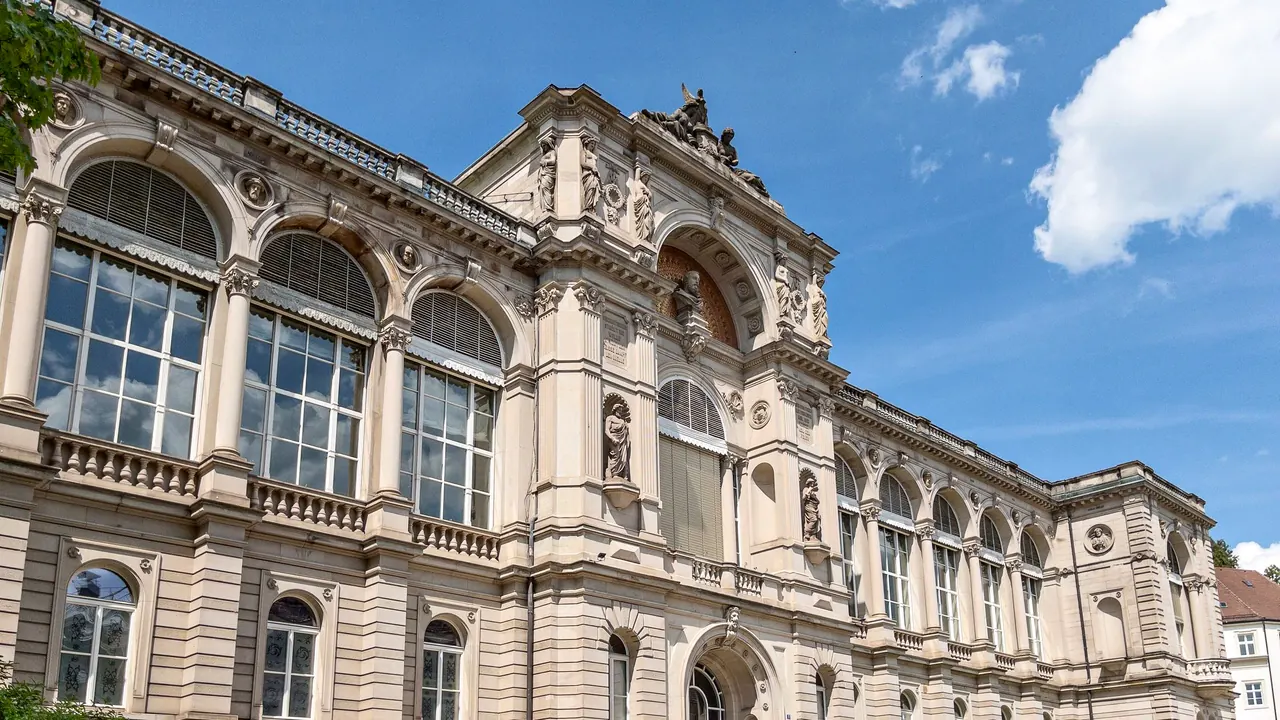
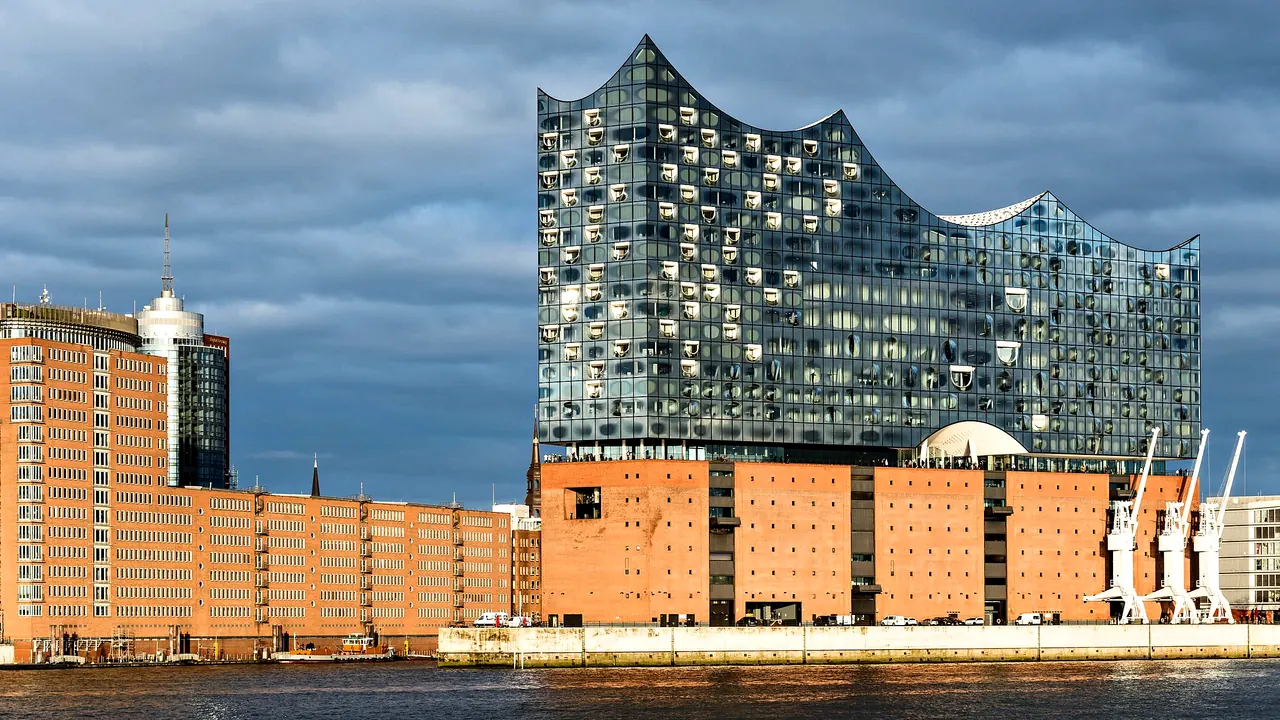
Photos: Baden-Baden by Kent Wang, CC BY-SA 2.0, cropped; Hamburg by Wolfgang Weiser, Pexels License.
Baden-Baden or Hamburg?
Our verdict in twelve categories, each scored against the same fixed benchmark cities, and the climate month by month, so you can choose for your trip.
Choose Baden-Baden for
- wellness
- nature and the outdoors
- day trips
Baden-Baden is the choice for a slow, restorative stay. You spend your days in the Friedrichsbad and Caracalla, walk the Lichtentaler Allee, and spend evenings at the Festspielhaus or the casino. It is also the better base for getting out. The Black Forest starts at the edge of town, and Strasbourg, Alsace and Heidelberg are all within reach, ideally by car. It suits couples and older travellers who want calm rather than a scene.
Choose Hamburg for
- nightlife
- shopping
- families
Hamburg suits travellers who want a full city: late nights in St Pauli, the Elbphilharmonie and the State Opera, harbour ferries, real shopping streets and plenty to keep children busy. You can manage it more easily without a car, it is a little kinder on the budget and it is far livelier after dark. In exchange you give up forest and hot springs for water, wind and red brick.
Scoreboard
Twelve categories on one fixed scale from 0 to 100. The shaded stretch is the gap between the two.
Your match
Pick a travel style or drag the sliders, and both match scores follow your weighting.
Wins on wellness and nature and the outdoors with your weighting.
Wins on nightlife and shopping with your weighting.
What matters to you?
Category by category
What the scores mean for a trip.
Beaches & swimming
Neither is a beach destination, but Hamburg at least has sand, and the sea is within reach. Its Elbe beaches at Oevelgoenne and below Blankenese are for watching ships rather than swimming, and for a proper swim on a warm day the Baltic at Travemuende or Timmendorfer Strand is about an hour away.
Baden-Baden is far inland, so summer swimming means the flooded gravel pits of the Rhine plain or an outdoor pool. Here the water that matters is warm and comes out of the ground.
Food & drink
Hamburg has the bigger and more varied table. There is port food such as fish rolls, Labskaus and Finkenwerder plaice, a coffee culture in Ottensen and the Schanzenviertel, and a broad modern scene that includes Portuguese and Turkish cooking near the harbour. A city this size simply gives you more choice night after night.
Baden-Baden is small, and its centre leans on hotel dining and cafés serving cake and coffee. Its advantage is the region around it: Flammkuchen and venison with a French accent, and Riesling and Pinot Noir in the wine taverns of the Rebland villages. Some of Germany's most celebrated restaurants are a drive away in the Black Forest.
Culture & sights
Hamburg has more to see. The highlights are the UNESCO-listed Speicherstadt and Kontorhaus district, the Elbphilharmonie plaza, the Rathaus and St Michael's, and the Kunsthalle, whose collection runs from old masters to Caspar David Friedrich. The war left gaps in the old core, so sightseeing here means districts and waterfront rather than one historic centre.
Baden-Baden is the reverse: a compact, intact Belle Époque resort and one of the Great Spa Towns of Europe, with the Kurhaus, the Trinkhalle and the Museum Frieder Burda close together. It makes a more complete picture but fills only a day or two.
Nightlife
This is one of the widest gaps between the two. In Hamburg, the Reeperbahn, the pavement bars of the Schanzenviertel and clubs in bunker basements and by the harbour keep going until dawn. Bars have no fixed closing time, and the crowd is mixed and rough around the edges.
Baden-Baden's night out is the gilded casino in the Kurhaus, which has a dress code, followed by a hotel or wine bar and quiet streets. Anyone wanting a club from here goes to Karlsruhe or Strasbourg.
Nature & outdoors
Baden-Baden has the better outdoors, because real upland starts at the edge of town. The Merkur funicular and the Battert cliffs lead onto Black Forest trails, and the High Road continues past the Mummelsee to the moorland of the Hornisgrinde, with mountain biking and some skiing in winter.
Hamburg is flat, and its outdoors is about water: sailing and paddling on the Alster, canoeing the northern canals, the riverside walk to Blankenese and cycling through the orchards of the Altes Land. Lueneburg Heath adds purple heather an hour south, but there is nothing to climb.
Day trips
Both are good bases, and Baden-Baden has the edge for variety because its outings cross a border. Strasbourg is about an hour away, with the Alsace wine route and Colmar beyond it, and Heidelberg, Freiburg, Speyer and Maulbronn are within similar reach. A car helps a great deal.
Hamburg's day trips are mostly brick Gothic Hanseatic towns: Luebeck first, then Lueneburg, Bremen, Wismar and Schwerin with its lakeside castle. They are more alike in character, but most are easy by train, and the Baltic resorts add a summer option.
Good for families
Hamburg keeps children busy without leaving town. Beyond its headline attractions, there are the planetarium in the Stadtpark, the water play areas in Planten un Blomen, and the Heide Park and Hansa-Park theme parks about an hour away. Wide, pram-friendly pavements help, though frequent rain means planning something indoors each day.
Baden-Baden's family appeal is gentler: a ride up the Merkur, forest paths and the Lichtentaler Allee. The quiet, refined mood is set for adults, so families tend to use it as a base and spend their days at Karlsruhe's zoo or further afield.
Getting around
Hamburg works well without a car. The U-Bahn and S-Bahn reach every district, the airport is on the S-Bahn, and the harbour ferries run on the same ticket, so a crossing doubles as sightseeing. Wind and rain are the main nuisance for cyclists.
Baden-Baden's centre is a short walk from end to end, with some steep streets, but the station is a few kilometres out in Oos and is reached by bus. Trains cover the larger towns, but the wine villages, the High Road and Alsace really need a car.
Shopping & style
Hamburg is a proper shopping city. Luxury labels line Neuer Wall, and covered arcades run around the Jungfernstieg and the Alsterhaus. The chains are on Moenckebergstrasse, and the Karolinenviertel has vintage and design shops. The Isemarkt under the elevated railway adds a market, and tea and coffee from the old trading houses make good things to take home.
Baden-Baden's Sophienstraße and Lange Straße are polished but short, mostly jewellers, watchmakers and boutiques for a wealthy spa clientele. Cuckoo clocks and local wine are about the extent of the souvenirs.
Affordability
Neither is cheap, but Hamburg is the easier of the two on a moderate budget. Its free sights help: the Speicherstadt, the Elbphilharmonie plaza and the riverside paths. So does a day ticket that covers trains and ferries, and so do the fish rolls and casual places in Altona and St Pauli, although hotels get more expensive during trade fairs.
Baden-Baden was built for the wealthy, and a stay spent in grand hotels and paying for each bath visit adds up quickly. Guesthouses, wine taverns and bakeries soften it, but the spas, the main reason to come, cost money every day.
Live music & performing arts
Both have serious classical music, but Hamburg has much more of everything. Alongside the Elbphilharmonie, the Laeiszhalle, the State Opera and the Hamburg Ballet, there is leading drama at the Deutsches Schauspielhaus and the Thalia Theater. Add the big musical theatres and the St Pauli rock clubs where the Beatles started out.
Baden-Baden's strength is narrower but remarkable for its size. The Festspielhaus brings international orchestras and opera, the Kurhaus and the small nineteenth-century theatre add more, and Brahms's summers are part of the story. Beyond classical music there is little.
Wellness & relaxation
Taking the waters is the whole point of Baden-Baden. The Friedrichsbad's silent sequence of hot rooms and pools, Caracalla's indoor and outdoor thermal pools and the grand hotel spas set a pace the whole town follows.
Hamburg has no springs, but the German sauna habit is well served at the art nouveau Holthusenbad and other bath complexes. For calm, there are the Alster, the Japanese garden in Planten un Blomen and the walks towards Blankenese. They are pleasant, but not a reason to make the trip.
When should you go?
Pick your month. The climate figures are measured averages, not a forecast.
Baden-Baden in July
Hamburg in July
Daytime high, °C
Rainfall in the month, mm
Temperature and rainfall are climate normals, averaged over the years shown. Baden-Baden: 1991-2020 normals, Baden-Baden-Geroldsau (3.9 km from centre). Hamburg: 1991-2020 normals, Hamburg Airport (9.3 km from centre).
Both are at their best from June to August, though neither is warm enough for a real beach trip outside a good summer. Baden-Baden runs a little warmer, reaching about 25°C in July and August against Hamburg's 23°C, and it gets slightly more sunshine in high summer, which suits forest walks and the wine villages. It is also the wetter of the two all year, with rain in every month and peaks above 110mm. Late spring and September are good for walking in either city, and autumn colour in the Black Forest makes October worth considering in Baden-Baden.
Hamburg is drier but colder and greyer in winter, with highs around 4°C in January and very little sunshine from November to February. Baden-Baden's winters are slightly milder, and its thermal baths are a better answer to a cold day than anything outdoors in either city. In Hamburg, the museums and concert halls get a winter visit through.
Which traveller are you?
On a relaxing and wellness trip, Baden-Baden is in a different league. The Friedrichsbad's ritual of hot rooms and pools, the Caracalla saunas and a town set to a slow pace make rest the point of the stay. Hamburg offers good saunas but no springs.
For a food and nightlife trip, Hamburg wins clearly. Fish rolls on the piers, the Altona fish market and a broad dining scene lead into St Pauli and the Schanzenviertel, where bars stay open until dawn. Baden-Baden's evenings end early, in wine bars and the casino.
On a family trip with children, Hamburg has far more to fill the days, with Miniatur Wunderland, Hagenbeck's open enclosures, harbour ferries and the old Elbe tunnel, all easy by public transport. Baden-Baden is calm and safe, but the Friedrichsbad excludes young children and Europa-Park is an hour away.
Before you go
| Measure | Baden-Baden | Hamburg |
|---|---|---|
| Official language | German | German |
| Currency | Euro (EUR) | Euro (EUR) |
| Sockets | CF230 V, 50 Hz | CF230 V, 50 Hz |
| Driving side | Right | Right |
| Time zone | UTC+1, UTC+2 in summer | UTC+1, UTC+2 in summer |
| Emergency number | 112 | 112 |
| Elevation | 181 m | 6 m |
| Main airport | Karlsruhe Baden-Baden Airport (FKB)12 km from centre44 non-stop destinations | Hamburg Helmut Schmidt Airport (HAM)9 km from centre120 non-stop destinations |
| Public holidays this year | 12 days | 10 days |
By the numbers
| Measure | Baden-Baden | Hamburg |
|---|---|---|
| Population | 56,952 | 1,869,473 |
| People per km² | 406 | 2,476 |
| Museums within 10 km | 11 | 77 |
| UNESCO World Heritage sites within 50 km | 3 | 1 |
Where else could you go?
Every comparison below shares a destination with this one, so you can follow Baden-Baden or Hamburg somewhere new.
- Strasbourgvs Baden-Baden
- Lubeckvs Hamburg
- Stuttgartvs Baden-Baden
- Heidelbergvs Baden-Baden
- Freiburgvs Baden-Baden
- Colmarvs Baden-Baden