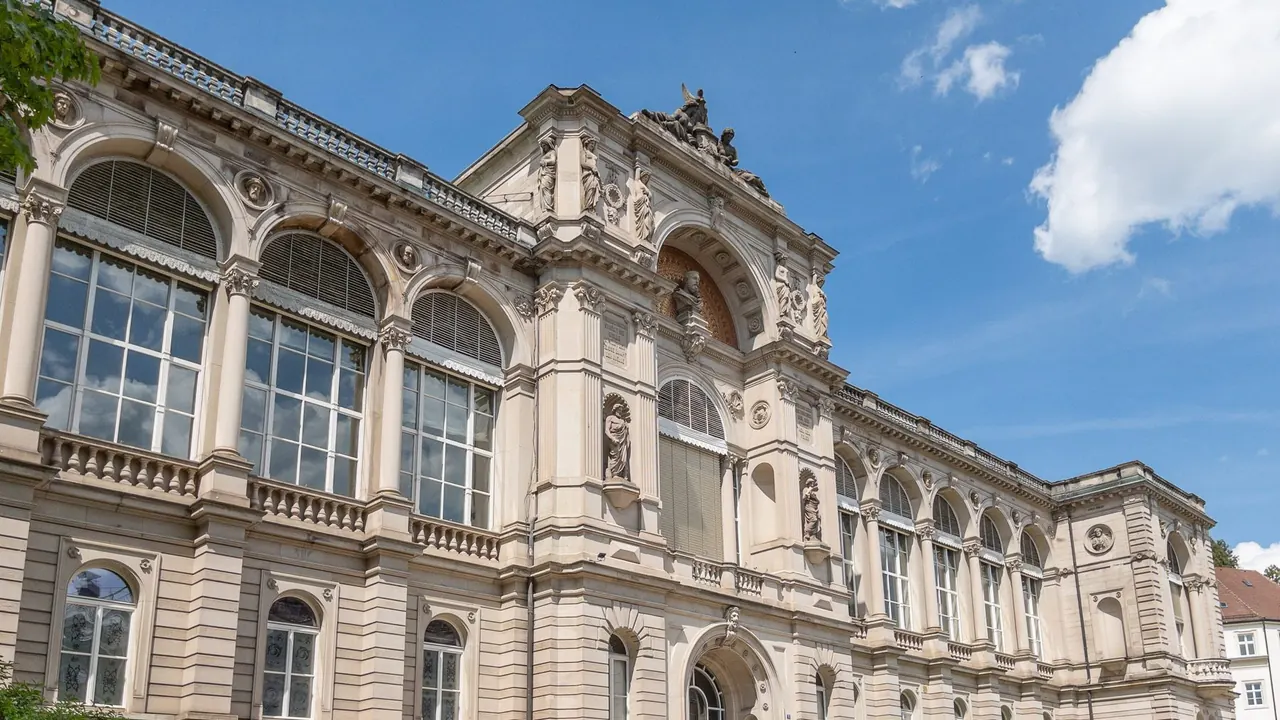
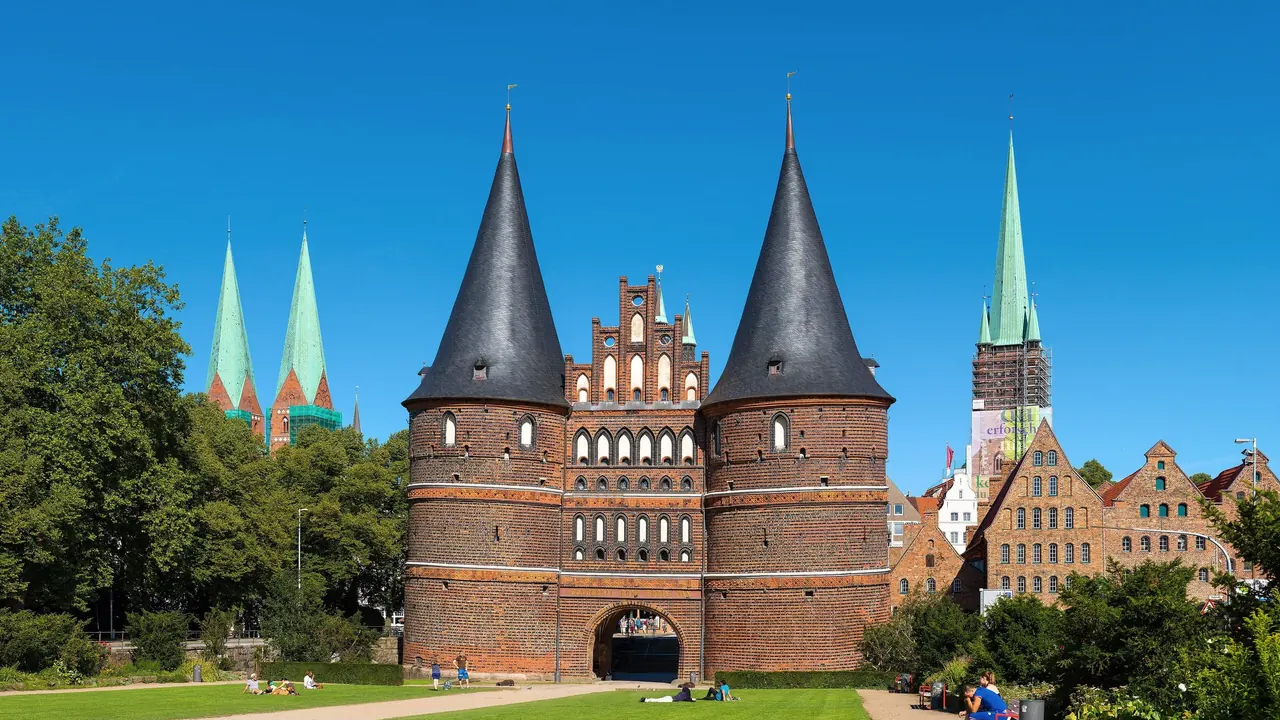
Photos: Baden-Baden by Kent Wang, CC BY-SA 2.0, cropped; Lubeck by Christian Wolf (www.c-w-design.de), CC BY-SA 3.0 DE, cropped.
Baden-Baden or Lubeck?
Our verdict in twelve categories, each scored against the same fixed benchmark cities, and the climate month by month, so you can choose for your trip.
Choose Baden-Baden for
- wellness
- nature and the outdoors
- day trips
Baden-Baden is for travellers who want to slow down. Its thermal baths are the reason to go, and the rest of a stay follows from them: walks along the Lichtentaler Allee, forest trails straight out of town, an evening at the Festspielhaus, and outings to Strasbourg, Alsace and Heidelberg. It suits couples and older travellers who don't mind paying more for comfort, and it rewards anyone who brings a car.
Choose Lubeck for
- beaches
- prices
- culture and sights
Pick Lübeck if you would rather explore than soak. Its island old town of brick Gothic churches, merchants' houses and hidden courtyards has more history to see than Baden-Baden's Belle Époque resort, and it all lies within a short walk of the station. It is also the cheaper and more practical choice for families. In summer the Baltic beach at Travemünde turns a city break into a seaside one.
Scoreboard
Twelve categories on one fixed scale from 0 to 100. The shaded stretch is the gap between the two.
Your match
Pick a travel style or drag the sliders, and both match scores follow your weighting.
Too close to call, 1 point apart
Wins on wellness and nature and the outdoors with your weighting.
Wins on beaches and prices with your weighting.
What matters to you?
Category by category
What the scores mean for a trip.
Beaches & swimming
Neither town is a beach destination, but only Lübeck has a coast. Travemünde, with its wicker beach chairs and long stretch of sand, is about twenty minutes away by regional train. The calm, shallow Baltic is gentle for paddling, but it stays cool even at the height of summer.
Baden-Baden is far inland. A hot afternoon there means an outdoor pool or a gravel lake on the Rhine plain, and the water people actually come for is in the thermal baths.
Food & drink
Both towns serve a good meal without being worth the journey for food alone, and their kitchens point in opposite directions. Baden-Baden draws on Baden's rich regional cooking, with venison, Flammkuchen, Black Forest ham and cherry gateau, a French touch from across the Rhine, and Riesling and Pinot Noir from the Rebland villages just outside town. Some of Germany's most celebrated restaurants lie a drive away in the hills.
Lübeck tastes of the north: herring, plaice and fish sandwiches from the harbour kiosks, Rotspon aged in the old cellars, and marzipan in every form around the town hall. Supper at the long tables of the Schiffergesellschaft guild house is an experience Baden-Baden has no match for.
Culture & sights
Lübeck has more to see. Almost the whole island old town is a World Heritage site, with the Holstentor, the Marienkirche that set the pattern for brick Gothic across the Baltic, and lanes of stepped-gable houses. The museums are strong too, from the European Hansemuseum to the Buddenbrookhaus for Thomas Mann, plus houses devoted to Günter Grass and Willy Brandt.
Baden-Baden's appeal is atmosphere more than monuments: the gilded Kurhaus, the Trinkhalle colonnade and the hillside villas of a nineteenth-century spa resort. Add the Museum Frieder Burda, the Fabergé collection and the Brahms house, and it fills a day or two less densely than Lübeck does.
Nightlife
Both towns are quiet after dark, though Lübeck has slightly more going on. It has student bars and pubs along the Obertrave and around the cathedral, and Travemünde's promenade on summer nights, and Hamburg is close by for anything bigger.
An evening in Baden-Baden is a dressed-up affair: a round in the Kurhaus casino, then a hotel bar or a wine bar among an older crowd. For clubs, people go to Karlsruhe or Strasbourg.
Nature & outdoors
Baden-Baden has much the better outdoors. The northern Black Forest starts at the edge of town. The Merkur funicular climbs to views across the Rhine plain to the Vosges, climbers use the Battert cliffs, and the High Road runs past the Mummelsee to moorland above 1,100m, with mountain biking in summer and some skiing in winter.
Lübeck's countryside is gentler and flatter. You can canoe the reedy Wakenitz, walk the clay cliffs of the Brodtener Steilufer, explore the Holstein Switzerland lakes and cycle long, easy coastal routes. It is pleasant, but it lacks the hills and forest that make Baden-Baden a walking base.
Day trips
Baden-Baden is the better base for day trips, because it sits where Germany meets France. Strasbourg's cathedral and Petite France are about an hour away, with Colmar and the Alsace wine villages beyond. Heidelberg and Freiburg are each about an hour by train, and Speyer cathedral and Maulbronn monastery are both within reach.
From Lübeck, Hamburg is the obvious day out at about 45 minutes away, and Wismar and Schwerin's island castle are each about an hour. Ratzeburg and Eutin are closer still, but the choice runs out sooner than it does around Baden-Baden.
Good for families
Lübeck is the easier choice with children. Its flat, compact old town and the Holstentor are ideal for exploring, Travemünde's shallow beach suits toddlers, and Hansa-Park is about half an hour up the coast. Outside summer, though, it has much less on offer.
Baden-Baden is safe and calm, and children enjoy the funicular and the forest trails, but the town is designed for adults. The Friedrichsbad does not admit young children, so families tend to spend their days at Europa-Park, about an hour south, or Karlsruhe zoo.
Getting around
Lübeck is simpler to get around. The main station is just across the river from the Holstentor, the old town is a flat island about 2km long, and trains run to the beach, so you won't need a car.
Baden-Baden's centre is also small enough to walk, but some streets are steep and the station is a bus ride away in Oos. The Black Forest High Road, the wine villages and Alsace are far easier with a car.
Shopping & style
Shopping is evenly matched, but the two towns cater to different shoppers. Baden-Baden is small and upmarket, with jewellers, watchmakers, boutiques and delicatessens on Sophienstraße and Lange Straße aimed at spa guests. Lübeck is more everyday: chain stores and a department store on Breite Strasse, with independents and craft shops tucked around Hüxstrasse.
Marzipan is Lübeck's essential souvenir, while Baden-Baden offers cuckoo clocks and local wine. Strasbourg and Hamburg respectively are where serious shoppers end up.
Affordability
Lübeck is noticeably kinder on the wallet. Its old-town hotels are moderately priced, fish kiosks and taverns are reasonable, and walking the old town costs nothing. The exception is Travemünde in July and August, when beach stays become dearer.
Baden-Baden was built for the wealthy and still prices itself that way. Grand hotels set the tone and every visit to the baths costs extra, so a stay centred on the spas adds up quickly, even though the wine taverns and guesthouses are fair.
Live music & performing arts
For classical music, Baden-Baden is the stronger town. The Festspielhaus is one of Germany's largest opera and concert houses and brings in leading international orchestras and soloists. The town's own philharmonic plays in the Kurhaus, and the legacy of Brahms and Clara Schumann is still part of its identity.
Lübeck offers solid seasons at its Art Nouveau theatre and the riverside concert hall. Its own speciality is organ music in the Marienkirche, where Buxtehude once played, and the Schleswig-Holstein Music Festival comes to town in summer. Neither town has much rock or jazz.
Wellness & relaxation
This is where the two towns differ most. Baden-Baden exists because of its hot springs. You can follow the silent sequence of hot rooms and pools in the domed Friedrichsbad, then move next door to the saunas and outdoor pools of Caracalla, and the whole town keeps to that unhurried pace.
Lübeck has no bathing tradition of its own. Travemünde has been a seaside spa since the early nineteenth century, and wellness hotels and the seawater pool at Scharbeutz keep that going. It makes for a restful few days, but not a spa vacation to rival Baden-Baden.
When should you go?
Pick your month. The climate figures are measured averages, not a forecast.
Baden-Baden in July
Lubeck in July
Daytime high, °C
Rainfall in the month, mm
Temperature and rainfall are climate normals, averaged over the years shown. Baden-Baden: 1991-2020 normals, Baden-Baden-Geroldsau (3.9 km from centre). Lubeck: 1991-2020 normals, Luebeck-Blankensee (6 km from centre).
Baden-Baden gets slightly warmer and sunnier in high summer, with afternoons around 25°C in July and August. It is also much the wetter town, with rain spread through every month of the year at around 100mm or more. May to September is the time for the forest and the wine villages, and October adds autumn colour. Winters are cold and dark, but a grey day here simply means more time in the baths.
Lübeck runs a degree or two cooler and gets roughly half the rain. Beach weather is limited to July and August, when highs reach about 24°C and the Baltic warms to around 19°C, which is bracing but swimmable. May is its sunniest month and a fine time to walk the old town. From November to February the days are short, chilly and dim, and the churches and museums carry the visit.
Which traveller are you?
On a relaxing and wellness trip, choose Baden-Baden without hesitation. The domed Friedrichsbad and the Caracalla thermal complex are built on Roman springs, and the whole town keeps a slow, spa-resort rhythm. Lübeck offers seaside saunas at best.
For a beach and sun trip, Lübeck is the only option of the two. Travemünde's sandy shore and the resorts along the bay are a short train ride away, while Baden-Baden is far from any sea. Expect cool water, even in August.
On an outdoors trip, Baden-Baden wins comfortably. The northern Black Forest starts at the edge of town, with the Merkur funicular, climbing on the Battert cliffs and the High Road to the Hornisgrinde. Lübeck's flat lakes and coast suit cycling, not hill walking.
Before you go
| Measure | Baden-Baden | Lubeck |
|---|---|---|
| Official language | German | German |
| Currency | Euro (EUR) | Euro (EUR) |
| Sockets | CF230 V, 50 Hz | CF230 V, 50 Hz |
| Driving side | Right | Right |
| Time zone | UTC+1, UTC+2 in summer | UTC+1, UTC+2 in summer |
| Emergency number | 112 | 112 |
| Elevation | 181 m | 13 m |
| Main airport | Karlsruhe Baden-Baden Airport (FKB)12 km from centre43 non-stop destinations | Hamburg Helmut Schmidt Airport (HAM)53 km from centre120 non-stop destinations |
| Public holidays this year | 12 days | 10 days |
By the numbers
| Measure | Baden-Baden | Lubeck |
|---|---|---|
| City population | 56,952 | 217,061 |
| People per km² | 406 | 1,013 |
| Museums within 10 km | 11 | 23 |
| UNESCO World Heritage sites within 50 km | 3 | 1 |
| Swim season, months above 21 °C | - | None |
Where else could you go?
Every comparison below shares a destination with this one, so you can follow Baden-Baden or Lubeck somewhere new.
- Strasbourgvs Baden-Baden
- Hamburgvs Lubeck
- Stuttgartvs Baden-Baden
- Heidelbergvs Baden-Baden
- Freiburgvs Baden-Baden
- Colmarvs Baden-Baden