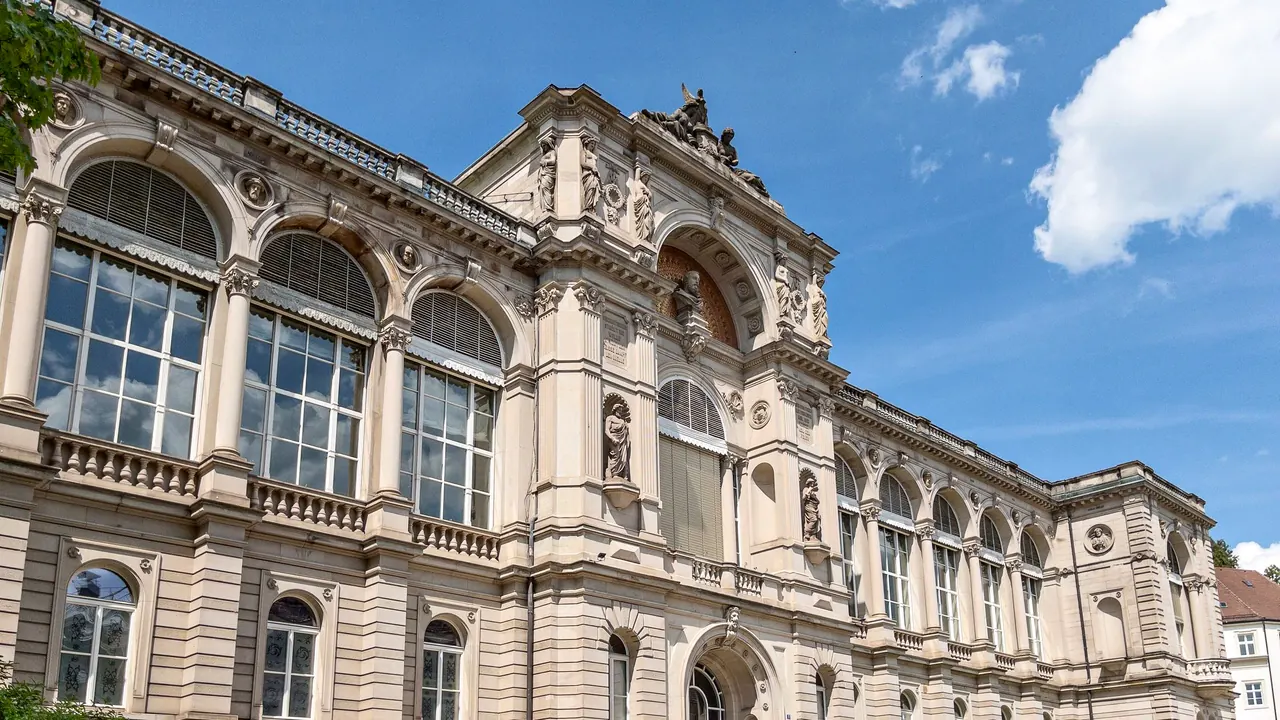
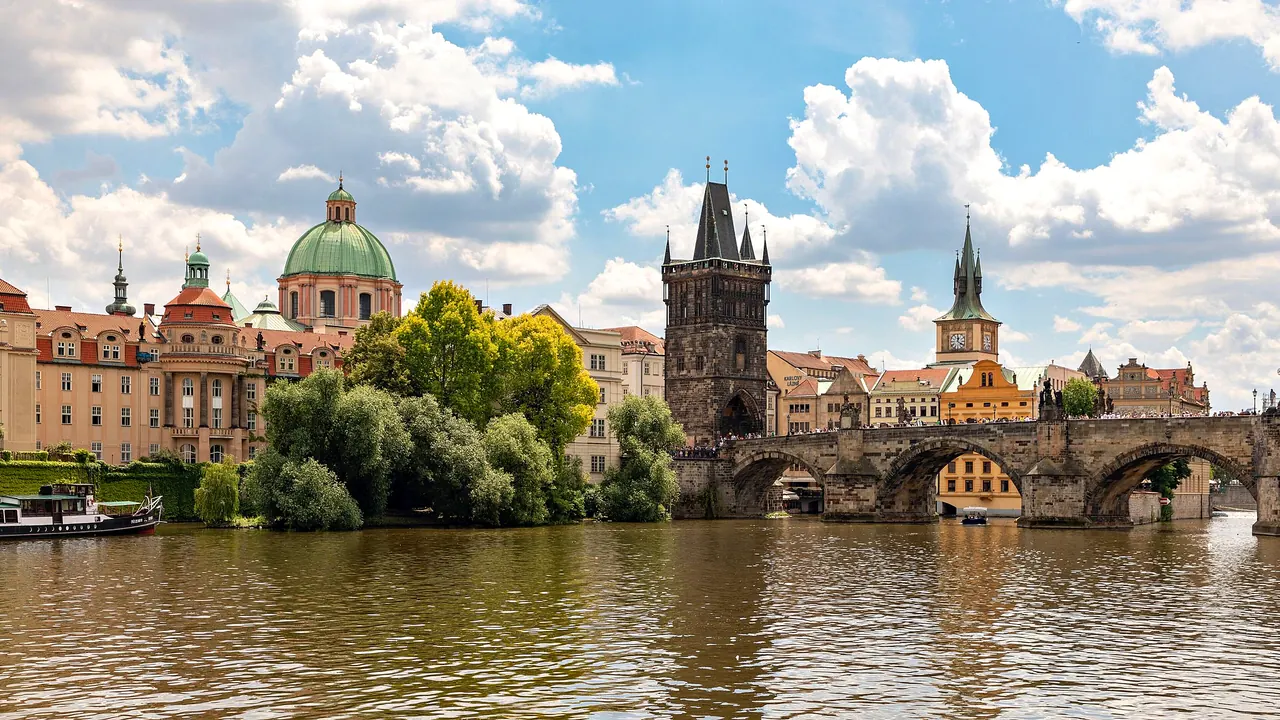
Photos: Baden-Baden by Kent Wang, CC BY-SA 2.0, cropped; Prague by Dietmar Rabich, CC BY-SA 4.0, cropped.
Baden-Baden or Prague?
Our verdict in twelve categories, each scored against the same fixed benchmark cities, and the climate month by month, so you can choose for your trip.
Choose Baden-Baden for
- wellness
- nature and the outdoors
- day trips
Baden-Baden is for travellers who want to slow right down. It suits a few days built around the thermal baths, forest walks straight from the edge of town and evenings at the Festspielhaus or in a Rebland wine tavern. A car turns it into a base for Alsace and the Black Forest. It is quiet, polished and not cheap, and anyone hoping for crowds of sights or late nights will find it too still.
Choose Prague for
- nightlife
- prices
- culture and sights
Prague is the better pick for a city break with plenty to fill it. The historic centre is among the most complete in Europe, the opera houses and concert halls are busy all season, and the pubs and beer gardens keep evenings going late. Trams and the metro mean you never need a car, and a stay costs noticeably less if you avoid the tourist core. What it can't offer is real rest, because the centre is crowded and the city has no bathing tradition of its own.
Scoreboard
Twelve categories on one fixed scale from 0 to 100. The shaded stretch is the gap between the two.
Your match
Pick a travel style or drag the sliders, and both match scores follow your weighting.
Wins on wellness and nature and the outdoors with your weighting.
Wins on nightlife and prices with your weighting.
What matters to you?
Category by category
What the scores mean for a trip.
Beaches & swimming
Neither city is anywhere near a sea, and swimming is a sideshow in both. In Baden-Baden, people swim in the flooded gravel pits of the Rhine plain and in outdoor pools. Prague has the Dzban reservoir on its edge and the wooded banks of Slapy about an hour away, which feel a little more like a lakeside outing. In Baden-Baden the water that really matters is in the thermal baths.
Food & drink
The two eat well in quite different ways. Baden-Baden is wine country. Riesling and Pinot Noir come from the Rebland slopes just outside town, and the cooking runs to Flammkuchen, venison and Black Forest ham, with a French touch from across the Rhine. The town itself has a limited range, and the best restaurants are a drive away in the hills.
Prague is built around beer. Carefully poured lager goes with dumplings, svickova and pickled sausages, and open sandwiches make a cheap lunch. The food is hearty but narrow, and the menus around Old Town Square are best avoided in favour of pubs in Vinohrady, Karlin or Letna.
Culture & sights
Baden-Baden's sights come down to the spa town itself: the Kurhaus, the Trinkhalle, the Lichtentaler Allee and hillside villas from the age when European aristocracy came to take the waters. The Museum Frieder Burda adds good modern art. It is a charming day or two, not more.
Prague works on a much bigger scale. The castle and St Vitus Cathedral, the palaces of Mala Strana, the Charles Bridge, the Old Town lanes and the synagogues of Josefov make up a centre of rare completeness. Cubist and Art Nouveau buildings add to it, and the essentials take three or four days.
Nightlife
Night out in Baden-Baden means the gilded casino rooms of the Kurhaus with a dress code, a hotel bar, and quiet streets by late evening. Anyone wanting more takes the train to Karlsruhe or Strasbourg.
Prague goes out properly. You can choose between cheap locals' pubs in Zizkov, wine and cocktail bars in Vinohrady, summer beer gardens on Letna, and techno in Holesovice's converted industrial spaces. The only thing to avoid is the loud weekend scene in the Old Town.
Nature & outdoors
Baden-Baden has the stronger outdoors. The northern Black Forest starts at the edge of town, and the Merkur funicular, the Battert climbing cliffs and the Panoramaweg are all within easy reach. Further in, the Black Forest High Road climbs past the Mummelsee to the Hornisgrinde moors, with mountain biking in summer and modest skiing in winter.
Prague's green spaces are inside the city: Petrin Hill, Stromovka and the rocky Divoka Sarka gorge. For proper hiking, the sandstone towers of Bohemian Switzerland are about two hours away. The country around the city is gentle, with no real mountains.
Day trips
Both make excellent bases, but the trips are different in kind. From Baden-Baden you cross a border: Strasbourg and the Alsace wine route to Colmar, plus Heidelberg, Freiburg, and the UNESCO cathedral at Speyer and monastery at Maulbronn. A car helps a great deal.
Prague's outings stay mostly in Bohemian castle country: Karlstejn, Konopiste, silver-mining Kutna Hora with its ossuary, and the sobering visit to Terezin. Trains also reach Dresden and buses reach Karlovy Vary. Only Cesky Krumlov really needs an overnight stay.
Good for families
Both are safe and suit families about equally, but in opposite ways. Baden-Baden is calm and easy, but it is made for adults, and the Friedrichsbad turns young children away. Families tend to spend their days at Europa-Park, about an hour south, or at Karlsruhe's zoo.
Prague entertains children on its own streets, with the castle, armour, the astronomical clock and the excellent Troja zoo with its chairlift. The hard part is physical: cobbles, long castle stairs and summer crowds all make life difficult with a pushchair.
Getting around
Prague is much easier without a car. Three metro lines, trams that run all night and the Petrin funicular all use one ticket, and the walk from Old Town Square to Mala Strana takes about fifteen minutes. The only nuisances are the cobbles and the pickpockets on crowded trams.
Baden-Baden's centre is small and walkable, though some streets are steep. The station is a bus ride away in Oos, and the High Road, the wine villages and Alsace all really need a car.
Shopping & style
Prague gives a shopper more to do. It has luxury labels on Parizska, chain stores on Na Prikope, and distinctly Czech buys such as Bohemian crystal, garnet jewellery and marionettes. There are design and vintage shops in Vinohrady and Holesovice, and Christmas markets on the old squares. Expect to walk past plenty of souvenir junk to find them.
Baden-Baden's Sophienstraße and Lange Straße are polished but short, with jewellers, watchmakers, boutiques and delicatessens. There are no department stores, and cuckoo clocks and local wine are about the only local buys.
Affordability
Prague is much kinder to a budget. Beer, pub lunches and public transport stay cheap, and staying a few tram stops from the centre keeps costs down. Just steer clear of the riverside restaurants and the exchange booths in the centre.
Baden-Baden was built for the wealthy and still feels like it. Grand hotels set the tone and the baths charge for every visit. Guesthouses, bakeries and wine taverns are reasonable, but a stay built around the spas soon gets expensive.
Live music & performing arts
Both are serious about classical music, but Prague offers much more of it. It has three opera houses, including the Estates Theatre where Mozart premiered Don Giovanni, plus the Czech Philharmonic at the Rudolfinum and the Prague Spring festival. Black-light theatre, marionette shows and a modest jazz circuit add variety.
Baden-Baden's Festspielhaus, built into the old railway station, brings in top international orchestras and opera, and the Brahms and Clara Schumann connections run deep. Beyond that and the small nineteenth-century theatre, though, there is little else.
Wellness & relaxation
This is Baden-Baden's reason for being. You can follow the silent sequence of hot rooms, scrubs and pools under the dome of the Friedrichsbad, or spend an afternoon in the pools and saunas at Caracalla. Then comes a slow walk along the Lichtentaler Allee and an early night.
Prague has no springs of its own. It offers hotel spas, massage studios and novelty beer baths, and the calmer moments come from a grand coffee house or a bench on Kampa island. For real spa culture, you have to travel two hours to Karlovy Vary.
When should you go?
Pick your month. The climate figures are measured averages, not a forecast.
Baden-Baden in July
Prague in July
Daytime high, °C
Rainfall in the month, mm
Temperature and rainfall are climate normals, averaged over the years shown. Baden-Baden: 1991-2020 normals, Baden-Baden-Geroldsau (3.9 km from centre). Prague: 1991-2020 normals, Praha-Libus (8.1 km from centre).
Summers are almost the same in both cities, with highs around 25°C in July and August and long sunny days from May to August. That is warm enough for outdoor pools and the lakes or reservoirs near each city. Winter is where they differ. Prague is colder, with January highs near 2°C, while Baden-Baden stays around 6°C. That makes Baden-Baden the gentler choice for a winter break, and a cold, damp day suits the thermal baths well anyway.
Rain is the other big difference. Baden-Baden gets around 100mm or more in almost every month of the year, so pack for showers whenever you go. Prague is much drier, with little rain in winter and early spring and its wettest months in summer, at about 80mm. For walking, both are at their best from May to September. Baden-Baden's forests are at their finest in October colour, and in Prague late spring and early autumn are the most comfortable times on the cobbles.
Which traveller are you?
On a relaxing and wellness trip, Baden-Baden wins easily. The Friedrichsbad and Caracalla stand on hot springs the Romans used, and the whole town keeps a slow pace. In Prague, rest mostly means hotel spas and a quiet corner of a park.
For a culture and arts trip, Prague offers far more. It has a whole UNESCO-listed centre of castle, bridge and Baroque quarters, three opera stages and the Rudolfinum. Baden-Baden's spa architecture, art museums and Festspielhaus fill a day or two well, but not a week.
For a food and nightlife trip, Prague is the stronger choice. It has excellent tank beer, pubs in Zizkov, beer gardens on Letna and clubs that stay open until dawn. Baden-Baden has fine wine taverns and regional cooking, but its evenings end with the casino and an early night.
Before you go
| Measure | Baden-Baden | Prague |
|---|---|---|
| Official language | German | Czech |
| Currency | Euro (EUR) | Czech Koruna (CZK) |
| Sockets | CF230 V, 50 Hz | CE230 V, 50 Hz |
| Driving side | Right | Right |
| Time zone | UTC+1, UTC+2 in summer | UTC+1, UTC+2 in summer |
| Emergency number | 112 | 112 |
| Elevation | 181 m | 235 m |
| Main airport | Karlsruhe Baden-Baden Airport (FKB)12 km from centre44 non-stop destinations | Václav Havel Airport Prague (PRG)12 km from centre178 non-stop destinations |
| Public holidays this year | 12 days | 13 days |
By the numbers
| Measure | Baden-Baden | Prague |
|---|---|---|
| Population | 56,952 | 1,397,880 |
| People per km² | 406 | 2,817 |
| Museums within 10 km | 11 | 88 |
| UNESCO World Heritage sites within 50 km | 3 | 1 |
Where else could you go?
Every comparison below shares a destination with this one, so you can follow Baden-Baden or Prague somewhere new.
- Strasbourgvs Baden-Baden
- Stuttgartvs Baden-Baden
- Heidelbergvs Baden-Baden
- Freiburgvs Baden-Baden
- Colmarvs Baden-Baden
- Karlovy Varyvs Prague