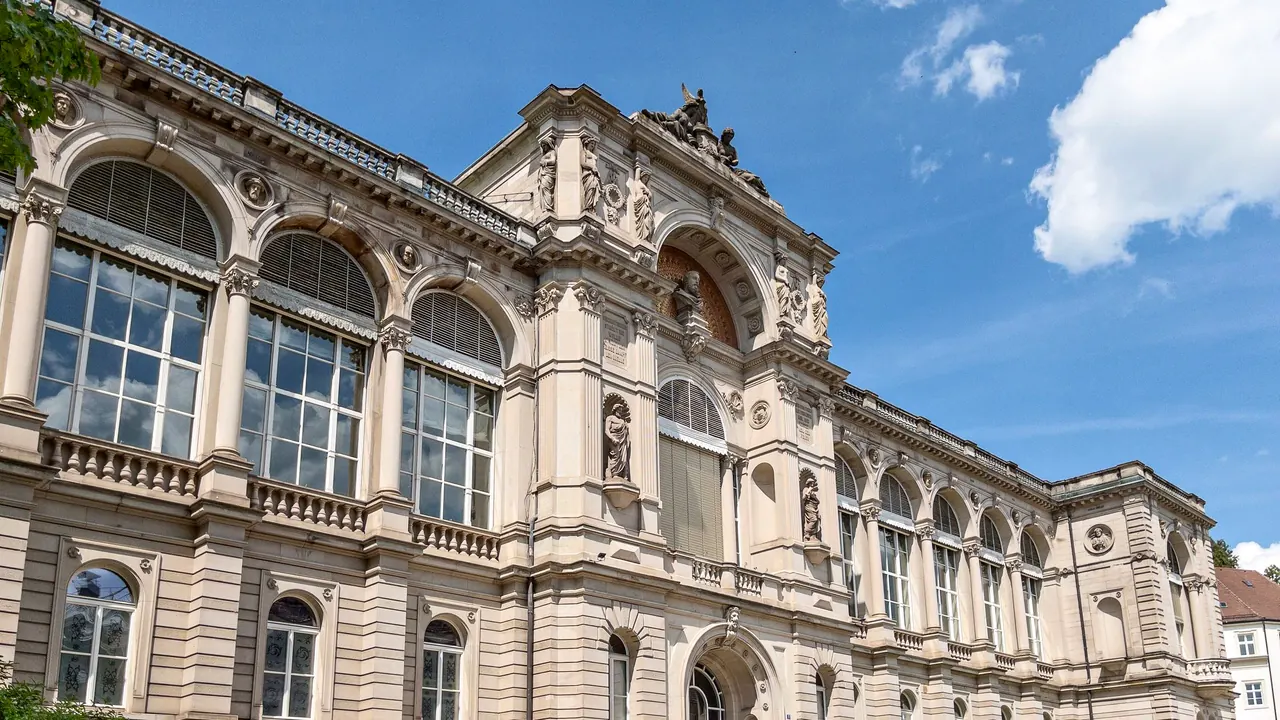
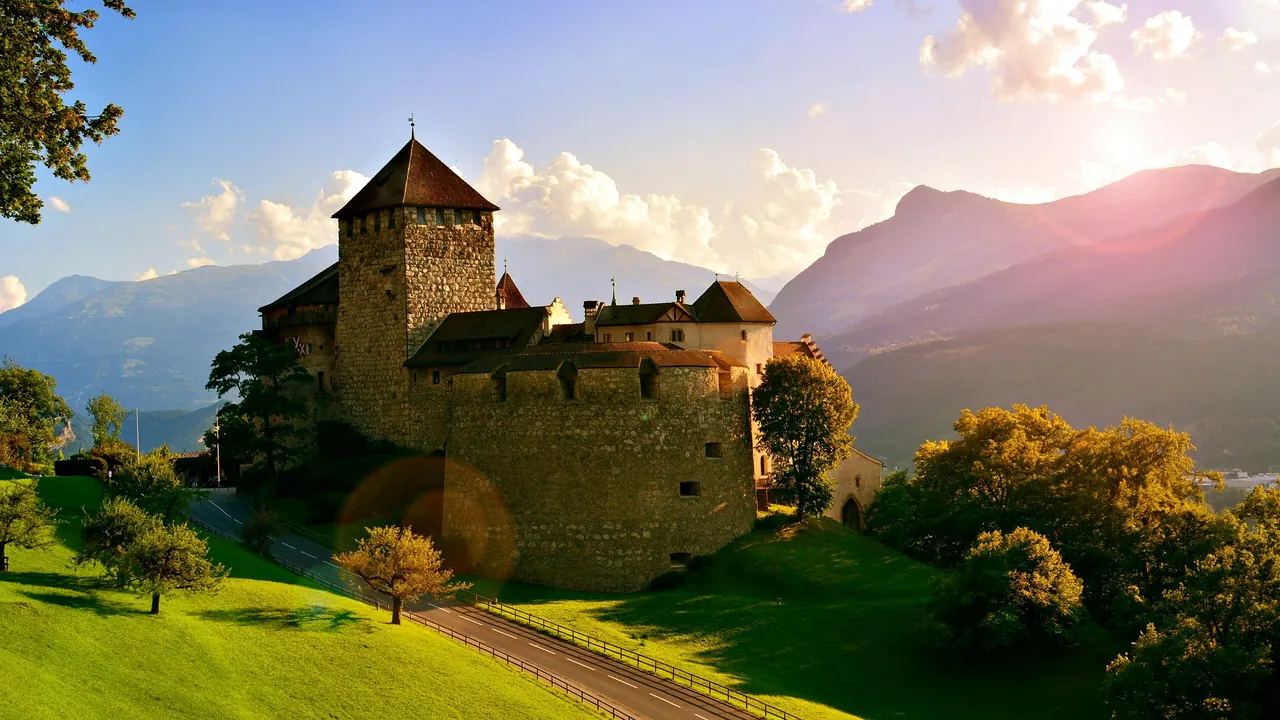
Photos: Baden-Baden by Kent Wang, CC BY-SA 2.0, cropped; Vaduz by Justin LaBerge, CC BY 2.0, cropped.
Baden-Baden or Vaduz?
Our verdict in twelve categories, each scored against the same fixed benchmark cities, and the climate month by month, so you can choose for your trip.
Choose Baden-Baden for
- wellness
- live music and the arts
- shopping
Baden-Baden is the choice for a slow, restorative stay built around the thermal baths, with evenings at the Festspielhaus or in the gilded Kurhaus casino and Riesling from the Rebland villages just outside town. It also has more to see and eat in town, and with Strasbourg, Heidelberg and the Alsace wine route all within reach it makes a better base for a varied week. It is expensive, but less so than Vaduz.
Choose Vaduz for
- nature and the outdoors
- beaches
Walkers and mountain lovers will be happier in Vaduz. Trails leave straight from the centre, the Rätikon peaks and Malbun are half an hour up the road, and winter brings easy skiing. The town itself is one unhurried day of modern art and castle views, Swiss prices apply to everything and nights end early. It suits travellers who want the Alps on the doorstep more than a town to explore.
Scoreboard
Twelve categories on one fixed scale from 0 to 100. The shaded stretch is the gap between the two.
Your match
Pick a travel style or drag the sliders, and both match scores follow your weighting.
Wins on wellness and live music and the arts with your weighting.
Wins on nature and the outdoors and beaches with your weighting.
What matters to you?
Category by category
What the scores mean for a trip.
Beaches & swimming
Neither is a place to come for swimming, but Vaduz has the better choice on a hot day. The Walensee, under its steep mountain walls, is about half an hour away and Lake Constance under an hour, with the water reaching around 20°C to 22°C at the height of summer. Baden-Baden only has the flooded gravel pits of the Rhine plain and outdoor pools, and its water culture is thermal rather than open-air.
Food & drink
Baden-Baden eats noticeably better. It draws on Baden's regional cooking, with a French accent from across the Rhine: Flammkuchen, venison, Black Forest ham and cherry gateau. The wine taverns of Varnhalt, Neuweier and Steinbach make easy evenings, and the celebrated restaurants of the northern Black Forest are a short drive away.
Vaduz offers a few hotel dining rooms, some restaurants along the Städtle and hill inns serving Käsknöpfle and rösti, solid rather than adventurous. Its best pleasure is the Pinot Noir from the prince's estate below the castle, but the range is narrow and dinner tends to finish early.
Culture & sights
In Baden-Baden the town itself is the main sight. It is a Belle Époque spa resort listed among the Great Spa Towns of Europe, with the Kurhaus, the colonnaded Trinkhalle, the Lichtentaler Allee and Roman bath ruins under the old town. Add the Museum Frieder Burda, the Kunsthalle, the Fabergé museum and the house where Brahms spent his summers, and you have a full day or two.
Vaduz fits into a single day. The black cube of the Kunstmuseum and the Hilti Art Foundation beside it match Baden-Baden for modern art, and the National Museum and the Postage Stamp Museum tell the principality's story. The castle that dominates every view is the prince's home and closed to visitors.
Nightlife
Both towns are quiet after dark. Baden-Baden at least has a signature night out: the historic casino in the Kurhaus, with its dress code and gilded rooms, followed by a wine bar or an old-town pub. In Vaduz, a few wine bars and hotel lounges on the Städtle stay open a little after dinner and that is all. For clubs, Baden-Baden looks to Karlsruhe or Strasbourg, while Vaduz sends you to Feldkirch or Zurich.
Nature & outdoors
Vaduz has the bigger landscape. From the Rhine valley floor, trails climb through vineyards and beech forest straight from town, and the road up to Triesenberg and Malbun leads to the Rätikon peaks, the exposed Fürstensteig and long ridge hikes. In winter there is skiing at Malbun and at larger Swiss resorts within an hour.
Baden-Baden's outdoors is gentler wooded upland. The Merkur funicular, the Battert cliffs and the Panoramaweg lead into fir forest and vineyards, and the Black Forest High Road climbs past the Mummelsee to the Hornisgrinde moorland at over 1,100m. It is at its best in autumn colour rather than on high alpine ground.
Day trips
Both sit close to borders, but Baden-Baden has the slightly richer list. Strasbourg and Petite France are about an hour away, with Colmar and Riquewihr further along the Alsace wine route. Heidelberg and Freiburg are each about an hour by train, and Speyer's cathedral and the Maulbronn monastery add two UNESCO sites.
From Vaduz, medieval Feldkirch is twenty minutes away, and St Gallen's abbey library, painted Appenzell and Chur are around an hour. Lindau and Bregenz on Lake Constance and Zurich are also within reach. Because Vaduz has no station, public transport usually means a change at Buchs or Sargans.
Good for families
Baden-Baden works better with children, mostly because of what lies nearby. Europa-Park, one of Europe's largest theme parks, is about an hour south and Karlsruhe's zoo is closer, while the Merkur funicular and the Lichtentaler Allee fill a gentle day in town. The one catch is the Friedrichsbad, which does not admit young children.
Vaduz has nothing designed for children, no zoo and no theme park. Family days revolve around the open-air pools, easy walks above Triesenberg and Malbun's beginner slopes, which suits older children who enjoy hiking more than younger ones.
Getting around
Both centres are small enough to walk, though Baden-Baden's streets climb steeply in places while the Städtle in Vaduz is short and flat. The difference is in the links. Baden-Baden has a railway station a few kilometres out in Oos, with frequent buses into town and direct trains to Karlsruhe and Freiburg.
Vaduz has no station at all, but a tidy bus network reaches every village in the country and runs up to Malbun, connecting with trains at Buchs, Sargans and Feldkirch. In both places a car makes the wider region, Alsace or the Swiss and Austrian valleys, far simpler.
Shopping & style
Baden-Baden is the better place to browse. Sophienstraße and Lange Straße are lined with jewellers, watchmakers, fashion boutiques and delicatessens aimed at well-off spa guests. Vaduz has only a handful of shops on the Städtle, selling watches, souvenirs and the collectable Liechtenstein stamps, and a bottle of local wine is the best thing to take home. Serious shoppers head to Strasbourg from one and to Zurich from the other.
Affordability
Neither town is cheap, but Baden-Baden is the easier one on the wallet. Its prices are German: simple guesthouses, wine taverns and bakeries are reasonable, and it is the spa visits and grand hotels that push the bill up. Vaduz charges Swiss prices for everything from a room to a simple lunch, and with only a few hotels there is little at the budget end. Some visitors save money by staying across the border in Austria.
Live music & performing arts
Baden-Baden is the clear choice for classical music. The Festspielhaus, built into the old railway station, is one of Germany's largest opera and concert houses and brings leading international orchestras and soloists through its seasons. The town's philharmonic plays in the Kurhaus, and the small nineteenth-century theatre stages drama and opera, all in the town where Brahms and Clara Schumann worked.
Liechtenstein's calendar is respectable but small. There is a theatre stage in neighbouring Schaan, a short orchestral season, a summer classical festival in Vaduz and the occasional church concert, enough for an evening out but not a reason to come.
Wellness & relaxation
This is where the two differ most. Baden-Baden exists to take the waters. The domed Friedrichsbad leads bathers through its silent sequence of hot rooms, scrubs and pools, Caracalla next door adds indoor and outdoor thermal pools and a large sauna area, and grand hotel spas fill any gaps.
Vaduz has no bathing culture of its own, only a few hotel spas. Its calm comes from quiet streets and mountain views, and for thermal water you cross the Rhine to Bad Ragaz, about twenty-five minutes away, where the Tamina gorge springs feed a large public bath.
When should you go?
Pick your month. The climate figures are measured averages, not a forecast.
Baden-Baden in July
Vaduz in July
Daytime high, °C
Rainfall in the month, mm
Where the figures come from
Vaduz's temperatures are measured 51 km from the centre, at Sigmarszell-Zeisertsweiler.
Vaduz has no rain gauge within 25 km of the centre, so its rainfall comes from a gridded climate dataset read at the destination rather than from a gauge further away.
Temperature and rainfall are climate normals, averaged over the years shown. Baden-Baden: 1991-2020 normals, Baden-Baden-Geroldsau (3.9 km from centre). Vaduz: 1991-2020 normals, Sigmarszell-Zeisertsweiler (51.3 km from centre).
Neither town gets warm enough for a beach trip in the usual sense. Summer highs peak at about 25°C in Baden-Baden in July and August, with Vaduz a degree cooler, which is comfortable for walking and warm enough for a lake swim near Vaduz in the short high season. May to September is the best window for both, and Baden-Baden gets a little more sunshine through the summer. Winters are cold in both, with highs around 4°C in Vaduz in December and January. That is the season for Malbun's slopes rather than for strolling the Städtle.
The rain falls differently. Baden-Baden is damp all year, with around 100mm in most months and no real dry season, so you can plan on spending a wet day in the baths at any time of year. Vaduz is drier in winter and early spring but wettest in high summer, with about 126mm in August, so hiking days need some flexibility. In October, Vaduz also sees noticeably more sunshine than Baden-Baden.
Which traveller are you?
For a relaxing and wellness trip, Baden-Baden is the clear choice. The Friedrichsbad and Caracalla sit at the heart of a town set entirely to a slow pace, while Vaduz has only hotel spas and sends bathers across the Rhine to Bad Ragaz.
On an outdoors trip, Vaduz comes out ahead. Trails start in the centre, the Rätikon's high paths and Malbun's ski slopes are half an hour away, and the Rhine dam path suits cyclists. Baden-Baden's Black Forest is gentler, wooded upland.
For a culture and arts trip, pick Baden-Baden. Its Belle Époque spa quarter, the Museum Frieder Burda and the Festspielhaus season fill two days and several evenings. Vaduz offers one good day of modern art and a small concert calendar.
Before you go
| Measure | Baden-Baden | Vaduz |
|---|---|---|
| Official language | German | German |
| Currency | Euro (EUR) | Swiss Franc (CHF) |
| Sockets | CF230 V, 50 Hz | CJ230 V, 50 Hz |
| Driving side | Right | Right |
| Time zone | UTC+1, UTC+2 in summer | UTC+1, UTC+2 in summer |
| Emergency number | 112 | 112 |
| Elevation | 181 m | 455 m |
| Main airport | Karlsruhe Baden-Baden Airport (FKB)12 km from centre45 non-stop destinations | Zürich Airport (ZRH)81 km from centre226 non-stop destinations |
| Public holidays this year | 12 days | 21 days |
By the numbers
| Measure | Baden-Baden | Vaduz |
|---|---|---|
| Population | 56,952 | 5,668 |
| People per km² | 406 | 328 |
| Museums within 10 km | 11 | 7 |
| UNESCO World Heritage sites within 50 km | 3 | 3 |
Where else could you go?
Every comparison below shares a destination with this one, so you can follow Baden-Baden or Vaduz somewhere new.
- Strasbourgvs Baden-Baden
- Stuttgartvs Baden-Baden
- Zurichvs Vaduz
- Heidelbergvs Baden-Baden
- Freiburgvs Baden-Baden
- Lucernevs Vaduz