
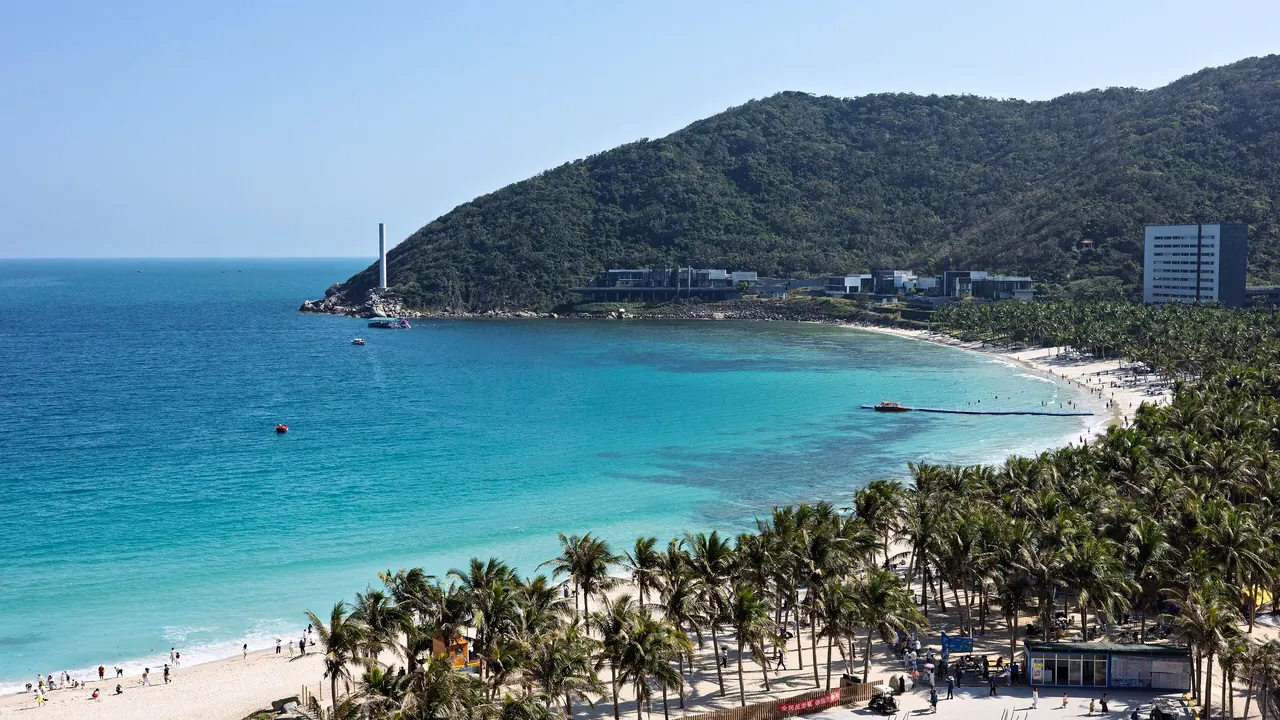
Photos: Bali by Evelin Magnus, Pexels License; Hainan by Steven Sun, CC BY-SA 4.0, cropped.
Bali or Hainan?
Our verdict in twelve categories, each scored against the same fixed benchmark cities, and the climate month by month, so you can choose for your trip.
Choose Bali for
- culture and sights
- nightlife
- live music and the arts
Bali suits travellers who want more from an island than a beach. Its temples, daily offerings and village ceremonies, the nightly dance in Ubud, the volcano climbs, surf breaks and dive sites, and a very deep yoga and spa culture give a stay real variety. It is also the cheaper of the two once you are there. The price is the traffic: the island is slow to cross, so it rewards travellers who pick one or two bases with care and accept that long outings take a whole day.
Choose Hainan for
- getting around
- beaches
Hainan makes more sense as a straightforward winter beach resort. When Bali is at its wettest, the Sanya bays are dry and calm, with resorts built for families, hot springs in the hills and a large duty-free complex at Haitang Bay. The coastal railway makes it easier to get around than Bali. What you give up is depth: the sights, nights out and food are thin by comparison, and resort rooms in the high season cost more than you might expect.
Scoreboard
Twelve categories on one fixed scale from 0 to 100. The shaded stretch is the gap between the two.
Your match
Pick a travel style or drag the sliders, and both match scores follow your weighting.
Wins on culture and sights and nightlife with your weighting.
Wins on getting around and beaches with your weighting.
What matters to you?
Category by category
What the scores mean for a trip.
Beaches & swimming
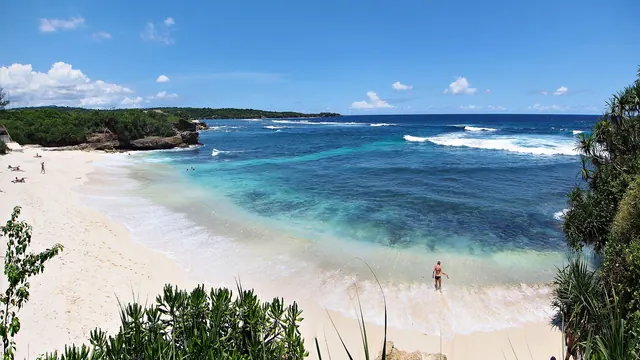
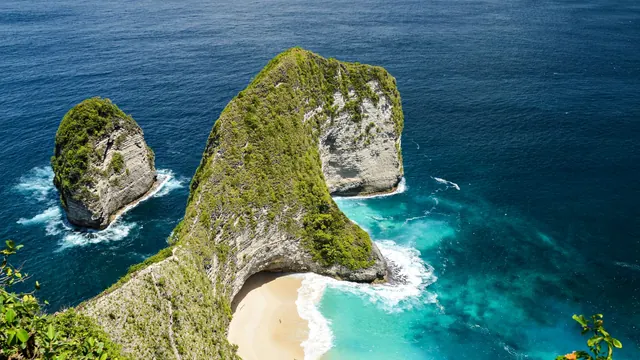
The two islands are about even for beaches, but Bali has more kinds of coast. Kuta, Seminyak and Canggu have long surf beaches with strong rips. Sanur and Nusa Dua have shallow lagoons behind the reef. The Bukit has pale coves under the cliffs, often at the bottom of steep steps. On top of this, Bali's sea is warm in every month.
Hainan's best beaches are grouped around Sanya. Yalong Bay has a long sweep of fine white sand and clear, calm water, and Haitang Bay is quieter and lined with resorts. They are at their best in the dry winter. Summer and autumn bring typhoons that can close the beaches, which is the reverse of Bali's pattern.
Food & drink
Bali is the better place to eat. Its Hindu cooking is built around pork, with babi guling, bebek betutu and lawar served at simple warungs and in Denpasar's morning markets. Canggu, Seminyak and Ubud add serious coffee, plant-based kitchens and tasting menus that use Indonesian ingredients.
Hainan has a few famous dishes, such as Wenchang chicken and Hele crab, and its most characterful eating is in Haikou's laoba tea houses. That is a long way from the Sanya beaches, where meals are mostly resort buffets or seafood you pick at a market hall and have cooked nearby.
Culture & sights
For culture there is no contest. In Bali, temples, shrines and morning offerings are part of everyday life. Tanah Lot, Uluwatu, Besakih and the Jatiluwih rice terraces are major sights, and a temple ceremony seen by chance can be the highlight of a stay. Ubud puts museums, the royal palace and rock shrines within easy reach, although the great temples involve long drives.
Hainan's heritage is modest and lies mostly in Haikou: the Qilou arcaded shophouses, the Five Officials Temple and the provincial museum. Nanshan's huge Guanyin statue near Sanya is more spectacle than history, and the Li villages are largely staged. On Hainan, sightseeing fills a free afternoon. On Bali, it can shape the whole trip.
Nightlife
Bali has far more to do at night, mostly in the southwest. Afternoons by a beach club pool in Seminyak, Canggu or on the Uluwatu cliffs run on into DJ sets after sunset. Canggu has bar-hopping along the rice-field lanes, and Kuta stays open until the early hours.
In Hainan, nights out are mainly Dadonghai's beach bars and a few Chinese-style clubs with table service. Locals tend to go to KTV karaoke in Haikou. Most resort guests simply finish the day with seafood by the sea.
Nature & outdoors
Bali's outdoors is more dramatic and has more to offer. You can climb Mount Batur before dawn for sunrise over the caldera, walk in the misty Munduk highlands, or cycle through the Sidemen rice valleys. At sea, the Bukit reef breaks draw surfers from around the world, and divers come for the Tulamben wreck and the manta rays off Nusa Penida.
Hainan's strength is its mountainous rainforest interior. Wuzhishan rises to about 1,860m and can be climbed in a day, and Jianfengling and Diaoluoshan have proper trails and cooler air. Riyue Bay gets good surf in winter. The parks near Sanya are heavily managed, though, and the coast around the resorts is more built up than wild.
Day trips
Neither island is a great base for day trips, but Bali's outings are more worthwhile, even though they are harder to reach. The Bali Aga villages of Tenganan and Penglipuran keep older customs and crafts, and Nusa Lembongan is a short boat ride from Sanur. Traffic in the south limits most visitors to one or two outings.
In Hainan, the coastal railway makes Lingshui's floating fishing villages, Bo'ao and Wenchang's overseas-Chinese mansions easy to reach. They are pleasant breaks from the beach rather than places worth the journey in their own right.
Good for families
Both islands work well for families, in different ways. In Bali, Sanur and Nusa Dua offer calm water and resorts with kids' clubs, and villas with private pools are comfortable for long stays. The Monkey Forest is a hit with children, though the monkeys bite. Against that are the heavy traffic, pavements too poor for pushchairs, frequent stomach upsets and the need for quick treatment after any animal bite.
Hainan is a simpler resort vacation. The large resorts at Yalong and Haitang Bay are built for children, and there are an aquarium and water park close by. The challenges are practical ones: little English outside the hotels and payments made almost entirely by mobile app.
Getting around
Hainan is much easier to get around. A high-speed railway circles the coast and links Haikou and Sanya in about an hour and a half, with stops at the main towns along the way. Within Sanya, ride-hailing cars connect the separate bays. It is worth setting up mobile payment before you arrive.
Bali has no public transport a visitor can really use. The roads in the south are clogged for much of the day, so people rely on drivers, ride-hailing apps or scooters, and scooters are best left to experienced riders. Crossing the mountains to the north or the far east takes most of a day.
Shopping & style
Both islands have a similar amount of shopping, but it is aimed at different shoppers. Bali is about things made on the island. The villages on the road to Ubud specialise in silver at Celuk, woodcarving at Mas and stone at Batubulan, and Seminyak and Canggu have boutiques run by local designers selling linen, ceramics and furniture.
Hainan is about duty-free. The huge complex at Haitang Bay gathers luxury brands, cosmetics, watches and electronics under one roof. Beyond that, the choice narrows to Li brocade, coffee and pearls of mixed quality.
Affordability
Bali gives you more for your money. Guesthouses, villas with private pools, warung meals, massages and drivers by the day are all cheap, and inland Ubud and the quieter coasts cost less still. The beach clubs and cliff-top resorts are the exception, with prices close to Western levels.
Hainan costs more than most of China. The Sanya resorts are priced like international ones and climb sharply in winter, which is also the best beach season. Haikou and the east-coast towns are cheaper, and so is summer, but that is the hot, wet typhoon season.
Live music & performing arts
Bali's tradition of dance and gamelan is easy to see on a short stay. Ubud's palace courtyards hold Legong, Barong or shadow-puppet performances almost every night, the Kecak is chanted at sunset on the cliffs at Uluwatu, and village temple festivals add dances performed for the gods.
Hainan has much less to offer. Its performances are mostly a theme-park spectacle in Sanya and bamboo-pole dances in the Li cultural villages. Qiong opera, the island's own regional form, is staged only occasionally.
Wellness & relaxation
Rest and restoration are among the main reasons people go to Bali. Ubud and its valleys are full of yoga studios, meditation retreats and spas among the rice fields, and Balinese massage and boreh scrubs are offered at every budget. You can also join the purification ritual at Tirta Empul or soak in the dragon-spout pools at Banjar.
Hainan's strength is its hot springs, such as the open-air forest pools at Qixianling and the long-established spring resorts at Xinglong. The big Sanya resorts add spas and treatments based on traditional Chinese medicine. On both islands, stay away from the busiest area to rest: Kuta and Canggu on Bali, and Sanya town on Hainan.

When should you go?
Pick your month. The climate figures are measured averages, not a forecast.
Bali in July
Hainan in July
Daytime high, °C
Rainfall in the month, mm
Temperature and rainfall are climate normals, averaged over the years shown. Bali: 1991-2020 normals, Denpasar / Ngurah-Rai (3.5 km from centre). Hainan: 1991-2020 normals, Yaxian (2 km from centre).
Bali is hot all year, with daytime highs that hardly move from about 30°C, so the season depends on rain rather than temperature. The dry months from April to October are the time to go. August brings only 12mm of rain and the most sunshine, and this is when the volcano climbs and the water are at their best. From November the rains build, and December to March is properly wet, with heavy downpours and duller skies. Even then the sea stays warm enough to swim every day.
Hainan's seasons run almost the other way. Where most visitors stay, winter is dry and mild, with January highs of about 24°C. The sea is cooler then than at any other time, but it is fine for swimming, and the warmth is pleasant for walking. Rain arrives in May and heavy from July to October, when typhoons can strike, with September bringing about 300mm. Summer is hot and humid, the same heat as Bali. Put simply, Bali is the choice from April to October and Hainan from November to April, and Bali has more sunshine through most of the year.
Which traveller are you?
On a culture and arts trip, Bali is the clear choice. A week based in Ubud lets you spend the days at temples and craft villages and the evenings at dance performances. On Hainan, the heritage would fill a single day in Haikou.
For a beach and sun trip in the northern winter, Hainan is the easier choice. You settle into one resort on Yalong or Haitang Bay and swim in calm water every day. On Bali you would choose between surf, lagoon and cliff coves.
On a trip on a tight budget, Bali makes the money last longer, as long as you stay inland or on a quiet coast and skip the beach clubs of Seminyak and Uluwatu. On Hainan, the Sanya beaches you came for are the costly part of the trip.
Before you go
| Measure | Bali | Hainan |
|---|---|---|
| Official language | Indonesian | Putonghua |
| Currency | Rupiah (IDR) | Yuan Renminbi (CNY) |
| Sockets | CF50 Hz | ACI220 V, 50 Hz |
| Driving side | Left | Right |
| Time zone | UTC+8 | UTC+8 |
| Emergency number | 112 | Police 110, ambulance 120, fire 119 |
| Main airport | Denpasar I Gusti Ngurah Rai International Airport (DPS)64 non-stop destinations | Sanya Phoenix International Airport (SYX)93 non-stop destinations |
| Public holidays this year | - | 6 days |
By the numbers
| Measure | Bali | Hainan |
|---|---|---|
| Population | 4,404,300 | 9,200,000 |
| People per km² | 782 | - |
| Swim season, months above 21 °C | 12 months | 12 months |
Where else could you go?
Every comparison below shares a destination with this one, so you can follow Bali or Hainan somewhere new.