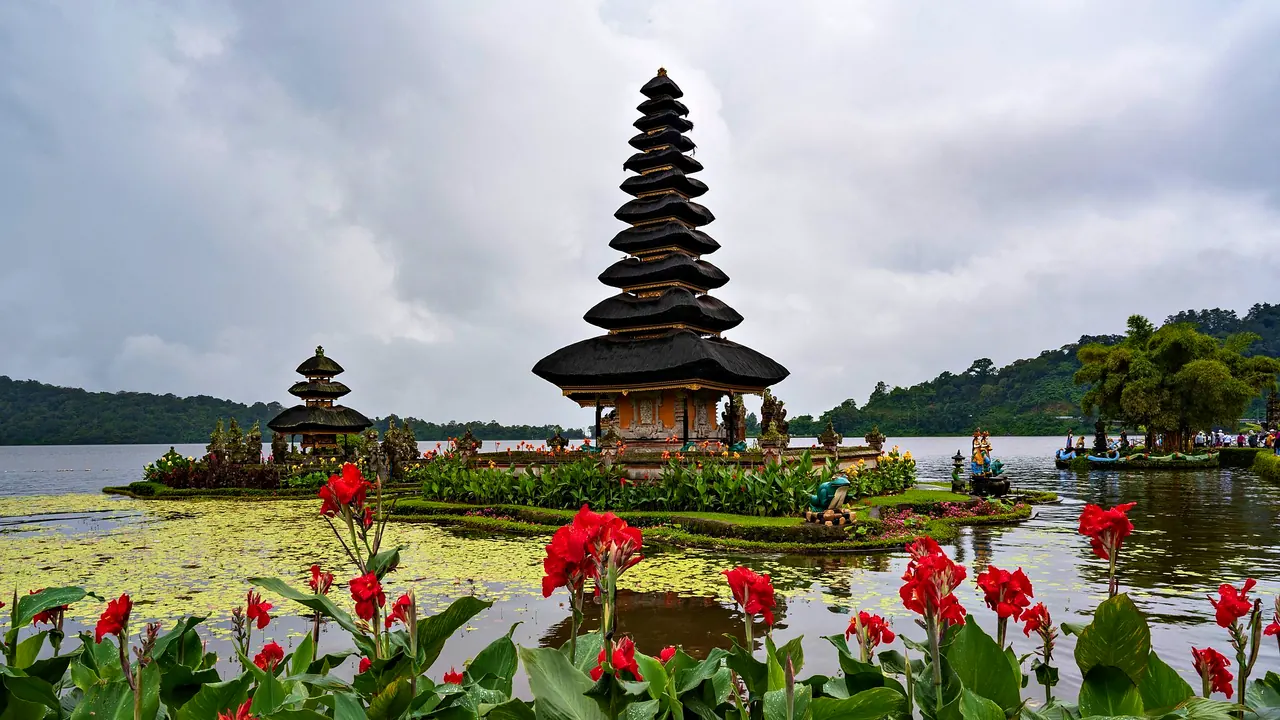
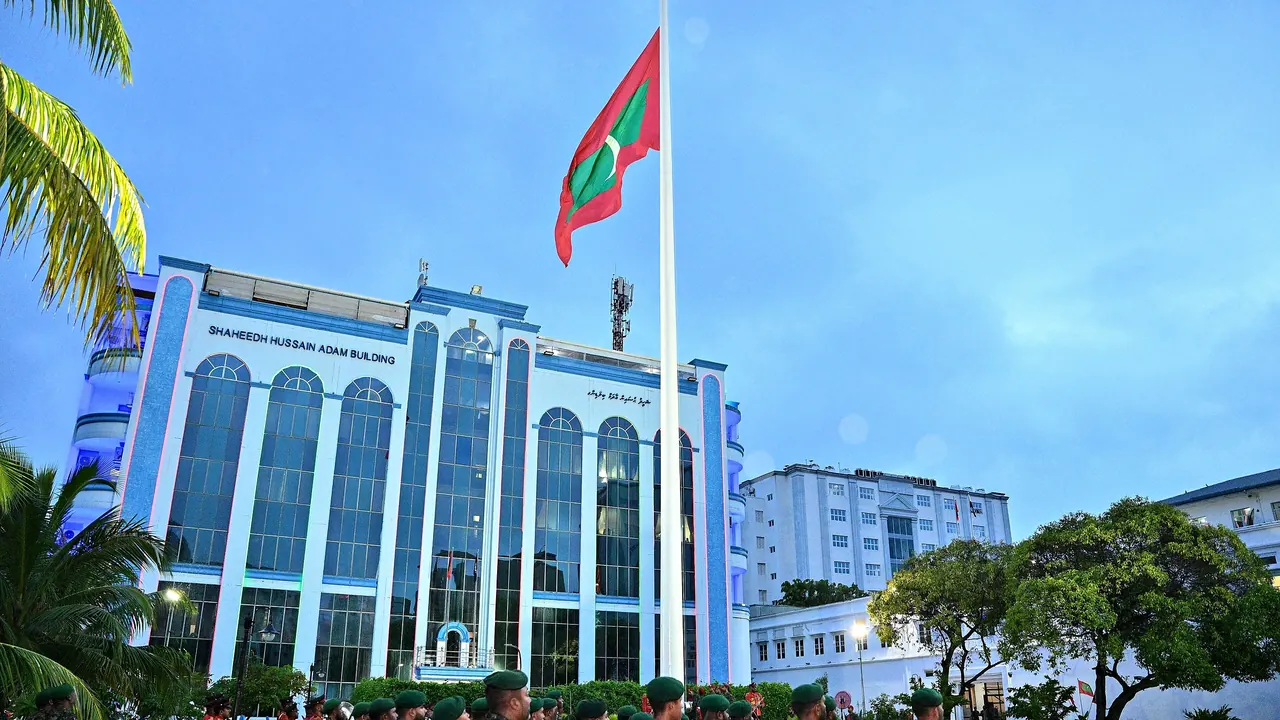
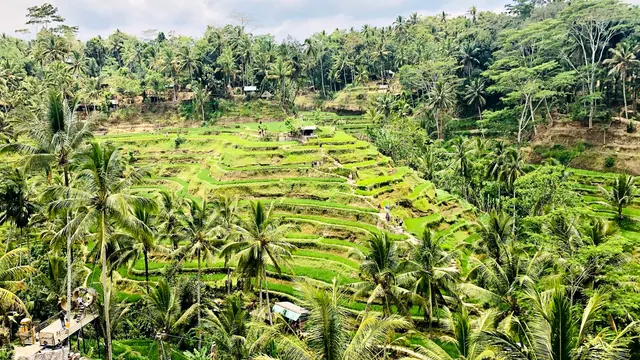
Photos: Bali by Evelin Magnus, Pexels License; Malé by The President's Office of the Republic of Maldives, CC BY 4.0, cropped.
Bali or Malé?
Our verdict in twelve categories, each scored against the same fixed benchmark cities, and the climate month by month, so you can choose for your trip.
Choose Bali for
- wellness
- nightlife
- live music and the arts
Bali suits travellers who want a whole island to explore over a week or more. It has surf beaches and calm lagoons, volcano climbs at dawn, temple ceremonies, Balinese cooking and beach clubs at sunset. Its retreats and spas around Ubud are among the best reasons anywhere to slow down. The price is time on the road, because the island is slow to cross and most visitors settle on one or two bases.
Choose Malé for
- getting around
Malé is a different kind of trip: a small, dry Muslim capital that works as a gateway to the Maldivian atolls rather than a destination in itself. Choose it if what you want is under the water, with famous dive sites and sandbanks a short boat ride away, a quiet local island stay, or a stopover on the way to a resort. Do not choose it for nightlife, shopping or a long list of sights.
Scoreboard
Twelve categories on one fixed scale from 0 to 100. The shaded stretch is the gap between the two.
Your match
Pick a travel style or drag the sliders, and both match scores follow your weighting.
Wins on wellness and nightlife with your weighting.
Wins on getting around with your weighting.
What matters to you?
Category by category
What the scores mean for a trip.
Beaches & swimming
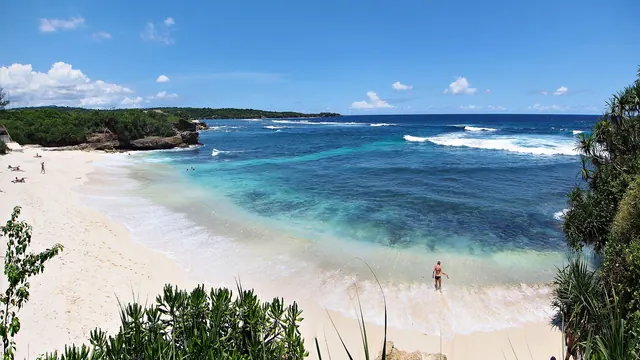
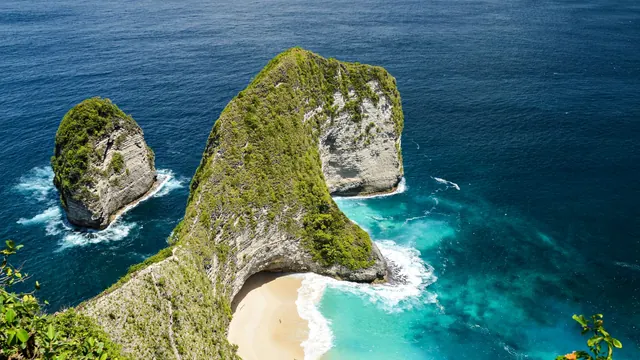
Bali has the wider choice of beaches on its own shores. There are surf beaches and sunsets on the west-facing sands of Kuta and Canggu, sheltered lagoons at Sanur and Nusa Dua, and pale coves under the Bukit cliffs. You can sunbathe in a bikini wherever you stay.
Malé has almost no sand in the city itself, only a small artificial beach. The good beaches are a hop away at Hulhumalé or further out by speedboat. On inhabited islands you swim modestly dressed, so a bikini means a designated tourist beach or a resort day pass. The water around the atolls is very clear, but it takes some planning to reach.
Food & drink
Bali eats much better. Its Hindu kitchen centres on pork, with babi guling, bebek betutu and sate lilit served at warungs and morning markets. On top of that come the brunch cafés of Canggu and the ambitious tasting menus of Ubud and Seminyak.
Malé's cooking is narrower and built almost entirely on tuna, from mas huni with roshi at breakfast to garudhiya broth. The tea shops and their short eats are worth an afternoon. Because the city is dry, there is no wine or beer with dinner, while Bali has its own arak and cocktail bars.
Culture & sights
Bali's culture is part of daily life. There are offerings on the pavements every morning, sea temples at Tanah Lot and Uluwatu, the mother temple of Besakih and the subak rice terraces of Jatiluwih, which could fill many days. The drawback is the long drives between them.
Malé's heritage fits into a single morning: the coral-stone Old Friday Mosque, the Mulee-aage palace, Sultan Park and the National Museum with its pre-Islamic carvings. These are good, but they are few, and the rest of the city is plain concrete.
Nightlife
The two could hardly be further apart. Bali's southwest offers afternoon-to-sunset beach clubs on the Uluwatu cliffs, bar-hopping in Canggu, polished lounges in Seminyak and late clubs in Kuta. Malé serves no alcohol, so evenings mean juice bars, tea shops and a walk on the waterfront promenade. For a drink you have to go to a resort.
Nature & outdoors
Bali has both land and sea. Inland there are dawn climbs on Mount Batur, the crater lakes and waterfalls of Munduk, and rice valleys for cycling. Offshore there are world-famous reef breaks on the Bukit and dives at Tulamben and Nusa Penida.
Malé has nothing to walk on, because the island is flat and fully built over. Its strength lies entirely underwater. The channel drifts of the North and South Malé atolls, with sharks, eagle rays and manta cleaning stations, are a short boat ride from the city. For divers alone, that is a serious draw.
Day trips
Neither is built for outings, but Bali gives you more variety. The walled Bali Aga village of Tenganan, the tidy street of Penglipuran and the rice valley of Sidemen are each quite different from the south, and Nusa Lembongan is a short boat ride from Sanur.
From Malé, every trip is a boat to another island, such as Maafushi, Guraidhoo or Thulusdhoo. The villages are pleasant but much alike, and there are no historic towns within reach.
Good for families
Bali is far easier with children. Sanur and Nusa Dua offer calm water, flat beachfront paths and kids' clubs, and the island adds a water park, a safari park and the Monkey Forest. Busy roads, rip currents and long temple drives are the challenges.
Malé is safe and friendly but tiring for families. The streets are narrow and full of scooters, there is little shade, and there is hardly anything aimed at children. Hulhumalé's parks and lagoon help, but most families sensibly move on to a resort.
Getting around
This is the one area where Malé comes out ahead. The city is about 2km across, taxis charge flat fares, and a bridge and ferries link it to the airport and neighbouring islands. You never need a car, although crowded pavements make walking less pleasant than the distances suggest.
Bali has no public transport a visitor can really use. Visitors rely on drivers, ride-hailing apps or scooters, and traffic in the south turns short distances into long journeys. Choosing your base well matters much more there.
Shopping & style
Bali is a real place to shop for crafts. Each village on the road to Ubud has its speciality, with silver in Celuk and woodcarving in Mas, and there is ikat weaving from Sidemen and designer linen and ceramics in Seminyak. Malé's shopping is practical, with a main street for locals, smoked tuna paste at the market and mostly imported souvenirs. Its genuine lacquerwork takes some hunting for.
Affordability
Bali gives far more for the same money. The budget that gets you a plain city room in Malé gets you a villa with its own pool in Bali, and a warung lunch, a massage or a day with a driver costs very little. Costs only climb if you spend your days in the beach clubs and brunch cafés of the southwest. Basing yourself inland or on the quieter coasts keeps them low.
In Malé it works the other way round: the town is cheap, but what you came for is not. Tea-shop meals and ferry rides cost little, but every dive, snorkelling trip or sandbank visit needs a speedboat, and speedboats are expensive. In Bali most outings to surf, temples or volcanoes are a day by road. In Malé the cost of a stay depends mostly on how often you go out on the water.
Live music & performing arts
Bali has a living stage. In Ubud there is Legong, Barong or shadow puppetry with gamelan in palace courtyards almost every night, and the Kecak is chanted at sunset on the Uluwatu cliffs. Malé has no regular venue at all. Its one tradition, bodu beru drumming, is mostly heard at national celebrations or put on for resort guests.
Wellness & relaxation
On a trip for rest, the two play opposite roles. In Bali, slowing down is a reason to come in the first place, and the island makes it easy at any budget, from a village room with a massage to a jungle pavilion. For those who want a spiritual side, there is ritual bathing at Tirta Empul. The one catch is where you stay. The Kuta and Canggu corner is loud and choked with traffic, so if you want rest, stay in the valleys or on the quieter coasts.
Malé is the noisy stop before the calm. The capital is tightly packed and restless even late at night, has no spa tradition of its own and has hardly a park to sit in. A small day spa can fill an hour between transfers, but real rest is a boat ride away, at a resort spa or on a quieter island.
When should you go?
Pick your month. The climate figures are measured averages, not a forecast.
Bali in July
Malé in July
Daytime high, °C
Rainfall in the month, mm
Temperature and rainfall are climate normals, averaged over the years shown. Bali: 1991-2020 normals, Denpasar / Ngurah-Rai (3.5 km from centre). Malé: 1991-2020 normals, Male (3.9 km from centre).
The two have opposite seasons, which matters more than the heat, since both stay around 30°C to 32°C all year. In Bali's south, the dry season runs from about April to October, and August is the driest and sunniest month. This is the time for beaches, clear water and volcano climbs, although the sea cools slightly to about 26°C in mid-year. From December to February the rain is heavy, close to 400mm in January.
Malé is at its best from January to March, when the northeast monsoon brings little rain, the most sunshine and calm, clear seas. From April the southwest monsoon sets in, and the rest of the year is wet, peaking around 216mm in October, with rougher water. A winter trip therefore points to Malé and a summer trip to Bali. The sea off Malé stays warm enough for swimming in every month.
Which traveller are you?
On a relaxing and wellness trip, Bali is the clear choice. Ubud's yoga studios, retreats and rice-field spas, low-cost Balinese massage, hot springs and calm clifftop resorts offer real rest. Crowded Malé has little to offer beyond a few small day spas.
For a food and nightlife trip, go to Bali. It has babi guling at warungs, tasting menus in Ubud and Seminyak, and beach clubs, cocktail bars and late clubs in the southwest. Malé is dry, with no bars at all, and its food is mostly tuna and tea-shop snacks.
For a short city break, Malé is the more practical choice. The capital is small enough to walk across, its coral-stone mosque and museum take one morning, and dive boats and island ferries leave close by. In Bali, a few days disappear into traffic.
Before you go
| Measure | Bali | Malé |
|---|---|---|
| Official language | Indonesian | Maldivian |
| Currency | Rupiah (IDR) | Rufiyaa (MVR) |
| Sockets | CF50 Hz | ACGJKL230 V, 50 Hz |
| Driving side | Left | Left |
| Time zone | UTC+8 | UTC+5 |
| Emergency number | 112 | Police 119, ambulance 102, fire 118 |
| Elevation | - | 2 m |
| Main airport | Denpasar I Gusti Ngurah Rai International Airport (DPS)64 non-stop destinations | Velana International Airport (MLE)3 km from centre50 non-stop destinations |
By the numbers
| Measure | Bali | Malé |
|---|---|---|
| Population | 4,404,300 | 133,019 |
| People per km² | 782 | 22,934 |
| Museums within 10 km | - | 1 |
| UNESCO World Heritage sites within 50 km | - | 0 |
| Swim season, months above 21 °C | 12 months | 12 months |
Where else could you go?
Every comparison below shares a destination with this one, so you can follow Bali or Malé somewhere new.