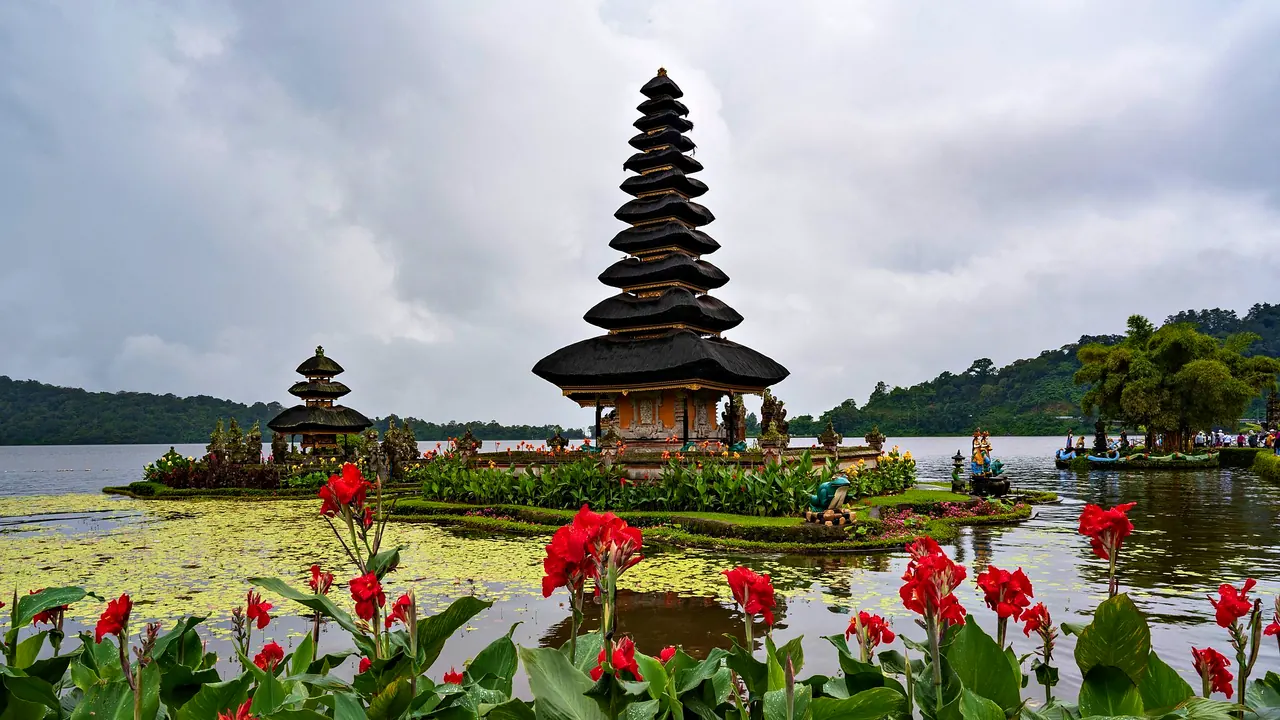
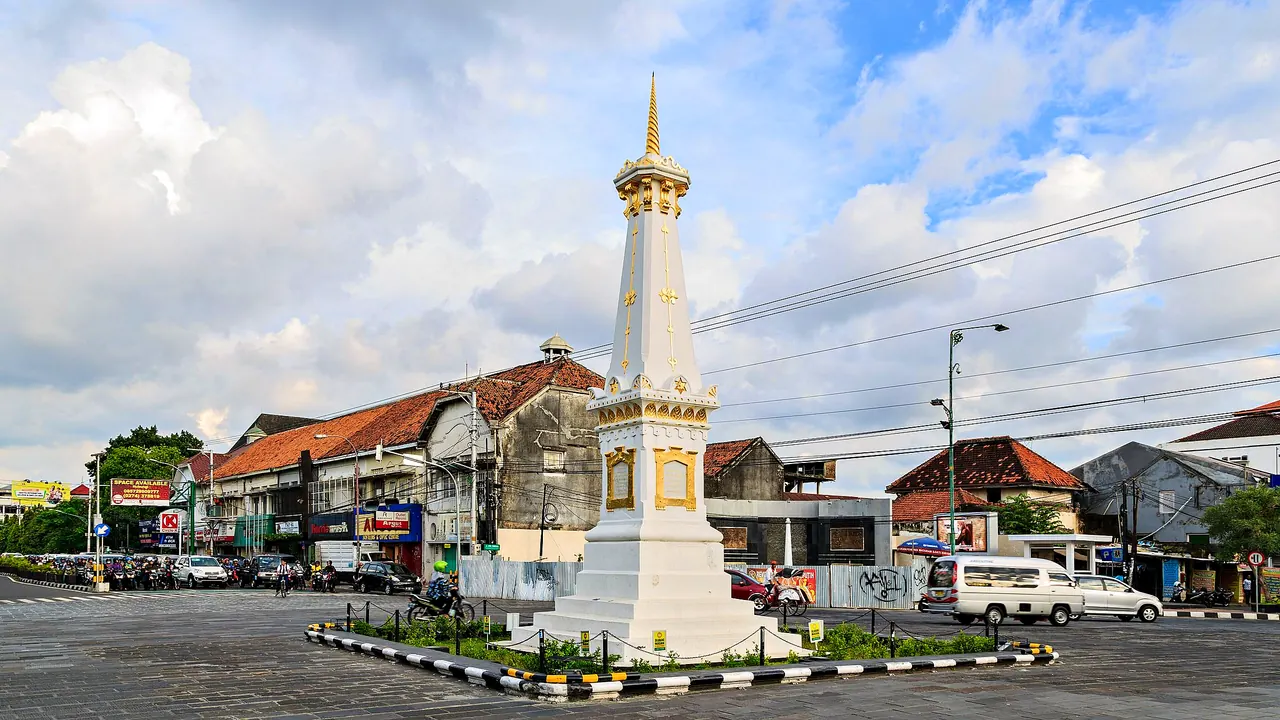
Photos: Bali by Evelin Magnus, Pexels License; Yogyakarta by CEphoto, Uwe Aranas, CC BY-SA 3.0, cropped.
Bali or Yogyakarta?
Our verdict in twelve categories, each scored against the same fixed benchmark cities, and the climate month by month, so you can choose for your trip.
Choose Bali for
- beaches
- wellness
- nightlife
Bali is the choice for a vacation built around the sea and slowing down. Its south coast gives you surf beaches, calm reef lagoons and cliff coves, Ubud adds yoga, spas and nightly dance, and the volcanic interior and dive sites fill the active days. It suits a longer stay with one or two well-chosen bases. You pay for that with heavy traffic, and a second, international price level in the smarter beach areas.
Choose Yogyakarta for
- day trips
- prices
- getting around
Travellers who care more about monuments than beaches will find Yogyakarta the better base. Borobudur and Prambanan are both an easy drive away, and the city itself is a working sultanate with a palace, court arts and Java's batik and silver crafts. It costs noticeably less than Bali, and a few days are enough. Evenings are spent over coffee at roadside carts rather than in bars, and there is no swimming coast to fall back on.
Scoreboard
Twelve categories on one fixed scale from 0 to 100. The shaded stretch is the gap between the two.
Your match
Pick a travel style or drag the sliders, and both match scores follow your weighting.
Wins on beaches and wellness with your weighting.
Wins on day trips and prices with your weighting.
What matters to you?
Category by category
What the scores mean for a trip.
Beaches & swimming
This is the widest gap between the two. Bali lives by its beaches. Kuta, Seminyak and Canggu are good for surfing and sunsets, Sanur and Nusa Dua sit behind reefs with shallow, calm water, and the Bukit peninsula has white-sand coves such as Padang Padang and Bingin under limestone cliffs.
Yogyakarta is inland, and the Indian Ocean beaches an hour south, like Parangtritis, have black sand and rips too strong to swim in. The Gunungkidul coves are prettier and have a few pools for paddling, but they are a two-hour outing, not somewhere to spend a week.
Food & drink
Bali has the wider table. Because the island is Hindu, pork is central, and babi guling, bebek betutu and sate lilit give it a cuisine unlike the rest of Indonesia. On top of that come the coffee roasters, plant-based kitchens and tasting menus of Canggu, Seminyak and Ubud.
Yogyakarta's cooking is sweeter and simpler, built around gudeg and the angkringan carts where people sit on mats eating rice parcels and drinking charcoal-dropped kopi joss. It is cheap, social and very local. But international range and fine dining are thin, and alcohol barely features.
Culture & sights
Bali comes out ahead because its heritage is everywhere. There are daily offerings on the pavements, ceremonies in every village, the sea temples of Tanah Lot and Uluwatu, Besakih on Mount Agung and the UNESCO-listed subak terraces of Jatiluwih. Ubud adds painting museums and the Goa Gajah cave, though reaching the major temples takes long drives.
Yogyakarta's own sights are more compact and courtly. There is the sultan's Kraton, the water palace of Taman Sari with its mural-painted kampung, the puppets and krises of Sonobudoyo, and the old silversmith capital of Kotagede. They fill two or three days. The great monuments that bring most visitors lie outside the city, and they are covered under day trips.
Nightlife
For a proper night out, Bali is far ahead, though only in its southwest corner. You can spend the afternoon by a pool at a beach club in Seminyak, Canggu or on the Uluwatu cliffs and stay as the DJs start. Canggu bar-hops along rice-field lanes, Seminyak has the cocktail lounges, and Kuta and Legian stay loud until the early hours.
Yogyakarta's evenings are busy but run on tea and coffee. Students fill the roadside carts late, and families ride light-covered pedal cars round Alun-Alun Kidul. Beer and cocktails mostly mean the small guesthouse bars of Prawirotaman.
Nature & outdoors
Both sit in volcanic country, but Bali gives you more to do in it. You can make the pre-dawn climb up Batur, walk through the crater lakes and waterfalls of Munduk, and see the rice valleys of Sidemen. Then there is the sea, with world-known surf on the Bukit, the Tulamben wreck and the manta rays off Nusa Penida, which Yogyakarta has nothing to match.
Yogyakarta's outdoors centres on Merapi, explored by jeep across its lava fields, with Merbabu as an overnight climb. Its limestone south adds something Bali lacks: caves. You can abseil into the Jomblang shaft or float through Goa Pindul on a tube.
Day trips
Here Yogyakarta is clearly stronger, and its outings are the main reason to go. Borobudur is about an hour and a half north and Prambanan less than an hour east, with Sewu, Plaosan and Ratu Boko close by. A simple train ride reaches Solo's palaces and batik markets, and beyond it are Sangiran and the mountain temples of Sukuh and Cetho.
In Bali, the main sights are part of the stay itself, so the separate outings are smaller. You can visit the old Bali Aga villages of Tenganan and Penglipuran, or take a boat to Nusa Lembongan. Traffic means most visitors manage only one or two.
Good for families
Bali is much easier with children, as long as you base yourself in Sanur or Nusa Dua. There you get calm reef water, flat beachfront paths, kids' clubs and villas with private pools. A water park, a safari park and the Ubud monkeys fill the other days, though the surf beaches' rips and the long drives need care.
Yogyakarta welcomes children just as warmly, and its zoo, the Taman Pintar science park, Merapi jeep rides and cave tubing suit older ones. With no swimmable beach, the heat, the scooters and the early temple starts make it harder work. A hotel pool matters.
Getting around
Neither is easy, but Yogyakarta is less tiring. Its centre around Malioboro, the Kraton and Taman Sari can be walked, with becaks and horse carts for short hops, and the commuter train to Solo is simple. For Borobudur and Merapi you still hire a driver.
Bali has no public transport a visitor can really use, and the stretch from the airport to Canggu and Uluwatu is often jammed. Pavements are patchy, and the north and east are long mountain drives. It works best if you choose your bases carefully and treat long journeys as full days out.
Shopping & style
Both are craft destinations, but Bali has more range. Along the road to Ubud, Celuk makes silver, Mas woodcarving and Batubulan stone carving. Seminyak and Canggu add designer-run boutiques for linen, swimwear, ceramics and furniture, which Yogyakarta lacks.
Yogyakarta is the place for batik in particular, from hand-drawn pieces in workshops to printed cloth in Beringharjo market. Kotagede has filigree silver, Kasongan has its potters, and there are wayang puppets and masks too. Beyond those crafts it is mostly malls.
Affordability
Yogyakarta is the cheaper of the two, and evenly so. Street food, guesthouses, becaks and drivers all cost little, as do spa treatments. The steep foreign-visitor fees at Borobudur and Prambanan are often the biggest single cost.
Bali gives a lot of comfort for the money, especially pool villas and massages inland around Ubud and Sidemen. But it has a second price level. Beach clubs, brunch cafés and clifftop resorts in Seminyak, Canggu and Uluwatu charge close to Western prices, and imported drinks are heavily taxed.
Live music & performing arts
The two are well matched, but their traditions differ. Bali's dance is village and temple art. There are Legong and Barong in Ubud's palace courtyards most nights, the Kecak chanted on the Uluwatu cliffs at sunset, and dances performed for the gods at temple festivals.
Yogyakarta's is court art, more formal and classical. Its set piece is the Ramayana ballet on the open-air stage with Prambanan floodlit behind. The Kraton holds gamelan and court dance, and the arts institute supports a contemporary scene, mostly in Indonesian.
Wellness & relaxation
Bali is one of the places people travel to just to unwind, and Ubud is the centre of it. It has yoga and meditation retreats, spas above river gorges, cheap Balinese massage and the purification ritual at Tirta Empul. There are hot springs at Banjar and Lake Batur, and quiet coasts at Amed and Sidemen.
Yogyakarta's offer is narrower but distinct. It has the royal lulur scrub with a flower bath, and jamu tonics sold from baskets. For quiet you have to leave the noisy centre for the villas on the cooler slopes towards Merapi, and there are no hot springs.
When should you go?
Pick your month. The climate figures are measured averages, not a forecast.
Bali in July
Yogyakarta in July
Daytime high, °C
Rainfall in the month, mm
Where the figures come from
Yogyakarta has no weather station within reach, so its figures come from a gridded climate model rather than a measured record, and read a broad area rather than one spot.
Temperature and rainfall are climate normals, averaged over the years shown. Bali: 1991-2020 normals, Denpasar / Ngurah-Rai (3.5 km from centre). Yogyakarta: 2001-2020 normals, NASA POWER reanalysis grid, no weather station within 90 km.
Both places are warm all year, so the real question is rain. Around Bali's southern resorts the wet season runs from about November to March and peaks in January at close to 400mm. May to October is dry, clear and sunny, with August the driest and sunniest month. The sea stays warm enough to swim in every month and never falls much below 26°C. Daytime highs sit around 29°C to 32°C all year, which is fine on the beach but hot for walking temple grounds at midday, so the mornings are best for sightseeing.
Yogyakarta is a degree or two cooler by day, but its wet season lasts longer. April and May are still noticeably wet, and the reliably dry window is July to September, with August down to about 31mm. That is the time for Borobudur at dawn, jeep tours on Merapi's slopes and the overnight climb up Merbabu. If you are combining the two, the middle of the year suits both. In the shoulder months of April, May and October, Bali gets clearly less rain.
Which traveller are you?
For a beach and sun trip, Bali wins easily. It has surf on the west coast, calm reef-sheltered lagoons at Sanur and Nusa Dua, and pale coves under the Bukit cliffs. Yogyakarta's coast is dark sand with dangerous surf, better for watching than swimming.
On a relaxing and wellness trip, Bali is the clear pick. Ubud's yoga studios, retreats and rice-field spas, plus hot springs at Banjar and Lake Batur, make rest the point of the stay. Yogyakarta has good lulur scrubs and jamu, but the city is hot and noisy.
On a trip on a tight budget, Yogyakarta goes further. Angkringan meals, guesthouses, becak rides and drivers cost very little, and only the temple fees stand out. Bali can be cheap too, but its beach clubs and brunch spots tempt you into Western prices.
Before you go
| Measure | Bali | Yogyakarta |
|---|---|---|
| Official language | Indonesian | Indonesian |
| Currency | Rupiah (IDR) | Rupiah (IDR) |
| Sockets | CF50 Hz | CF50 Hz |
| Driving side | Left | Left |
| Time zone | UTC+8 | UTC+7 |
| Emergency number | 112 | 112 |
| Elevation | - | 113 m |
| Main airport | Denpasar I Gusti Ngurah Rai International Airport (DPS)64 non-stop destinations | Yogyakarta International Airport (YIA)39 km from centre20 non-stop destinations |
By the numbers
| Measure | Bali | Yogyakarta |
|---|---|---|
| Population | 4,404,300 | 422,732 |
| People per km² | 782 | 13,007 |
| Museums within 10 km | - | 38 |
| UNESCO World Heritage sites within 50 km | - | 3 |
| Swim season, months above 21 °C | 12 months | 12 months |
Where else could you go?
Every comparison below shares a destination with this one, so you can follow Bali or Yogyakarta somewhere new.