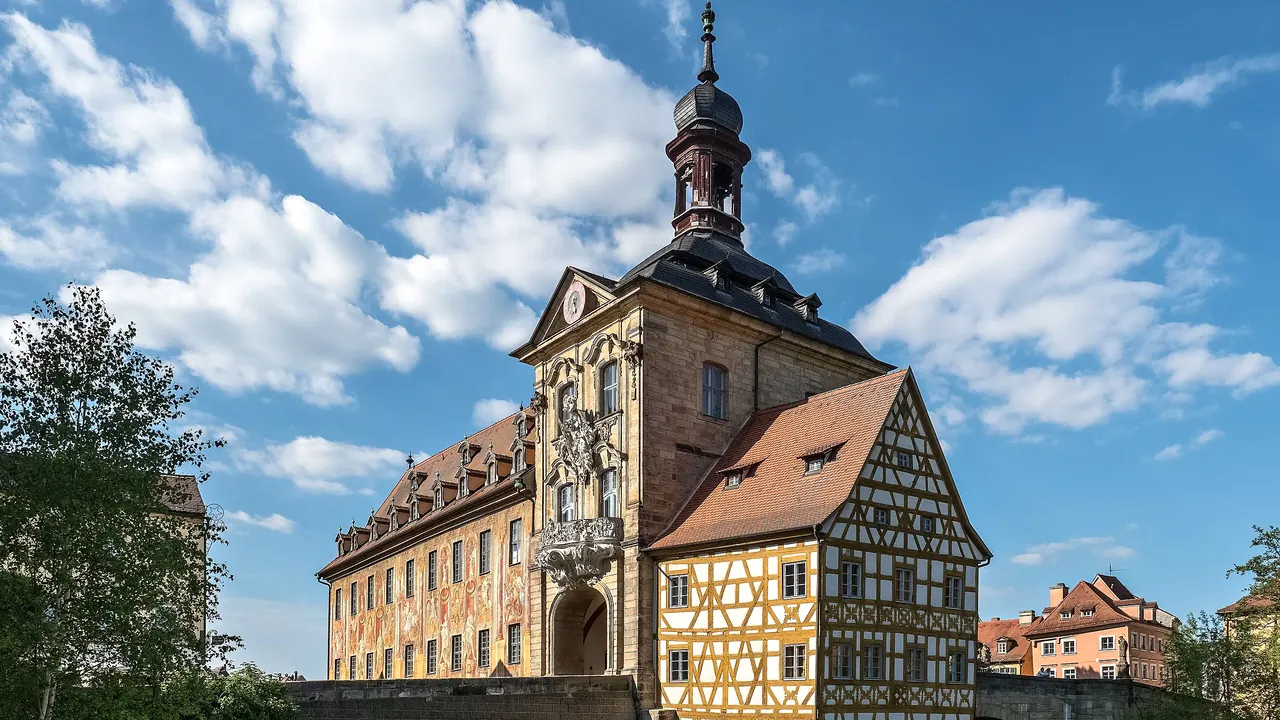
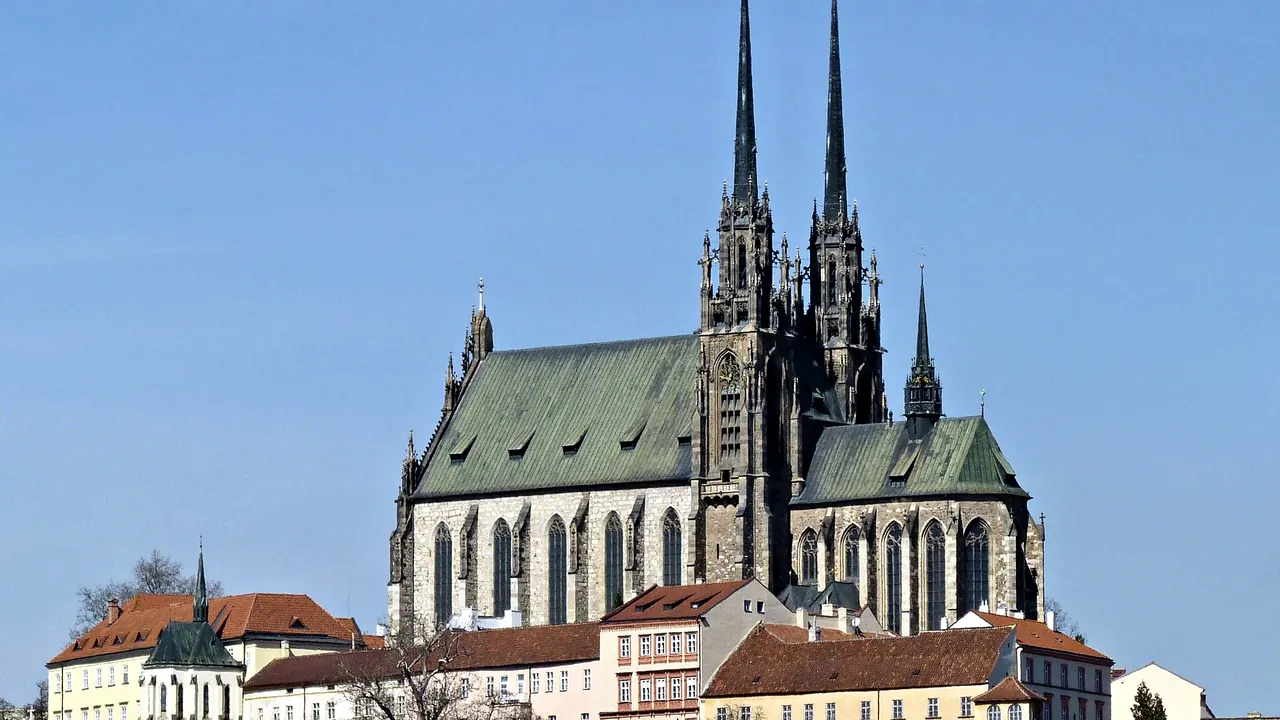
Photos: Bamberg by Ermell, CC BY-SA 4.0, cropped; Brno by Michal Klajban, CC BY-SA 3.0, cropped.
Bamberg or Brno?
Our verdict in twelve categories, each scored against the same fixed benchmark cities, and the climate month by month, so you can choose for your trip.
Choose Bamberg for
- wellness
- food and drink
- culture and sights
Bamberg suits travellers who want to wander one of Germany's most complete old towns and then settle into its brewery taverns and hillside beer cellars. The townscape on its seven hills is the attraction in itself, and the beer culture built around smoky Rauchbier goes deeper than anything Brno pours. Its slow pace, with thermal brine pools a short train ride away, also makes it the better place to unwind.
Choose Brno for
- nightlife
- prices
- live music and the arts
Choose Brno for a cheaper and more varied base with more going on after dark. Evenings run to cocktail bars and Moravian wine, the stages put on Janacek opera and ballet, and trams and regional trains bring UNESCO chateaux, cave country and even Vienna within a day's reach. Families will also find more made for children, from the science centre to the boat ride through the Punkva Caves.
Scoreboard
Twelve categories on one fixed scale from 0 to 100. The shaded stretch is the gap between the two.
Your match
Pick a travel style or drag the sliders, and both match scores follow your weighting.
Too close to call, 2 points apart
Wins on wellness and food and drink with your weighting.
Wins on nightlife and prices with your weighting.
What matters to you?
Category by category
What the scores mean for a trip.
Beaches & swimming
Neither city is for beach lovers. In both, swimming is a local summer habit rather than a reason to visit. Bamberg keeps it close to home, with its old river bathing spot in the Hain park and gravel-pit lakes on the edge of town. Brno's swimmers take a tram and then a river boat out to the reservoir on the Svratka, where algae can spoil the water in hot spells, or drive an hour south to the Nove Mlyny lakes below the Palava hills.
Food & drink
Bamberg eats and drinks better, mainly because of its beer. Smoky Rauchbier poured from wooden barrels in centuries-old brewery taverns, summer evenings in the Bierkeller under chestnut trees and plates of Schäufele with dumplings give a meal there a strong sense of place that few towns its size can match.
Brno's Czech cooking covers similar hearty ground with svickova, goulash and roast pork, but the food itself is less distinctive. Its strength is in the glass: Moravian wine from vineyards less than an hour south, specialty coffee and carefully made cocktails. Neither city has much variety or fine dining.
Culture & sights
In Bamberg the whole old town is the sight. It is an intact, UNESCO-listed townscape spread over seven hills, with the four-towered Imperial Cathedral and the Bamberg Horseman above and the frescoed Old Town Hall on its island in the Regnitz below. Walking through it is the experience, and it hangs together in a way Brno's centre does not.
Brno's appeal is more modern and more spread out. Villa Tugendhat and the city's interwar functionalist buildings are the main draw, backed by the Moravian Gallery, the Mendel Museum and the mummified monks of the Capuchin Crypt. Its museums are stronger than Bamberg's small ones, but the historic core is compact and two or three days covers it.
Nightlife
Brno has the livelier evenings. In term time students fill the bars around Jakubske namesti until late, and the city's cocktail bars, hidden behind unmarked doors and down cellar steps, are worth going out for in themselves. Wine bars pouring Moravian wine and beer pubs cover the cheaper end.
Bamberg's nights are slower and built around beer: brewery taverns after work, the student bars of the Sand quarter and long summer evenings in the hillside cellars. Neither city has much in the way of clubs. In Bamberg, a proper big night out means taking the train to Nuremberg.
Nature & outdoors
The countryside around both cities is gentle limestone and woodland rather than mountains, and each is a good base for marked trails and long-distance cycling. The difference lies in the main attraction.
From Bamberg it is Franconian Switzerland, with rock towers, castle-topped crags and climbing, as well as the Steigerwald beech forests and village-to-village brewery walks. From Brno it is the caves of the Moravian Karst, where a boat follows an underground river below the Macocha Abyss, with the Palava ridge and the Dyje valley of Podyji National Park further south.
Day trips
Both are well placed on the railway, but Brno has the longer list. Within an hour or two lie the Lednice-Valtice estate, the Austerlitz battlefield, Kromeriz, Trebic, Telc and Zelena Hora, a run of UNESCO sites that is hard to equal. Vienna and Bratislava both also fit into a day.
Bamberg's options are good too, though they all belong to one region: Nuremberg's castle, the Würzburg Residence, Coburg, Bayreuth and the basilica of Vierzehnheiligen, with Rothenburg at the end of a long day. It shows you Franconia in depth rather than two countries and their capitals.
Good for families
Both cities are safe and relaxed with children, but Brno has more made for them. The VIDA science centre, the zoo on its wooded hillside, the prehistory displays at the Anthropos pavilion and the planetarium on Kravi hora can fill several days, and the cave boat in the Moravian Karst is usually the highlight.
Bamberg relies on simpler pleasures: playgrounds in the Hain, rowing boats on the Regnitz, a leisure pool with slides and beer gardens where children play among the tables. Its sights are mostly churches, and the cobbled climb to the cathedral is hard going with a pushchair.
Getting around
Both centres are small enough to walk, and neither city needs a car. Bamberg is more purely a walking town, with the island town, cathedral hill and Little Venice minutes apart, bicycles on the flat lower town and buses for everything else.
Brno relies on its trams to reach outlying sights such as Villa Tugendhat and the reservoir. Its single ticket also covers regional trains across South Moravia, which makes day trips simpler. Brno's station is at the edge of the old town, while Bamberg's is a fair walk out.
Shopping & style
In both cities shopping is a sideline, with chain stores along the pedestrian streets and a few independent bookshops. The things worth taking home differ. In Bamberg they are smoked beer from the brewery shops, produce from the market gardens and finds from the antique dealers near the cathedral. In Brno it is Moravian wine bought straight from the cellars, along with vintage and design shops in the old-town arcades and large malls by the station.
Affordability
Brno is clearly the cheaper place to stay. Hotels and apartments cost little for central Europe, weekday lunch menus are very good value, and tram tickets and museum entries barely register. Only cocktails and specialty coffee push the bill up, though big trade fairs can fill the rooms.
Bamberg is reasonably priced for Germany, with cheap local beer and tavern meals that cost less than in the big cities. Still, its prices are Western European, and old-town rooms get scarcer and dearer at weekends.
Live music & performing arts
Brno has the fuller stage life, and Janacek's legacy runs through it. The National Theatre Brno stages opera and ballet in the Janacek Theatre, drama at the ornate Mahen Theatre and performances at the historic Reduta, where the young Mozart once played. There is also a Philharmonic season and a festival devoted to the composer.
Bamberg's offer is narrower but serious: the internationally known Bamberg Symphony in its concert hall on the Regnitz, the ETA Hoffmann Theatre and concerts in the cathedral and churches. It has no opera company of its own, though the Bayreuth Festival is an hour away.
Wellness & relaxation
Bamberg is the easier place to unwind. Unhurried mornings by the river and afternoons in shaded beer gardens, in a town that empties of day visitors by evening, already slow things down. The warm brine pools of Bad Staffelstein, half an hour away by train, add real thermal bathing.
Brno has no spa tradition and no thermal springs. Relaxing there means the sauna at a swimming complex or a hotel spa, café afternoons and quiet walks in Luzanky park or on the Spilberk slopes.
When should you go?
Pick your month. The climate figures are measured averages, not a forecast.
Bamberg in July
Brno in July
Daytime high, °C
Rainfall in the month, mm
Temperature and rainfall are climate normals, averaged over the years shown. Bamberg: 1991-2020 normals, Bamberg (2.8 km from centre). Brno: 1991-2020 normals, Brno / Turany (8.4 km from centre).
Both cities have an inland central European climate, and both reach their summer peak of 26°C in July. Late May to mid-September is the time for river bathing and lake swimming. It is also the best time for walking the streets, because neither city gets uncomfortably hot. Summer is the wettest part of the year in both, with July bringing the most rain.
Winter is where they differ. Brno is a little colder, with January highs around 2°C, but much drier: its January rainfall of 22mm is less than half of Bamberg's 47mm. Brno is also the sunnier of the two in every month, so its clear springs make April and May especially pleasant for walking and for the wine country. Bamberg's milder but greyer, damper winter suits short visits to the old town better than long days outdoors.
Which traveller are you?
For a relaxing and wellness trip, Bamberg is the better fit. Its slow rhythm of riverside mornings and long beer-garden afternoons does much of the work, and the warm brine pools of Bad Staffelstein are half an hour away by train. Brno offers only swimming-complex saunas and hotel spas.
On a tight budget, Brno makes money go further. Weekday lunch menus, cheap beer and local wine, and low-cost tram tickets and museum entries all come in below Bamberg. Bamberg's prices are fair but plainly Western European, and its old-town rooms get dearer at weekends.
On a family trip with children, Brno has more to fill the days: the VIDA science centre, a hillside zoo, mammoths at the Anthropos pavilion and the underground boat ride in the Punkva Caves. Bamberg is calm and safe, but it offers mainly playgrounds, rowing boats and a leisure pool.
Before you go
| Measure | Bamberg | Brno |
|---|---|---|
| Official language | German | Czech |
| Currency | Euro (EUR) | Czech Koruna (CZK) |
| Sockets | CF230 V, 50 Hz | CE230 V, 50 Hz |
| Driving side | Right | Right |
| Time zone | UTC+1, UTC+2 in summer | UTC+1, UTC+2 in summer |
| Emergency number | 112 | 112 |
| Elevation | 262 m | 237 m |
| Main airport | Nuremberg Airport (NUE)46 km from centre56 non-stop destinations | Brno-Tuřany Airport (BRQ)8 km from centre40 non-stop destinations |
| Public holidays this year | 12 days | 13 days |
By the numbers
| Measure | Bamberg | Brno |
|---|---|---|
| City population | 77,218 | 402,739 |
| People per km² | 1,414 | 1,750 |
| Museums within 10 km | 11 | 25 |
| UNESCO World Heritage sites within 50 km | 1 | 2 |
Where else could you go?
Every comparison below shares a destination with this one, so you can follow Bamberg or Brno somewhere new.
- Nurembergvs Bamberg
- Rothenburg ob der Taubervs Bamberg
- Viennavs Brno
- Bratislavavs Brno
- Karlovy Varyvs Bamberg
- Frankfurtvs Bamberg