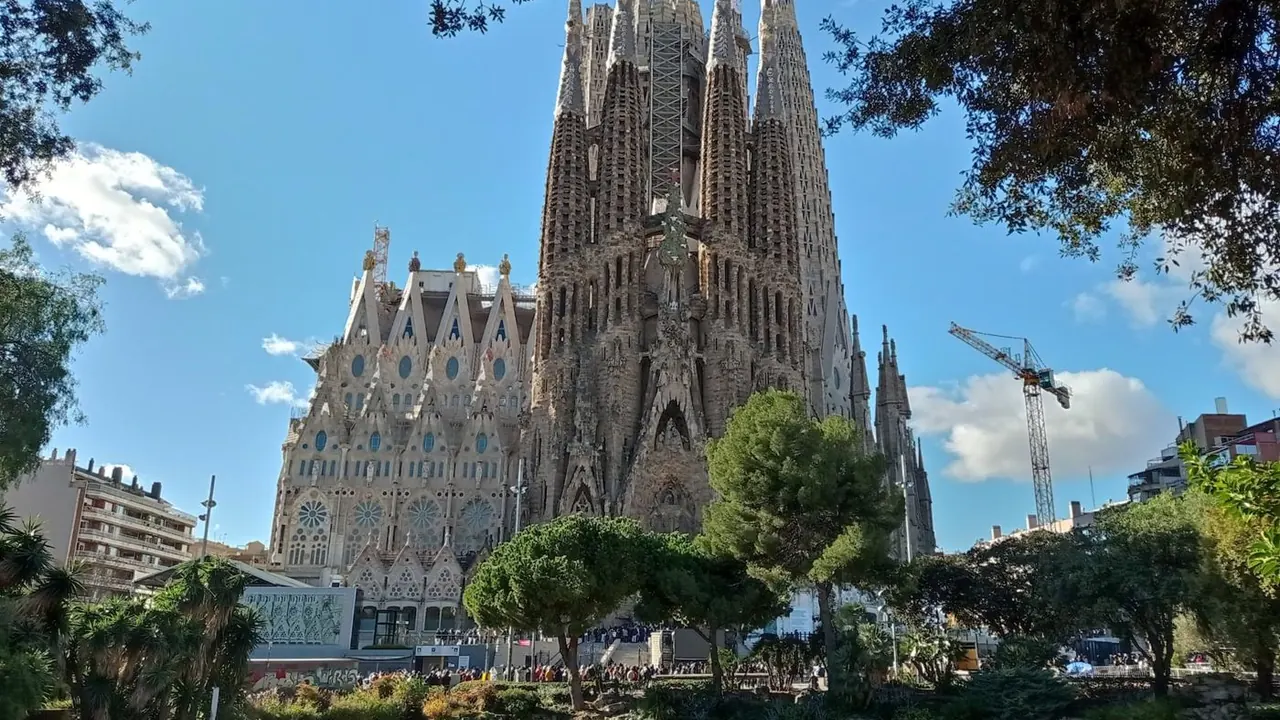
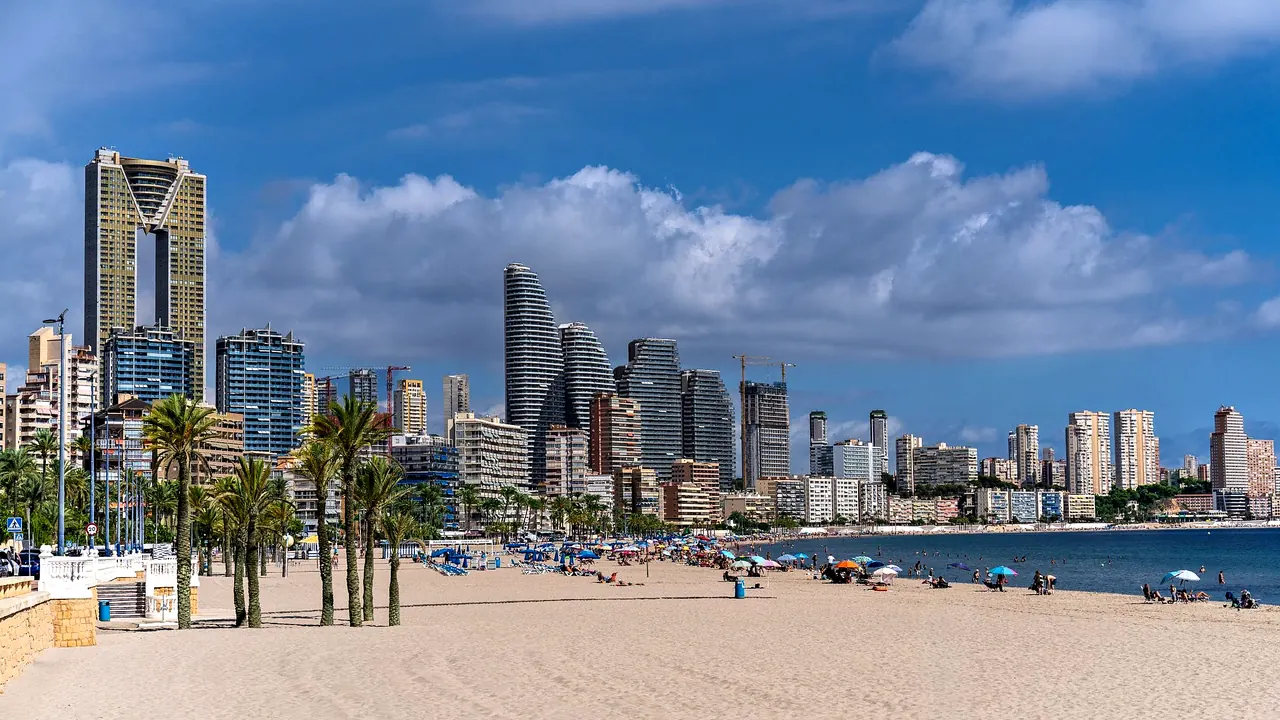
Photos: Barcelona by Canaan, CC BY-SA 4.0, cropped; Benidorm by Emilio Sánchez Hernández, Pexels License.
Barcelona or Benidorm?
Our verdict in twelve categories, each scored against the same fixed benchmark cities, and the climate month by month, so you can choose for your trip.
Choose Barcelona for
- culture and sights
- shopping
- food and drink
Barcelona is the choice when the city itself is the point of the trip. Gaudí's buildings, the Gothic Quarter and the Picasso and Miró collections fill the days, and Catalan cooking and the covered markets fill the gaps between them. The nights in the Born, Gràcia and Poble Sec run late. It costs more, and its beaches are a pleasant extra rather than the reason to go.
Choose Benidorm for
- prices
- beaches
- families
Travellers who want sand, sun and an easy routine for less money will be happier in Benidorm. Its two long beaches have shallow, warmer water and are right outside the hotel. The theme and water parks are on the edge of town, and the winters are mild and bright enough to stay for weeks. Come expecting a resort, though. Sights, restaurants and shops are thin, and anything cultural means a trip to Alicante or Valencia.
Scoreboard
Twelve categories on one fixed scale from 0 to 100. The shaded stretch is the gap between the two.
Your match
Pick a travel style or drag the sliders, and both match scores follow your weighting.
Wins on culture and sights and shopping with your weighting.
Wins on prices and beaches with your weighting.
What matters to you?
Category by category
What the scores mean for a trip.
Beaches & swimming
Barcelona's strip from Barceloneta past Bogatell to Mar Bella is very good for a big city, and you can swim after a morning of sightseeing. But the beaches are man-made, packed in July and August and worked by pickpockets, and for cleaner water you take the train to Sitges or up the Maresme.
Benidorm exists for its beach, and it shows. Levante and Poniente are long, groomed crescents with shallow, clear water. Poniente has more room for families and Levante is nearer the bars, and the sea stays warm enough to swim into October. The rocky coves under the Serra Gelada and the pebbles at Albir add variety without needing a train.
Food & drink
Barcelona is the place to eat well. Catalan cooking is a cuisine in its own right, and you can eat at the counters of Santa Caterina and Sant Antoni markets, drink vermouth late in the morning, and choose anything from workers' set lunches to serious tasting menus. Gràcia, Poble Sec and the Eixample reward wandering, as long as you avoid the Rambla.
In Benidorm the seafront mostly serves full breakfasts, roasts and pizzas for package visitors. The good meals are in the old town's tapas lane and the rice restaurants making arroz a banda and arroz negro, but you have to look for them.
Culture & sights
This is where the two are furthest apart. Barcelona has the Sagrada Família, Casa Batlló and La Pedrera, the Roman walls and medieval squares of the Gothic Quarter, Santa Maria del Mar, and museums from Picasso to the Romanesque frescoes of the MNAC. That is enough for a full week.
Benidorm's heritage is a few whitewashed lanes on the headland, the blue-domed church and the view from the Balcón del Mediterráneo, and the skyline of towers is its most striking sight. For history you go to Altea, Guadalest or Valencia.
Nightlife
Barcelona has more range at night. You can drink cocktails in medieval cellars in the Born, find scruffy bars in the Raval, drink outdoors in Gràcia's squares, eat pintxos along Blai and go to serious electronic club nights that last until dawn. It stays busy midweek too.
Benidorm's nightlife is just as late but narrower: themed pubs, karaoke and drag cabaret in the British quarter behind Levante, stag and hen groups in fancy dress, and big clubs on the edge of town. It is cheap and uncomplicated, and it slows sharply outside summer.
Nature & outdoors
Both have mountains close behind the sea, and Barcelona's are a little easier to reach. The Collserola trails start at the edge of Gràcia and Sarrià, the Carretera de les Aigües gives a flat path with views over the whole city, and Montserrat's pinnacles and the Costa Brava cliff paths are reachable by train or within two hours.
Benidorm's outdoors is more dramatic but needs more effort. The Serra Gelada cliff path starts from Levante beach, but Puig Campana, the Bernia ridge and the Algar waterfalls really need a car. In return it has snorkelling and diving around the island offshore. In both places, walking belongs to spring and autumn.
Day trips
Barcelona sits on fast rail lines, so Girona's walled old town, the Dalí museum at Figueres and Roman Tarragona all make easy days without a car. Montserrat, Sitges and the cava cellars of the Penedès are closer still.
Benidorm's outings are smaller in scale: white Altea and painted Villajoyosa next door, Guadalest's castle on its rock, and Alicante by the coastal tram. Elche's palm grove and Valencia are reachable, but Valencia at two hours each way makes a long day.
Good for families
Both work well with children, in different ways. Barcelona gives a city break with the aquarium, the CosmoCaixa science museum and the Tibidabo funfair, and Gaudí's buildings appeal to children too. But the narrow old streets are a struggle with a pushchair.
Benidorm is the simpler beach week. Its gentle, calm water and flat promenades are easy with small children, and the theme park, water park, marine park and zoo are all on the edge of town. Staying near Poniente keeps you away from the adult nightlife behind Levante.
Getting around
Barcelona's flat centre and simple metro mean you rarely need to think about transport. You can walk from the Gothic Quarter to Gràcia, the trams and local trains use the same tickets, and only Park Güell, Montjuïc and Tibidabo involve a climb or a funicular.
In Benidorm, getting around the town is just a walk along the two promenades, and buses and the coastal tram cover the seafront, the parks, Alicante and Altea. The inland villages and mountains, though, are hard to reach without a car or an organised excursion.
Shopping & style
Barcelona is a real shopping city. The Passeig de Gràcia has fashion houses among the Modernista façades, and the Born has independent designers, Gràcia has craft shops and the Raval has vintage and records. Espadrilles, ceramics and conserves make good things to take home.
Benidorm sells what a beach week needs: swimwear, sunglasses, cheap electronics and souvenirs, plus weekly markets full of clothes and fakes. For anything better, people take the tram to Alicante.
Affordability
Benidorm is much the cheaper trip. Its huge supply of rooms and all-inclusive packages keep rates low most of the year, winter is especially good value, and drinks and set lunches cost less than in most Spanish resorts. Only high summer and a family day at the parks push costs up.
Barcelona costs more than most of Spain, mainly because of its hotels, plus the tourist tax and the Gaudí entry fees. You can keep food costs down with weekday set lunches and market counters.
Live music & performing arts
Barcelona has a serious arts calendar. There is opera and ballet at the Liceu, concerts under the stained-glass ceiling of the Palau de la Música, the symphony orchestra at L'Auditori, and jazz cellars and flamenco stages in the old town. Sónar, Primavera Sound and the Grec festival on Montjuïc fill the early summer.
Benidorm's evenings mean dinner-show spectaculars, tribute acts, comedians and drag cabaret, fun but light. Classical music or drama means a trip to Alicante or Valencia.
Wellness & relaxation
Neither is a place for a spa retreat, but Barcelona has slightly more to offer. Its Arab-style bath houses in the old town have warm pools and massages, and the Collserola paths and Montjuïc gardens are quiet places to walk in the evening, even though the centre is noisy and runs late.
In Benidorm, wellness means hotel spas and saunas. The town's calm depends on the season: loud in summer, slow and sunny from November to March, when long stays on the quieter Poniente side suit people who mainly want to rest.
When should you go?
Pick your month. The climate figures are measured averages, not a forecast.
Barcelona in July
Benidorm in July
Daytime high, °C
Rainfall in the month, mm
Where the figures come from
Benidorm's temperatures are measured 38 km from the centre, at Alicante.
Benidorm has no rain gauge within 25 km of the centre, so its rainfall comes from a gridded climate dataset read at the city rather than from a gauge further away.
Temperature and rainfall are climate normals, averaged over the years shown. Barcelona: 1991-2020 normals, Barcelona / Aeropuerto (14.4 km from centre). Benidorm: 1991-2020 normals, Alicante (38.1 km from centre).
From June to September both towns are warm enough for the beach, but Benidorm is a little hotter and much drier. Its summer has almost no rain, its sea reaches about 26°C in August and stays fine for swimming into October, and its winter afternoons, around 17°C in January with plenty of sun, are a few degrees milder than Barcelona's. July and August are hot in both, and hotter in Benidorm, so walking around at midday is hard work.
The best months for sightseeing in Barcelona are May and June, then late September and October, when the streets are comfortable to walk. Its wet spell comes in autumn, with more than 80mm in both September and October, roughly double what Benidorm gets then. From November to March Barcelona is cool and greyer. That is fine for museums but not for the beach, and Benidorm's winter is the sunnier of the two.
Which traveller are you?
On a culture and arts trip, Barcelona is the clear choice. The Modernista buildings, the Gothic Quarter, the Picasso Museum and the MNAC, plus evenings at the Liceu or the Palau de la Música, will fill a week. Benidorm has an old-town lookout and not much else.
For a beach and sun trip, Benidorm is the better base. Levante and Poniente are long, groomed and shelve gently into the water, the sea is a touch warmer, and summers are drier and sunnier. The sand starts at the hotel door, not a metro ride away.
On a trip on a tight budget, Benidorm makes it easier. Barcelona on little money means seeing Gaudí's façades from the pavement, walking the Gothic Quarter and eating lunch at market counters. In Benidorm the main pleasure, the beach, costs nothing, and the coastal tram makes Altea a cheap outing.
Before you go
| Measure | Barcelona | Benidorm |
|---|---|---|
| Official language | Spanish | Spanish |
| Currency | Euro (EUR) | Euro (EUR) |
| Sockets | CF230 V, 50 Hz | CF230 V, 50 Hz |
| Driving side | Right | Right |
| Time zone | UTC+1, UTC+2 in summer | UTC+1, UTC+2 in summer |
| Emergency number | 112 | 112 |
| Elevation | 9 m | 15 m |
| Main airport | Josep Tarradellas Barcelona-El Prat Airport (BCN)13 km from centre235 non-stop destinations | Alicante-Elche Miguel Hernández Airport (ALC)48 km from centre126 non-stop destinations |
| Public holidays this year | 14 days | 13 days |
By the numbers
| Measure | Barcelona | Benidorm |
|---|---|---|
| City population | 1,731,649 | 77,327 |
| People per km² | 17,094 | 2,008 |
| Museums within 10 km | 95 | 5 |
| UNESCO World Heritage sites within 50 km | 3 | 1 |
| Swim season, months above 21 °C | 3 months | 5 months |
Where else could you go?
Every comparison below shares a destination with this one, so you can follow Barcelona or Benidorm somewhere new.
- Alicantevs Benidorm
- Gironavs Barcelona
- Valenciavs Benidorm
- Carcassonnevs Barcelona
- Toulousevs Barcelona
- Zaragozavs Barcelona