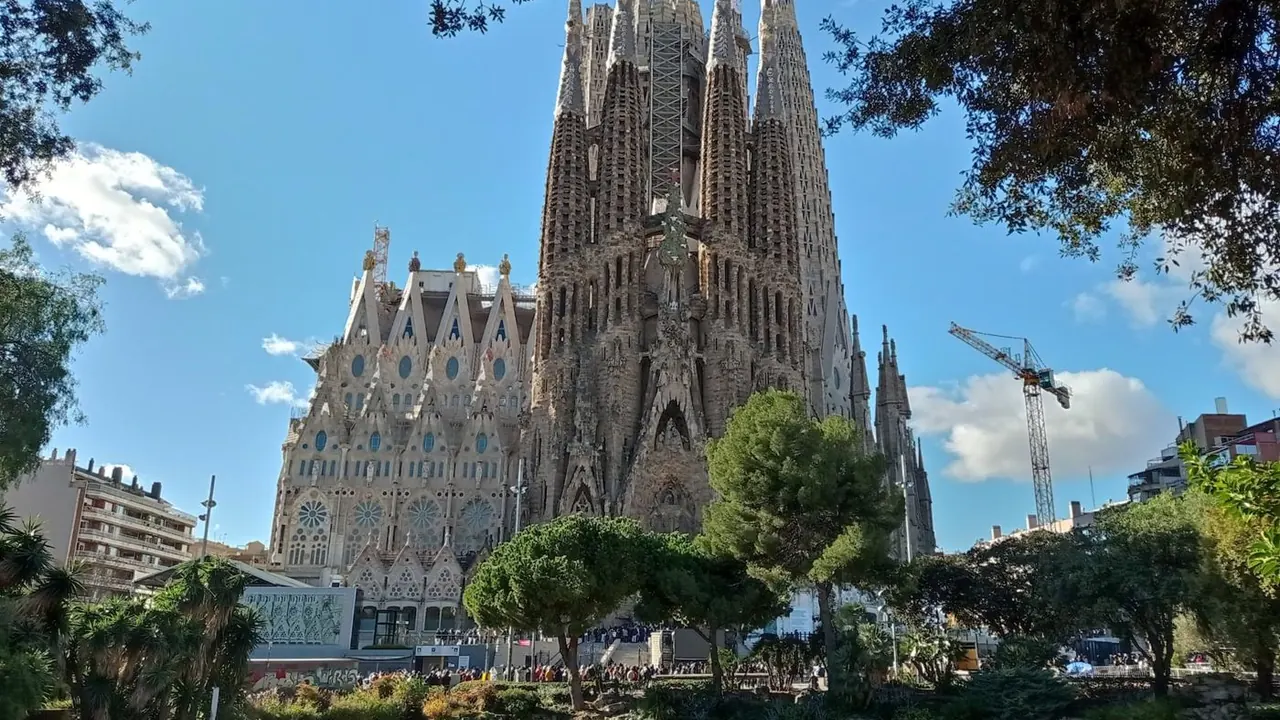
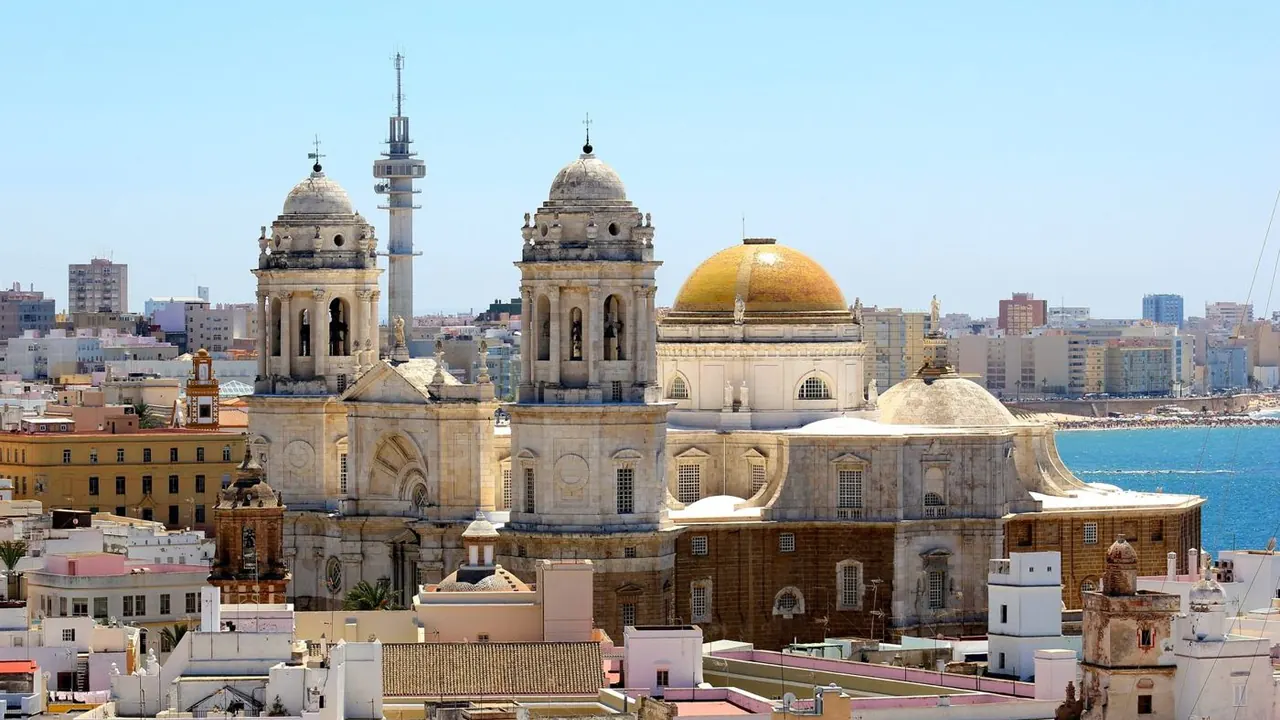
Photos: Barcelona by Canaan, CC BY-SA 4.0, cropped; Cadiz by Bronch, CC BY-SA 3.0 ES, cropped.
Barcelona or Cadiz?
Our verdict in twelve categories, each scored against the same fixed benchmark cities, and the climate month by month, so you can choose for your trip.
Choose Barcelona for
- shopping
- nightlife
- culture and sights
Barcelona is the choice for a trip built around the city itself. Gaudí's buildings, the Gothic Quarter and a deep museum list fill a week. You eat at market counters and in serious tasting-menu restaurants, and the nights run until dawn. The metro, the shopping streets and the children's attractions add to it. It suits first-time visitors, night owls and anyone who wants a full programme every day.
Choose Cadiz for
- prices
- beaches
- wellness
If you want the sea and a slower rhythm, go to Cadiz. Its old town on the peninsula takes two or three unhurried days, the Atlantic beaches start at the edge of town, and fried fish and sherry cost less than Barcelona's equivalents. It works best as a base: sherry towns, white villages and Seville are all within reach.
Scoreboard
Twelve categories on one fixed scale from 0 to 100. The shaded stretch is the gap between the two.
Your match
Pick a travel style or drag the sliders, and both match scores follow your weighting.
Wins on shopping and nightlife with your weighting.
Wins on prices and beaches with your weighting.
What matters to you?
Category by category
What the scores mean for a trip.
Beaches & swimming
These two are close for a beach trip, with Cadiz slightly ahead, but the beaches differ in kind. Barcelona's strip from Barceloneta to Mar Bella is man-made and a metro ride from the centre. Its water is warmer, but in July and August the sand is packed, with hawkers and bag thieves working it.
Cadiz is surrounded by the Atlantic. You can swim at La Caleta, the cove between two castles, or find room on the long, natural golden sand of Playa Victoria. The empty strands of the Costa de la Luz are within an hour by car. The catch is the levante wind, which can make a beach day unpleasant for several days in a row.
Food & drink
Barcelona has the broader table: a distinct Catalan cuisine, vermouth before lunch, market halls such as Santa Caterina and Sant Antoni, and everything from workers' set lunches to ambitious tasting menus. You can eat well in Gràcia, Poble Sec and the Eixample for a week without repeating yourself.
Cadiz does one thing very well, which is fish. Cones of fried fish, shrimp fritters and almadraba tuna in the La Viña bars, with chilled manzanilla, make superb eating. Beyond that the range is narrow, and there are few ambitious restaurants in town.
Culture & sights
Barcelona is far richer for sightseeing. The Sagrada Família, Casa Batlló, La Pedrera and Park Güell are found nowhere else. Beneath them lie Roman walls, Santa Maria del Mar and museums of Picasso, Miró and Romanesque frescoes.
The history in Cadiz is older but smaller in scale. There are Phoenician sarcophagi in the Museo de Cádiz, a Roman theatre in the Barrio del Pópulo, the gold-domed cathedral and the room where the 1812 constitution was signed. It rewards two or three days rather than a week.
Nightlife
Barcelona's nights are among the longest in Europe. Each district has its own style, from medieval cellar bars in the Born to the Raval's scruffy bars, Gràcia's crowded squares and the beach clubs of the Port Olímpic. It also has a deep electronic scene, busy even midweek.
Cadiz is a place for evening tapas and late terraces, around La Viña and along the Playa Victoria promenade in summer, with only a small student club scene. The exception is the ten days of Carnival in February, when the whole city parties through the night.
Nature & outdoors
Barcelona has the edge, mainly because its hills start inside the city. The Collserola trails and the Carretera de les Aigües begin at the edge of Gràcia and Sarrià. Montserrat's pinnacles are about an hour away, and the Costa Brava cliff paths and the Montseny range are within two.
The landscapes around Cadiz are flatter and wetter: salt pans and marshes full of flamingos in the bay's natural park, and Doñana across the river from Sanlúcar. Tarifa is the draw for kitesurfing and whale watching in the Strait, and real mountain walking means the drive to Grazalema.
Day trips
Both make excellent bases, but they work differently. From Barcelona, fast trains do most of the work. Girona is under forty minutes away, and Figueres, Tarragona's Roman ruins, Montserrat and Sitges are easy without a car.
From Cadiz, the trains reach Jerez's bodegas and Seville's cathedral and Alcázar, and a ferry crosses to El Puerto de Santa María. The most memorable trips, though, are the white towns of Vejer and Arcos and the Roman ruins at Bolonia, and for those you need a hire car.
Good for families
Barcelona has much more built for children. There is the aquarium, the CosmoCaixa science museum, the zoo in the Ciutadella and the funfair on Tibidabo, PortAventura is an hour away, and Gaudí's buildings look like a storybook. The crowded old town is hard going with a pushchair.
Cadiz suits a simpler beach vacation, with the lifeguarded sand of Playa Victoria and a flat old town with shady parks. Once the beach palls there is little else, beyond castle walls, the camera obscura and the bay ferry.
Getting around
Barcelona's flat centre is easy on foot, and the metro, trams, buses and local trains run on one ticket, so even the uphill sights are within reach. Getting to Park Güell or Tibidabo still means a climb or a funicular.
Cadiz's old town is small, mostly free of cars and easy to cross on foot, with buses down the isthmus and good trains to Jerez and Seville. Its weakness is the wider region: the beaches and villages of the Costa de la Luz are hard to reach without a car.
Shopping & style
The gap shows between the Passeig de Gràcia and Cadiz's Calle Ancha. Barcelona's grand avenue lines up fashion houses beneath Modernista façades, but the real interest lies off it: independent designers in the Born, craft shops in Gràcia, vintage and record shops in the Raval, and the Els Encants flea market by Glòries.
Cadiz's shopping streets around Calle Ancha and Plaza de las Flores keep to high-street chains, family-run shops and a few boutiques. The pleasure is in small things to take home, such as hand-painted fans, ceramics, flamenco fashion and sherry. Anything more serious means a trip to Seville.
Affordability
Cadiz is the cheaper stay. Tapas and fried fish cost little, local transport is cheap, and most sights are cheap or free. Rooms are the exception in July, August and Carnival week, and staying near Playa Victoria helps.
In Barcelona, expensive hotels, the tourist tax and the Gaudí entry fees make sightseeing costly. Set lunches and neighbourhood bars help, but the bill is still higher than in most of Spain.
Live music & performing arts
Opera at the Liceu against flamenco in a Santa María peña sums up how these two stages differ. Barcelona has a full season of opera and ballet, concerts under the stained glass of the Palau de la Música, the symphony orchestra at L'Auditori, serious theatre at the Lliure, jazz cellars in the Gothic Quarter, and Sónar and Primavera Sound each early summer.
Cadiz works on a smaller, more local scale. Its members' peñas keep alive the flamenco of the city that gave the world the alegrías. At the Gran Teatro Falla, the Carnival choirs sing satirical songs about politics and city life. For opera or an orchestra, you need to go to Seville.
Wellness & relaxation
Neither city has a bathing tradition, so spa treatments mean hotels or Arab-style baths. Barcelona's are in its old town, and in Cadiz you go to Jerez or to the resort spas near Chiclana. The real difference is pace. Barcelona's centre is noisy and late, so you have to look for calm in the Collserola or on Montjuïc. In Cadiz the slow days, the siesta and sunset over La Caleta come without any effort.
When should you go?
Pick your month. The climate figures are measured averages, not a forecast.
Barcelona in July
Cadiz in July
Daytime high, °C
Rainfall in the month, mm
Temperature and rainfall are climate normals, averaged over the years shown. Barcelona: 1991-2020 normals, Barcelona / Aeropuerto (14.4 km from centre). Cadiz: 1991-2020 normals, Cadiz Bay / Puntales (5.2 km from centre).
Barcelona and Cadiz share hot summers of much the same strength, and in July and August long walks are best kept to the morning in both. The rain is where they part. Barcelona has the odd summer shower and its wettest months in September and October. Cadiz is almost completely dry from June to August and saves its rain for late autumn, peaking around 89mm in November. Cadiz is also the sunnier of the two all year, and its winters are milder, near 16°C in January against Barcelona's 14°C, so it makes the better winter escape for walking the streets.
For swimming, Barcelona's Mediterranean is the warmer sea. It reaches about 25°C in August and stays a little warmer than the Atlantic at Cadiz into October. The water at Cadiz tops out around 23°C in July and August. In both, the sea is comfortable from June to September, and spring and autumn are the best seasons for sightseeing.
Which traveller are you?
On a culture and arts trip, Barcelona wins clearly. Gaudí's Modernista buildings, the Gothic Quarter, the Picasso Museum and the MNAC fill a week. Add opera at the Liceu and concerts at the Palau de la Música, and Cadiz cannot match the depth.
For a food and nightlife trip, Barcelona has more of both. Catalan cooking, markets like Sant Antoni and a serious tasting-menu scene lead into bars in Born cellars, Gràcia's squares and clubs that fill at two. Outside Carnival, Cadiz's evenings are tapas and terraces.
On a trip on a tight budget, Cadiz goes further. Freidurías, market counters and cheap glasses of sherry keep meals inexpensive, and the sights charge little or nothing. Buses, trains and the bay ferry are cheap too. Barcelona's hotels, tourist tax and Gaudí entry fees add up quickly.
Before you go
| Measure | Barcelona | Cadiz |
|---|---|---|
| Official language | Spanish | Spanish |
| Currency | Euro (EUR) | Euro (EUR) |
| Sockets | CF230 V, 50 Hz | CF230 V, 50 Hz |
| Driving side | Right | Right |
| Time zone | UTC+1, UTC+2 in summer | UTC+1, UTC+2 in summer |
| Emergency number | 112 | 112 |
| Elevation | 9 m | 11 m |
| Main airport | Josep Tarradellas Barcelona-El Prat Airport (BCN)13 km from centre235 non-stop destinations | Jerez Airport (XRY)31 km from centre25 non-stop destinations |
| Public holidays this year | 14 days | 12 days |
By the numbers
| Measure | Barcelona | Cadiz |
|---|---|---|
| City population | 1,731,649 | 109,950 |
| People per km² | 17,094 | 9,087 |
| Museums within 10 km | 95 | 11 |
| UNESCO World Heritage sites within 50 km | 3 | 0 |
| Swim season, months above 21 °C | 3 months | 3 months |
Where else could you go?
Every comparison below shares a destination with this one, so you can follow Barcelona or Cadiz somewhere new.