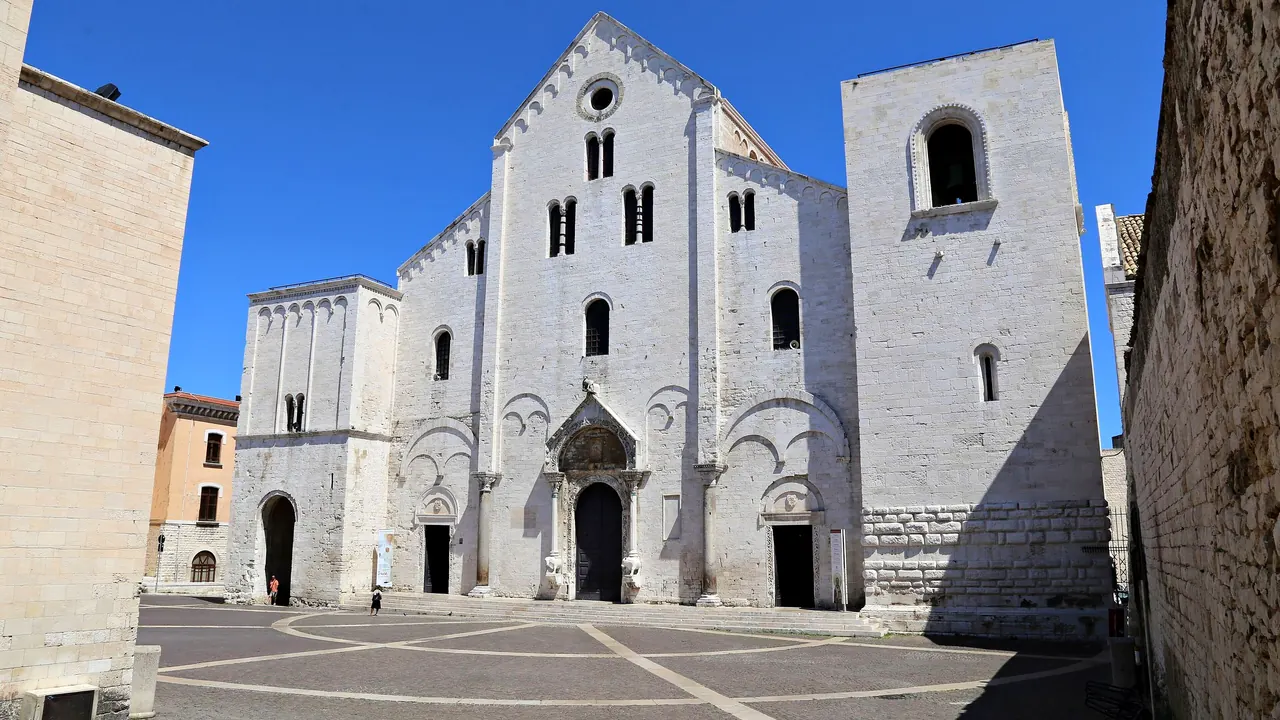
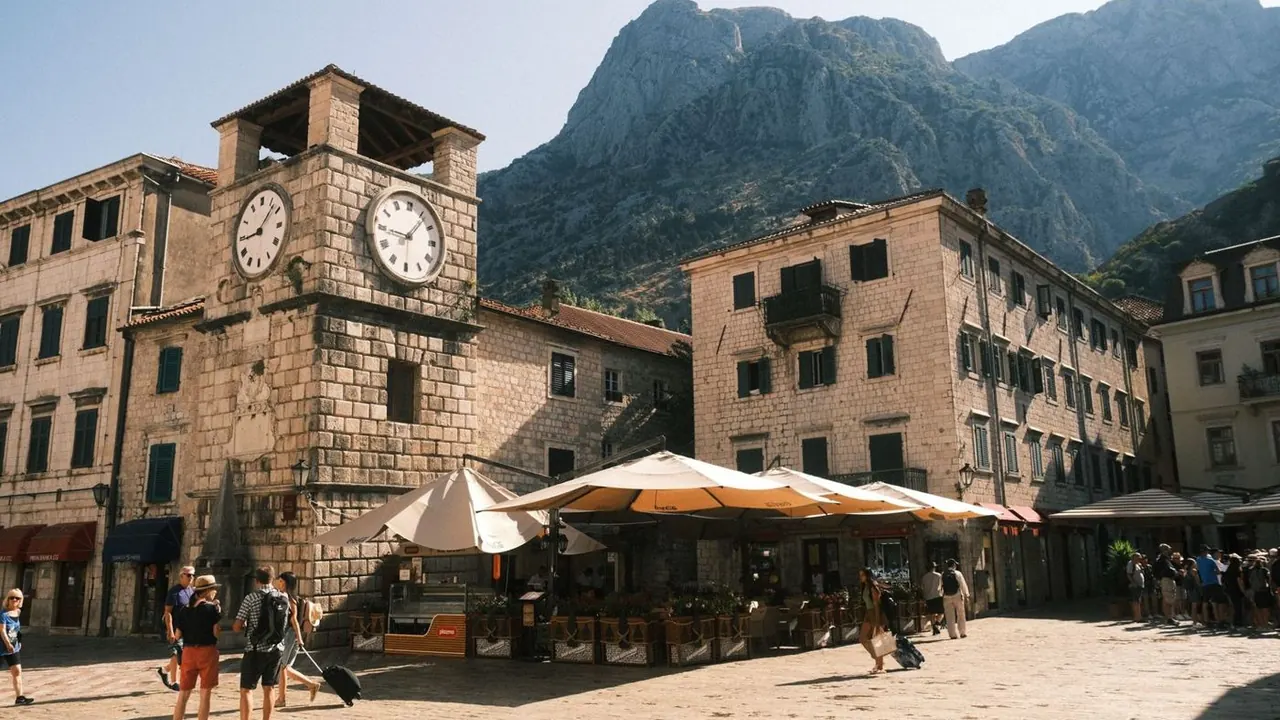
Photos: Bari by Sailko, CC BY-SA 4.0, cropped; Kotor by Muhammed Fatih Beki, Pexels License.
Bari or Kotor?
Our verdict in twelve categories, each scored against the same fixed benchmark cities, and the climate month by month, so you can choose for your trip.
Choose Bari for
- food and drink
- live music and the arts
- nightlife
Bari suits a traveller who wants a working southern Italian city as a base: hand-rolled orecchiette and street food in the old town lanes, late evenings on the piazzas, a night at the opera, and a different trip every day to Matera, the trulli country or the coast at Polignano. It is the better choice for food lovers, families and anyone who wants plenty to do without a car for every outing.
Choose Kotor for
- nature and the outdoors
Choose Kotor when the landscape matters more than the city. The fjord-like bay, the cliffs rising straight from the water and the walks up to the fortress and Lovcen make it a place for walkers, kayakers and people who like quiet evenings in a small walled town. Expect a simpler table and very little going on after dark.
Scoreboard
Twelve categories on one fixed scale from 0 to 100. The shaded stretch is the gap between the two.
Your match
Pick a travel style or drag the sliders, and both match scores follow your weighting.
Wins on food and drink and live music and the arts with your weighting.
Wins on nature and the outdoors with your weighting.
What matters to you?
Category by category
What the scores mean for a trip.
Beaches & swimming
Bari has the edge. It has its own sandy city beach at Pane e Pomodoro, and half an hour south by regional train are the cliff-framed cove at Polignano and the clear inlets around Monopoli.
Kotor has no beach in town. Swimming means concrete platforms and narrow pebble strips along the inner bay, where the water is calm but less clear, and a real beach day means the trip over the hill to Jaz or Sveti Stefan. In both places the beach is an outing rather than the heart of the stay.
Food & drink
Bari is one of the main reasons to choose this side of the Adriatic. Orecchiette are made by hand in the doorways of Bari Vecchia, focaccia barese and sgagliozze are sold from kitchen windows, sea urchins are eaten raw at the fishermen's pier, and the trattoria cooking is generous and cheap, with Primitivo and Negroamaro to drink.
Kotor's best plates, Njegusi ham, mussels from the bay and a glass of Vranac, are good, but the old town's terraces serve the same menu to the same crowds. To eat well you have to head out to the konobas in Dobrota, Prcanj or Perast.
Culture & sights
The two are broadly level, and both reward a day or two rather than a week. What they offer differs in kind. Bari has distinct sights: the Basilica di San Nicola with its pilgrims, the cathedral, the Norman-Swabian castle, the nineteenth-century Murat grid and a modest picture gallery.
Kotor is better taken as a single townscape. Its UNESCO-listed walled triangle of marble lanes, the twelfth-century St Tryphon's cathedral and the walls climbing the cliff to St John's fortress are the point, while museums are few.
Nightlife
Bari is clearly the livelier of the two. Students and young locals fill Piazza Mercantile and Piazza Ferrarese late into summer nights, the bars of the Umbertino streets and the seafront run past midnight, and in high summer the party moves to beach clubs south of the city.
Kotor's evenings are calm by comparison: a drink on a square under the floodlit walls and a few bars open late in season. Anyone after dancing until dawn takes the half-hour trip to Budva.
Nature & outdoors
Here Kotor is far ahead. The bay winds inland between limestone walls more than 1,000m high, and you can walk straight out of the gates onto the Ladder of Kotor or the fortress path. Above the town are the beech woods and karst meadows of Lovcen, and the shoreline is ideal for kayaking.
Bari's outdoors is gentler and further from the door. Apart from the long seafront promenade, it means quiet walks and cycling on the open Alta Murgia plateau an hour inland, the Castellana caves and easy rides through the Valle d'Itria, with no mountains anywhere near.
Day trips
Bari is the stronger base, and many people choose it for the day trips alone. Matera's cave city, the trulli of Alberobello, the white towns of Ostuni and Locorotondo, Castel del Monte, Trani's cathedral on the sea and Baroque Lecce are all within an hour or two.
Kotor has a fine set of trips of its own: Perast and its island church, Herceg Novi, Budva and Sveti Stefan, and the mountain road to Cetinje and the Njegos mausoleum. Beyond those it is a long day to Dubrovnik or Ostrog, so the choice runs out sooner.
Good for families
Bari works better with children, though neither city builds much for them. Families can rely on the sandy city beach, gelato on the evening passeggiata and outings to the Castellana caves, the Fasano safari park and Alberobello.
Kotor's car-free old town is safe and its street cats charm younger children, but the main sight is a steep, exposed fortress climb, and the lanes are packed with day visitors at midday. A boat to Perast's island church and bay swimming from the jetties are the family highlights.
Getting around
Bari is easier to move around. The old town, the Murat streets and the seafront lie side by side on flat ground, a rail link reaches the airport, and regional lines run to Polignano, Trani, Matera and Alberobello, although a car still helps inland.
Kotor's walled centre takes minutes to cross on foot, but leaving it is the hard part. One road circles the bay and jams in summer, buses are infrequent, and most visitors end up hiring a car or driver, with water taxis for some villages.
Shopping & style
Neither city is a shopping destination, but Bari offers more. Via Sparano and the Murat streets have Italian chains and some upmarket boutiques, and the delicatessens sell dried pasta, taralli, oil and Puglian ceramics.
Kotor's lanes are given over to souvenirs, filigree, lace and cat trinkets. The best buys are Vranac, Njegusi ham and honey from the green market, and anyone wanting brands goes to the marina at Tivat.
Affordability
The two cost about the same over a trip, but money goes further in different ways. In Bari the savings are in what you eat: street food, trattoria lunches and cheap local wine, while rooms tighten in July and August and day trips by car add up.
In Kotor the main costs come inside the walls in high summer, when terrace restaurants and hotel rooms charge resort rates. Staying in an apartment in Dobrota or Muo and coming in May, June or September brings the price down noticeably.
Live music & performing arts
Bari has a proper stage, and Kotor does not. The Teatro Petruzzelli, one of Italy's largest opera houses, runs a full season of opera, ballet and concerts, and in summer jazz and open-air music fill the piazzas and the castle, though spoken theatre is in Italian.
Kotor's cultural calendar is seasonal and occasional: classical recitals and choirs in its churches in summer, the carnival and the decorated boats of Boka Night. The rest of the year there is little beyond a terrace musician.
Wellness & relaxation
Neither is a spa destination, and in both proper pampering means a hotel or resort spa. Bari is a little ahead for unwinding, thanks to its slow southern routine of long lunches, an afternoon rest and a seafront stroll, with restored country estates nearby for a real retreat.
Kotor's calm depends on timing. Mornings on the water and evenings after the day crowds leave are peaceful, but midday inside the walls in summer is anything but, so rest-seekers stay along the shore.
When should you go?
Pick your month. The climate figures are measured averages, not a forecast.
Bari in July
Kotor in July
Daytime high, °C
Rainfall in the month, mm
Where the figures come from
Bari has no rain gauge within 25 km of the centre, so its rainfall comes from a gridded climate dataset read at the city rather than from a gauge further away.
Bari's sunshine is measured 77 km from the centre, at Marina Di Ginosa.
Kotor has no rain gauge within 25 km of the centre, so its rainfall comes from a gridded climate dataset read at the city rather than from a gauge further away.
Kotor's sunshine is measured 42 km from the centre, at Podgorica-Grad.
Temperature and rainfall are climate normals, averaged over the years shown. Bari: 1991-2020 (sunshine 1961-1990) normals, Bari / Palese Macchie (7 km from centre). Kotor: 1991-2020 normals, Tivat (4.2 km from centre).
Both cities have the same kind of summer. July and August reach about 30°C, and both seas are warm enough for long swims from late June to September, peaking near 26°C in August. Bari is the drier of the two all year. Its summers are almost rainless, and even its wettest months, October and November, bring only moderate rain. Spring and late September into October are the most comfortable times for walking the old town and touring the Puglian towns, while midsummer afternoons are better spent by the sea.
Kotor is far wetter from autumn to spring, with November around 202mm, so a winter visit often means grey, rainy days in the bay. Its summer is very sunny but hard going on the bare limestone. May suits the fortress climb and the Lovcen trails, though the sea is still cool at 19°C. June and September give you warm water and gentler heat for walking at the same time.
Which traveller are you?
On an outdoors trip, Kotor is the clear pick. Trails start at the town gates and climb to the fortress and the Ladder of Kotor, Lovcen National Park sits above the bay, and kayaking the shoreline is easy. Bari's flat plain offers far less.
For a food and nightlife trip, Bari wins comfortably. Its street food, raw seafood by the pier and Apulian trattorias beat Kotor's repetitive terrace menus, and its piazzas and seafront bars stay busy late, while Kotor's nights out mostly mean going to Budva.
On a family trip with children, Bari is easier. It has a sandy beach in the city, flat car-free lanes and outings such as the Castellana caves and the Fasano safari park. Kotor's main sight is a steep, hot fortress climb, and its proper sandy beaches are a drive away.
Before you go
| Measure | Bari | Kotor |
|---|---|---|
| Official language | Italian | Montenegrin |
| Currency | Euro (EUR) | Euro (EUR) |
| Sockets | CFL230 V, 50 Hz | CF230 V, 50 Hz |
| Driving side | Right | Right |
| Time zone | UTC+1, UTC+2 in summer | UTC+1, UTC+2 in summer |
| Emergency number | 112 | 112 |
| Elevation | 5 m | 10 m |
| Main airport | Bari Karol Wojtyła International Airport (BRI)9 km from centre104 non-stop destinations | Tivat Airport (TIV)5 km from centre42 non-stop destinations |
| Public holidays this year | 13 days | - |
By the numbers
| Measure | Bari | Kotor |
|---|---|---|
| City population | 315,473 | 562 |
| People per km² | 2,687 | - |
| Museums within 10 km | 12 | 3 |
| UNESCO World Heritage sites within 50 km | 1 | 3 |
| Swim season, months above 21 °C | 4 months | 5 months |
Where else could you go?
Every comparison below shares a destination with this one, so you can follow Bari or Kotor somewhere new.