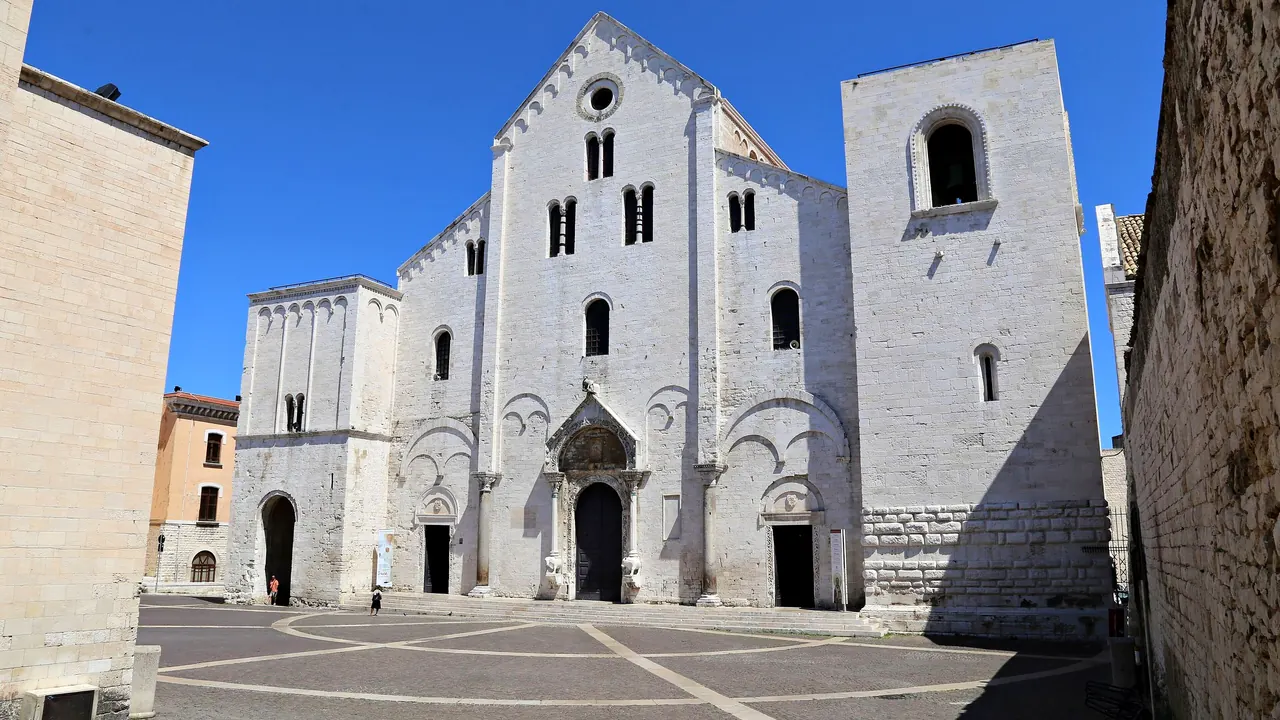
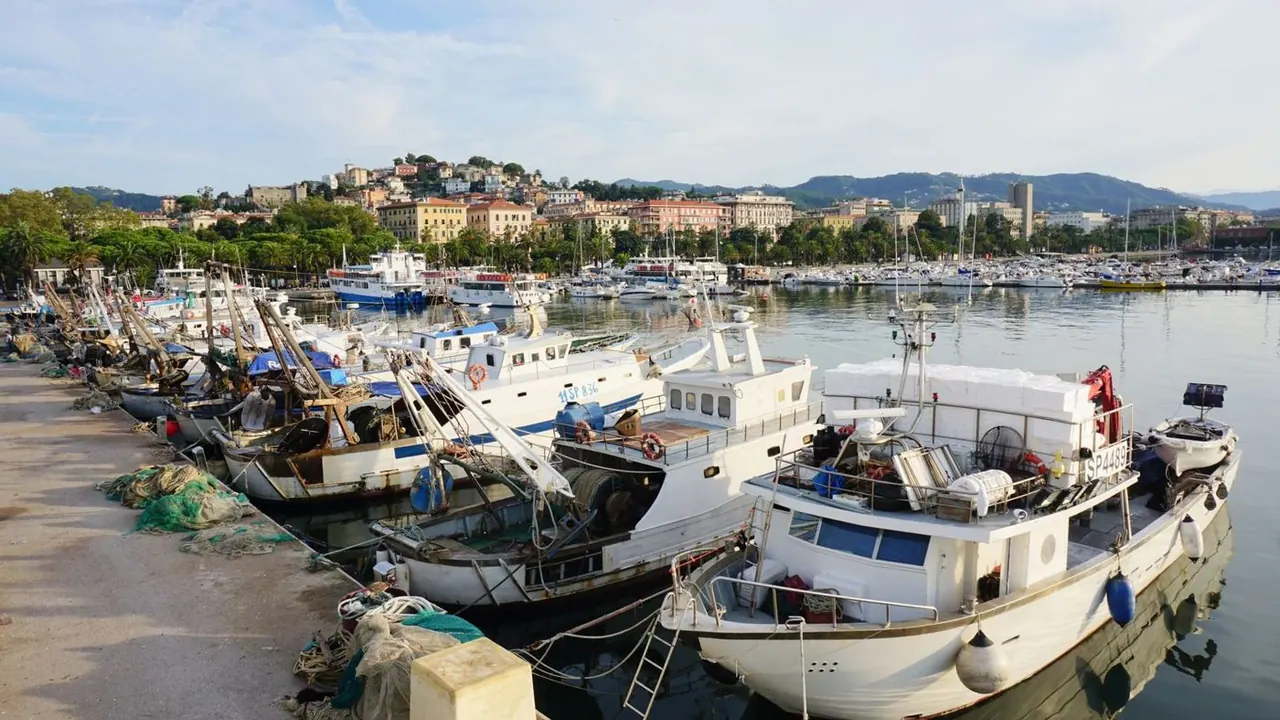
Photos: Bari by Sailko, CC BY-SA 4.0, cropped; La Spezia by Irina Balashova, Pexels License.
Bari or La Spezia?
Our verdict in twelve categories, each scored against the same fixed benchmark cities, and the climate month by month, so you can choose for your trip.
Choose Bari for
- nightlife
- live music and the arts
- culture and sights
Bari suits travellers who want a southern Italian city with a life of its own. The old town has the Basilica di San Nicola at its heart, the street food is some of the most distinctive in the country, evenings run late in the piazzas, and the Petruzzelli puts on proper opera. It also stretches a budget further, and it makes a good base for Matera, the trulli and the white towns of Puglia.
Choose La Spezia for
- nature and the outdoors
- getting around
- wellness
Walkers, and anyone who mainly comes for the coastline, will be happier in La Spezia. The town itself is plain and goes to bed early, but the Cinque Terre paths, Portovenere and Palmaria start just outside it, and trains and ferries reach them without a car. Choose it for active days outdoors and quiet evenings, not for city sightseeing or late nights.
Scoreboard
Twelve categories on one fixed scale from 0 to 100. The shaded stretch is the gap between the two.
Your match
Pick a travel style or drag the sliders, and both match scores follow your weighting.
Wins on nightlife and live music and the arts with your weighting.
Wins on nature and the outdoors and getting around with your weighting.
What matters to you?
Category by category
What the scores mean for a trip.
Beaches & swimming
The swimming is about equally good, but it works differently. Bari has a sandy beach of its own at Pane e Pomodoro, a short walk from the centre and crowded with local families, plus rocky platforms near Torre Quetta. The best water is south of the city, at Polignano's cliff-backed cove and the inlets around Monopoli.
La Spezia has no beach in town at all, so every swim starts with a bus, boat or train. In return, the choice is wide: sheltered sand and pebble at Lerici and San Terenzo, very clear rocky water off Palmaria, and Monterosso's long sandy beach. Expect more pebbles and more paid bathing establishments than around Bari.
Food & drink
Bari is the better place to eat. Its street food is particular to the city: focaccia barese, panzerotti and fried sgagliozze, with raw shellfish eaten standing at the fishermen's pier. Hand-rolled orecchiette, tiella and burrata make even simple meals worth the trip, and the food comes with Primitivo and Negroamaro.
La Spezia's Ligurian cooking is good but narrower: farinata, mesciua, pesto on trofie and the gulf's rope-grown mussels, with crisp Cinque Terre whites to drink. Neither city has much fine dining or international food.
Culture & sights
Bari has the stronger set of sights, nearly all inside Bari Vecchia. The Basilica di San Nicola, the cathedral and the Norman-Swabian castle sit a few minutes apart among whitewashed lanes, and the Murat grid and the Pinacoteca make a second day.
La Spezia is a nineteenth-century naval town with no medieval centre. Its draws are museums: the Amedeo Lia collection of early Italian painting, the naval museum and the Lunigiana stele statues in the castle. Most of the area's real history lies out along the coast.
Nightlife
Bari is the place for a night out. Students and young locals fill Piazza Mercantile and Piazza Ferrarese well past midnight, and in July and August the crowd moves on to open-air venues and beach clubs down the coast.
La Spezia's evening is mostly the aperitivo, a spritz or Vermentino along Via del Prione or at the Lerici waterfront in summer, after which the town goes quiet. Most visitors here turn in early for the next day's trails.
Nature & outdoors
This is La Spezia's great advantage. Terraced cliffs of vines and olives fall to the sea along the Cinque Terre, linked by the coastal Sentiero Azzurro and quieter ridge paths, and Palmaria and the Montemarcello promontory are close to town. Add kayaking, diving and the marble peaks of the Apuan Alps an hour inland, and an active trip can fill a week.
Bari's surroundings are flat olive country. The Alta Murgia plateau suits quiet walks and cycling, and the Grotte di Castellana are worth an outing, but there are no mountains and nothing as dramatic as the Ligurian cliffs.
Day trips
Both cities make excellent bases, but the trips are of different kinds. From Bari they spread across a whole region: Matera's cave dwellings, the trulli of Alberobello, Ostuni and the Valle d'Itria, Castel del Monte and Baroque Lecce. Each place looks quite different from the last, though distances are longer and some need a car.
La Spezia's best trips are packed tightly together. The five Cinque Terre villages and Portovenere are minutes away, and Pisa, Lucca and the Riviera towns towards Portofino are easy rail outings, so a different place each day requires very little planning.
Good for families
The two are about even for children, and neither has a zoo or theme park on its doorstep. Bari's advantage is a sandy beach in town, car-free old-town lanes and the evening passeggiata, with the Fasano safari park and the Castellana caves for days out. Midday heat means planning around a long afternoon break.
La Spezia's best family days are on the water, with boat trips round Portovenere and shallow beaches at Lerici. Its steep villages and crowded summer trains suit older children better than toddlers.
Getting around
La Spezia is the easier place to manage without a car. Its station, market, museums and seafront are within a short flat walk, coastal trains run through the Cinque Terre, buses reach Portovenere and Lerici, and ferries cross the gulf in season. Driving into the villages is more trouble than it is worth, and the main drawback is packed summer trains.
Bari's centre is just as walkable and has a rail link to the airport. Its regional lines are slow and infrequent, though, so many visitors hire a car for the inland towns.
Shopping & style
Neither is a shopping destination, but Bari offers a little more. Via Sparano and the Murat streets combine Italian chains with a few upmarket boutiques, and Puglian ceramics make a good find. La Spezia's Via del Prione and Corso Cavour are more everyday. In both, the best things to take home are edible: taralli and dried orecchiette from Bari, pesto, Sciacchetrà and anchovies from La Spezia.
Affordability
Bari goes further on a modest budget. Street food, trattoria lunches and local wine cost little, and the old town and basilica are free, though rooms tighten in July and August.
La Spezia is mid-priced. It is cheaper to stay in than the Cinque Terre villages, but summer rooms cost what they do elsewhere in Western Europe, and trail passes, boat trips and bathing establishments add up over a stay. Spring and autumn ease the cost.
Live music & performing arts
Bari has a real stage for an evening out. The Teatro Petruzzelli, one of Italy's largest opera houses, runs seasons of opera, ballet and symphonic music, and the Piccinni adds drama.
La Spezia's Teatro Civico offers prose theatre and touring shows, and for opera you have to travel to Genoa or Pisa. Both cities have a long-running summer jazz festival and open-air concerts, so the gap narrows in July and August.
Wellness & relaxation
Neither city has a bathing tradition, and spa time mostly means a hotel. The ways to unwind differ. From Bari, people book a few nights at a restored masseria in the countryside, while from La Spezia the small thermal baths at Equi Terme are an hour inland, and the quiet of Palmaria or a long lunch in Tellaro are much closer.
When should you go?
Pick your month. The climate figures are measured averages, not a forecast.
Bari in July
La Spezia in July
Daytime high, °C
Rainfall in the month, mm
Where the figures come from
Bari has no rain gauge within 25 km of the centre, so its rainfall comes from a gridded climate dataset read at the city rather than from a gauge further away.
Bari's sunshine is measured 77 km from the centre, at Marina Di Ginosa.
La Spezia's temperatures are measured 65 km from the centre, at Pisa / S. Giusto.
La Spezia has no rain gauge within 25 km of the centre, so its rainfall comes from a gridded climate dataset read at the city rather than from a gauge further away.
Temperature and rainfall are climate normals, averaged over the years shown. Bari: 1991-2020 (sunshine 1961-1990) normals, Bari / Palese Macchie (7 km from centre). La Spezia: 1991-2020 normals, Pisa / S. Giusto (64.8 km from centre).
The two summers are much alike. Both cities reach about 30°C in July and August, which makes midday walking hard work in either. June to September is the swimming season on both coasts, and the Adriatic off Bari is slightly the warmer of the two, at about 26°C in August. La Spezia is at its sunniest in July. For walking, May and late September are the best months in both places, warm without the heat of high summer.
The difference comes in autumn and winter. Bari stays fairly dry all year, with only moderate rain from September to December. La Spezia gets much wetter from October, with around 150mm in November, and the trails become slippery and less appealing. A late-season or winter trip therefore leans towards Bari, where days stay a little milder and drier.
Which traveller are you?
For an outdoors trip, La Spezia is the clear choice. The Cinque Terre footpaths, the Palmaria loop, kayaking and diving in the gulf and the Apuan Alps inland are all close by, while flat Bari offers gentle cycling and plateau walks.
On a food and nightlife trip, Bari wins comfortably. Orecchiette rolled in the lanes, raw sea urchins by the pier and fried street snacks lead into late evenings in Piazza Mercantile and at the beach clubs, whereas La Spezia winds down after aperitivo.
For a culture and arts trip, Bari has more to offer. The Romanesque basilica, the cathedral and the castle sit within a dense old town, and the Petruzzelli stages opera and ballet. La Spezia has fine museums but no medieval core and no opera house.
Before you go
| Measure | Bari | La Spezia |
|---|---|---|
| Official language | Italian | Italian |
| Currency | Euro (EUR) | Euro (EUR) |
| Sockets | CFL230 V, 50 Hz | CFL230 V, 50 Hz |
| Driving side | Right | Right |
| Time zone | UTC+1, UTC+2 in summer | UTC+1, UTC+2 in summer |
| Emergency number | 112 | 112 |
| Elevation | 5 m | 3 m |
| Main airport | Bari Karol Wojtyła International Airport (BRI)9 km from centre104 non-stop destinations | Pisa International Airport (PSA)65 km from centre82 non-stop destinations |
| Public holidays this year | 13 days | 13 days |
By the numbers
| Measure | Bari | La Spezia |
|---|---|---|
| City population | 315,473 | 92,119 |
| People per km² | 2,687 | 1,792 |
| Museums within 10 km | 12 | 12 |
| UNESCO World Heritage sites within 50 km | 1 | 2 |
| Swim season, months above 21 °C | 4 months | 4 months |
Where else could you go?
Every comparison below shares a destination with this one, so you can follow Bari or La Spezia somewhere new.
- Portofinovs La Spezia
- Materavs Bari
- Luccavs La Spezia
- Pisavs La Spezia
- Genoavs La Spezia
- Florencevs La Spezia