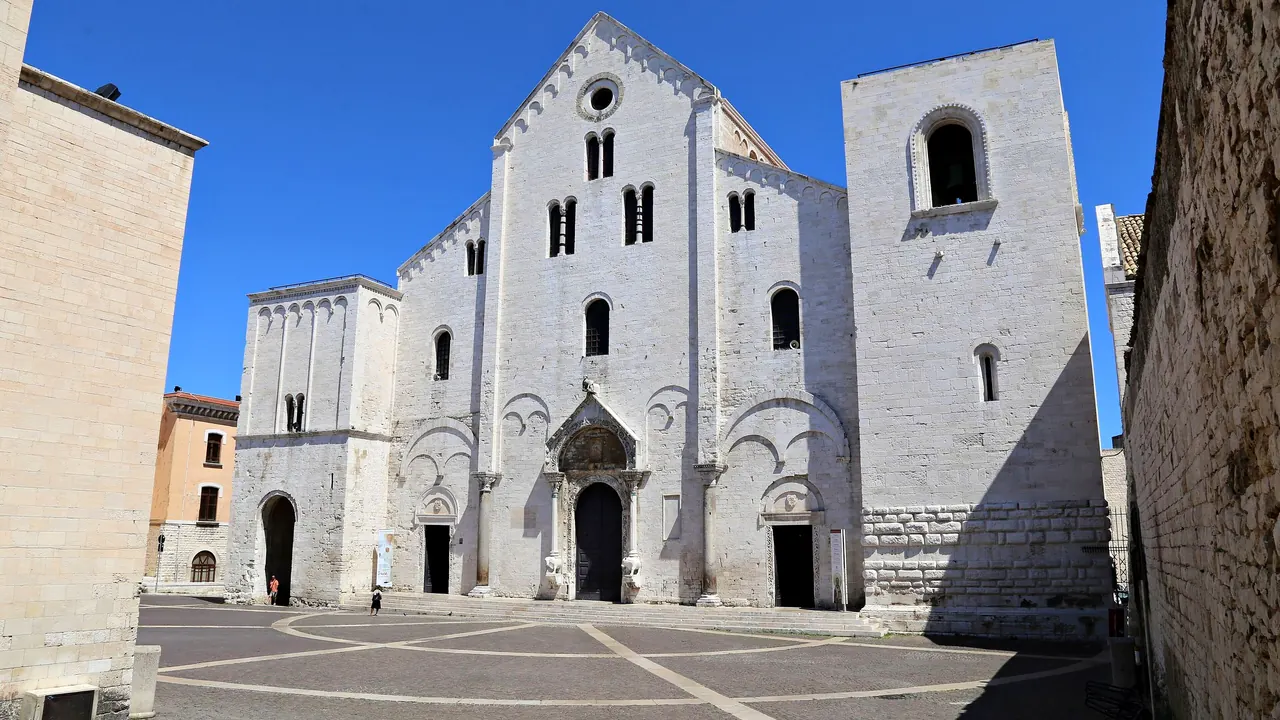
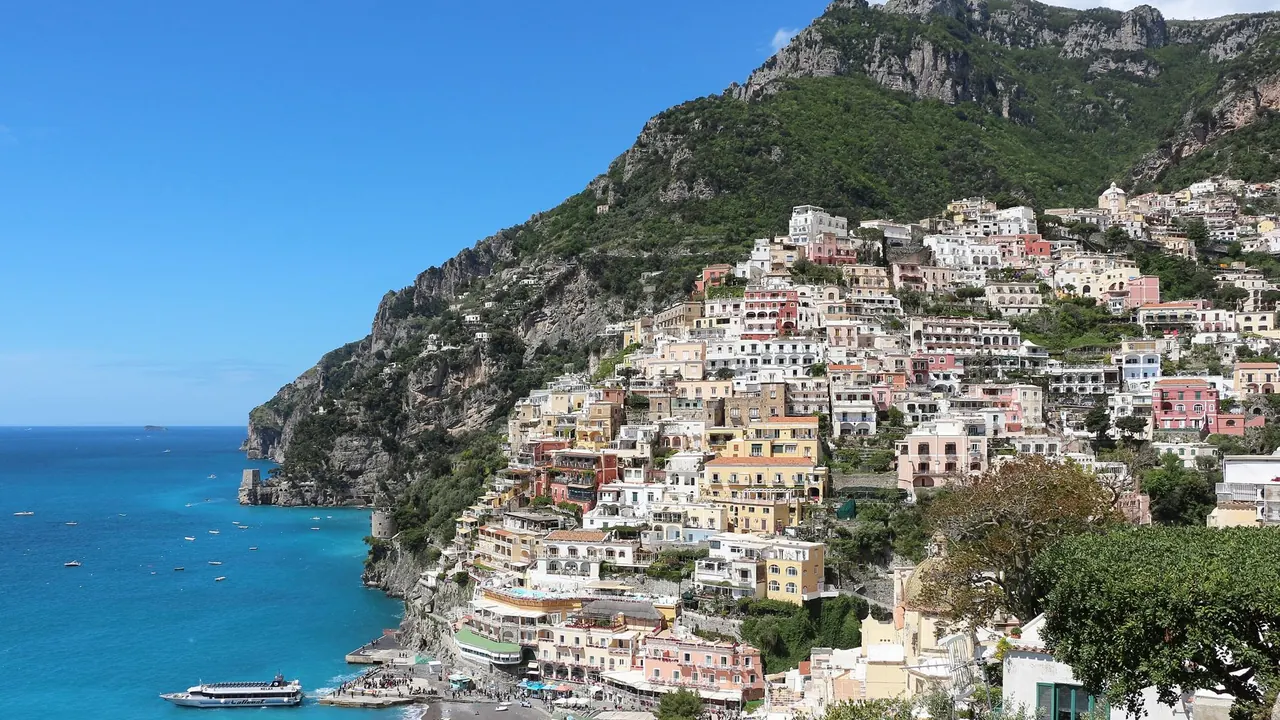
Photos: Bari by Sailko, CC BY-SA 4.0, cropped; Positano by Bernard Gagnon, CC BY 4.0, cropped.
Bari or Positano?
Our verdict in twelve categories, each scored against the same fixed benchmark cities, and the climate month by month, so you can choose for your trip.
Choose Bari for
- prices
- culture and sights
- live music and the arts
Bari suits travellers who want a working southern city with real food, a lively evening scene and a cheap base for exploring Puglia. The old town, the basilica and the opera house fill a couple of days. Matera, the trulli and the white hill towns fill the rest, and the flat, compact centre makes it easy going with children or on a modest budget.
Choose Positano for
- nature and the outdoors
- wellness
- beaches
Positano is for a slower, costlier trip built around the sea and the cliffs. It is the better pick for couples and walkers who want clear water below the town, the Path of the Gods above it and ferries to Capri and Amalfi, and who don't mind high prices, endless stairs and quiet evenings.
Scoreboard
Twelve categories on one fixed scale from 0 to 100. The shaded stretch is the gap between the two.
Your match
Pick a travel style or drag the sliders, and both match scores follow your weighting.
Wins on prices and culture and sights with your weighting.
Wins on nature and the outdoors and wellness with your weighting.
What matters to you?
Category by category
What the scores mean for a trip.
Beaches & swimming
Bari has a sandy beach of its own at Pane e Pomodoro, plus the rocky platforms around Torre Quetta. They are handy for an afternoon with local families, but the good swimming means a train south to Polignano and Monopoli.
In Positano the sea is the whole point. Spiaggia Grande and Fornillo sit right below the town, and boats run to quieter coves and to Capri, all in clear, deep blue water. The trade-off is a coarse, steep shore of grey sand and pebbles, crowded by mid-morning in summer.
Food & drink
Bari is much the better place to eat. It has hand-rolled orecchiette in the lanes of Bari Vecchia, focaccia and sgagliozze from kitchen windows, and raw sea urchins at the fishermen's pier. Meals are generous, rooted in Apulian home cooking and fairly priced.
Positano offers a beautiful setting more than variety. Long terrace lunches of clams, scialatielli and lemon desserts are lovely, but the menus repeat each other, there is almost no street food or market life, and many kitchens shut over winter.
Culture & sights
Bari has a proper set of sights. There is the Basilica di San Nicola with the relics of St Nicholas, the cathedral and Norman-Swabian castle close by, the nineteenth-century Murat grid and a respectable gallery of southern Italian painting.
In Positano the town itself is the sight. You see the majolica dome of Santa Maria Assunta, the Roman villa buried beneath it and a few watchtowers, and serious sightseeing means a trip to Naples or along the coast.
Nightlife
For going out, Bari is clearly the better pick. It is a student city that keeps late hours. On summer evenings the squares at the edge of the old town become open-air meeting places, with young locals drinking on steps and terraces. The bars stay busy well past midnight, and in high summer the crowd moves out to the coast south of town. The scene is local and easy-going, more about bars than big clubs, and it thins out on winter weeknights.
Positano's evenings are shorter and quieter. You have a drink while the light fades over the bay, then a dinner that runs for hours. After that there are only a few bars and one club in a cave on the beach, and even those close when the season ends. It suits couples much better than groups who want to party.
Nature & outdoors
Positano has the more dramatic setting by far. Sheer limestone mountains drop into the sea, trails climb through chestnut woods to ridges over 1,000m, and the Path of the Gods runs above terraced lemon groves. By boat you can follow the cliffs to the Li Galli islets.
Bari's surroundings are gentle and flat. You have the seafront promenade, the open karst grassland of Alta Murgia and easy cycling in the Valle d'Itria, but no mountains, and the wilder Gargano is too far for a day.
Day trips
Both are superb bases, but for different kinds of outing. From Bari the trips are about towns and landscapes inland: Matera's cave dwellings, the trulli of Alberobello, Ostuni and Martina Franca, Castel del Monte, and Trani's cathedral by the sea. The trains are slow, so a car helps.
From Positano you mostly go by sea: ferries to Amalfi, Ravello and Capri, plus Pompeii, Herculaneum and Paestum by train or bus. Most boats stop running outside spring to autumn, and the coast road crawls in summer.
Good for families
Bari is far easier with children. The centre is flat and small, the old town lanes are free of traffic, the sandy city beach is close, and the Grotte di Castellana and the Fasano safari park make good outings.
Positano is built of stairs, so pushchairs are no use. The pebbly beaches also shelve quickly, which makes it better for older children who love boats and swimming than for toddlers.
Getting around
The difference comes down to flat ground against endless stairs. Bari Vecchia, the Murat streets and the seafront sit side by side on level ground, a train runs to the airport, and regional lines head out along the coast and inland, though some are slow.
In Positano almost every walk means hundreds of steps. A single road loops through the upper town, coast buses fill up and crawl in summer, and parking is scarce. Ferries and your own legs do most of the work, and the boats mostly run only in season.
Shopping & style
Neither is a serious shopping destination, but they offer different things to buy. Bari's shopping is everyday: chain fashion along Via Sparano, plus orecchiette, taralli, olive oil and Puglian ceramics from delis and doorways.
Positano sells one distinctive look: white linen and printed resort wear in the lanes above the beach, sandals cut to fit while you wait, and hand-painted ceramics.
Affordability
There is a big gap in cost. Bari is among Italy's more affordable cities, with cheap street food and wine and moderate rooms outside July and August, though beach clubs and hire cars add up.
Positano is one of the most expensive places to stay in the country, with steep sea-view rooms, loungers, terraces and boat trips. Staying in Praiano or Sorrento, or coming in May or October, saves a lot.
Live music & performing arts
Bari has the Teatro Petruzzelli, one of Italy's largest opera houses, with a season of opera, ballet and concerts. Summer jazz and open-air concerts use its piazzas and castle. Positano has only occasional church concerts. Its best evening is Ravello's classical festival on a terrace over the sea, and for opera you have to go to Naples.
Wellness & relaxation
Neither has a bathing tradition, but Positano is the more restful choice. It has upscale hotel spas, pools cut into the cliff and terraces above the sea, though the stairs and the July and August crowds take away some of the calm. Bari offers a slow southern rhythm and the evening stroll along the seafront. Anyone who wants proper pampering heads out to a restored country estate.
When should you go?
Pick your month. The climate figures are measured averages, not a forecast.
Bari in July
Positano in July
Daytime high, °C
Rainfall in the month, mm
Where the figures come from
Bari has no rain gauge within 25 km of the centre, so its rainfall comes from a gridded climate dataset read at the city rather than from a gauge further away.
Bari's sunshine is measured 77 km from the centre, at Marina Di Ginosa.
Positano's temperatures are measured 25 km from the centre, at Capri.
Positano has no rain gauge within 25 km of the centre, so its rainfall comes from a gridded climate dataset read at the city rather than from a gauge further away.
Positano's sunshine is measured 59 km from the centre, at Grazzanise.
Temperature and rainfall are climate normals, averaged over the years shown. Bari: 1991-2020 (sunshine 1961-1990) normals, Bari / Palese Macchie (7 km from centre). Positano: 2005-2025 (sunshine 1991-2020, rainfall 1991-2020) normals, Capri (25.3 km from centre).
Both are warm enough for swimming from June to September, with daytime highs around 30°C in July and August and the sea reaching 26°C in both places. Midsummer is hot for walking. In Bari that means sightseeing early and late around a long afternoon break. In Positano it means climbs that are hard work in the middle of the day. Positano is very sunny in high summer, with over 300 hours of sunshine a month in July and August.
The two part ways in the cooler months. Positano gets much more rain, with the wet season building through autumn to about 127mm in November, and the winter is grey and damp. Bari stays drier all year, though it too gets wetter from September to November. For walking, May and late September suit both places, and Positano's trails are at their best in spring and autumn. Bari makes the easier winter city break, mild and fairly dry.
Which traveller are you?
On a trip on a tight budget, Bari is the clear choice. Street food, trattoria lunches and local wine cost little, and the old town is free to wander. In Positano rooms, loungers and terrace meals are priced for the view, so the money goes quickly.
For a culture and arts trip, Bari gives far more. There is the Romanesque Basilica di San Nicola, the cathedral and castle, a full opera season at the Petruzzelli, and Matera and Lecce within reach. Positano's sights take a couple of hours.
On an outdoors trip, Bari has only flat olive country and the gentle Alta Murgia plateau. Positano wins easily. The Lattari mountains drop straight into the sea, the Path of the Gods follows the cliffs with views across to Capri, and kayaks trace the shore to grottoes.
Before you go
| Measure | Bari | Positano |
|---|---|---|
| Official language | Italian | Italian |
| Currency | Euro (EUR) | Euro (EUR) |
| Sockets | CFL230 V, 50 Hz | CFL230 V, 50 Hz |
| Driving side | Right | Right |
| Time zone | UTC+1, UTC+2 in summer | UTC+1, UTC+2 in summer |
| Emergency number | 112 | 112 |
| Elevation | 5 m | 142 m |
| Main airport | Bari Karol Wojtyła International Airport (BRI)9 km from centre104 non-stop destinations | Naples International Airport (NAP)33 km from centre131 non-stop destinations |
| Public holidays this year | 13 days | 13 days |
By the numbers
| Measure | Bari | Positano |
|---|---|---|
| City population | 315,473 | 3,729 |
| People per km² | 2,687 | 429 |
| Museums within 10 km | 12 | 10 |
| UNESCO World Heritage sites within 50 km | 1 | 5 |
| Swim season, months above 21 °C | 4 months | 5 months |
Where else could you go?
Every comparison below shares a destination with this one, so you can follow Bari or Positano somewhere new.