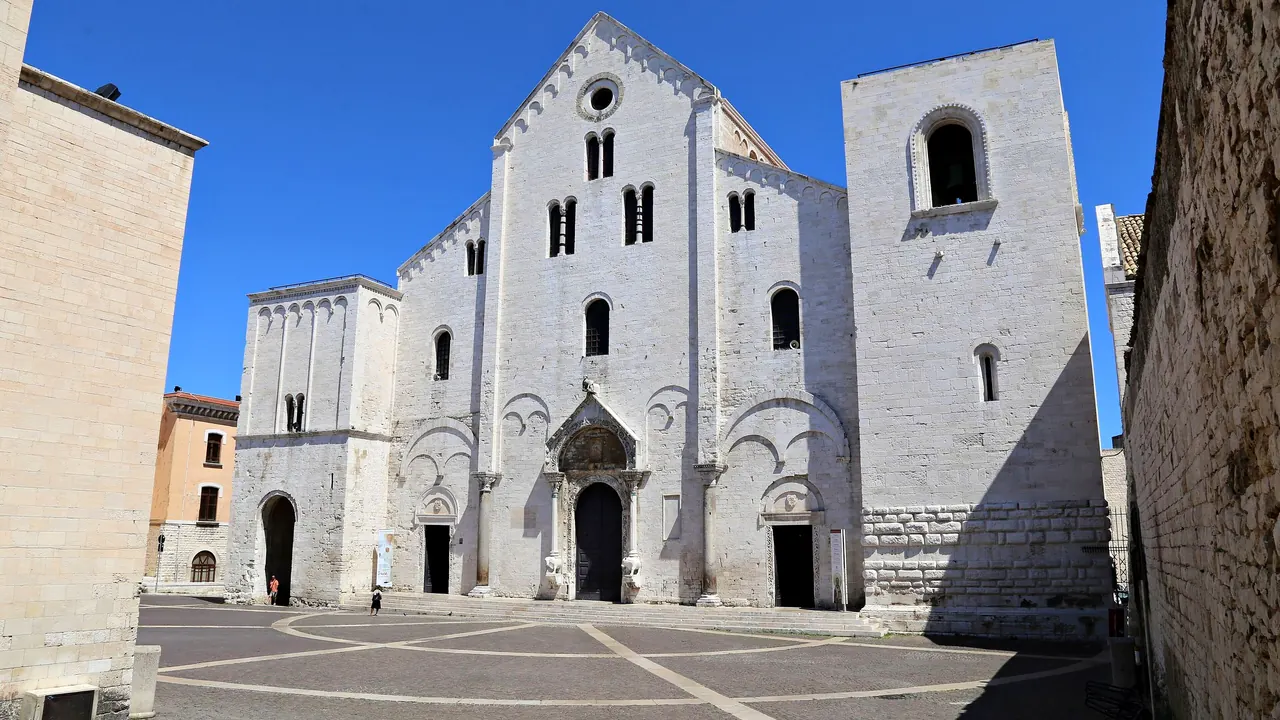
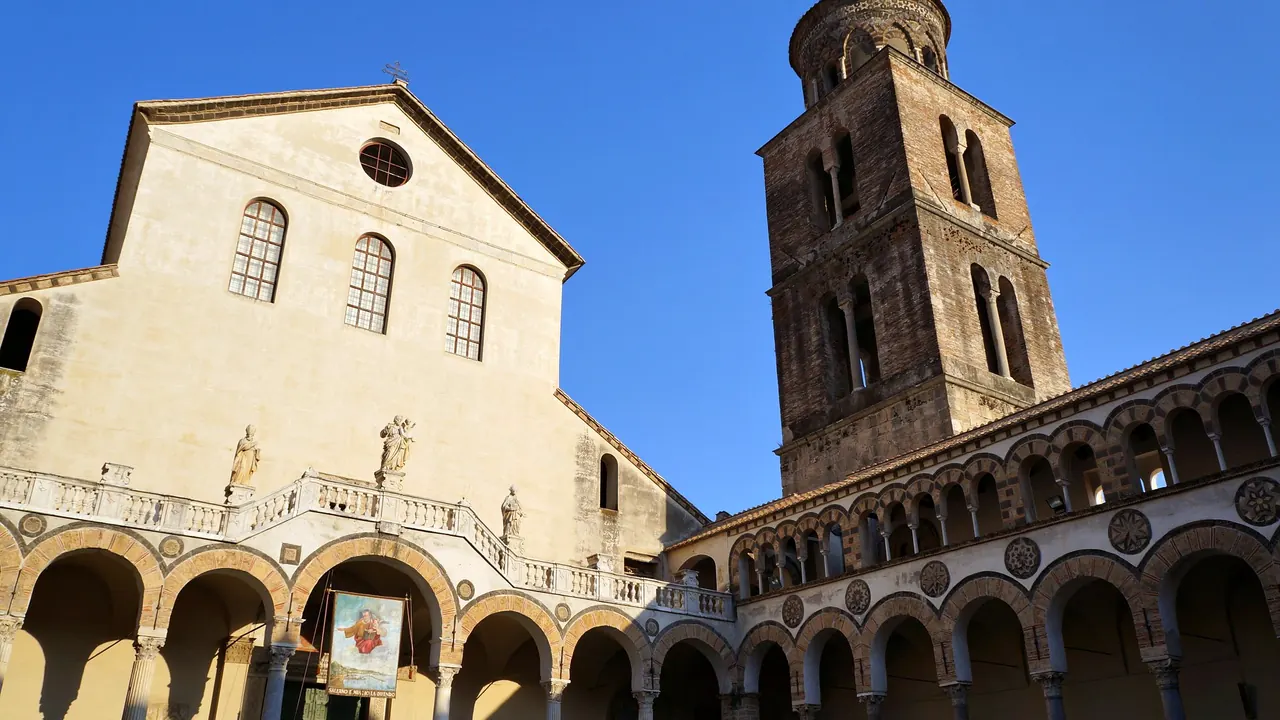
Photos: Bari by Sailko, CC BY-SA 4.0, cropped; Salerno by Leandro Neumann Ciuffo, CC BY 2.0, cropped.
Bari or Salerno?
Our verdict in twelve categories, each scored against the same fixed benchmark cities, and the climate month by month, so you can choose for your trip.
Choose Bari for
- nightlife
- culture and sights
- live music and the arts
Bari suits travellers who want the city itself to fill the evenings: the old town around the Basilica di San Nicola, late drinks outdoors on the piazzas, street food from kitchen windows and a night at the Petruzzelli. It is also the natural base for Puglia's inland towns, with Matera, Alberobello and the Valle d'Itria all within reach, and it stays drier than Salerno from autumn to spring.
Choose Salerno for
- nature and the outdoors
- day trips
- wellness
If the landscape matters more than the town, choose Salerno. The cliffs and mule tracks of the Amalfi Coast, the Cilento hills and boat trips along the gulf are all on its doorstep, and Pompeii, Paestum and Naples are each a short train ride away. Its own sights and nightlife are quieter, so it works best as a comfortable, fairly priced base for active days out.
Scoreboard
Twelve categories on one fixed scale from 0 to 100. The shaded stretch is the gap between the two.
Your match
Pick a travel style or drag the sliders, and both match scores follow your weighting.
Too close to call, level with your weighting
Wins on nightlife and culture and sights with your weighting.
Wins on nature and the outdoors and day trips with your weighting.
What matters to you?
Category by category
What the scores mean for a trip.
Beaches & swimming
For swimming the two are evenly matched, and both seas are similarly warm in August. Bari's own Pane e Pomodoro beach is sand, and the rocky platforms around Torre Quetta continue along the shore. Its best water is a train ride south, at the pebble cove of Polignano a Mare and the rocky inlets around Monopoli.
Salerno's city beaches are grey sand, with murkier water near the port. Its strength is choice. There are long sandy beaches backed by pine woods towards Paestum for a full day with lidos, and clear pebbly coves on the Amalfi side reached by ferry.
Food & drink
Both are places for honest regional cooking rather than fine dining, and Bari has a slight edge for eating in the streets. Its old town is the show: women rolling orecchiette in doorways, fried polenta sold from kitchen windows, and raw seafood eaten at the old pier with a beer.
Salerno's best flavours come from just outside town. Buffalo mozzarella is made on the Paestum plain and eaten the same day, colatura comes from Cetara, and lemons grow on the coast. Add wood-fired pizza, sfogliatelle and Campanian whites like Fiano, where Bari pours Primitivo and Negroamaro.
Culture & sights
Bari gives you more to see within the city. The Basilica di San Nicola is a landmark of Apulian Romanesque and a pilgrimage site for Orthodox visitors. With the cathedral, the Norman-Swabian castle, the Murat quarter's civic buildings and the Pinacoteca, it fills a couple of full days.
Salerno's medieval core is smaller. It is built around the cathedral with Saint Matthew's crypt, the Giardino della Minerva with its link to Europe's earliest medical school, and Arechi Castle above the gulf. The museums are modest, and the region's famous ancient sites lie outside the city.
Nightlife
Bari is the better night out. Piazza Mercantile and Piazza Ferrarese fill with students on summer evenings, the bars of the Umbertino streets and the seafront stay open past midnight, and there are a few clubs plus open-air venues along the coast in July and August.
Salerno's evenings are gentler. Young locals gather outside wine bars and pubs around Largo Campo and Via dei Mercanti, and the seafront carries the aperitivo crowd. There is no club scene to speak of, and a big night means going to Naples.
Nature & outdoors
This is where Salerno pulls well ahead. It has the limestone cliffs and lemon terraces of the Amalfi Coast, mule tracks through the Lattari mountains such as the Path of the Gods, and the wooded hills and river gorges of the Cilento further south. Kayaking and boat trips round out the summer.
Bari's surroundings are calmer and flatter: olive groves, stone walls and a seafront promenade. The Alta Murgia plateau suits quiet walks and cycling, and the Grotte di Castellana make a good half-day. There are no mountains within easy reach.
Day trips
Both are outstanding bases, and the real difference is the kind of trip. From Bari you head into Puglia's interior: Matera's cave dwellings, the trulli of Alberobello, the white towns of the Valle d'Itria, Castel del Monte, and Lecce further off. Slow inland lines mean a hire car makes most of this easier.
Salerno's outings are classical and coastal, and most need no car. Paestum's temples and Pompeii are each about half an hour by train, ferries run to Amalfi and Positano, and Naples, Herculaneum and Caserta are easy rail trips.
Good for families
Neither city is built around children, but both welcome them warmly. Bari is easier on small legs, with a flat, traffic-free old town and a sandy beach in the city. Its family outings are the Fasano safari park and the Grotte di Castellana.
Salerno counters with a car-free seafront lined with playgrounds, shallow sandy beaches to the south and the Luci d'Artista lights at Christmas. Its stepped old town and winding coast roads are harder going with young children.
Getting around
Both centres are compact and walkable, but they differ beyond them. Bari is flat throughout and has a rail link to the airport, while its regional railways to Polignano, Trani and Matera are slow enough that many visitors hire a car.
Salerno makes going without a car easier. Fast trains reach Naples, regional lines serve Pompeii and Paestum, and summer ferries replace the crowded Amalfi road. Within town, only the castle on its hill needs a bus.
Shopping & style
Neither is a shopping destination, and each has one long pedestrian street of Italian chains: Via Sparano in Bari, Corso Vittorio Emanuele in Salerno. The difference is in the souvenirs. Bari's are dried orecchiette, taralli, olive oil and Puglian ceramics, while Salerno points you to Vietri's painted majolica, limoncello and Cetara's colatura, with Naples close by for anything bigger.
Affordability
The two are equally good value, and both are cheapest outside July and August. In Bari the main extras are beach clubs and the car you may want for inland trips. Salerno's draw is that its rooms cost far less than the cliff villages nearby, but over a long stay ferry fares, lido sunbeds and entry to the big archaeological sites add up.
Live music & performing arts
Bari has the stronger stage. The Teatro Petruzzelli is one of Italy's largest opera houses, with a full season of opera, ballet and symphonic concerts, and in summer a long-running jazz festival uses the castle and piazzas.
Salerno's gilded Teatro Verdi, modelled on the San Carlo in Naples, puts on a smaller season. Its special summer evening is a concert at the Ravello Festival on the cliff-top terraces above Amalfi. In both cities the spoken theatre is in Italian.
Wellness & relaxation
For a slow, restful stay the two are close, but each city offers a different way to unwind. In Bari it comes down to the pace of the day: a long lunch, a quiet afternoon break and an evening walk along the seafront once the heat fades. For proper pampering you would leave the city for a restored estate among the olive groves.
Salerno has something Bari lacks: natural thermal water, at the open-air sulphur pools of Contursi Terme about an hour inland. In town, the palm-lined promenade and the quiet upper lanes of the old town are good for gentle mornings and sunset walks. It is still a working port, though, and its main roads are noisy with traffic.
When should you go?
Pick your month. The climate figures are measured averages, not a forecast.
Bari in July
Salerno in July
Daytime high, °C
Rainfall in the month, mm
Where the figures come from
Bari has no rain gauge within 25 km of the centre, so its rainfall comes from a gridded climate dataset read at the city rather than from a gauge further away.
Bari's sunshine is measured 77 km from the centre, at Marina Di Ginosa.
Salerno's temperatures are measured 71 km from the centre, at Grazzanise.
Salerno has no rain gauge within 25 km of the centre, so its rainfall comes from a gridded climate dataset read at the city rather than from a gauge further away.
Temperature and rainfall are climate normals, averaged over the years shown. Bari: 1991-2020 (sunshine 1961-1990) normals, Bari / Palese Macchie (7 km from centre). Salerno: 1991-2020 normals, Grazzanise (71.3 km from centre).
Both cities share a hot, dry high summer. From June to August highs reach around 30°C and there is little rain. By August the sea is about 26°C at either, warm enough for long swims. The midday heat makes walking the streets hard in both, and on Salerno's coastal paths it is too hot for comfortable hiking. Salerno's summer days are long and very sunny. Late May and June are the best times to combine swimming with walking.
September is when the rain comes back. Bari gets 65mm, more than in January, and Salerno gets more still, though the sea stays warm enough to swim in both. From October to January the gap grows. Bari's wettest month, November, is much drier than Salerno's at 154mm, so a late-autumn or winter trip is more reliable in Bari. Winters are mild in both. Spring is good walking weather in both cities, and it is the best season for hiking above Amalfi.
Which traveller are you?
For an outdoors trip, Salerno is the clear pick. The Path of the Gods, the Valle delle Ferriere and the Cilento's gorges and headlands are close by, and you can kayak or sail along the coast. Bari's flat plain offers gentle cycling and walks on the Murgia plateau.
On a food and nightlife trip, Bari has the edge. Its street food is unusually distinctive: focaccia barese, sgagliozze and raw sea urchins at the fishermen's pier. Evenings run late across Piazza Mercantile, the Umbertino bars and the summer beach clubs, while Salerno's nights end in old-town wine bars.
For a culture and arts trip, Bari offers more within the city. It has the Basilica di San Nicola, a Norman-Swabian castle, the Murat quarter's palazzi and a full opera season at the Petruzzelli. Salerno's cathedral and gardens are smaller, and its great ancient sites lie outside town.
Before you go
| Measure | Bari | Salerno |
|---|---|---|
| Official language | Italian | Italian |
| Currency | Euro (EUR) | Euro (EUR) |
| Sockets | CFL230 V, 50 Hz | CFL230 V, 50 Hz |
| Driving side | Right | Right |
| Time zone | UTC+1, UTC+2 in summer | UTC+1, UTC+2 in summer |
| Emergency number | 112 | 112 |
| Elevation | 5 m | 4 m |
| Main airport | Bari Karol Wojtyła International Airport (BRI)9 km from centre104 non-stop destinations | Naples International Airport (NAP)46 km from centre131 non-stop destinations |
| Public holidays this year | 13 days | 13 days |
By the numbers
| Measure | Bari | Salerno |
|---|---|---|
| City population | 315,473 | 127,186 |
| People per km² | 2,687 | 2,123 |
| Museums within 10 km | 12 | 9 |
| UNESCO World Heritage sites within 50 km | 1 | 5 |
| Swim season, months above 21 °C | 4 months | 5 months |
Where else could you go?
Every comparison below shares a destination with this one, so you can follow Bari or Salerno somewhere new.