Photos: Bari by Sailko, CC BY-SA 4.0, cropped; Split by Bernard Gagnon, CC BY-SA 4.0, cropped.
Bari or Split?
Our verdict in twelve categories, each scored against the same fixed benchmark cities, and the climate month by month, so you can choose for your trip.
Choose Bari for
- prices
- food and drink
- shopping
Bari is the better choice if you care most about eating well and seeing a lot of a region. It is the stronger base for day trips: Matera, the trulli of Alberobello, the white towns of the Valle d'Itria and Lecce are all within reach. Back in the city you get orecchiette rolled in the old town's doorways, focaccia and raw seafood by the old pier, a proper opera house and prices that stay fair. Go for food and day trips rather than the beach.
Choose Split for
- nature and the outdoors
- beaches
- wellness
Split suits travellers who want the sea and the mountains close at hand. You can swim within walking distance of a Roman palace that people still live in, walk the trails on Marjan before breakfast, and take a ferry to Brač or Hvar, or go rafting in the Cetina canyon. Its swimming, its outdoors and its main sight are all stronger than Bari's. The cost is higher prices in high summer and a thinner food scene.
Scoreboard
Twelve categories on one fixed scale from 0 to 100. The shaded stretch is the gap between the two.
Your match
Pick a travel style or drag the sliders, and both match scores follow your weighting.
Too close to call, level with your weighting
Wins on prices and food and drink with your weighting.
Wins on nature and the outdoors and beaches with your weighting.
What matters to you?
Category by category
What the scores mean for a trip.
Beaches & swimming
Split is the better place for swimming. You can walk from the palace to Bačvice's shallow sandy bay, or to the pine-shaded coves around Marjan with their deeper, clear water. Ferries put the longer beaches of Brač, Šolta and Hvar within easy reach.
Bari has its sandy city beach at Pane e Pomodoro and the platforms at Torre Quetta, but these are ordinary. The good swimming is a train ride south, in the pebble cove at Polignano a Mare and the rocky inlets around Monopoli. In Bari the sea means half-day outings. In Split it can be part of every day.
Food & drink
Food is where Bari pulls clearly ahead. The cooking is rooted in the city's streets: thick focaccia barese, sgagliozze sold from kitchen windows, women making orecchiette in Bari Vecchia, and urchins and octopus eaten raw by the old pier with a beer. You eat well almost everywhere, and at fair prices.
Split's Dalmatian cooking is good, with black risotto, pašticada and peka, but you have to choose your table. The best meals are in the konobas of Varoš and behind the Riva, while many menus inside the palace are aimed at the summer crowds. Both cities have good local wines, Primitivo against Plavac Mali, and neither has much fine dining.
Culture & sights
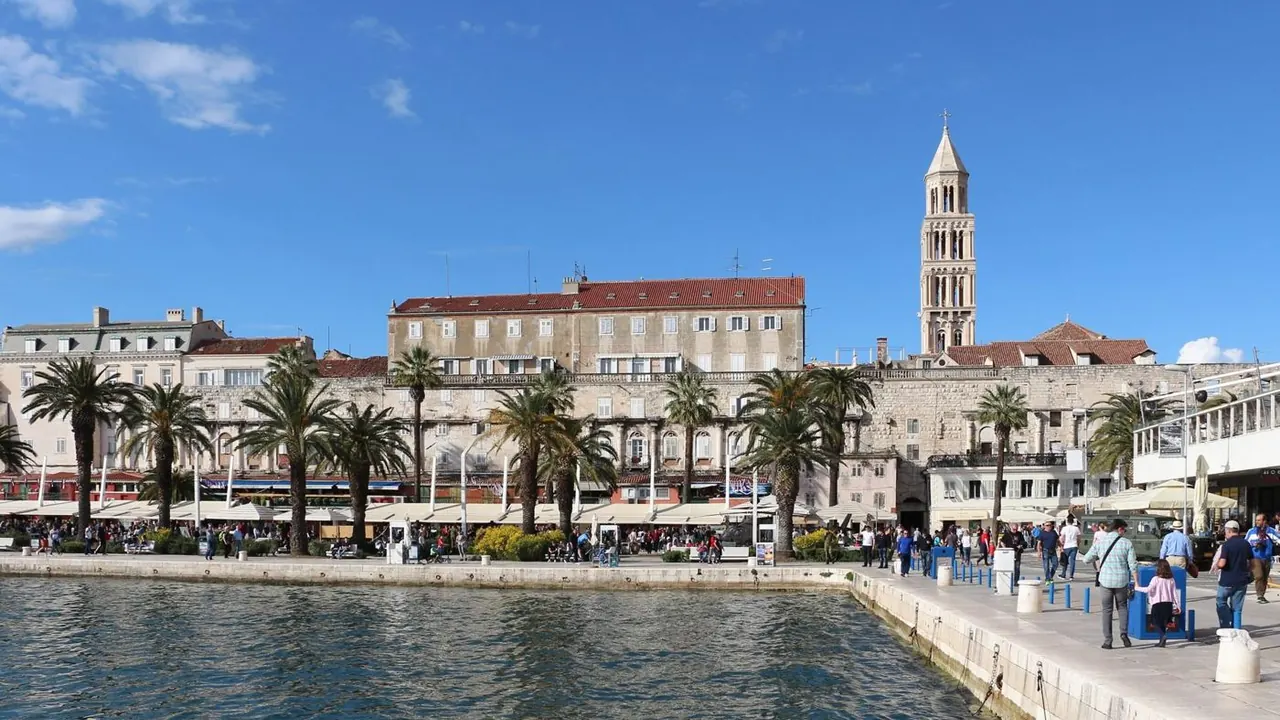
Split has the more remarkable centrepiece. Diocletian's Palace is a Roman emperor's residence that people still live in, with the cathedral set in his mausoleum and the original floor plan visible in the vaults below. The Meštrović Gallery adds a fine museum on the slopes of Marjan.
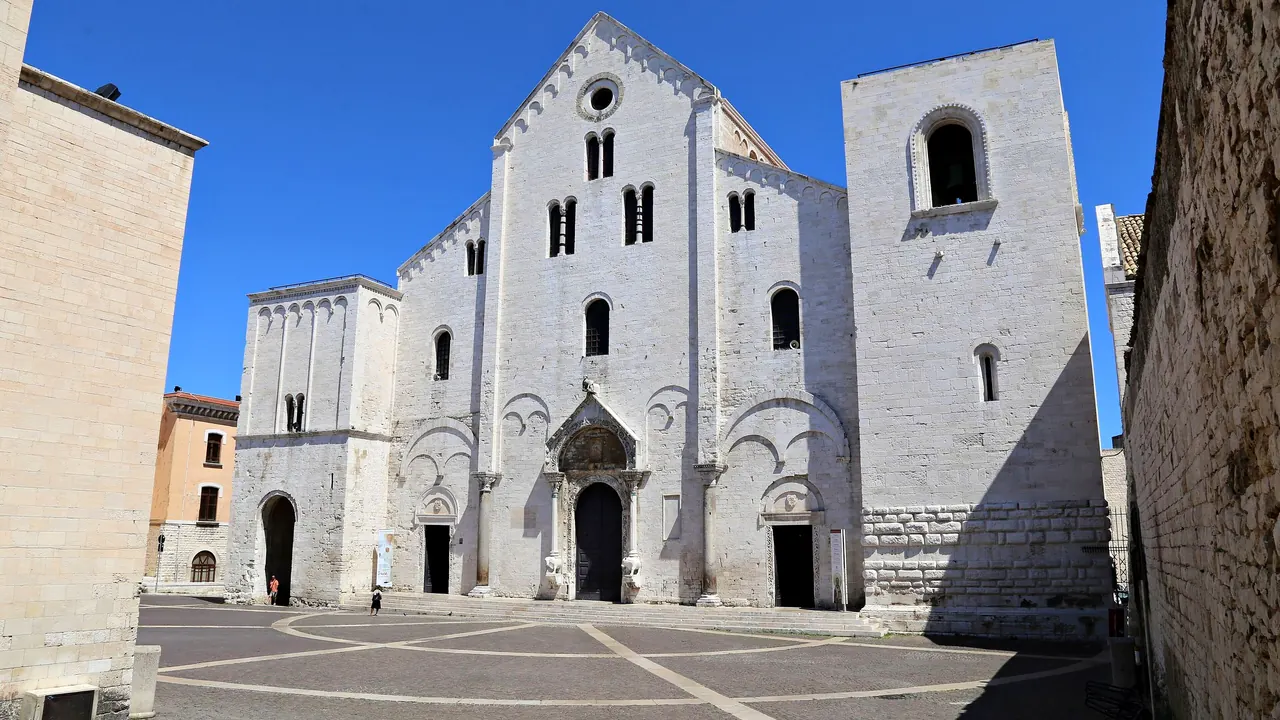
Bari's sights are pleasant rather than striking: the Romanesque Basilica di San Nicola with the saint's relics, the cathedral, the Norman-Swabian castle and the nineteenth-century Murat grid. Either city's sights can be seen in a couple of days, but in Split you spend those days inside the main monument.
Nightlife
The two are about level, and both cities do their drinking outdoors in summer. Bari's nights belong to students and young locals on the steps of Piazza Mercantile and Piazza Ferrarese, with beach clubs further down the coast in July and August.
Split's evenings move from the Riva into small bars tucked into the palace alleys and stairways, then on to the clubs around Bačvice. The bigger difference is the season. Bari keeps a quieter scene going through the winter, while Split shrinks to a handful of bars from October to May.
Nature & outdoors
This is where the two differ most. Split sits between limestone mountains and an island-studded sea. Marjan's forest trails start at the edge of town, Mosor and Kozjak offer ridge hikes, Biokovo rises above Makarska, and there is rafting in the Cetina canyon and sea kayaking around the islands.
Bari is flat olive and stone-wall country. Its best outdoor options are the long seafront promenade, quiet walks and cycling on the open karst of Alta Murgia, and the Grotte di Castellana. All of these are gentle rather than dramatic.
Day trips
Both make excellent bases, but Bari has the richer list of places to visit. Matera's cave dwellings, the trulli of Alberobello, Ostuni and the Valle d'Itria, Castel del Monte, Trani's cathedral on the sea and Baroque Lecce are each worth a trip in their own right. For the inland towns, a car helps.
Split's trips are mostly by sea and bus: medieval Trogir and Šibenik's cathedral, Roman Salona, Klis Fortress, and the islands of Hvar, Brač and Vis. The ferries make these trips easy in summer but need more planning in winter.
Good for families
Families will find the two much alike. Both are relaxed and safe, have compact centres and offer little built specifically for children. Bari's advantages are its sandy city beach, the traffic-free old town and outings to the Fasano safari park and the Grotte di Castellana.
Split offers shallow paddling at Bačvice, shade and room to run on Marjan, and a ferry ride that is often the highlight of the trip. In both cities the midday summer heat calls for a long break, and Split's crowded streets in August make it harder work.
Getting around
Both centres are easy on foot. Split's is slightly tighter: the palace, Varoš, the markets and Bačvice are all within about fifteen minutes of each other, and the ferry port, bus station and railway station sit together at the harbour. The polished steps of the palace are hard going with a pushchair.
Bari's old town, Murat and the seafront lie flat side by side, and a rail link runs to the airport. It is also the hub of regional railways to the coast and inland, though some lines are slow enough that many visitors hire a car.
Shopping & style
Neither city is a shopping destination, but Bari offers more. Via Sparano has fashion chains and a few upmarket boutiques, and the delis sell dried orecchiette, taralli, olive oil and Puglian ceramics.
In Split, the shops inside the palace lean heavily on lavender, coral and souvenir ties. The Pazar green market, with its figs, honey and brandies, is the most enjoyable place to browse.
Affordability
Bari is the cheaper trip, and the gap widens in summer. Street food, trattoria lunches and local wine cost little, and its main sights are free. Rooms tighten in July and August but rarely reach big-city levels.
Split in high summer charges Western European prices for rooms near the old town and a lot for waterfront fish sold by weight, and ferries add up for a family. If you go in May, June or late September, or eat at bakeries and konobas away from the Riva, the difference shrinks considerably.
Live music & performing arts
Bari has the stronger stage. The Teatro Petruzzelli, one of Italy's largest opera houses, gives the city a full season of opera, ballet and symphonic concerts, and a long-running summer jazz festival takes over the castle and the piazzas. Plays at the Piccinni and the smaller theatres are in Italian.
Split's Croatian National Theatre also stages opera, ballet and drama through the season, and you need no Croatian for the opera or the ballet. What sets Split apart is klapa, unaccompanied harmony singing heard in the palace's domed vestibule, and the Summer Festival's open-air opera in the Peristyle. Beyond these, live music mostly means bar bands, and there is little of it outside summer.
Wellness & relaxation
Neither city has thermal baths, but Split is easier to unwind in. The local habit of fjaka means hour-long coffees on the Riva and empty streets in the afternoon heat, and there are pine woods on Marjan and resort spas along the coast. The islands are close by when the old town gets loud.
Bari's slower pace comes from long lunches and the evening stroll on the seafront. For real pampering, visitors usually leave the city for a restored country estate.
When should you go?
Pick your month. The climate figures are measured averages, not a forecast.
Bari in July
Split in July
Daytime high, °C
Rainfall in the month, mm
Where the figures come from
Bari has no rain gauge within 25 km of the centre, so its rainfall comes from a gridded climate dataset read at the city rather than from a gauge further away.
Bari's sunshine is measured 77 km from the centre, at Marina Di Ginosa.
Temperature and rainfall are climate normals, averaged over the years shown. Bari: 1991-2020 (sunshine 1961-1990) normals, Bari / Palese Macchie (7 km from centre). Split: 1991-2020 (sunshine 1971-2000, rainfall 1981-2010) normals, Split / Marjan (0.9 km from centre).
The two cities follow almost the same pattern through the year. Both are warm enough for swimming from June to September, when the Adriatic reaches about 25°C on either side. July and August are hot, around 31°C in Split, so walking the streets at midday is hard work and the old towns are best in the morning and evening. May and late September are the gentlest months for sightseeing and hiking, and in Split the sea stays pleasant into early October.
The real difference is the rain. Bari is the drier of the two all year, with almost no rain in summer. Split gets noticeably wetter from September, and November brings about 100mm, so it is the bleaker choice in late autumn and winter. In return Split has a long, very sunny summer, with more than 340 hours of sunshine in July. Winter days are mild but cool in both, around 11°C to 14°C, which works for a city visit but not for the beach.
Which traveller are you?
On a food and nightlife trip, Bari is the better pick. Eating is the main event here, cheap and casual enough to graze from a late lunch to the evening. The nights keep going outside summer too, if more quietly. Split's food takes more careful choosing.
For an outdoors trip, Split clearly wins. Without a car you can hike in the morning and swim in the afternoon, and a week can mix mountain days, a river adventure and time on the water. Bari is good for gentle walking and cycling, and little more.
On a tight budget, Bari lets you enjoy its best side, the food, without counting every coin, and the summer squeeze on rooms is milder. In Split the sea and Marjan's trails cost nothing, but island hops and summer stays use up a small budget quickly.
Before you go
| Measure | Bari | Split |
|---|---|---|
| Official language | Italian | Croatian |
| Currency | Euro (EUR) | Euro (EUR) |
| Sockets | CFL230 V, 50 Hz | CF230 V, 50 Hz |
| Driving side | Right | Right |
| Time zone | UTC+1, UTC+2 in summer | UTC+1, UTC+2 in summer |
| Emergency number | 112 | 112 |
| Elevation | 5 m | 0 m |
| Main airport | Bari Karol Wojtyła International Airport (BRI)9 km from centre104 non-stop destinations | Split Saint Jerome Airport (SPU)12 km from centre69 non-stop destinations |
| Public holidays this year | 13 days | 14 days |
By the numbers
| Measure | Bari | Split |
|---|---|---|
| City population | 315,473 | 160,577 |
| People per km² | 2,687 | - |
| Museums within 10 km | 12 | 11 |
| UNESCO World Heritage sites within 50 km | 1 | 4 |
| Swim season, months above 21 °C | 4 months | 4 months |
Where else could you go?
Every comparison below shares a destination with this one, so you can follow Bari or Split somewhere new.