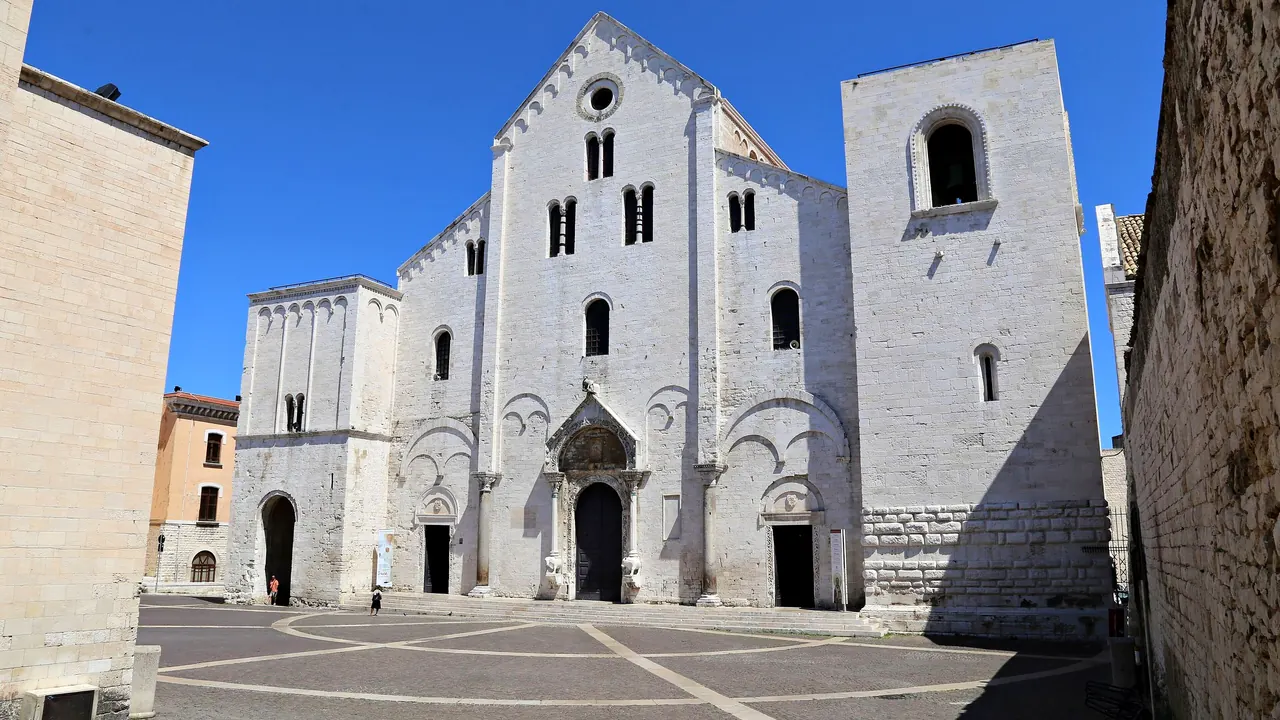
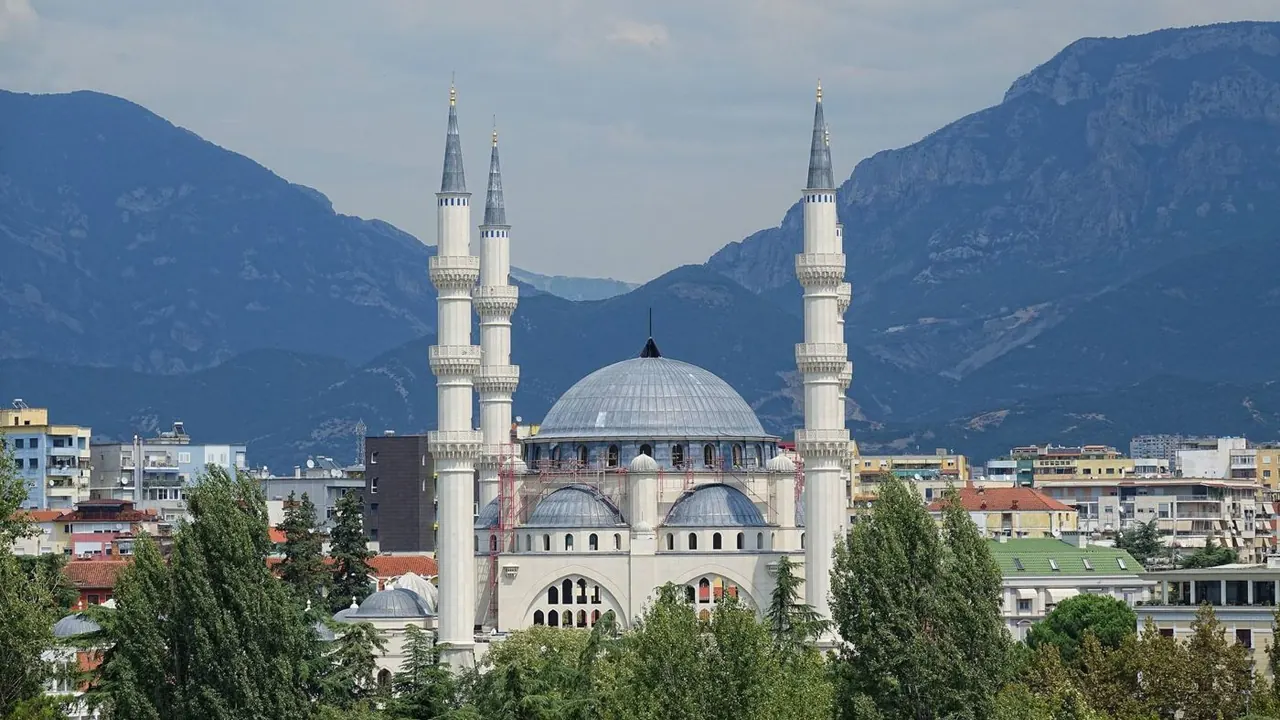
Photos: Bari by Sailko, CC BY-SA 4.0, cropped; Tirana by Bjørn Christian Tørrissen, CC BY-SA 4.0, cropped.
Bari or Tirana?
Our verdict in twelve categories, each scored against the same fixed benchmark cities, and the climate month by month, so you can choose for your trip.
Choose Bari for
- day trips
- beaches
- live music and the arts
Bari is the better base for a traveller who wants to eat well, swim in warm water and spend half the trip exploring. Matera's cave churches, the trulli of Alberobello, the white towns of the Valle d'Itria and the coves of Polignano are all within reach, many of them by train. Back in town there is a Romanesque old town to wander and an opera house worth dressing up for. Families with young children will also find it easier, with a sandy beach in the city and traffic-free lanes.
Choose Tirana for
- prices
- nature and the outdoors
- nightlife
Choose Tirana if your budget has to stretch, or if you would rather spend a morning in mountain forest than on a sun lounger. Mount Dajti rises from the edge of the city, and the Cold War bunkers and the old secret police building tell a recent history you will not find on the Italian side of the Adriatic. Kruja and Berat make strong full days out, and Blloku gives you a stylish evening for a fraction of Italian prices.
Scoreboard
Twelve categories on one fixed scale from 0 to 100. The shaded stretch is the gap between the two.
Your match
Pick a travel style or drag the sliders, and both match scores follow your weighting.
Wins on day trips and beaches with your weighting.
Wins on prices and nature and the outdoors with your weighting.
What matters to you?
Category by category
What the scores mean for a trip.
Beaches & swimming
Bari has the sea right at its edge. Families fill the sand at Pane e Pomodoro on summer afternoons, and the platforms around Torre Quetta continue along the shore. The real reward is the train south to the limestone coves of Polignano a Mare and the rocky inlets of Monopoli, which turn a city stay into a proper swimming trip.
Tirana is inland, so the sea takes about an hour to reach. You end up at the long hotel-lined beach of Durrës and Golem, where the shallow water suits children but summer weekends are packed. Albania's famous clear coves near Himara and Ksamil are far too distant for a day out.
Food & drink
Food is a main reason to visit Bari. Women roll orecchiette in the doorways of Bari Vecchia, and locals eat raw sea urchins and octopus by the old fishermen's pier. Focaccia barese and fried sgagliozze make a cheap lunch, and Primitivo and Negroamaro wines go with everything.
Tirana's cooking is rustic and very good, but it has less range: tavë kosi, fërgesë, morning byrek and grilled meat. Its best meals are often in the farm restaurants in the hills outside town rather than in the centre. Long coffees and a glass of raki after dinner are as much a part of the experience as the food. Neither city is strong on fine dining.
Culture & sights
Bari has the older and richer heritage. The Basilica di San Nicola is a landmark of Apulian Romanesque that still draws Orthodox pilgrims, and the cathedral, the Norman-Swabian castle and the whitewashed lanes of the old town are all a short walk apart. The palazzi of the Murat quarter and the Pinacoteca's southern Italian paintings fill out a second day.
Tirana's sights belong mostly to the twentieth century. Bunk'Art's Cold War tunnels and the House of Leaves, the old secret police building, are the visits that stay with you. The painted Et'hem Bey Mosque and the mosaic on the National History Museum add some colour around Skanderbeg Square. The city's older history is mostly found in the towns outside it.
Nightlife
The two are fairly even here, but the evenings feel different. In Bari, people drink outdoors in public squares. Students crowd the steps of Piazza Mercantile and Piazza Ferrarese, and in July and August the night moves out to beach clubs along the coast. Winter weeknights are quiet.
Tirana's nightlife is concentrated in Blloku, the former quarter of the communist leadership. Lounge terraces and cocktail bars draw a dressed-up local crowd, and a few larger clubs near the Grand Park lake stay open later than most places in Bari.
Nature & outdoors
Tirana has a mountain on its doorstep. The cable car up Mount Dajti takes about a quarter of an hour to reach forest trails and views across the plain to the sea. Within an hour or so you can be at the turquoise Bovilla reservoir, hiking around Gamti or heading for rafting rivers.
Bari's countryside is gentler. Its long seafront promenade is the main outdoor space, the bare karst plateau of Alta Murgia is about an hour inland, and there are the Castellana caves and the easy cycling of the Valle d'Itria. Walkers looking for real height will find more around Tirana.
Day trips
Day trips are where Bari stands out most. Matera's cave dwellings, the trulli of Alberobello, Ostuni and Martina Franca, Frederick II's octagonal Castel del Monte, Trani's cathedral on the sea and Baroque Lecce all fit into a single week, and the railways reach many of them.
Tirana has strong options too. Skanderbeg's castle at Kruja is under an hour away, and Berat's UNESCO-listed Ottoman houses are the highlight. Shkodra and Apollonia also repay the trip. But you travel by minibus, tour or hire car on slow roads, so each outing takes a full day, and there is less choice in total.
Good for families
Bari is easier with children. A sandy beach sits next to the centre, and the old town's lanes are free of traffic. Outings are close at hand too: the Castellana caves, the Fasano safari park and the trulli of Alberobello, which look like fairy-tale houses to a child.
Tirana is just as warm towards children, who are welcome in cafés late into the evening, and the Grand Park playgrounds and the Dajti cable car make good outings. But heavy traffic and broken pavements make pushing a buggy hard work, and the nearest beach is an hour away.
Getting around
Both centres are flat and easy to walk, but Bari is easier beyond the centre. A rail link runs to the airport, and regional lines run along the coast and inland towards Matera, though some are slow and many visitors still hire a car for the Valle d'Itria.
Tirana has no metro or tram, and its bus routes are poorly signed. Cheap taxis become the usual way to reach Bunk'Art or the cable car. Wide, busy roads make crossing on foot tiring, and day trips depend on minibuses or a car.
Shopping & style
Neither city is worth the trip for shopping alone, but Bari makes the better afternoon of it. For clothes, Via Sparano in the Murat quarter puts Italian labels and a few smarter boutiques along one pedestrian street in the heart of town. In Tirana, the high-street brands are spread across malls on the outskirts. Bari's real strength is its larder. A bag of hand-shaped pasta, a bottle of Apulian oil or Primitivo and a painted plate from the region pack easily and make a better haul than most visitors expect.
In Tirana, the more interesting buys are crafts rather than fashion. The Pazari i Ri market sells cheese, honey and raki much as Bari's delicatessens sell oil and wine. It also has felt hats, embroidery and filigree silver, and Bari has nothing like them. Kruja's covered bazaar is a good second stop on the day trip to the castle. Anyone hoping for clothes or design will find less choice in Tirana than on Via Sparano.
Affordability
Tirana is noticeably cheaper. A sit-down dinner, a taxi across town or a museum ticket costs a fraction of what it would in Western Europe, and even the smarter Blloku bars stay modest by European standards.
Bari is good value for Italy, with cheap street food, local wine and a free old town. But rooms get tight in July and August, and beach clubs and car hire for day trips push a summer budget up in a way Tirana rarely does.
Live music & performing arts
Bari has the stronger evening programme. The Teatro Petruzzelli, one of Italy's largest opera houses, puts on opera, ballet and symphony concerts, and in summer a long-running jazz festival fills the piazzas and the castle.
Tirana's opera and ballet house on Skanderbeg Square is pleasant and tickets are easy to get, but the programme is thinner. Albania's UNESCO-recognised polyphonic folk singing is rarely performed in the capital.
Wellness & relaxation
Neither city is a place for pampering, and both are better for a slow pace than for spa treatments. In Bari, people who want proper rest usually move out to a restored country estate in the Apulian countryside.
Tirana has the sulphur springs at Llixha, about an hour away, though the spa hotels there are simple and old-fashioned. Closer to town, Dajti's forests are a cool escape from city noise.
When should you go?
Pick your month. The climate figures are measured averages, not a forecast.
Bari in July
Tirana in July
Daytime high, °C
Rainfall in the month, mm
Where the figures come from
Bari has no rain gauge within 25 km of the centre, so its rainfall comes from a gridded climate dataset read at the city rather than from a gauge further away.
Bari's sunshine is measured 77 km from the centre, at Marina Di Ginosa.
Temperature and rainfall are climate normals, averaged over the years shown. Bari: 1991-2020 (sunshine 1961-1990) normals, Bari / Palese Macchie (7 km from centre). Tirana: 1961-1990 normals, Tirana (3 km from centre).
Summer runs much the same in both cities, with daytime highs around 30°C in July and August, which is good beach weather but tiring for sightseeing at midday. The big difference is rain. Bari's summers are almost completely dry, and the Adriatic there warms to 26°C by August, so you can swim comfortably from June to September. Rain arrives in autumn, peaking at about 83mm in November, though winters stay mild and are perfectly fine for a city visit.
Tirana gets far more rain. Its wet season runs from October to April and peaks at around 172mm in November, so winter visits mean grey skies and showers. In return, its summer is very sunny, especially in July. It is also slightly hotter, at about 31°C, which makes May, June, September and early October the best months for walking the city and the hills around it. For a beach trip, Bari's dry season is longer and more reliable.
Which traveller are you?
On a beach and sun trip, Bari is the clear choice. It has a sandy beach in the city, and the clear coves of Polignano and Monopoli are a short train ride away. From Tirana, the sea means a trip to Durrës, where the beach is crowded and the water near the port is not always clear.
On a trip on a tight budget, Tirana goes further. Byrek, grilled-meat dinners, raki, taxis and museum tickets all cost very little, and central hotels are good value. Bari is cheap for Italy, but rooms get scarce in summer and day trips by car soon add up.
For an outdoors trip, Tirana has more to offer. The Dajti cable car lifts you into beech and pine forest above the city, and the Bovilla gorge, Gamti's trails and river rafting are all close by. Around Bari it is mostly flat olive country, good for cycling but with no mountains.
Before you go
| Measure | Bari | Tirana |
|---|---|---|
| Official language | Italian | Albanian |
| Currency | Euro (EUR) | Lek (ALL) |
| Sockets | CFL230 V, 50 Hz | CF220 V, 50 Hz |
| Driving side | Right | Right |
| Time zone | UTC+1, UTC+2 in summer | UTC+1, UTC+2 in summer |
| Emergency number | 112 | 112 |
| Elevation | 5 m | 110 m |
| Main airport | Bari Karol Wojtyła International Airport (BRI)9 km from centre104 non-stop destinations | Tirana International Airport Mother Teresa (TIA)13 km from centre121 non-stop destinations |
| Public holidays this year | 13 days | 14 days |
By the numbers
| Measure | Bari | Tirana |
|---|---|---|
| City population | 315,473 | 389,323 |
| People per km² | 2,687 | 9,314 |
| Museums within 10 km | 12 | 11 |
| UNESCO World Heritage sites within 50 km | 1 | 0 |
| Swim season, months above 21 °C | 4 months | 5 months |
Where else could you go?
Every comparison below shares a destination with this one, so you can follow Bari or Tirana somewhere new.