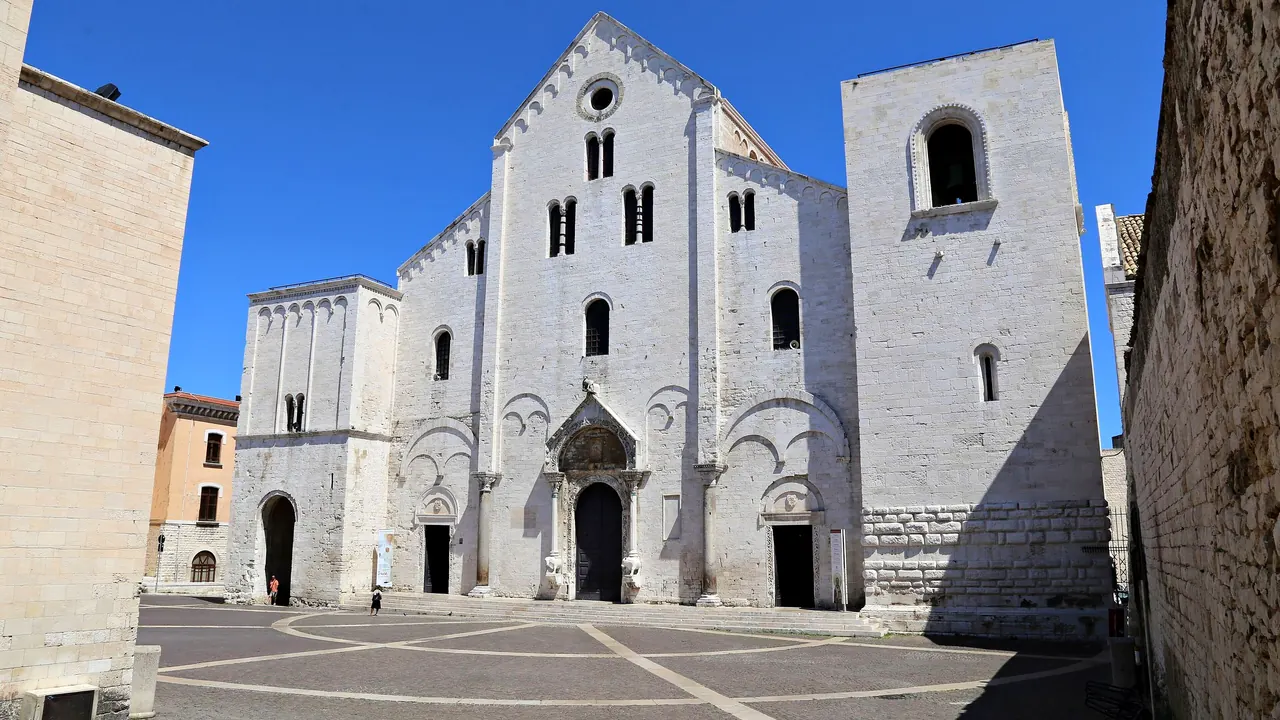
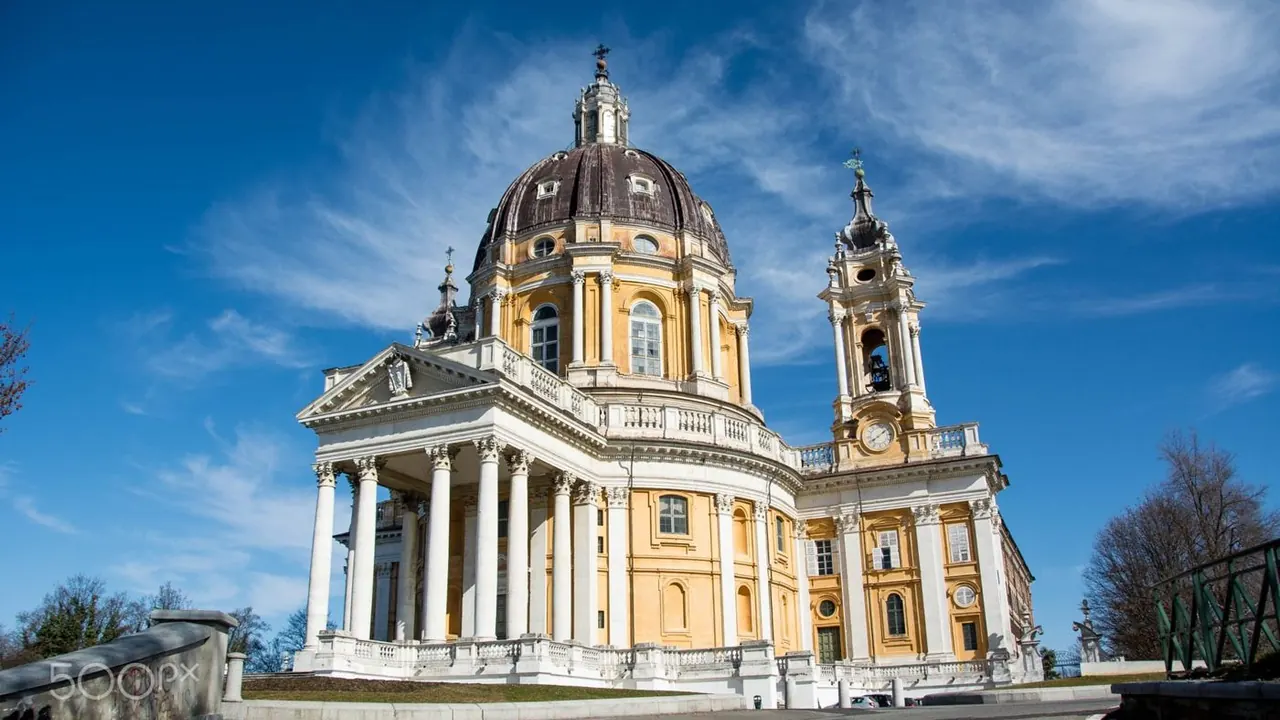
Photos: Bari by Sailko, CC BY-SA 4.0, cropped; Turin by Konstantin Dacosta, CC BY 3.0, cropped.
Bari or Turin?
Our verdict in twelve categories, each scored against the same fixed benchmark cities, and the climate month by month, so you can choose for your trip.
Choose Bari for
- beaches
- nightlife
- day trips
Bari suits a slow southern summer of sea, street food and day trips. The city beach and the coves around Polignano a Mare and Monopoli make swimming part of almost every day, and Matera, the trulli and the white towns of the Valle d'Itria are all within reach. Come for the Apulian coast and its towns, and for a pace built around long lunches and the evening stroll, rather than for big museums.
Choose Turin for
- nature and the outdoors
- culture and sights
- live music and the arts
Turin is the choice when the trip is about museums, mountains and serious eating. The Museo Egizio, the Savoy palaces and a full opera season give it real depth, the Alps are close enough for hiking or skiing, and the Langhe wine country lies just south. It has no sea, though, so anyone who needs a swim in summer should look elsewhere.
Scoreboard
Twelve categories on one fixed scale from 0 to 100. The shaded stretch is the gap between the two.
Your match
Pick a travel style or drag the sliders, and both match scores follow your weighting.
Wins on beaches and nightlife with your weighting.
Wins on nature and the outdoors and culture and sights with your weighting.
What matters to you?
Category by category
What the scores mean for a trip.
Beaches & swimming
Bari can give you a beach vacation and Turin cannot. In Bari you can swim at Pane e Pomodoro or off the rocks near Torre Quetta without leaving town, and the clear coves south towards Polignano a Mare and Monopoli are an easy half-day by train.
Turin is inland on the Po plain. The nearest sea is the Ligurian coast near Savona, close to two hours away, and in summer the locals make do with small lakes such as Avigliana. If you can't do without a swim, Turin only works if you add a few separate days on the coast.
Food & drink
Both cities eat very well, but Turin has the greater depth. Piedmontese cooking is rich and precise: agnolotti del plin, vitello tonnato, autumn white truffles from the Langhe and Barolo on every wine list. It also has an aperitivo tradition, the gianduja chocolate born in the city and bicerin served in the historic arcade cafés.
Bari is better on the street and at the market. Focaccia barese, panzerotti, fried polenta and raw seafood eaten by the fishermen's pier are cheap pleasures Turin cannot match. Sit-down meals of orecchiette and tiella are generous but simple, and the fine-dining choice is small.
Culture & sights
Turin is in another league for sightseeing. The Museo Egizio alone justifies a visit, and around it are the Royal Palace, Palazzo Madama, the Shroud cathedral, the National Cinema Museum in the Mole and the UNESCO-listed Savoy residences, with contemporary art at Rivoli. That is enough for several full days.
Bari's sights cluster in Bari Vecchia, where the Basilica di San Nicola is a fine example of Apulian Romanesque and a pilgrimage site. Add the cathedral, the castle and the Murat quarter and you have a pleasant day or two, not a week's worth.
Nightlife
Neither city is a party destination, and both are relaxed and sociable after dark. The difference is in the setting. Bari's nights happen outdoors and late, with crowds on the steps of Piazza Mercantile and Piazza Ferrarese and beach clubs along the coast in high summer, but winter weeknights go quiet.
Turin's evenings begin with a long aperitivo and then spread across distinct bar districts: the wine bars of the Quadrilatero Romano, the student pavements of San Salvario and the slightly alternative Vanchiglia, with clubs in old industrial buildings and the riverside Murazzi in summer.
Nature & outdoors
Turin has the Alps on its horizon, and they are close enough to visit. Gran Paradiso's ibex and high trails, the Susa valley and the ski slopes of the Via Lattea are around an hour or so away, offering hiking, climbing and skiing in season. Closer in, there are the Superga hills, the Mandria forest and riverside cycling in Valentino park.
Bari's surroundings are gentler. You get a long seafront promenade, open walking and cycling on the Alta Murgia plateau and the Grotte di Castellana, but there are no mountains, and the wilder Gargano is too far for a day.
Day trips
Both are excellent bases, and the difference lies in what surrounds them. From Bari, the trips are to remarkable towns: the cave dwellings of Matera, the trulli of Alberobello, white Ostuni, Trani's cathedral by the sea and Baroque Lecce. Slow regional lines mean a car helps inland.
From Turin, the trips lean towards wine and landscape: the Langhe vineyards around Alba, Barolo and Bra, the Sacra di San Michele on its rock, and Aosta or Lake Maggiore. Fast trains also put Milan within an hour and Genoa within about two.
Good for families
The two are about equally manageable with children, in different ways. Bari offers a sandy city beach, traffic-free lanes and gelato on the evening passeggiata, which suits young children, though attractions such as the caves and the safari park mean trips out of town.
Turin gives older children more to do within the city: the glass lift up the Mole, the Egyptian mummies, the car museum and the rack railway to Superga. Its arcades also offer shelter from rain and sun. Neither city has a zoo or aquarium in the centre.
Getting around
Both centres are flat and easy to walk, and Turin's is slightly simpler to get around. Its grid of arcaded streets runs from Porta Nuova to the river, and a driverless metro line and the fast rail links to other Italian cities add reach.
Bari Vecchia, the Murat streets and the seafront sit side by side, and a train goes to the airport. The city buses, though, are slow, and the regional railways to Matera and the Valle d'Itria run infrequently, so many visitors hire a car.
Shopping & style
Turin gives a shopper more. Via Roma has luxury labels under its arcades, there are boutiques around Via Lagrange, antique dealers on Via Maria Vittoria and the Balon flea market on Saturdays, and the chocolate makers and truffle delicatessens are a draw in their own right.
Bari's Via Sparano is mostly high-street chains. The real finds are food to take home, such as dried orecchiette, taralli and olive oil, along with Puglian ceramics.
Affordability
Costs are similar in the two cities, and both are comfortable rather than cheap. Bari's savings come from street food, cheap local wine and a free old town, while its rooms get tighter in July and August.
In Turin, a generous aperitivo can replace dinner and Porta Palazzo market is good value. Spending rises with museum tickets, fine dining, truffle season and trade-fair weeks.
Live music & performing arts
Turin has the fuller calendar. The Teatro Regio stages opera and ballet, the RAI National Symphony Orchestra plays at its own auditorium, there are concerts at the Lingotto, and jazz clubs and music festivals run through the year.
Bari's highlight is the Teatro Petruzzelli, one of Italy's largest opera houses and well worth an evening out. Beyond that, the offer is mainly summer jazz and open-air concerts in the piazzas and the castle.
Wellness & relaxation
Neither city has a bathing tradition, and spas in both are mostly in hotels. Turin is the more restful stay, with slow coffee in historic cafés, walks along the Po and in Valentino park, and real thermal waters at Acqui Terme or in the Aosta valley if you are willing to travel.
Bari's calm comes from its southern routine of long lunches, an afternoon break and the seafront stroll. Anyone looking for proper pampering usually moves out to a restored country estate.
When should you go?
Pick your month. The climate figures are measured averages, not a forecast.
Bari in July
Turin in July
Daytime high, °C
Rainfall in the month, mm
Where the figures come from
Bari has no rain gauge within 25 km of the centre, so its rainfall comes from a gridded climate dataset read at the city rather than from a gauge further away.
Bari's sunshine is measured 77 km from the centre, at Marina Di Ginosa.
Turin has no rain gauge within 25 km of the centre, so its rainfall comes from a gridded climate dataset read at the city rather than from a gauge further away.
Temperature and rainfall are climate normals, averaged over the years shown. Bari: 1991-2020 (sunshine 1961-1990) normals, Bari / Palese Macchie (7 km from centre). Turin: 1991-2020 normals, Torino / Caselle (15.4 km from centre).
Bari is a summer city. From June to September the days are hot, reaching 30°C in July and August, and the Adriatic is warm enough to swim in, at around 26°C at its peak. Midday in high summer is too hot for walking, so sightseeing moves to the mornings and evenings. Rain comes in autumn, building to around 83mm in November, and winters are mild and grey but rarely cold. Late spring and early autumn are the most comfortable months for exploring the old town and the towns around it.
Turin runs on a different calendar. Winters are colder, with January highs of only 7°C, though they are fairly dry and make for crisp walks under the arcades and ski days in the mountains. Spring is the wettest part of the year, with May the rainiest month at about 115mm. Summer is warm and sometimes sticky, which suits the Alps more than the city streets, and September and October bring settled walking weather along with the truffle and wine season in the hills.
Which traveller are you?
On a beach and sun trip, Bari is the clear pick. Its sandy city beach covers a quick swim, and the coves of Polignano a Mare and Monopoli are a short train ride away. Turin has no sea, and the nearest Riviera beaches make a long day.
For a culture and arts trip, Turin offers much more. The Museo Egizio, the Royal Palace, the Savoy residences and the Teatro Regio's opera season fill several days. Bari's basilica and old town are characterful, but most visitors see them in a day or two.
On an outdoors trip, Turin wins because the Alps are close. Gran Paradiso's high trails, ski slopes around Sestriere and walks in the hills to Superga are all easy to reach. Bari's flat surroundings give gentle cycling in the Murgia and not much more.
Before you go
| Measure | Bari | Turin |
|---|---|---|
| Official language | Italian | Italian |
| Currency | Euro (EUR) | Euro (EUR) |
| Sockets | CFL230 V, 50 Hz | CFL230 V, 50 Hz |
| Driving side | Right | Right |
| Time zone | UTC+1, UTC+2 in summer | UTC+1, UTC+2 in summer |
| Emergency number | 112 | 112 |
| Elevation | 5 m | 239 m |
| Main airport | Bari Karol Wojtyła International Airport (BRI)9 km from centre104 non-stop destinations | Turin Airport (TRN)14 km from centre65 non-stop destinations |
| Public holidays this year | 13 days | 13 days |
By the numbers
| Measure | Bari | Turin |
|---|---|---|
| City population | 315,473 | 841,600 |
| People per km² | 2,687 | 6,474 |
| Museums within 10 km | 12 | 72 |
| UNESCO World Heritage sites within 50 km | 1 | 4 |
| Swim season, months above 21 °C | 4 months | - |
Where else could you go?
Every comparison below shares a destination with this one, so you can follow Bari or Turin somewhere new.