Photos: Bariloche by Maclemo, CC BY-SA 3.0, cropped; Interlaken by Roy Egloff, CC BY-SA 4.0, cropped.
Bariloche or Interlaken?
Our verdict in twelve categories, each scored against the same fixed benchmark cities, and the climate month by month, so you can choose for your trip.
Choose Bariloche for
- prices
- food and drink
- culture and sights
Bariloche suits travellers who want wild Andean lake and forest country with a little more life after dark and a gentler bill. Patagonian lamb, lake trout, brewery gardens and the chocolate shops of Calle Mitre give a stay more flavour, and cabins, hostels and free trails in Nahuel Huapi keep costs within reason by mountain-resort standards. The catch is distance. Beyond the bus lines along Avenida Bustillo, you will want a car or a tour.
Choose Interlaken for
- day trips
- getting around
- families
Pick Interlaken if you want the Alps with Swiss precision. Trains, cog railways, gondolas and steamers bring the Jungfrau, the Lauterbrunnen valley and the old town of Bern within easy reach without a car, which also makes it the easier choice with children. Expect to pay heavily for that, and to eat and drink plainly, because the town itself offers little beyond the view.
Scoreboard
Twelve categories on one fixed scale from 0 to 100. The shaded stretch is the gap between the two.
Your match
Pick a travel style or drag the sliders, and both match scores follow your weighting.
Too close to call, 1 point apart
Wins on prices and food and drink with your weighting.
Wins on day trips and getting around with your weighting.
What matters to you?
Category by category
What the scores mean for a trip.
Beaches & swimming
Neither town is a beach destination, and both offer lake shores below snowy peaks rather than sand and surf. The difference is the water. Bariloche's glacial lakes rarely get much above 15°C even in January, so Playa Bonita or the shore of Lago Gutiérrez is for sunbathing, a picnic and a quick, bracing plunge.
Interlaken's Lake Thun reaches about 21°C in a good July or August, and the grassy lidos at Neuhaus and towards Spiez make a proper swim after a hike realistic, though only for a few summer weeks.
Food & drink
Bariloche eats better and more distinctively. Its Patagonian cooking has real local character, with lamb roasted on an iron cross, lake trout, venison and smoked cheeses. The chocolatiers of Calle Mitre are worth a visit in their own right, and the small breweries on the road to Cerro Catedral make for easy afternoons.
Interlaken's restaurants are reliable but generic, with fondue and rösti alongside Indian and Asian kitchens. Its best food is up the mountain: cheese from an Alpine dairy, or lunch on a hut terrace above Mürren.
Culture & sights
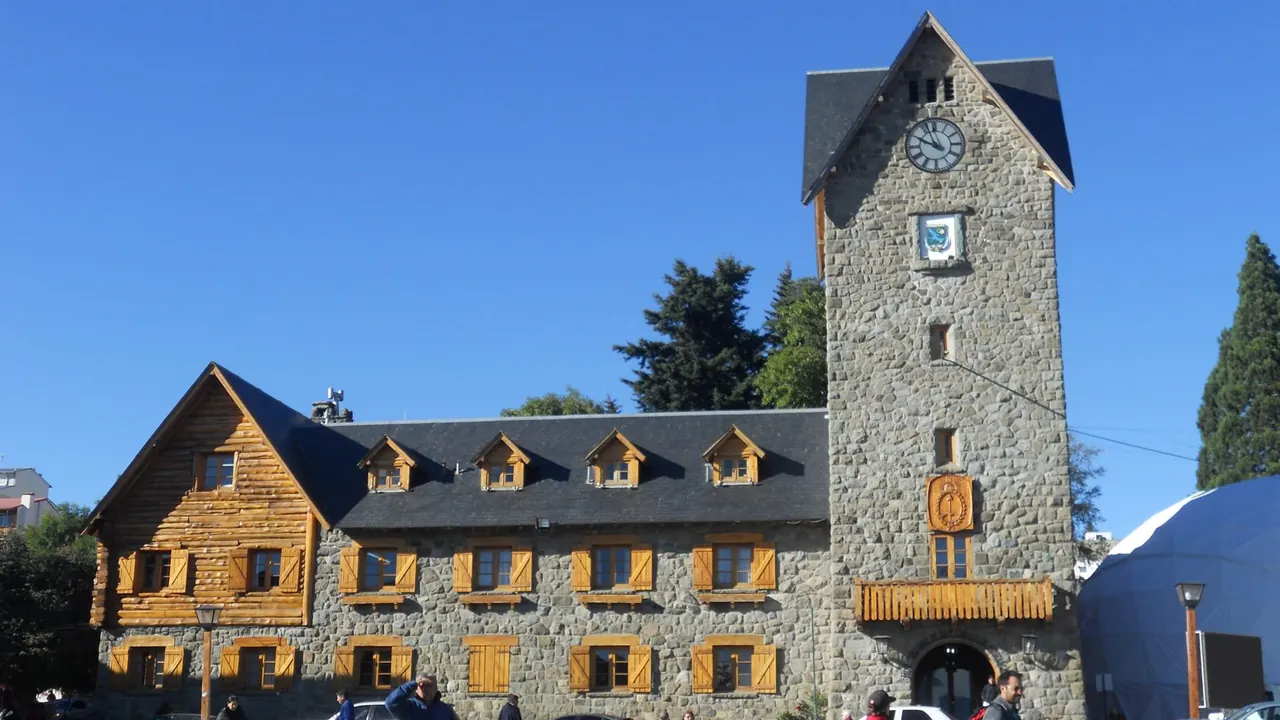
Neither town is a destination for its sights, but Bariloche at least has a townscape with its own character. The stone and timber civic square from the 1930s set the alpine look the town is known for, and the regional museum on it is a good introduction to the Mapuche and the settlers before you head into the park. One of the square's architects, Alejandro Bustillo, also designed the Llao Llao hotel and its small wooden chapel, which make a worthwhile stop on the Circuito Chico.
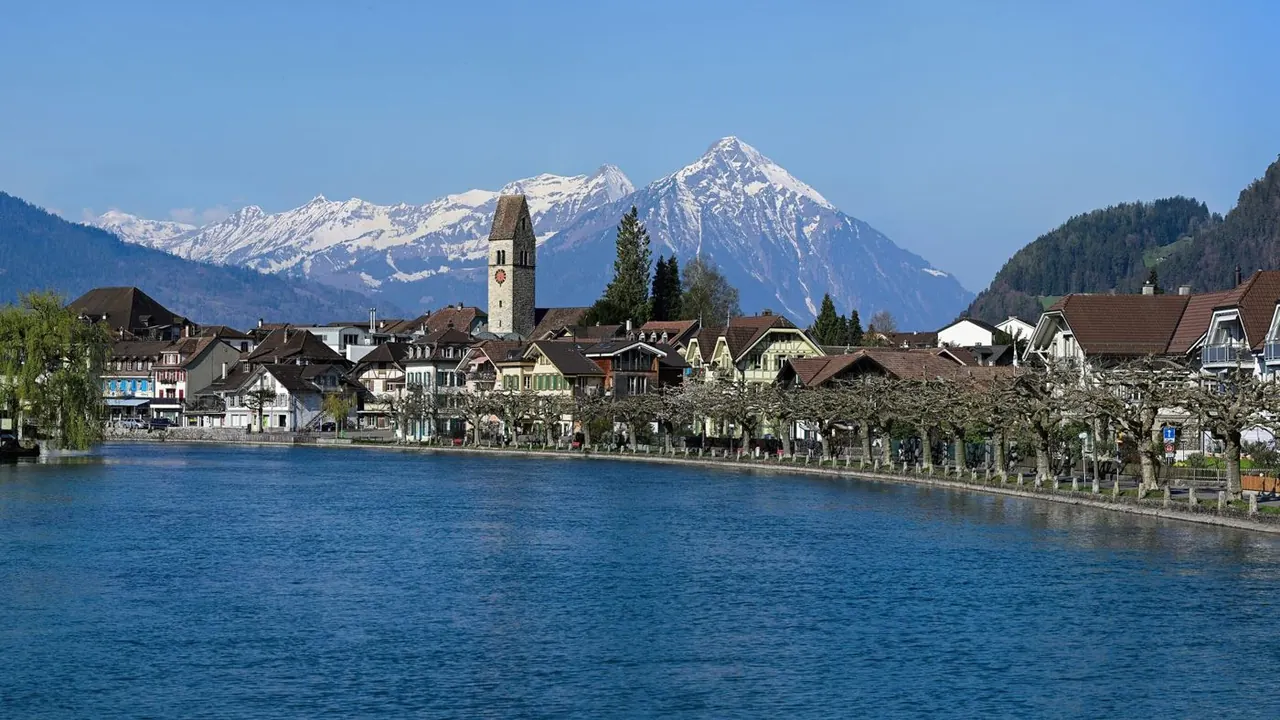
Interlaken has even less to show. Its sights fit into a single walk: the row of grand nineteenth-century hotels and the Kursaal facing the Höhematte meadow, then across the Aare to the few old timber houses of Unterseen. Bariloche fills a morning, but in Interlaken you need a train to reach any real museum or historic quarter.
Nightlife
Bariloche keeps Argentine hours, so evenings run later. Its big dance clubs belong to the school-leavers' trips, though, and most adults will prefer the brewpubs, the bars around Calle Mitre and a long dinner by the fire. Interlaken winds down early because everyone has a dawn train or paraglide to catch. Beyond a few backpacker pubs, basement clubs and the Kursaal casino, the town is quiet well before midnight.
Nature & outdoors
Both are among the world's great mountain bases, and the difference is in kind. Bariloche offers wilder, emptier country: a vast glacial lake inside Nahuel Huapi National Park, forests of coihue and lenga, hut-to-hut trekking from Cerro Catedral to the Frey and Jakob refuges, fly fishing, and the hanging glaciers of Tronador.
Interlaken's Alps are sheerer and far more developed. Trains and cable cars take you beneath the Eiger, Mönch and Jungfrau, into the Lauterbrunnen valley or up to the Jungfraujoch at 3,454m, and the town is a hub for paragliding, canyoning and rafting. Expect more people on the trails, and cloud that can hide the peaks for days.
Day trips
Interlaken is the clear winner here. Bern's arcaded medieval centre is under an hour away by train and Thun's castle half an hour. Lake steamers to Spiez and Oberhofen, the open-air museum at Ballenberg and Lucerne by way of the Brünig line can fill several more days.
From Bariloche, outings are mostly into scenery. Villa La Angostura and the craft market at El Bolsón reward the drive, but there are no heritage towns or wine regions within reach.
Good for families
Interlaken is the smoother family base. Besides the mountain lifts, there are the St Beatus caves above Lake Thun and the farm animals and craft demonstrations at Ballenberg, though the highest summits can be hard on very young children.
Bariloche suits active families, with ski schools at Cerro Catedral, sledging on Cerro Otto, boat trips to Isla Victoria and chocolate workshops on Calle Mitre. Because it is so spread out, those outings involve more travel. Neither town has a zoo or aquarium to fall back on when it rains.
Getting around
This is where the two differ most once you are there. Interlaken is flat and compact, and its mainline trains, narrow-gauge mountain railways, gondolas and steamers connect so neatly that you can explore the whole Jungfrau region without a car.
Bariloche stretches for about 25km along Avenida Bustillo. Buses reach Llao Llao and Cerro Catedral, but for Circuito Chico, Villa La Angostura or Tronador most visitors hire a car or book tours, and winter ice makes the roads harder going.
Shopping & style
Bariloche has the edge, mainly because much of what it sells is made locally: chocolate on Calle Mitre, Patagonian wool knitwear, smoked trout, and the woodwork and Mapuche-style textiles at the craft fairs. Interlaken's Höheweg is given over to watch and jewellery stores, army knives and cuckoo clocks for tour groups, and Brienz woodcarving is the one local craft worth seeking out. Neither has fashion or design boutiques.
Affordability
Bariloche is expensive by Argentine standards, but Interlaken is expensive by almost anyone's. Bariloche's hotels, cabins and restaurants charge resort prices, steepest in January and during the July school break, and ski passes and organised excursions add to the bill. Spring and autumn, away from those peak weeks, are noticeably cheaper.
In Interlaken the mountain railways and the trip to the Jungfraujoch are the whole point of going, and they cost far more than most visitors expect, on top of full Swiss prices for beds and meals. Regional passes and picnics soften the bill without making it cheap.
Live music & performing arts
Bariloche has the stronger musical tradition. The Camerata Bariloche chamber orchestra carries the town's name, and the Semana Musical Llao Llao brings a yearly week of concerts above the lake, though on most nights there is little beyond folk music in a bar. Interlaken's highlight is the summer open-air William Tell, played by local amateurs in the woods, along with folklore evenings of yodelling and alphorns. For an orchestra, you go to Bern.
Wellness & relaxation
Neither town has thermal springs, and in both a spa day means a grand hotel, either the Llao Llao above Nahuel Huapi or the old hotels along the Höheweg. The difference is where you find quiet. In Bariloche it means staying out along the lake towards Llao Llao or Colonia Suiza, while in Interlaken it means lakeside villages, slow steamer crossings, or car-free Wengen and Mürren above the valley.
When should you go?
Pick your month. The climate figures are measured averages, not a forecast.
Bariloche in July
Interlaken in July
Daytime high, °C
Rainfall in the month, mm
Where the figures come from
Interlaken has no rain gauge within 25 km of the centre, so its rainfall comes from a gridded climate dataset read at the city rather than from a gauge further away.
Temperature and rainfall are climate normals, averaged over the years shown. Bariloche: 1991-2020 normals, Bariloche Aerodrome (11.2 km from centre). Interlaken: 2005-2020 (rainfall 1991-2020) normals, Meiringen / Unterbach (19.3 km from centre).
The two run on opposite calendars. Bariloche's summer, from December to March, is its best season for hiking and lake shores, with highs near 23°C, very little rain and long sunny days. From May to August the rain sets in hard, peaking at about 172mm in June, and on the mountains that means snow, so these months are for skiing rather than walking.
Interlaken is warmest from June to August, around 24°C in July, which is warm enough for a swim in Lake Thun. Those are also its wettest months, though, and cloud can sit on the peaks. May and September are mild for walking, and winter highs of about 3°C leave the season to skiers.
Which traveller are you?
On a trip on a tight budget, Bariloche is the realistic choice. Resort prices peak in January and July, but valley cabins, self-catering, city buses and free trails make it manageable, while Interlaken's mountain railways leave no cheap way in.
On a family trip with children, Interlaken is easier. The trains and gondolas are an adventure in themselves, the summit stations have play areas and short walks, and the rail network takes the driving out of the trip, which Bariloche's long lakeside sprawl rarely allows.
For a food and nightlife trip, Bariloche gives far more. Fire-roasted lamb, smoked meats and brewery gardens beat Interlaken's dependable fondue and curry houses, and late Argentine dinners keep the evening going long after Interlaken's streets have gone quiet.
Before you go
| Measure | Bariloche | Interlaken |
|---|---|---|
| Official language | Spanish | French, German, Italian, Romansh |
| Currency | Argentine Peso (ARS) | Swiss Franc (CHF) |
| Sockets | CI220 V, 50 Hz | CJ230 V, 50 Hz |
| Driving side | Left | Right |
| Time zone | UTC-3 | UTC+1, UTC+2 in summer |
| Emergency number | 117 or 911 | 112 |
| Elevation | 794 m | 571 m |
| Main airport | Teniente Luis Candelaria International Airport (BRC)12 km from centre17 non-stop destinations | Zürich Airport (ZRH)100 km from centre226 non-stop destinations |
| Public holidays this year | 16 days | 10 days |
By the numbers
| Measure | Bariloche | Interlaken |
|---|---|---|
| City population | 136,381 | 6,123 |
| People per km² | 619 | 1,424 |
| Museums within 10 km | 3 | 3 |
| UNESCO World Heritage sites within 50 km | 0 | 2 |
Where else could you go?
Every comparison below shares a destination with this one, so you can follow Bariloche or Interlaken somewhere new.