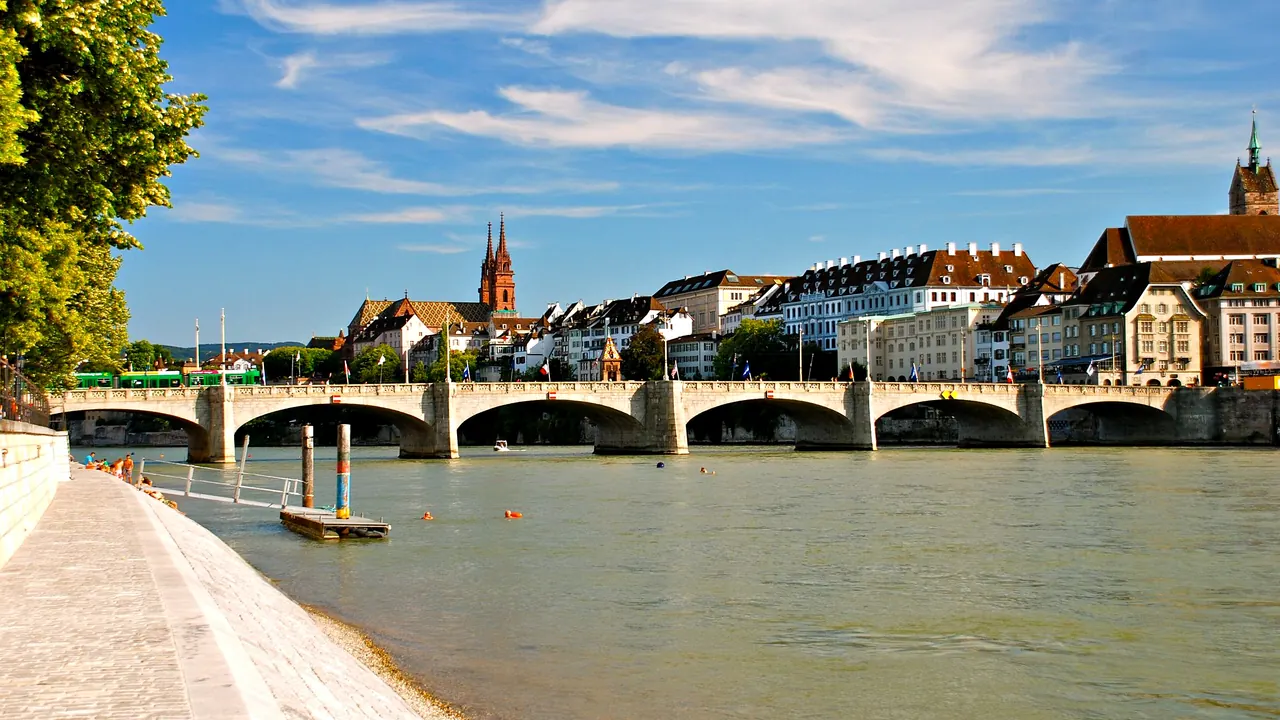
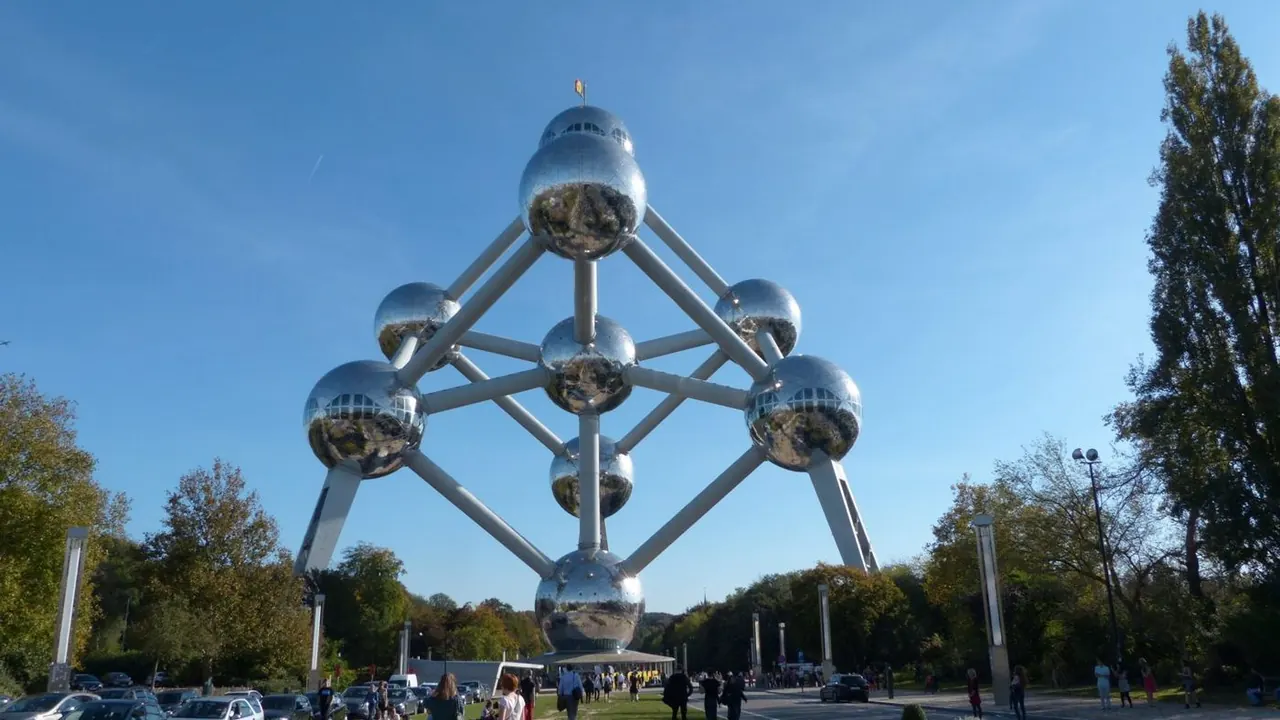
Photos: Basel by Lucazzitto, CC BY-SA 3.0, cropped; Brussels by Ettanghe, CC BY-SA 4.0, cropped.
Basel or Brussels?
Our verdict in twelve categories, each scored against the same fixed benchmark cities, and the climate month by month, so you can choose for your trip.
Choose Basel for
- wellness
- getting around
- beaches
Basel suits a calm, orderly trip in which the city itself is the starting point. It has superb museums in a small, intact old town, the easiest public transport you will find, a summer river to float down, and the Jura, Black Forest and Vosges close by for walking. Spa towns lie just over the borders too. The catch is the bill: this is Switzerland, and the evenings are quiet.
Choose Brussels for
- prices
- food and drink
- nightlife
Brussels rewards travellers who want more going on, and who want to spend less doing it. Eating and drinking are reasons to come in their own right, from frites and mussels to lambic beer in old taverns, and the bars around Saint-Géry and Ixelles keep the evenings going. Shopping for chocolate, antiques and Belgian design adds to that. The city is rougher round the edges and hardly restful, but it gives more for the money.
Scoreboard
Twelve categories on one fixed scale from 0 to 100. The shaded stretch is the gap between the two.
Your match
Pick a travel style or drag the sliders, and both match scores follow your weighting.
Wins on wellness and getting around with your weighting.
Wins on prices and food and drink with your weighting.
What matters to you?
Category by category
What the scores mean for a trip.
Beaches & swimming
Neither city has a beach, but Basel has a real summer swimming culture. From June to early September locals walk up the Kleinbasel bank and float back past the old town on the Rhine current, then dry off on the gravel banks. The current is strong, so this is one for confident swimmers.
Brussels has nothing like it. Swimming there means Art Deco indoor pools or the summer open-air basins. The sandy coast at Ostend is a little over an hour away by train, but the North Sea stays cool and windy, so it makes a day out rather than a swim.
Food & drink
Brussels is a city people travel to for food, and Basel is not. In Brussels, mussels, carbonnade stewed in beer, shrimp croquettes and frites from a friterie sit alongside one of the world's great beer cultures, with lambics and gueuzes brewed only in this corner of Belgium. Matonge, Saint-Josse and Saint-Gilles add Congolese, Moroccan and Turkish cooking.
Basel eats well but carefully. It has few specialities of its own beyond Läckerli and Fasnacht flour soup, and it borrows from Alsace and Baden. Its fine dining is very good, but everyday meals feel pricey, which is why many locals cross the border to eat.
Culture & sights
Both are excellent for culture, but in different ways. Basel's strength is its art collections. The Kunstmuseum's Holbeins, the Fondation Beyeler in its Renzo Piano building, the Museum Tinguely and the Vitra campus over the German border make an unusually rich run for a small city, and they are set in an old town of red sandstone and guild houses that is still intact.
Brussels has the bigger single showpiece in the Grand-Place. It also has Bruegel and Magritte on the upper town hill, and Horta's UNESCO-listed Art Nouveau houses in Saint-Gilles and Ixelles. Its historic fabric is patchier, though, broken up by office blocks, where Basel's centre is whole and easy to take in within a few days.
Nightlife
Brussels has much the livelier evenings. Bars spill out around Saint-Géry and the Bourse, Place Flagey and Châtelain draw a local crowd, and a well-known techno club in the Marolles and the queer scene on Rue du Marché au Charbon give it some depth after midnight. Beer in century-old taverns ties the whole night together.
Basel is pleasant but quiet. In summer people drink on the Kleinbasel steps by the river, and in winter the bars are around the Kaserne, all at Swiss prices. Its great night out is Fasnacht, three days of drums and lanterns in late winter that nothing in Brussels matches.
Nature & outdoors
Basel has far better countryside on its doorstep. The Jura ridges start just south of town, the Black Forest summits rise above 1,400m within an hour, and the Vosges lie to the west, all with marked trails. Flat Rhine paths make easy cycling into Germany and France.
Brussels has one fine asset in the Sonian Forest, with its tall beech stands. Beyond that it is surrounded by flat farmland, and the Ardennes valleys around Dinant are a longer day out.
Day trips
Both are first-rate bases, and the difference is what lies around them. From Brussels, short train rides reach Belgium's great historic towns: Ghent in about half an hour, Antwerp and Bruges soon after, and Leuven and Mechelen closer still. Paris is within about an hour and a half by high-speed train.
Basel opens instead onto three countries and three kinds of scenery. Colmar and the Alsace wine villages, Freiburg and the Black Forest, then Lucerne, Bern and the Rhine Falls offer mountains and vineyards where Brussels offers mostly cities.
Good for families
These are about equal for children, with different highlights. Basel is small, clean and calm. The Zolli is one of Europe's best zoos, the current-driven ferries delight small children, and Europa-Park is about an hour away by car.
Brussels has more for indoor days, which its weather often calls for. There are the Iguanodon hall at the Natural Sciences museum, the Atomium and Mini-Europe, and comic murals across the centre, with Walibi and Pairi Daiza nearby. Cobbles and heavy traffic make it harder going with a pushchair than Basel.
Getting around
Basel is the easier city to move around. Its compact centre and both river banks are walkable, green trams reach everywhere, some lines cross into France and Germany, and hotel guests ride free. The main station puts most of Switzerland a short train ride away.
Brussels works well enough, with metro, trams and contactless payment. But the climb between the lower and upper town is steep, the pavements are rough, and driving is a trial.
Shopping & style
Brussels is the better place to browse. Master chocolatiers line the Galeries Royales and the Sablon, which also has a weekend antiques market. The Jeu de Balle flea market runs daily in the Marolles, and Rue Antoine Dansaert has Belgian designers.
Basel's shopping is neat but thin. Watches and chocolate line Freie Strasse, and there are small design shops around Spalenberg. Its Christmas market by the Münster is the one real draw.
Affordability
Brussels is clearly the cheaper stay, though neither is a budget city. Weekends are the bargain there, when the business hotels empty, and frites, immigrant-quarter cooking and good-value beer keep daily spending down.
In Basel nearly everything costs Swiss prices, from rooms and meals to museum entry, and rooms become scarce during the big trade fairs. The free transport card helps, and so does slipping over the border to eat or even to sleep.
Live music & performing arts
Brussels has the slightly broader stage. La Monnaie has adventurous opera and a place in Belgian history, Bozar and Flagey host major orchestras, and the Queen Elisabeth Competition is a fixture each spring. Add contemporary dance and theatre in two languages, plus rock tours.
Basel is impressively serious for its size, with bold work at Theater Basel, the fine Stadtcasino hall and a strong early-music tradition. Its season goes quiet in high summer.
Wellness & relaxation
Basel is the better place to unwind, mostly because of what lies just beyond it. The saline baths at Rheinfelden are a short train ride away. Over the German border, Badenweiler and Bad Krozingen have warm mineral pools and saunas, and Baden-Baden is within reach if you give it the whole day. Back in town, slow Sundays and the river steps set an unhurried rhythm that Brussels rarely matches.
Brussels has nothing like that spa country close by. Its own spa town is too far for an easy outing. The closest it comes to a bathing culture is the North African hammams, along with a swim in one of its Art Deco pools. Rest there comes more from lingering at the table and from green space, chiefly the beech woods on the city's south-eastern edge, and the noise of a busy capital is never far off.
When should you go?
Pick your month. The climate figures are measured averages, not a forecast.
Basel in July
Brussels in July
Daytime high, °C
Rainfall in the month, mm
Temperature and rainfall are climate normals, averaged over the years shown. Basel: 1991-2020 (sunshine 1961-1990) normals, Basel / Binningen (1.9 km from centre). Brussels: 1991-2020 normals, Uccle (5.2 km from centre).
Basel has the warmer, sunnier summer. July reaches about 26°C, with more sunshine than Brussels from spring to autumn, and from June to early September the Rhine is warm enough for the city's famous float downstream. The trade-off is that its summer is also its wettest season, with frequent showers and thunderstorms from May to August. Winters are cold and grey but fairly dry, which suits museum days and the Christmas market.
Brussels runs milder and cloudier all year. Summer highs sit around 23°C, comfortable for walking all day, and April is its driest month at about 47mm. Rain falls in every season, though, and it peaks in late summer and again in December at around 90mm. For either city, May to September is the best window. Basel is the better choice if you want heat and the river, Brussels if you prefer cooler days for walking from one town to the next.
Which traveller are you?
For a food and nightlife trip, Brussels is the clear choice. Belgian cooking, hundreds of beers in brown cafés, Congolese and Moroccan food in its immigrant quarters, and late bars in Saint-Gilles and Ixelles go far beyond Basel's riverside kiosks.
On a trip on a tight budget, Brussels is the realistic option. Frites, neighbourhood cooking and cheap weekend hotel rooms keep costs in check. Basel charges Swiss prices for almost everything, though its free transport card and cheaper meals over the border help a little.
For a relaxing and wellness trip, Basel fits better. Its pace is unhurried, the Rhine banks are made for idling, and the saline baths at Rheinfelden and the spa towns of southern Baden are close. Brussels offers mostly hammams and hotel spas, all at a working capital's pace.
Before you go
| Measure | Basel | Brussels |
|---|---|---|
| Official language | French, German, Italian, Romansh | French, German, Dutch |
| Currency | Swiss Franc (CHF) | Euro (EUR) |
| Sockets | CJ230 V, 50 Hz | CE230 V, 50 Hz |
| Driving side | Right | Right |
| Time zone | UTC+1, UTC+2 in summer | UTC+1, UTC+2 in summer |
| Emergency number | 112 | 112 |
| Elevation | 247 m | 70 m |
| Main airport | EuroAirport Basel–Mulhouse–Freiburg (BSL)7 km from centre112 non-stop destinations | Brussels Airport (BRU)11 km from centre191 non-stop destinations |
| Public holidays this year | 10 days | 14 days |
By the numbers
| Measure | Basel | Brussels |
|---|---|---|
| City population | 176,329 | 195,546 |
| People per km² | 7,378 | 5,908 |
| Museums within 10 km | 61 | 106 |
| UNESCO World Heritage sites within 50 km | 2 | 11 |
Where else could you go?
Every comparison below shares a destination with this one, so you can follow Basel or Brussels somewhere new.