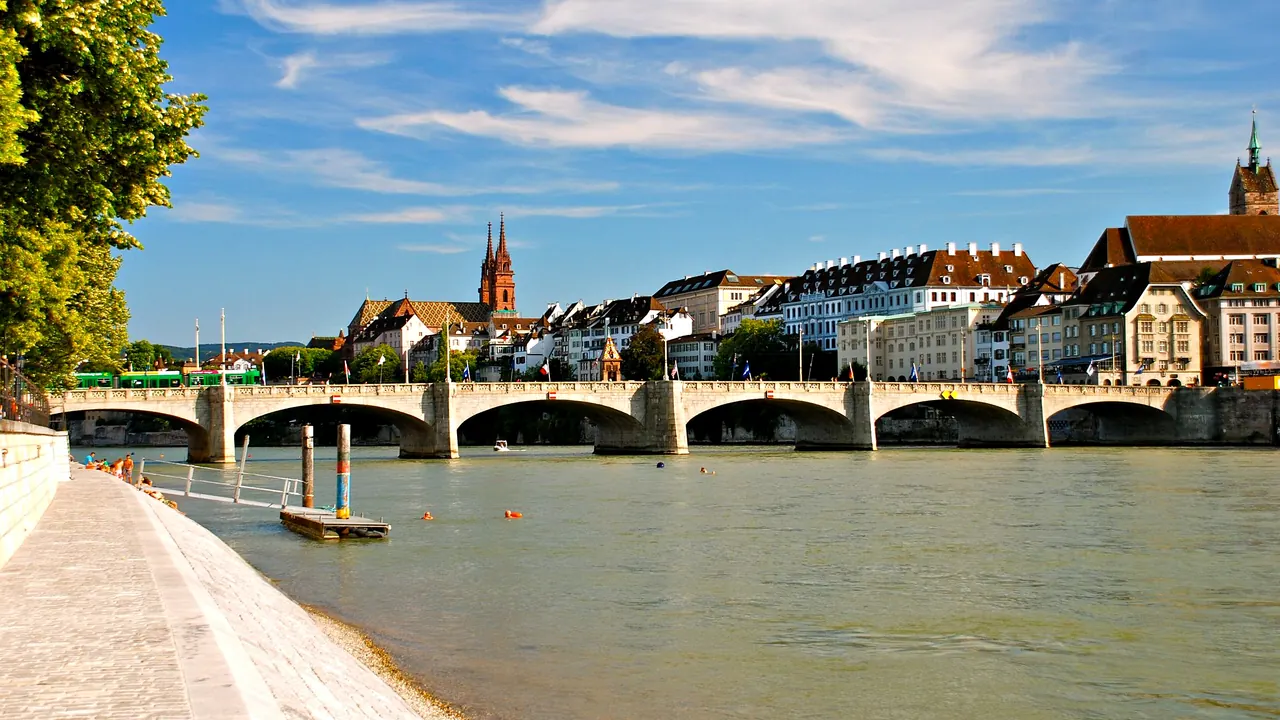
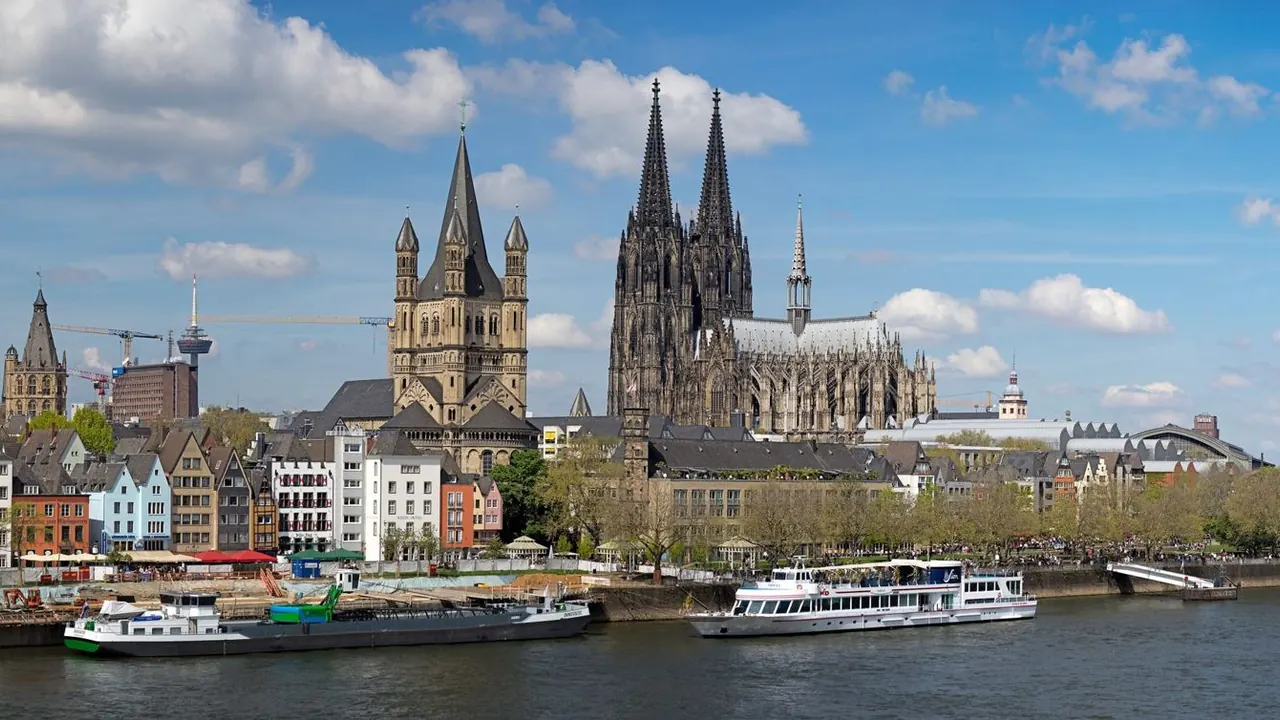
Photos: Basel by Lucazzitto, CC BY-SA 3.0, cropped; Cologne by Jörg Braukmann, CC BY-SA 4.0, cropped.
Basel or Cologne?
Our verdict in twelve categories, each scored against the same fixed benchmark cities, and the climate month by month, so you can choose for your trip.
Choose Basel for
- beaches
- getting around
- nature and the outdoors
Basel suits a traveller who wants a calm, compact base with a great deal within reach. Its museums and well-kept old town fill a few unhurried days. Trams and trains run so smoothly that day trips into three countries become easy, and summer brings the rare pleasure of floating down the Rhine past the Münster. Everything costs a lot, so it rewards visitors who can absorb Swiss costs or are happy to sleep across the border.
Choose Cologne for
- prices
- nightlife
- shopping
Cologne is the pick for a livelier, cheaper and more sociable trip. The evenings are the draw: Kölsch in the Altstadt brewhouses, bars in the Belgian Quarter, clubs in Ehrenfeld and a full calendar of gigs and concerts. It is also the easier choice for families and shoppers, and a stay costs far less. The trade-off is a plainer townscape, with the cathedral carrying much of the sightseeing.
Scoreboard
Twelve categories on one fixed scale from 0 to 100. The shaded stretch is the gap between the two.
Your match
Pick a travel style or drag the sliders, and both match scores follow your weighting.
Wins on beaches and getting around with your weighting.
Wins on prices and nightlife with your weighting.
What matters to you?
Category by category
What the scores mean for a trip.
Beaches & swimming
Neither city has a beach, but Basel offers the better swim. Its summer habit of floating downstream past the old town with clothes packed in a swim bag is part of city life, and the water is often above 20°C in August. It is only for confident swimmers, though.
In Cologne the Rhine is off limits because of the shipping and the current, so swimming means heading out to gravel-pit lakes such as Fühlinger See or Otto-Maigler-See. They make a pleasant afternoon on the grass, but they feel like an excursion rather than part of the city.
Food & drink
Neither is a food destination, and the difference is one of character. Basel's cooking borrows from both sides of the border, with Alsatian tarte flambée, Baden wines and a small, polished fine-dining tier. The Markthalle is good for casual meals, and cheaper dinners are a tram ride away in France or Germany.
Cologne's table is heartier and more social: Himmel un Ääd and sauerbraten in the brewhouses, with a Köbes topping up your Kölsch. For something different, Ehrenfeld's Venloer Strasse has the best Turkish and Middle Eastern food in either city.
Culture & sights
Both reward a few days of sightseeing, but in different ways. Basel is the richer museum city, with the Kunstmuseum's Holbeins, the Fondation Beyeler and the Vitra campus. Its old town also survives as a whole, from the Münster up the Spalenberg to the Spalentor.
Cologne is about single great buildings rather than streets. The cathedral is the most powerful sight in either city, and the twelve Romanesque churches and the Roman remains add depth. Museum Ludwig is a match for Basel on modern art. Between these highlights, though, post-war rebuilding left a plain townscape.
Nightlife
Cologne is much the better night out. Evenings run from the Altstadt brewhouses to cocktail bars in the Belgian Quarter, the student crowds of Zülpicher Strasse and late clubs in Ehrenfeld. Its gay scene around Rudolfplatz is one of Germany's largest.
Basel is quieter and more expensive, and at its best on summer nights at the riverside buvettes in Kleinbasel. Both cities have a famous late-winter carnival. Basel's Fasnacht is a spectacle of drums, piccolos and lanterns that starts before dawn, while Cologne's street carnival is a city-wide party in costume.
Nature & outdoors
Basel has the better countryside on its doorstep. The wooded Jura begins just south of the city, and the Black Forest, with summits above 1,400m, is within an hour. The Vosges lie to the west, so proper hikes and even light skiing are easy to reach.
Cologne's green spaces are gentler. There are the Grüngürtel parks and the Rhine meadows, with the Siebengebirge and the Eifel crater lakes further out. Both are flat cities for cycling, but Basel's riverside routes take you straight into two other countries.
Day trips
Both are excellent bases, and Basel comes out ahead because it stands where three countries meet. Colmar and the Alsace wine villages, Freiburg and the Black Forest, and Lucerne, Bern and Zurich are each within about an hour. Strasbourg is a little further. That is a week of outings with real variety in language, food and scenery.
Cologne's rail network is denser close in, with Brühl, Bonn, Düsseldorf and Aachen all under forty minutes and the castles of the Rhine Gorge further south. Most of its trips stay in Germany, with Maastricht, Liège and Brussels as the foreign extras.
Good for families
Cologne has more made for children. The Chocolate Museum, the cable car over the Rhine, the zoo with its elephant park and Phantasialand, a short trip away at Brühl, add up to a fuller week. Brewhouses are relaxed about young guests, though Carnival is best avoided with small children.
Basel is safe and easy with a pram, and the Zolli is one of Europe's best zoos, but there is little else after that. Europa-Park is about an hour's drive away and the Rhine is too strong for children to swim in. Expensive meals and quiet Sundays also need planning.
Getting around
Basel is the easier city to move around. Its green trams are frequent and cover the whole city, hotel guests ride free, and the little ferries pulled across by the current make crossing the Rhine a pleasure in itself.
Cologne is still simple for most visitors, since the station sits beside the cathedral and the centre is flat and walkable. Beyond that, the mix of trams, Stadtbahn and S-Bahn is harder to understand and can be crowded, so it takes a little more patience.
Shopping & style
Cologne is the better place to shop. Schildergasse and Hohe Strasse are among Germany's busiest high streets, and Ehrenstrasse and the Belgian Quarter add independent fashion and design shops. Eau de Cologne from the historic perfume houses on Glockengasse makes a souvenir with real history.
Basel's Freie Strasse is smaller and more polished, strong on Swiss watches and chocolate but limited otherwise. Both are at their best in Advent. Basel's market around the Münster is compact and pretty, while Cologne's markets spread across several squares.
Affordability
Cologne costs far less. Brewhouse meals are good value, the cathedral is free and hotels are moderate outside trade-fair weeks and Carnival.
Basel is very expensive, with Swiss prices for rooms, meals, drinks and museums. Free transport for hotel guests helps, and many visitors eat or even stay across the border in France or Germany. Both cities fill up during their big fairs, so check the dates before booking either.
Live music & performing arts
Cologne has the broader stage. The Philharmonie beside the cathedral is home to two major orchestras, the WDR adds a big band and choirs, and the opera and the Schauspiel share Offenbachplatz. Its real advantage is popular music, with gigs most nights in Ehrenfeld and the Südstadt, a strong electronic tradition and big touring acts at the arena in Deutz.
Basel's scene is serious but mostly classical, with bold productions at Theater Basel, the fine acoustics of the Stadtcasino and a respected early-music tradition. Its season also pauses in high summer.
Wellness & relaxation
Neither city is a spa destination, and they help you relax in different ways. Basel's strength is its pace: quiet Sundays and an unhurried riverside. The saline baths at Rheinfelden are twenty minutes away, and the Baden spa towns lie just over the border.
Cologne is busier, but it has bathing in the city itself. A thermal bath fed by mineral springs in the Rheinpark looks across to the cathedral, and locals use the big German-style sauna complexes as a weekend habit. Aachen's historic hot springs are under forty minutes away.
When should you go?
Pick your month. The climate figures are measured averages, not a forecast.
Basel in July
Cologne in July
Daytime high, °C
Rainfall in the month, mm
Temperature and rainfall are climate normals, averaged over the years shown. Basel: 1991-2020 (sunshine 1961-1990) normals, Basel / Binningen (1.9 km from centre). Cologne: 1991-2020 (sunshine 1981-2010) normals, Köln-Stammheim (5.4 km from centre).
The two cities follow almost the same temperature curve. Highs reach about 25°C in July and August, and the days are cold and short from November to February. Late May to September is the warm season in both, and spring and early autumn are the most comfortable times for walking the streets. The difference is in rain and light. Basel is noticeably sunnier in summer, with about 219 hours in July. Its wettest stretch, though, falls in late spring and summer, with May the rainiest month at 96mm, so expect showers in the warm months. June to early September is the only window for its Rhine swim.
Cologne is greyer all year and spreads its rain more evenly. Its summers are a touch cooler and its winters wetter and darker than Basel's. Neither city is a place for winter sun. Still, Basel's drier, slightly brighter winter months make it the better bet for a cold-season break, while Cologne's lake bathing needs a warm spell in high summer.
Which traveller are you?
On a trip on a tight budget, Cologne makes money go much further. Beds, meals and a night's drinking all cost less, and its greatest sight is free. Basel's free tram pass and cross-border dinners help, but Swiss prices still shape every day.
For a food and nightlife trip, Cologne wins because eating and going out run together, with hearty plates and endless small Kölsch leading into a late night. Basel cooks more refined, Alsace-leaning food, but its evenings are quieter and dearer.
On an outdoors trip, Basel puts higher hills within a short train ride, so a day can start on a ridge trail and end with a swim in the Rhine. Summers are sunnier too. Cologne's walking is pleasant but lower and gentler.
Before you go
| Measure | Basel | Cologne |
|---|---|---|
| Official language | French, German, Italian, Romansh | German |
| Currency | Swiss Franc (CHF) | Euro (EUR) |
| Sockets | CJ230 V, 50 Hz | CF230 V, 50 Hz |
| Driving side | Right | Right |
| Time zone | UTC+1, UTC+2 in summer | UTC+1, UTC+2 in summer |
| Emergency number | 112 | 112 |
| Elevation | 247 m | 59 m |
| Main airport | EuroAirport Basel–Mulhouse–Freiburg (BSL)7 km from centre112 non-stop destinations | Cologne Bonn Airport (CGN)15 km from centre115 non-stop destinations |
| Public holidays this year | 10 days | 11 days |
By the numbers
| Measure | Basel | Cologne |
|---|---|---|
| City population | 176,329 | 1,025,523 |
| People per km² | 7,378 | 2,532 |
| Museums within 10 km | 61 | 40 |
| UNESCO World Heritage sites within 50 km | 2 | 3 |
Where else could you go?
Every comparison below shares a destination with this one, so you can follow Basel or Cologne somewhere new.