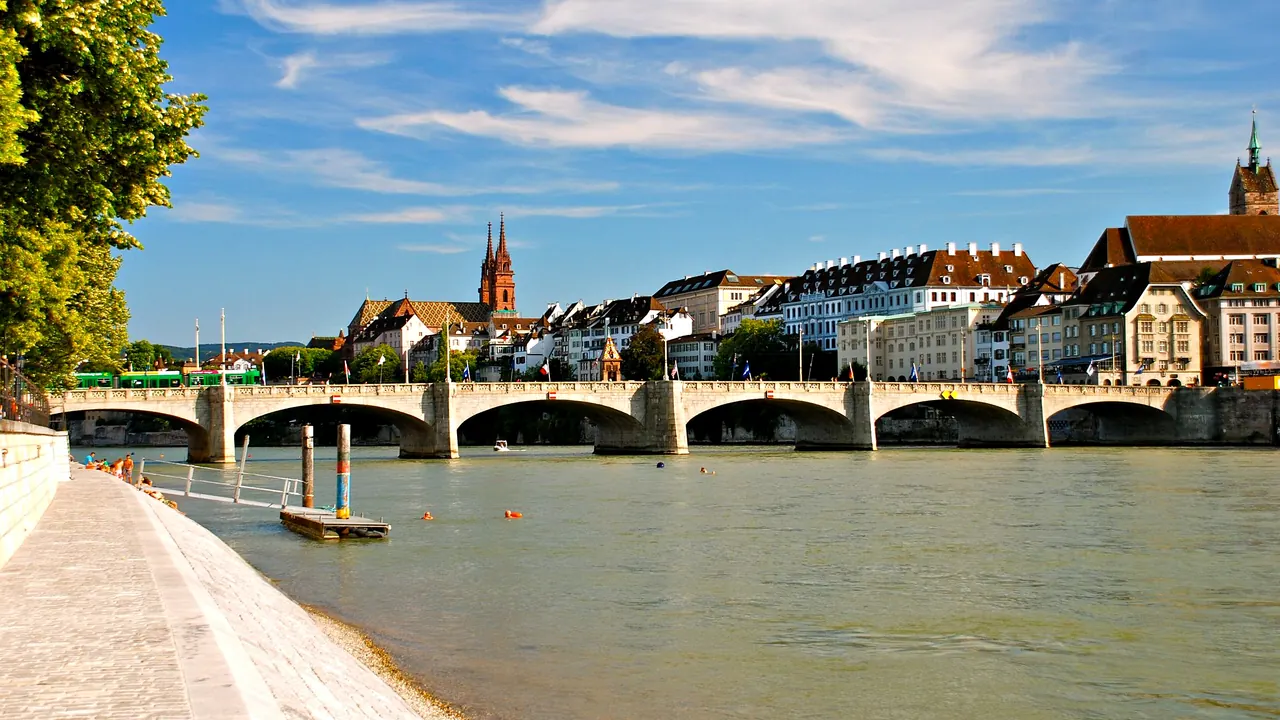
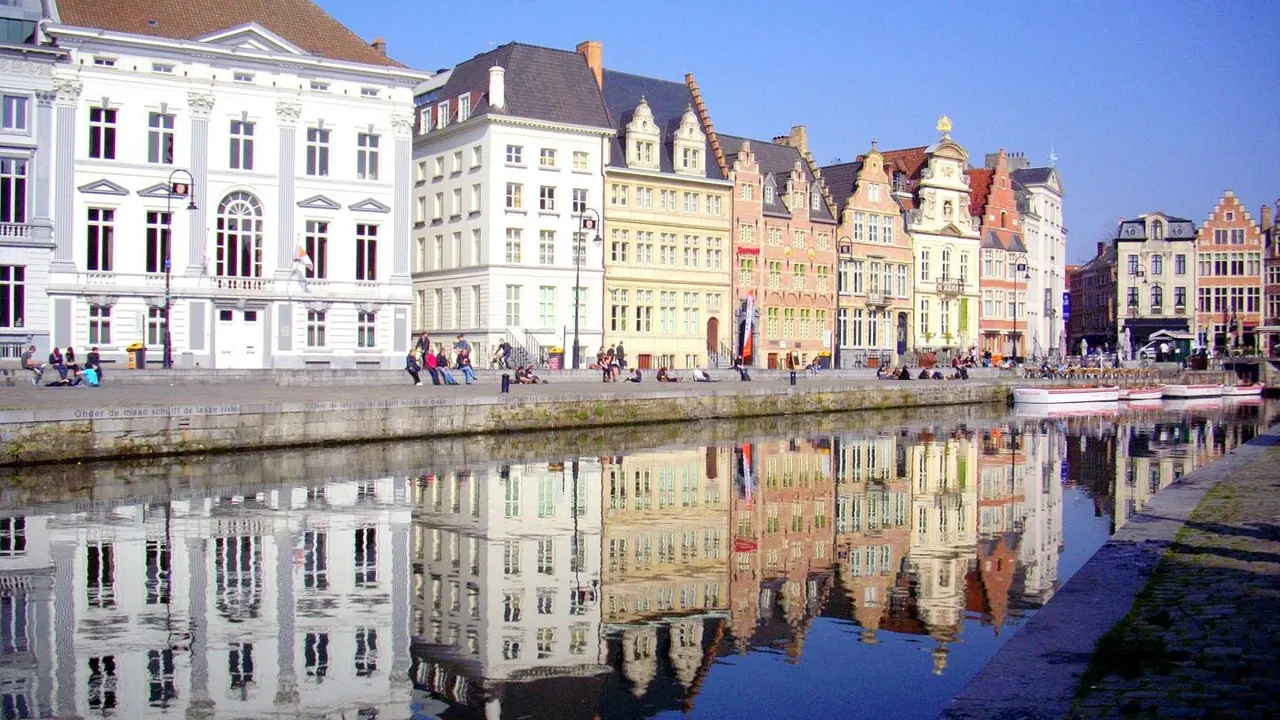
Photos: Basel by Lucazzitto, CC BY-SA 3.0, cropped; Ghent by ykeiko, CC BY-SA 3.0, cropped.
Basel or Ghent?
Our verdict in twelve categories, each scored against the same fixed benchmark cities, and the climate month by month, so you can choose for your trip.
Choose Basel for
- nature and the outdoors
- wellness
- families
Basel suits travellers who want art, landscape and easy movement more than lively evenings. Its museums, from the Kunstmuseum to the Fondation Beyeler, sit within reach of the Jura and the Black Forest. Trams run straight into Germany and France, the thermal baths at Rheinfelden make an easy slow day, and on summer afternoons you can float down the Rhine past the old town. Families have the Zolli too. The catch is the bill, which is Swiss from breakfast to bedtime.
Choose Ghent for
- prices
- nightlife
- food and drink
Choose Ghent if your vacation is about evenings at the table and in the bar. Flemish stews and long beer lists fill the old brown cafés, the student crowd keeps the city young, and the whole centre turns into a street festival in July. Its medieval centre is every bit as rewarding as Basel's old town and costs noticeably less to enjoy. Bruges, Brussels and Antwerp are all short train rides away. Walkers and spa-goers will find its flat farmland and lack of baths limiting.
Scoreboard
Twelve categories on one fixed scale from 0 to 100. The shaded stretch is the gap between the two.
Your match
Pick a travel style or drag the sliders, and both match scores follow your weighting.
Too close to call, 1 point apart
Wins on nature and the outdoors and wellness with your weighting.
Wins on prices and nightlife with your weighting.
What matters to you?
Category by category
What the scores mean for a trip.
Beaches & swimming
Neither city has a beach, but Basel copes better with a hot day. Its answer is the Rhine: you walk upstream along the Kleinbasel bank and float back past the Münster, and in August the water is often above 20°C. The current is strong, so this is for confident swimmers only.
Ghent's swimming means the supervised lake at the Blaarmeersen, or an hour on the train to Ostend and a cooler, greyer, windier North Sea. Both are fine for a day out, but neither is part of daily city life the way the Rhine is.
Food & drink
Ghent gives you more reason to plan your meals. It has dishes of its own, such as waterzooi, mussels with frites and grey shrimp croquettes, and a beer culture of Trappist and lambic poured in old cafés. Vegetarians are unusually well looked after.
Basel eats well, but much of what it serves is borrowed from Alsace and Baden. The Markthalle is the best casual stop, and Läckerli are the local treat. Many locals find the better-value meals across the border.
Culture & sights
Both are rich in culture but in different ways. Basel is a museum city first: the Kunstmuseum's Holbeins, the Beyeler, Tinguely and the Vitra campus, along with modern buildings by Herzog & de Meuron.
Ghent is about the townscape and one masterpiece. The guildhalls of the Graslei, the moated Gravensteen and the three towers in a row lead to the van Eyck altarpiece in St Bavo's. Plan a day or so longer for Basel.
Nightlife
Ghent is the livelier place to go out. Its university fills the Overpoort's bars in term time, and the cafés around the Vrijdagmarkt and Oudburg are made for long evenings over strong beer. The Gentse Feesten turns July into ten days of late nights.
Basel's evenings are gentler. In summer people drink at the riverside buvettes, and through the year there are bars near the Kaserne and a few clubs in old harbour buildings, all at Swiss prices. Its one wild moment is Fasnacht, which starts at four in the morning in late winter.
Nature & outdoors
Basel has real hill country on three sides: the Jura just to the south, the Vosges to the west and the Black Forest, with summits above 1,400m, within an hour. There are marked trails, winter walks and some light skiing.
Ghent's surroundings are flat and farmed. The best it offers is cycling along the Leie through Sint-Martens-Latem, birdwatching at the Bourgoyen-Ossemeersen wetland and the polders towards the Dutch border. That makes for pleasant days on a bike, but there are no hills.
Day trips
Both cities make outstanding bases, and what differs is the kind of day out. From Basel you can cross borders and change scenery: the wine villages and Colmar in Alsace, Freiburg in Germany, Lucerne and Bern, and the Rhine Falls.
Ghent's trips are a dense run of great Flemish art cities. Bruges is under half an hour away and Brussels and Antwerp are close behind, with Ypres and the First World War battlefields further out. The hops are shorter from Ghent, and the landscapes more varied from Basel.
Good for families
Basel is the easier city with children. The Zolli, one of Europe's best zoos, is a short walk from the station, and the little river ferries pulled across by the current are a treat. Trams take prams without fuss, and Europa-Park is about an hour away.
Ghent has the Gravensteen's battlements, canal boats and the toys at the House of Alijn, but its zoo is in Antwerp and cobbles are hard work with a pushchair. One thing Ghent does better is swimming: the Blaarmeersen lake lets children in the water, which Basel's Rhine does not.
Getting around
Both centres are easy to walk, but Basel's transport goes further. Its green trams cross into Germany and France, hotel guests ride free, and the station has direct trains to three countries.
Ghent keeps cars out of its centre and gets around by bike, with bike lanes everywhere and rentals easy to find. Gent-Sint-Pieters station is a twenty-minute walk from the sights, though, and wet cobbles need care.
Shopping & style
Neither city is worth the trip for shopping, and the two lean different ways. Basel is the more polished, with Swiss watches, jewellers and chocolatiers along Freie Strasse and one of Switzerland's prettier Christmas markets by the Münster.
Ghent is more informal: vintage around the Sint-Pietersnieuwstraat, independent design on the Serpentstraat, the Sint-Jacobs flea market and Sunday flowers on the Kouter. Cuberdons and mustard make the best take-home buys.
Affordability
Ghent is much easier on the wallet. It is not cheap, since dinners with a few Belgian beers add up, but frites stands, bakeries, set lunches and free churches keep the days reasonable. Small hotels and guesthouses are moderately priced for most of the year.
Basel is among the most expensive cities in Europe for rooms, meals and museum tickets, and the trade fairs make it worse. The free transport card helps, and many visitors eat, shop or even sleep across the border.
Live music & performing arts
The two are closely matched, each with stages far stronger than its size suggests. Basel's strength is classical music and opera: Theater Basel puts on opera, ballet and drama under one roof, the Stadtcasino has fine acoustics, and the city has a long early-music tradition. It goes quiet in July and August.
Ghent has a share of the Flemish national opera, the early music of De Bijloke in a medieval hospital, and NTGent's theatre, which is mostly in Dutch. Summer is when Ghent pulls ahead, with free stages across the centre during the Gentse Feesten.
Wellness & relaxation
Basel is the better choice for a restful trip with proper bathing. The saline thermal baths at Rheinfelden are about twenty minutes away, the mineral pools of Badenweiler and Bad Krozingen are just over the border, and the calm riverside does the rest.
Ghent has only private saunas and hotel spas. Its quiet comes from the enclosed gardens of the beguinages, canal walks along the Coupure and slow afternoons on café terraces.
When should you go?
Pick your month. The climate figures are measured averages, not a forecast.
Basel in July
Ghent in July
Daytime high, °C
Rainfall in the month, mm
Where the figures come from
Ghent has no rain gauge within 25 km of the centre, so its rainfall comes from a gridded climate dataset read at the city rather than from a gauge further away.
Ghent's sunshine is measured 45 km from the centre, at Vlissingen.
Temperature and rainfall are climate normals, averaged over the years shown. Basel: 1991-2020 (sunshine 1961-1990) normals, Basel / Binningen (1.9 km from centre). Ghent: 2009-2025 (sunshine 1991-2020, rainfall 1991-2020) normals, Melle / Kalverhaag (10.1 km from centre).
The two cities follow a similar calendar but differ in the details. Basel has the warmer summer, with highs around 26°C in July, and from June to early September the Rhine is warm enough to swim. Its wettest stretch is late spring and summer, though, with May the rainiest month at 96mm, so a bright summer day can easily turn showery. Winters are cold and dull, with very little sunshine in December, and best kept for museums.
Ghent never gets too hot for walking. Summer highs reach about 23°C, and the North Sea at the coast peaks at only 19°C in August, so a beach day there is bracing. Its rain falls the other way round from Basel's. April and May are the driest months, May and June share the most sunshine, and the wet builds through autumn to a peak of 87mm in December. Late spring and early summer are Ghent's best season, while Basel is at its best from June to September.
Which traveller are you?
On an outdoors trip, Basel is the clear choice. The Jura's wooded ridges begin at the city's edge, the Black Forest and the Vosges are within an hour, and flat Rhine paths lead by bike into Germany and France. Ghent offers gentle cycling through farmland and little else.
For a trip on a tight budget, Ghent makes money go much further. Frites stands, bakeries and set lunches keep the days cheap, guesthouses are moderately priced and St Bavo's Cathedral is free to enter. Basel charges Swiss prices for nearly everything, even with the free tram card.
On a food and nightlife trip, Ghent comes out well ahead. Waterzooi and beef stewed in dark beer lead into long evenings in the brown cafés of the Patershol, the Overpoort stays loud in term time, and July brings the Gentse Feesten. Basel's nights are quieter, except at Fasnacht.
Before you go
| Measure | Basel | Ghent |
|---|---|---|
| Official language | French, German, Italian, Romansh | French, German, Dutch |
| Currency | Swiss Franc (CHF) | Euro (EUR) |
| Sockets | CJ230 V, 50 Hz | CE230 V, 50 Hz |
| Driving side | Right | Right |
| Time zone | UTC+1, UTC+2 in summer | UTC+1, UTC+2 in summer |
| Emergency number | 112 | 112 |
| Elevation | 247 m | 12 m |
| Main airport | EuroAirport Basel–Mulhouse–Freiburg (BSL)7 km from centre112 non-stop destinations | Brussels Airport (BRU)56 km from centre191 non-stop destinations |
| Public holidays this year | 10 days | 14 days |
By the numbers
| Measure | Basel | Ghent |
|---|---|---|
| City population | 176,329 | 272,657 |
| People per km² | 7,378 | 1,728 |
| Museums within 10 km | 61 | 30 |
| UNESCO World Heritage sites within 50 km | 2 | 5 |
| Swim season, months above 21 °C | - | None |
Where else could you go?
Every comparison below shares a destination with this one, so you can follow Basel or Ghent somewhere new.