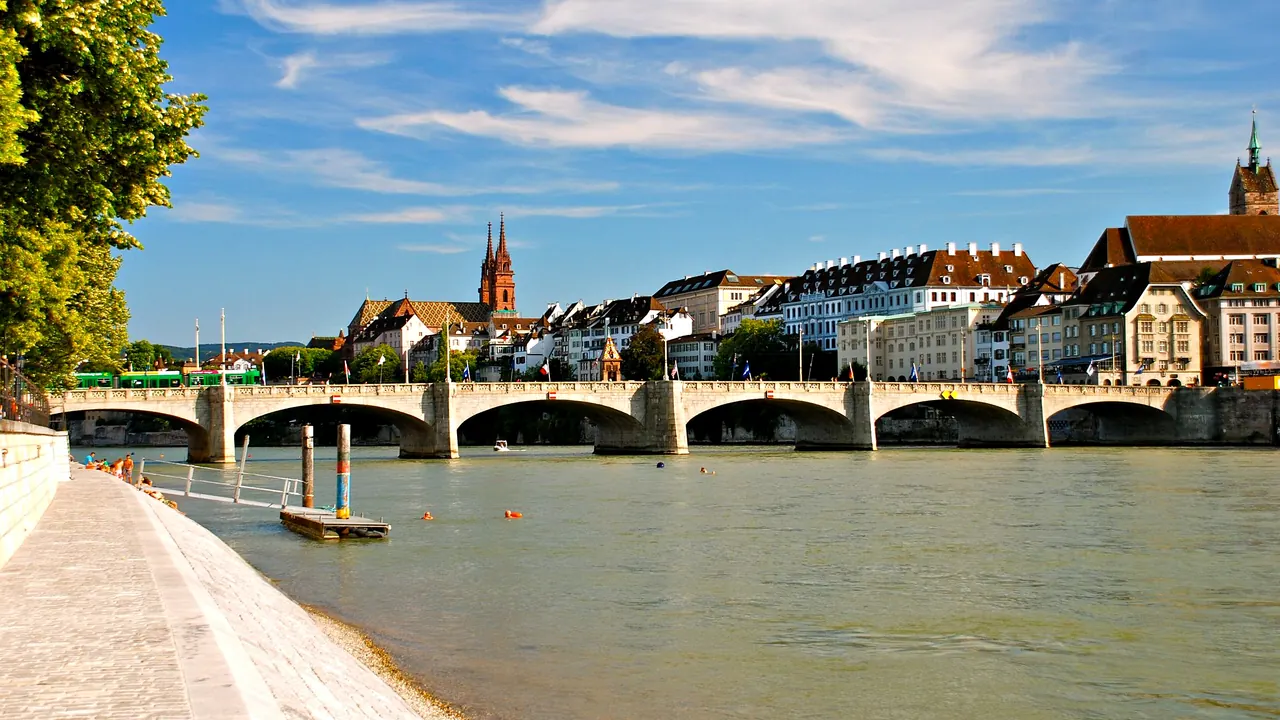
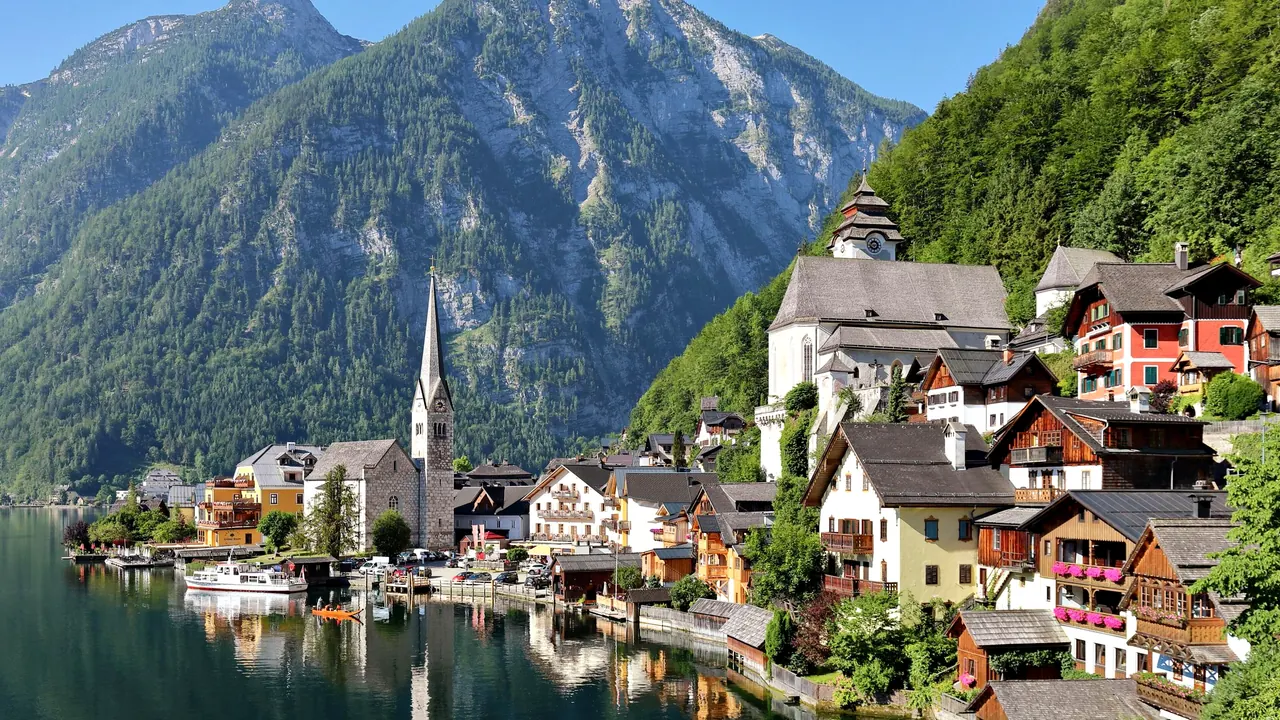
Photos: Basel by Lucazzitto, CC BY-SA 3.0, cropped; Hallstatt by C.Stadler/Bwag, CC BY-SA 4.0, cropped.
Basel or Hallstatt?
Our verdict in twelve categories, each scored against the same fixed benchmark cities, and the climate month by month, so you can choose for your trip.
Choose Basel for
- live music and the arts
- culture and sights
- nightlife
Basel is the better choice for a city trip built around art, music and easy movement. It has world-class museums, a serious opera and concert season, trams that run across borders, and fast trains to Alsace, the Black Forest and half of Switzerland. Stay a long weekend or a week and you will not run short of things to do, as long as you can live with Swiss prices.
Choose Hallstatt for
- nature and the outdoors
- prices
Hallstatt suits travellers who come for the mountains and the lake and want quiet evenings. The village is small and you can see it in a day, but it opens straight on to the Dachstein, with ice caves, high plateau walks and the view at Gosausee. Plan around the crowds at midday and the wet Alpine weather, and stay a few days with walking boots, not a long list of sights.
Scoreboard
Twelve categories on one fixed scale from 0 to 100. The shaded stretch is the gap between the two.
Your match
Pick a travel style or drag the sliders, and both match scores follow your weighting.
Wins on live music and the arts and culture and sights with your weighting.
Wins on nature and the outdoors and prices with your weighting.
What matters to you?
Category by category
What the scores mean for a trip.
Beaches & swimming
Neither place has a beach, so swimming means fresh water in both. Basel's version is the better outing: the city floats down the Rhine past the old town on a summer afternoon, with gravelly banks and bathing huts for sunbathing in between. It does mean a strong current, so it suits confident swimmers.
Hallstatt has calm water but a colder, more limited swim. The deep lake warms slowly, and the steep shores leave only a small jetty lawn in the village and a lido at Obertraun. It works as a bracing dip after a hike, but it is not a reason to spend an afternoon by the water.
Food & drink
Basel gives you far more choice. It has Alsatian tarte flambée, Baden wines, a small fine-dining tier, the Markthalle and the Marktplatz market, and wine villages across the border for cheaper meals. It is not a city people visit for the food, but you will eat well and with variety.
In Hallstatt, eating means guesthouse dining rooms with schnitzel and dumplings, plus char or whitefish from the lake. Kitchens close early once the day crowds leave, and for real cake culture you have to go to Bad Ischl.
Culture & sights
Basel has the richer culture by a wide margin. Its museums would stand out in a city several times its size, from the Holbein rooms of the Kunstmuseum to the Beyeler and the Tinguely. Around them are the red sandstone Münster, the painted Rathaus, the guild lanes of Spalenberg and modern buildings by Herzog & de Meuron, enough for three or four days.
Hallstatt's culture is deep in time but small in scale. Its draws are the salt mine, worked for seven millennia, the museum that tells the story of the Iron Age culture named after the village, and the painted skulls of the Beinhaus. Together with the postcard village, that makes a day, not a week.
Nightlife
Basel's nightlife is modest but real. People drink on the riverside steps in summer, there are bars around the Kaserne and Rheingasse, and a few clubs in old harbour buildings play electronic music at weekends. Once a year Fasnacht takes over the whole city for three days and nights.
Hallstatt has nothing like this. An evening there is dinner, a glass of wine by the water and a walk along the dark lake, which is lovely if quiet is what you came for.
Nature & outdoors
Hallstatt is the place for real mountains. The lake sits in a glacial trough under the Dachstein, and from the village you can reach the Five Fingers platform, the Giant Ice Cave, the waterfalls of the Echerntal and the reflection of the peak in the Gosausee. There are via ferratas in summer and ski touring in winter.
Basel's outdoors is gentler and you have to travel to it. You get Jura ridges, Black Forest summits within an hour and flat Rhine cycle paths into France and Germany. That suits walkers and cyclists, but nothing there compares with the scenery right outside Hallstatt.
Day trips
Basel is one of the best day-trip bases in this part of Europe. It touches three countries, so Colmar and the Alsace wine route, Freiburg, Bern, Lucerne and Zurich are all about an hour away by fast train, with Roman Augusta Raurica close by.
Hallstatt's outings stay within the Salzkammergut lake country: Habsburg Bad Ischl, St Wolfgang and Gmunden, with Salzburg as a long day. They are attractive trips, but the buses and lakeside railway take planning, and many people find they need a car.
Good for families
Basel is the easier city with children. It is compact and safe, the trams take prams, and the Zolli, one of Europe's best zoos, is near the station. The current-powered ferries and Europa-Park within driving distance add to that.
Hallstatt has a few great moments for children, such as the miners' slides in the salt mine and the ice caves for older ones. But the single steep lane is crowded at midday and hard work with a pushchair, so families usually do better staying in Obertraun.
Getting around
Basel is effortless to get around. Its centre is walkable, green trams cover the rest and even cross into Germany and France, hotel guests travel free, and direct trains leave the main station in every direction.
Hallstatt's village takes minutes to walk, though the steps are steep. Leaving it is harder: the station is across the lake and reached by boat, and buses are sparse outside summer.
Shopping & style
Neither is a shopping destination, but Basel has more to browse. Freie Strasse has Swiss watches and chocolatiers, Spalenberg has small design shops, and there is a pretty Christmas market around the Münster. In Hallstatt, shopping is one lane of souvenir shops, where the local mine salt is the only buy you will not find elsewhere.
Affordability
Both are expensive, but Hallstatt is the gentler bill. Its rooms and meals are priced at Alpine resort level, and you can bring costs down by staying in Obertraun, Bad Goisern or Bad Ischl and visiting for the day.
Basel charges full Swiss prices for everything, and rooms become scarce during the big trade fairs. The free transport card helps, and so does crossing the border for meals or a cheaper bed.
Live music & performing arts
The gap here is wide. Basel has Theater Basel, known well beyond Switzerland for bold opera, ballet and drama, the Stadtcasino's fine concert hall with two orchestras, early-music concerts and small jazz venues, with a season that runs from autumn to early summer.
Hallstatt has a brass band on feast days and the odd church concert. For a real night of music you have to go to Bad Ischl's summer operetta or to Salzburg.
Wellness & relaxation
Basel has the edge for a restful stay. Neither has a bathing culture of its own, but Basel has more good spas close by. The saline baths at Rheinfelden are twenty minutes away, the mineral pools and saunas of Bad Bellingen, Badenweiler and Bad Krozingen are just over the German border, and Baden-Baden works for a longer day. In the city the pace stays calm all day, and the Sundays are quiet.
Hallstatt's calm comes at the edges of the day: misty mornings and empty evenings by the lake, with Bad Ischl's brine baths half an hour away. In the middle of the day the tour groups fill the lane, so a slow stay there means spending those hours out on the water or up in the hills.
When should you go?
Pick your month. The climate figures are measured averages, not a forecast.
Basel in July
Hallstatt in July
Daytime high, °C
Rainfall in the month, mm
Where the figures come from
Hallstatt's temperatures are measured 56 km from the centre, at Salzburg.
Hallstatt has no rain gauge within 25 km of the centre, so its rainfall comes from a gridded climate dataset read at the city rather than from a gauge further away.
Temperature and rainfall are climate normals, averaged over the years shown. Basel: 1991-2020 (sunshine 1961-1990) normals, Basel / Binningen (1.9 km from centre). Hallstatt: 1991-2020 normals, Salzburg (55.5 km from centre).
The two places follow almost the same temperature curve through the warm months. Both are comfortable for walking from May to September and peak at about 25°C to 26°C in July and August. That is also the only stretch when the Rhine or the lake is warm enough for a swim. They differ in rain. Basel's summer is its wettest season, but the rain stays moderate and it gets a little more sunshine. Hallstatt's summer is far wetter, with up to 178mm in July, so expect mist and showers over the mountains on any midsummer stay.
In winter Basel is cold, with highs around 5°C in January, but January and February are its driest months, so it is a reasonable time for museums and concerts. Hallstatt is colder still, at about 3°C in January, and wetter all year round. For walking there, April is the drier month, before the heavy rain of May and June, though it is still cool. In summer, plan for wet days between the clear ones. Basel is at its best from June to early September, when life moves to the river.
Which traveller are you?
On a culture and arts trip, Basel is the clear pick. The Kunstmuseum, the Fondation Beyeler and the Vitra campus would fill several days, and Theater Basel and the Stadtcasino offer evenings that Hallstatt, with no stage or concert hall, cannot match.
For an outdoors trip, choose Hallstatt. The Dachstein starts at the edge of the village, with cable cars to the Krippenstein, ice caves, glacier valleys, hut-to-hut routes and winter ski touring. Basel's Jura and Black Forest walks are gentler and further away.
On a food and nightlife trip, Basel wins easily. It has Alsatian and Baden influences, a good market hall and summer drinking on the Kleinbasel riverbank. Hallstatt offers lake fish, a short menu of Austrian standards and silent evenings once the day visitors leave.
Before you go
| Measure | Basel | Hallstatt |
|---|---|---|
| Official language | French, German, Italian, Romansh | German, Austrian Sign Language |
| Currency | Swiss Franc (CHF) | Euro (EUR) |
| Sockets | CJ230 V, 50 Hz | CF230 V, 50 Hz |
| Driving side | Right | Right |
| Time zone | UTC+1, UTC+2 in summer | UTC+1, UTC+2 in summer |
| Emergency number | 112 | 112 |
| Elevation | 247 m | 511 m |
| Main airport | EuroAirport Basel–Mulhouse–Freiburg (BSL)7 km from centre112 non-stop destinations | Salzburg Airport (SZG)55 km from centre64 non-stop destinations |
| Public holidays this year | 10 days | 16 days |
By the numbers
| Measure | Basel | Hallstatt |
|---|---|---|
| City population | 176,329 | 741 |
| People per km² | 7,378 | 12 |
| Museums within 10 km | 61 | 3 |
| UNESCO World Heritage sites within 50 km | 2 | 2 |
Where else could you go?
Every comparison below shares a destination with this one, so you can follow Basel or Hallstatt somewhere new.