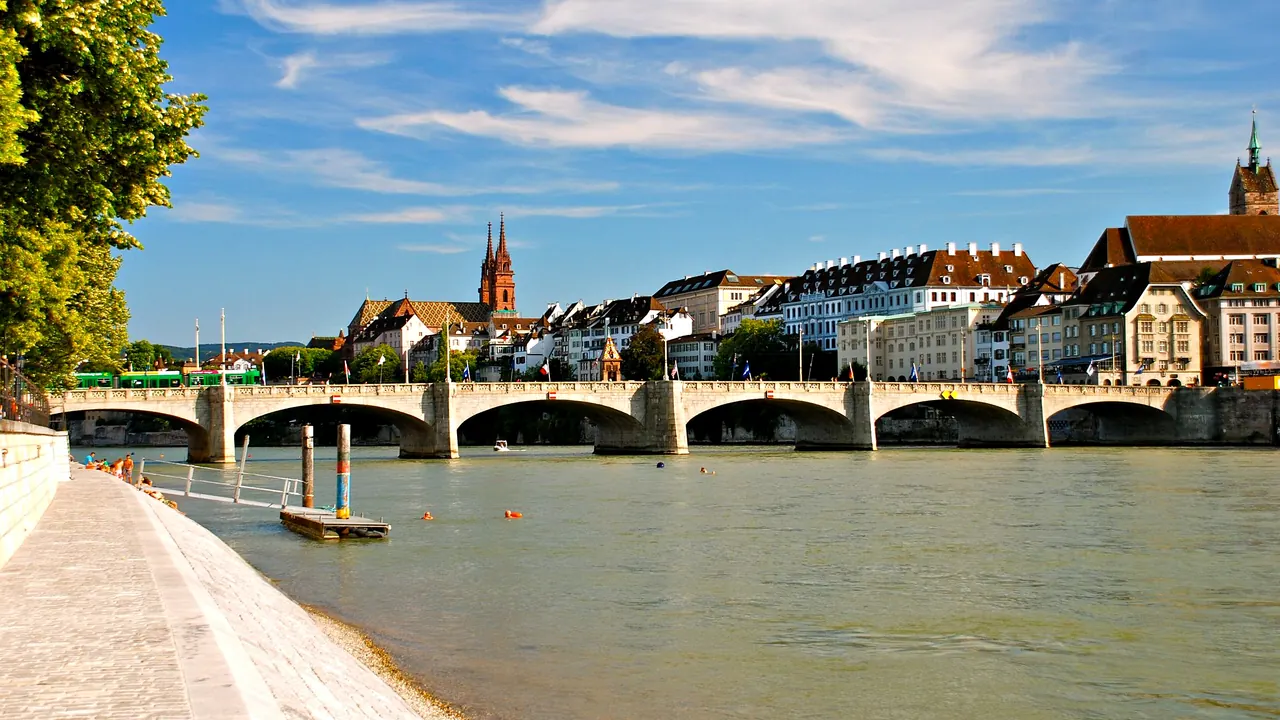
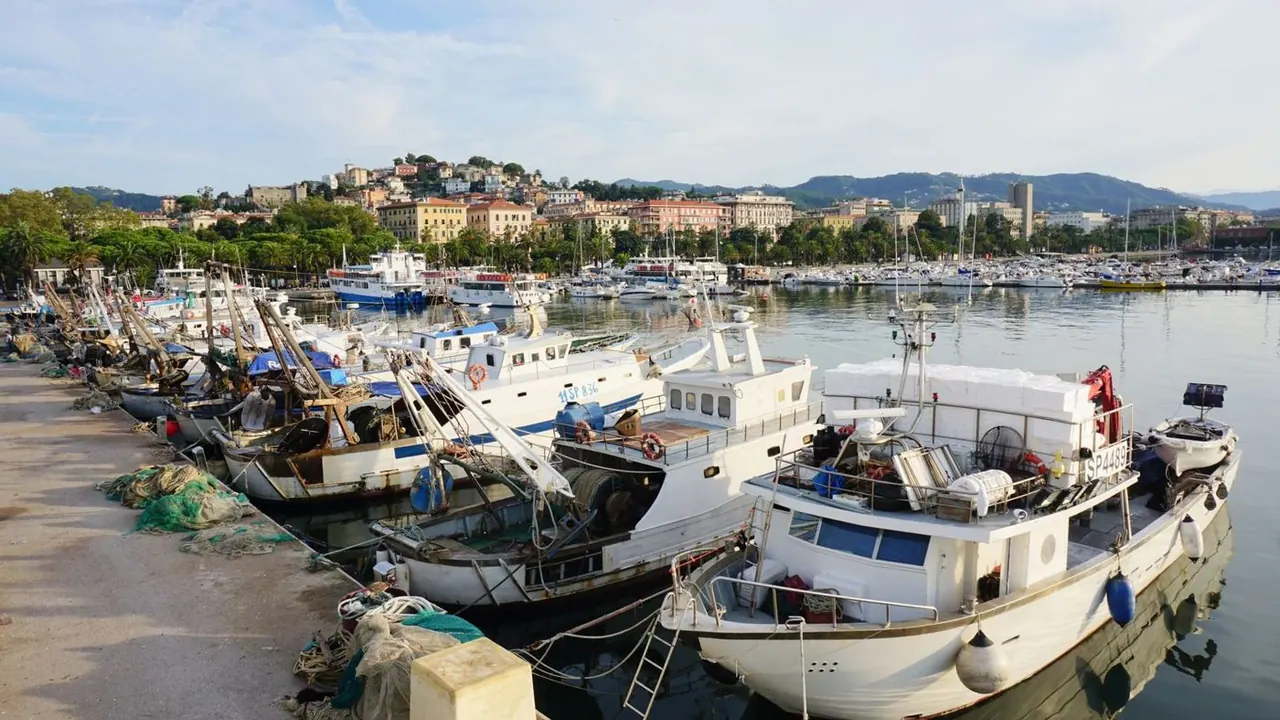
Photos: Basel by Lucazzitto, CC BY-SA 3.0, cropped; La Spezia by Irina Balashova, Pexels License.
Basel or La Spezia?
Our verdict in twelve categories, each scored against the same fixed benchmark cities, and the climate month by month, so you can choose for your trip.
Choose Basel for
- live music and the arts
- culture and sights
- getting around
Basel is the better choice for a trip built around art, music and easy logistics. Its museums, from the Kunstmuseum to the Fondation Beyeler, and the opera and concerts at Theater Basel and the Stadtcasino give it a cultural weight La Spezia cannot match. Trams, fast trains and a free transport card make every outing simple. It suits travellers who can absorb Swiss prices and do not need the sea.
Choose La Spezia for
- prices
- beaches
- nature and the outdoors
For coast, cliffs and walking, La Spezia wins. It is a practical, mid-priced base for the Cinque Terre trails, the swimming coves of Lerici and Palmaria and boat trips around Portovenere, with warmer, sunnier weather and a real sea. The town itself is plain and goes to bed early, so come for the landscape and the farinata rather than for sights or evenings out.
Scoreboard
Twelve categories on one fixed scale from 0 to 100. The shaded stretch is the gap between the two.
Your match
Pick a travel style or drag the sliders, and both match scores follow your weighting.
Wins on live music and the arts and culture and sights with your weighting.
Wins on prices and beaches with your weighting.
What matters to you?
Category by category
What the scores mean for a trip.
Beaches & swimming
Basel's swimming is the Rhine itself. Floating downstream past the old town with your clothes in a swim bag is a memorable summer ritual, but it means a strong current, gravel banks and a short season, with no sand anywhere close.
La Spezia has no beach in town either, but a short bus or train ride brings real sea swimming: sand and pebble at San Terenzo and Lerici, coves at Fiascherino and Tellaro, clear water off Palmaria and Monterosso's long beach. The beaches are small, often pebbly and partly given over to paid bathing establishments, but the season is longer and the water warmer than the river's.
Food & drink
La Spezia has the stronger local table. Farinata from wood ovens, mussels farmed on ropes off Portovenere, pesto on trofie and testaroli and the white wines of the Cinque Terre give it a cuisine of its own at steady prices, though fine dining is scarce.
Basel eats well but borrows much of its menu from Alsace and Baden, and Läckerli and the Fasnacht flour soup are among its few true specialities. Its strength is a small, refined top tier that La Spezia lacks, while everyday meals cost more than they are worth.
Culture & sights
Here Basel is in another league. The Holbeins in the Kunstmuseum, the Fondation Beyeler, the Museum Tinguely and the Vitra Design Museum make it worth the trip for art alone. The Münster, the painted Rathaus and the Spalentor give it a medieval core, and buildings by Herzog & de Meuron stand alongside.
La Spezia is a nineteenth-century naval town of arcaded street grids and Liberty facades. The Museo Amedeo Lia and the Lunigiana stele statues in the Castello San Giorgio fill a day or two well, but most of the region's history lies out on the coast.
Nightlife
Neither city is a place to go out hard, but Basel has more to do after dark. Summer evenings on the steps by the Kleinbasel kiosks, bars around the Kaserne and a few weekend clubs in old harbour buildings keep things going later. Fasnacht turns the whole city into a three-day street carnival.
In La Spezia the evening is the aperitivo on Via del Prione or the seafront, moving to the waterfront at Lerici in summer. After that most people head to bed before an early start on the trails.
Nature & outdoors
La Spezia's landscape is the main event. There are the terraced cliffs of the Cinque Terre national park, the Sentiero Azzurro and quieter ridge paths, the loop round Palmaria and the pine woods of Montemarcello. Add kayaking and diving in the gulf and the marble peaks of the Apuan Alps an hour inland.
Basel's countryside is gentler but varied. The Jura, the Black Forest and the Vosges are all close for hiking, and flat Rhine paths take cyclists into two countries. It suits walkers and cyclists, whereas La Spezia puts sea and cliffs together.
Day trips
Both are outstanding bases, and the difference is in kind. Basel's trips cross borders: Colmar and the Alsace wine villages, Freiburg and the Black Forest, then Lucerne, Bern and Zurich by fast train, with the Rhine Falls a little further. It adds up to a week of old towns and cathedrals in three countries.
La Spezia's trips are mostly coastal and close. The Cinque Terre villages are minutes away by train, Portovenere is a short boat ride, and Lerici and Tellaro lie across the gulf, with Pisa, Lucca and the Carrara quarries inland. Expect seaside villages and walks rather than cities, and crowded summer trains.
Good for families
Basel is the easier city with children. The Zolli is one of Europe's best zoos, the Natural History and toy museums cover wet days, the ferries pulled across by the current amuse small children, and Europa-Park is an hour's drive away.
La Spezia's family days are on the water, with boat trips round Portovenere and shallow, sheltered beaches at San Terenzo and Lerici, which Basel cannot offer. Beyond that there is no zoo or theme park, and steep villages and packed trains suit older children better than toddlers.
Getting around
Basel is about as easy as a city gets. The old town is walkable, the green trams run into Germany and France, hotel guests travel free on local transport and the main station has direct trains in every direction.
La Spezia's flat centre is walkable too, and trains, buses and seasonal ferries link it well to the coast. The catch is summer, when Cinque Terre trains and village platforms are crammed, and a car is more hindrance than help.
Shopping & style
Neither is a shopping destination, but Basel has more range. Freie Strasse and Gerbergasse have Swiss watches, jewellery and chocolatiers, Spalenberg has small design shops, and the Christmas market around the Münster is worth a visit in itself.
La Spezia's Via del Prione and Corso Cavour offer ordinary chains and shoe shops. Its best buys are edible: pesto, olive oil, Sciacchetrà and anchovies, plus Carrara marble from the nearby towns.
Affordability
Basel is very expensive, with Swiss prices on rooms, meals, drinks and museum tickets, and rooms grow scarce during Art Basel. Free trams for hotel guests and cheaper meals over the borders in Germany and France ease the bill only a little.
La Spezia is moderate by comparison. Farinata, focaccia and trattorias are fair value, transport is cheap and rooms cost less than in the Cinque Terre villages. Summer rates, trail passes and paid beaches still add up, and spring and autumn are kinder on the budget.
Live music & performing arts
Basel has a serious season from autumn to early summer. There is opera, ballet and drama at Theater Basel, the Sinfonieorchester Basel at the Stadtcasino, early-music concerts and jazz fed by the city's school. It goes quiet in July and August.
La Spezia's stage life is thin outside summer and centres on the Teatro Civico and Sarzana's small Teatro degli Impavidi. Its best moments are the summer jazz festival and open-air concerts in castle courtyards, which fall in the months when Basel rests.
Wellness & relaxation
Basel is better placed for a spa day. The saline thermal baths at Rheinfelden are twenty minutes away, and the German spa towns of Bad Bellingen, Badenweiler and Bad Krozingen, or Baden-Baden on a longer day, are within easy reach. Quiet Sundays and the river banks add to its unhurried pace.
La Spezia relies on hotel spas and the small baths at Equi Terme an hour inland. Its calm comes instead from a long lunch in Tellaro or an afternoon on Palmaria out of season.
When should you go?
Pick your month. The climate figures are measured averages, not a forecast.
Basel in July
La Spezia in July
Daytime high, °C
Rainfall in the month, mm
Where the figures come from
La Spezia's temperatures are measured 65 km from the centre, at Pisa / S. Giusto.
La Spezia has no rain gauge within 25 km of the centre, so its rainfall comes from a gridded climate dataset read at the city rather than from a gauge further away.
Temperature and rainfall are climate normals, averaged over the years shown. Basel: 1991-2020 (sunshine 1961-1990) normals, Basel / Binningen (1.9 km from centre). La Spezia: 1991-2020 normals, Pisa / S. Giusto (64.8 km from centre).
Basel has a central European climate, and summer is the time for it. Highs reach about 26°C in July, and the Rhine is warm enough to float in from June to early September. Those summer months are also the wettest, with frequent showers. Winters are dull and cold, near 5°C in January, which is fine for museums but not for lingering outdoors. Spring and early autumn are pleasant for walking, if cool.
La Spezia is milder and much sunnier all year. The sea is warm enough for swimming from June into early October and peaks around 25°C in August. July and August highs near 30°C make the coastal paths hard going in the middle of the day, so late spring and September are the best months for hiking. October and November bring the heaviest rain, about 151mm in November, and winters are mild but damp. The Ligurian coast turns wet just as Basel settles into its indoor concert season.
Which traveller are you?
For a culture and arts trip, Basel is the clear pick. The Kunstmuseum, the Fondation Beyeler and the Vitra campus could fill several days on their own, and evenings can go to opera at Theater Basel or the orchestra at the Stadtcasino.
On a beach and sun trip, La Spezia is the one to choose. Sunny summers and a warm sea make swimming easy, from the sheltered sand at Lerici to the clear rocks of Palmaria. Basel offers only a fast summer float down the Rhine.
On a tight budget, La Spezia is far easier. Farinata, focaccia and trattoria meals are fair value, local trains are cheap and rooms cost less than in the Cinque Terre. Basel's hotels and meals carry full Swiss prices, free trams or not.
Before you go
| Measure | Basel | La Spezia |
|---|---|---|
| Official language | French, German, Italian, Romansh | Italian |
| Currency | Swiss Franc (CHF) | Euro (EUR) |
| Sockets | CJ230 V, 50 Hz | CFL230 V, 50 Hz |
| Driving side | Right | Right |
| Time zone | UTC+1, UTC+2 in summer | UTC+1, UTC+2 in summer |
| Emergency number | 112 | 112 |
| Elevation | 247 m | 3 m |
| Main airport | EuroAirport Basel–Mulhouse–Freiburg (BSL)7 km from centre112 non-stop destinations | Pisa International Airport (PSA)65 km from centre82 non-stop destinations |
| Public holidays this year | 10 days | 13 days |
By the numbers
| Measure | Basel | La Spezia |
|---|---|---|
| City population | 176,329 | 92,119 |
| People per km² | 7,378 | 1,792 |
| Museums within 10 km | 61 | 12 |
| UNESCO World Heritage sites within 50 km | 2 | 2 |
| Swim season, months above 21 °C | - | 4 months |
Where else could you go?
Every comparison below shares a destination with this one, so you can follow Basel or La Spezia somewhere new.