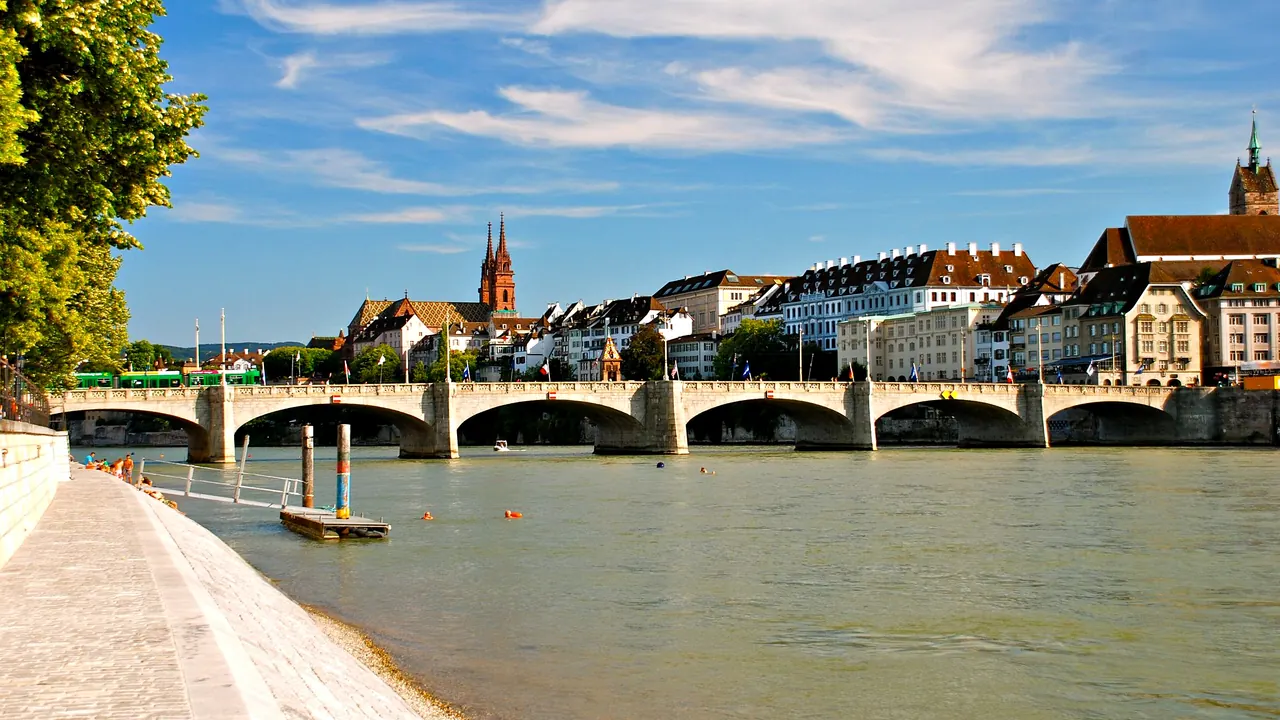
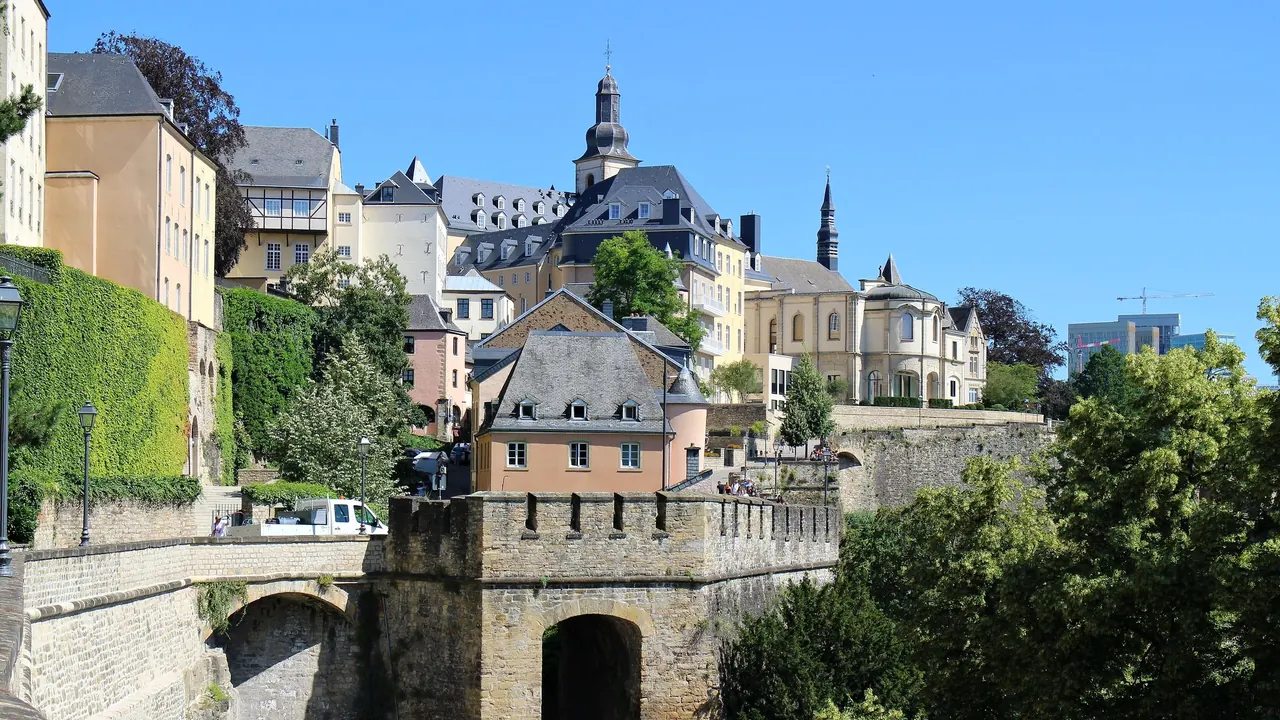
Photos: Basel by Lucazzitto, CC BY-SA 3.0, cropped; Luxembourg by Suicasmo, CC BY-SA 4.0, cropped.
Basel or Luxembourg?
Our verdict in twelve categories, each scored against the same fixed benchmark cities, and the climate month by month, so you can choose for your trip.
Choose Basel for
- beaches
- culture and sights
- families
Basel suits travellers who want to spend their days on art, music and moving around. Its museums hold far more than a city this size should: Holbein at the Kunstmuseum, the Beyeler's Impressionists and the Vitra campus just over the border. Theater Basel and the Stadtcasino fill the evenings. Fast trains reach Alsace, the Black Forest, Lucerne and Bern, so it works as a base for a week. In summer you can float down the Rhine with the locals.
Choose Luxembourg for
- prices
- food and drink
Luxembourg is better for a shorter, quieter stay where the setting itself is the attraction. The old town stands on a fortress rock above wooded gorges, and you can walk the casemate tunnels and the paths in the valley below. The Müllerthal's sandstone gorges and the Moselle vineyards are close by. Public transport is free everywhere, which takes some of the sting out of the prices, and two or three unhurried days cover it well.
Scoreboard
Twelve categories on one fixed scale from 0 to 100. The shaded stretch is the gap between the two.
Your match
Pick a travel style or drag the sliders, and both match scores follow your weighting.
Wins on beaches and culture and sights with your weighting.
Wins on prices and food and drink with your weighting.
What matters to you?
Category by category
What the scores mean for a trip.
Beaches & swimming
Neither city has a beach, but Basel's river makes up for it far better. On summer afternoons, locals walk upstream along the Kleinbasel bank and float back past the old town, then dry off on the gravel banks. Swimming here is part of ordinary city life rather than an excursion. The current is strong, though, so it is for confident swimmers.
In Luxembourg, a swim means going out of town. The bathing spots on the Upper Sûre reservoir are about an hour north, and the gravel-pit lakes at Remerschen are in the Moselle valley. Both are pleasant on a hot day in July or August, but most visitors never get to them.
Food & drink
The two cities are on a par for food, and both borrow heavily from their neighbours. Basel's kitchen leans towards Alsace and Baden, with tarte flambée, choucroute and Baden wines. The Markthalle and the market on Marktplatz are the easy casual stops, and locals often cross the border for cheaper meals.
Luxembourg's better restaurants are mostly French, and decades of Portuguese and Italian cooking run through its neighbourhood places. Its real edge is wine: Moselle Riesling and crémant are poured by the glass everywhere, and nothing in Basel matches that.
Culture & sights
Basel has much more to see inside. The Kunstmuseum's Old Masters, the Beyeler's modern art in its Renzo Piano building, the Tinguely and the Antikenmuseum add up to a museum city that needs three or four days. Its old town is a pleasant setting rather than the main event, with the red Münster, the painted Rathaus and the guild lanes of Spalenberg.
Luxembourg works the other way round. Its setting is the main sight: a UNESCO-listed fortress on sandstone cliffs, the Bock casemates and the view from the Chemin de la Corniche down to the Grund. MUDAM and the national museum are worth an afternoon, but two days covers the city.
Nightlife
Evenings are quiet in both cities, so the difference is in timing. Basel's best nights are in summer, when people drink on the river steps by the Kleinbasel kiosks until late. Clubs in old harbour buildings keep electronic music going at weekends, and Fasnacht turns the whole city into a three-day procession of drums and lanterns.
Luxembourg's nights are busiest on Thursdays and Fridays, before many residents leave for the weekend. Bars and clubs are packed into the old brewery at Rives de Clausen, and the crowd is mostly young international professionals. A glass of crémant on a terrace is a more typical evening.
Nature & outdoors
The cities are evenly matched for the outdoors, but the green starts in different places. In Luxembourg it begins in the centre itself: wooded gorges along the Pétrusse and Alzette have paths along the bottom. The Müllerthal's mossy rock passages are half an hour away, and the Ardennes lie further north.
Basel itself is flat and urban. Its strength is the three upland areas around it: the Jura ridges, the Black Forest with summits above 1,400m and light skiing in winter, and the Vosges. The Rhine paths make easy cycling into Germany and France.
Day trips
Both cities sit on borders, but Basel has the longer list. Colmar and the Alsace wine villages, Freiburg, Lucerne, Bern and Zurich are each about an hour away by fast train, Strasbourg is a little further, and the Rhine Falls take about an hour and a half. You could spend a week on day trips without repeating yourself.
Luxembourg's outings are good but smaller in scale. Roman Trier and Metz, with its Gothic cathedral, are each under an hour away. Closer to home there are Vianden's castle, Echternach, the Family of Man exhibition at Clervaux, and afternoons of wine tasting in Moselle villages such as Remich and Schengen.
Good for families
Basel has more to keep children busy. The Zolli is one of Europe's best zoos and sits a short walk from the station. The natural history and toy museums cover a rainy morning, the little ferries pulled across by the current are a treat, and Europa-Park is about an hour away by car.
Luxembourg is just as calm and safe, but it offers less. The casemate tunnels and ramparts are the highlight for children, and the Parc Merveilleux at Bettembourg is the only attraction built for families. With no zoo or theme park, it suits a family stay of two or three days rather than a week.
Getting around
Basel is the smoother of the two to move around. The old town and both banks of the Rhine are flat and easy to cover on foot, and the four small river ferries make a crossing part of the walk. Green trams handle the rest of the city and hotel guests ride them free. Some lines carry on into Germany and France, and the main station has direct trains across Switzerland and into both neighbours, so no day trip needs a car.
Luxembourg's network is free for everyone: trams, buses and second-class trains alike, with trains out to Vianden, Clervaux and the Moselle. The old town is compact and pleasant to walk. The city is built on several levels, though, so it helps to know where the public lifts down to the Grund and Pfaffenthal are, and the funicular up to Kirchberg. Roads fill with cross-border commuters at rush hour, which is another reason to leave the car behind.
Shopping & style
Neither city is somewhere people travel to shop, and both are short on bargains. Basel offers Swiss watches, chocolatiers and Läckerli on Freie Strasse, small design shops in Spalenberg and a pretty Christmas market by the Münster. Luxembourg has luxury fashion along the Grand-Rue, the Villeroy & Boch porcelain outlet, and Moselle crémant to take home.
Affordability
Both cities are expensive, but Basel is the harder on the wallet. Hotels, meals, drinks and museum tickets all cost what you would expect in Switzerland, and rooms become scarce during big trade fairs such as Art Basel. The free travel card for hotel guests and cheaper meals over the border in Germany and France help only so much.
In Luxembourg the savings add up a little more. Transport is free for all, several museums charge no entry, wine by the glass is reasonable, and room rates sometimes drop at weekends. Staying in Trier or Metz and coming in by train is a common way to save.
Live music & performing arts
Basel creates more of its own performances. Theater Basel stages opera, ballet and drama in house and is known well beyond Switzerland for bold productions. The Sinfonieorchester plays at the Stadtcasino, and the city's early-music tradition adds historical concerts. The season goes quiet in July and August.
Luxembourg's Philharmonie is a superb hall with a resident orchestra, but much of the programme there and at the Grand Théâtre comes from visiting companies. In summer, the open-air concerts at Neimënster in the Grund fill the gap left by Basel's break.
Wellness & relaxation
Both cities are calm places with no bathing tradition of their own, so a spa day means a short trip out. From Basel you have more choice: the saline baths at Rheinfelden are about twenty minutes away, the German spa towns of southern Baden lie just over the border, and Baden-Baden is possible as a longer day. From Luxembourg there is essentially one destination, the thermal park at Mondorf-les-Bains, about half an hour away.
When should you go?
Pick your month. The climate figures are measured averages, not a forecast.
Basel in July
Luxembourg in July
Daytime high, °C
Rainfall in the month, mm
Temperature and rainfall are climate normals, averaged over the years shown. Basel: 1991-2020 (sunshine 1961-1990) normals, Basel / Binningen (1.9 km from centre). Luxembourg: 1991-2020 normals, Luxembourg / Luxembourg (6.3 km from centre).
The two cities have a similar inland climate, but Basel is a little warmer through the year. Its summer afternoons reach about 26°C in July, against 24°C in Luxembourg. June to early September is the season for swimming in the Rhine in Basel. In Luxembourg, July and August are the only lake months. Both cities are cold and grey from November to February, which suits museums and concert halls better than walking the streets. In December, Basel's Christmas market around the Münster makes up for some of that.
Rain falls differently in the two cities. Basel's winters are fairly dry, and its wettest stretch runs from May to August, peaking at about 96mm in May, so pack for summer showers. Luxembourg's rain is spread evenly across the year and is heaviest in December, at about 89mm. Luxembourg is clearly the sunnier of the two from April to August. In both cities, late spring and September are the most comfortable months for walking around town and hiking nearby, and Luxembourg's forests are at their best in autumn.
Which traveller are you?
On a culture and arts trip, Basel is the stronger choice. The Kunstmuseum, the Fondation Beyeler, the Tinguely and the Vitra campus would keep you busy for several days, and Theater Basel's own opera and ballet productions fill the evenings between autumn and early summer.
On a family trip with children, Basel also comes out ahead. The Zolli, one of Europe's best zoos, is a short walk from the station, and the current-drawn Rhine ferries amuse younger children. Europa-Park is within reach for a big day out, while Luxembourg has no zoo or theme park.
On a trip with a tight budget, Luxembourg is somewhat easier on the wallet, though neither city is cheap. Trams, buses and trains are free for everyone across the whole country, several museums cost nothing, and a lunch menu is the best way to eat well for less.
Before you go
| Measure | Basel | Luxembourg |
|---|---|---|
| Official language | French, German, Italian, Romansh | French, German, Luxembourgish |
| Currency | Swiss Franc (CHF) | Euro (EUR) |
| Sockets | CJ230 V, 50 Hz | CF230 V, 50 Hz |
| Driving side | Right | Right |
| Time zone | UTC+1, UTC+2 in summer | UTC+1, UTC+2 in summer |
| Emergency number | 112 | 112 |
| Elevation | 247 m | 300 m |
| Main airport | EuroAirport Basel–Mulhouse–Freiburg (BSL)7 km from centre112 non-stop destinations | Luxembourg-Findel International Airport (LUX)6 km from centre115 non-stop destinations |
| Public holidays this year | 10 days | 12 days |
By the numbers
| Measure | Basel | Luxembourg |
|---|---|---|
| City population | 176,329 | 137,678 |
| People per km² | 7,378 | 2,663 |
| Museums within 10 km | 61 | 19 |
| UNESCO World Heritage sites within 50 km | 2 | 4 |
Where else could you go?
Every comparison below shares a destination with this one, so you can follow Basel or Luxembourg somewhere new.