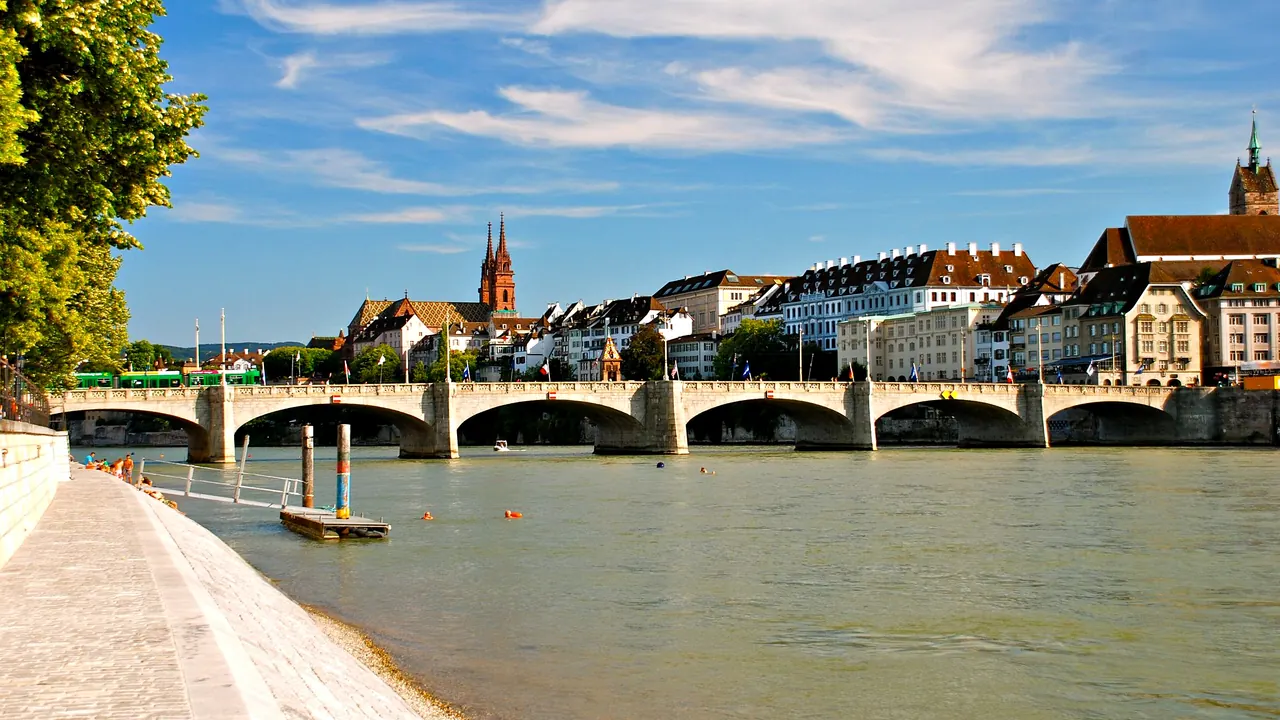
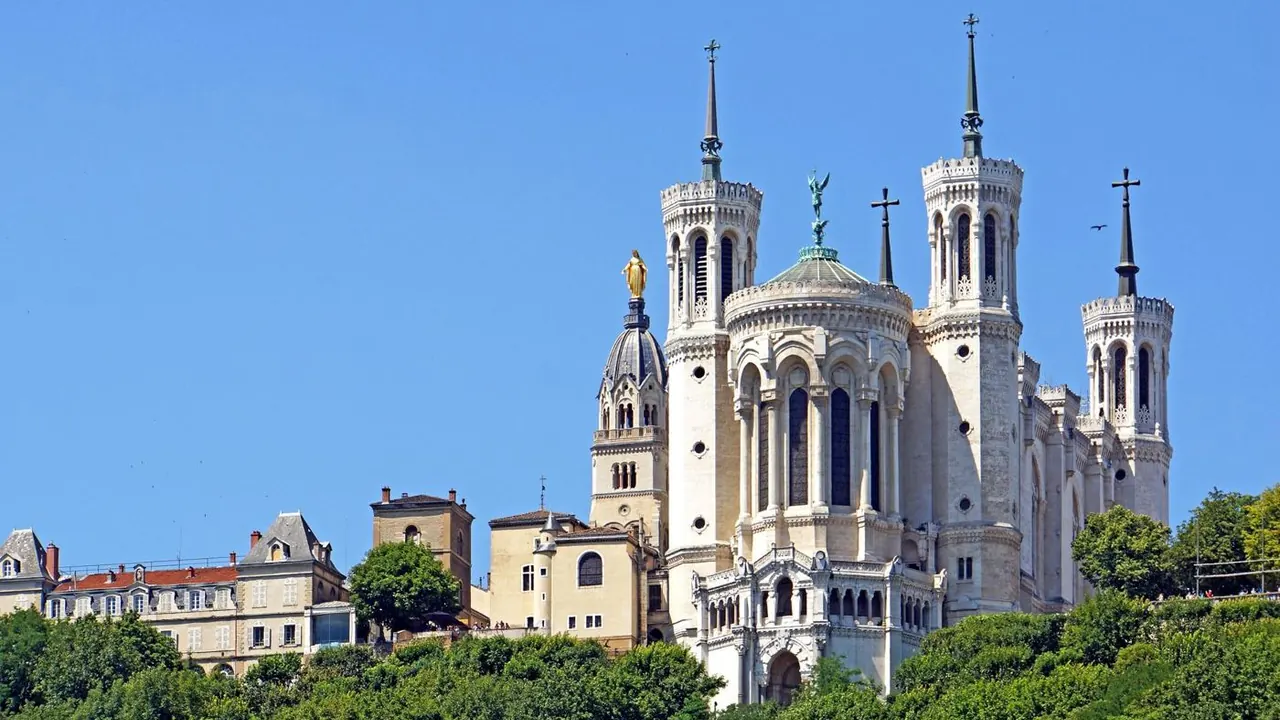
Photos: Basel by Lucazzitto, CC BY-SA 3.0, cropped; Lyon by Dennis G. Jarvis, CC BY-SA 2.0, cropped.
Basel or Lyon?
Our verdict in twelve categories, each scored against the same fixed benchmark cities, and the climate month by month, so you can choose for your trip.
Choose Basel for
- beaches
- getting around
- wellness
Basel suits a traveller who wants a small, orderly base with first-class art and a different country on every day of the trip. The museums are remarkable for a city its size, the trams and trains make everything easy, and Alsace, the Black Forest, Lucerne and Bern are all close. In summer you can float down the Rhine past the old town. It is a calm, polished choice, as long as you accept Swiss prices and quiet evenings.
Choose Lyon for
- food and drink
- prices
- nightlife
If you travel to eat, Lyon is the stronger pick. Bouchon lunches, the Halles and the wine country on both sides of the city make food the point of the trip. The city is larger and has more layers, from Roman theatres to a Renaissance quarter, and its evenings are livelier, with barges on the Rhône and a student crowd. Every bill is also noticeably lower than in Basel.
Scoreboard
Twelve categories on one fixed scale from 0 to 100. The shaded stretch is the gap between the two.
Your match
Pick a travel style or drag the sliders, and both match scores follow your weighting.
Wins on beaches and getting around with your weighting.
Wins on food and drink and prices with your weighting.
What matters to you?
Category by category
What the scores mean for a trip.
Beaches & swimming
Neither city has sand, but Basel has a proper summer swim right in the centre. Locals walk up the Kleinbasel bank and let the Rhine carry them back past the Münster, with the water often above 20°C in August. It is only for confident swimmers, because the current is strong.
Lyon's river is for sunbathing on the quays, not for swimming. The nearest place to get in the water is the supervised lake at Miribel-Jonage on the edge of the city. The clear Alpine lakes of Annecy and Bourget mean a day out of one and a half to two hours each way.
Food & drink
This is where the two differ most, and Lyon wins easily. The bouchon is a way of eating you will find nowhere else: quenelles, andouillette, cervelle de canut and a pot of local red. Behind it stand the tradition of the Mères lyonnaises, Les Halles Paul Bocuse and the Beaujolais and northern Rhône vineyards on the doorstep.
Basel eats well, but much of its cooking comes from its neighbours: tarte flambée from Alsace, wines from Baden. It has few dishes of its own beyond Läckerli and the Fasnacht flour soup. The Markthalle and Marktplatz market are good for a casual lunch, but everyday meals can feel expensive for what you get.
Culture & sights
Lyon has the wider sweep of history. There are Roman theatres on Fourvière, the Renaissance lanes and traboules of Vieux Lyon, the silk-weavers' buildings of Croix-Rousse and a fine-arts collection in a former abbey, and much of the city is on the UNESCO list. It takes a few full days, and the pleasure comes from walking through the layers rather than from one famous sight.
Basel's strength is art packed into a small space. The Kunstmuseum's Holbeins, the Fondation Beyeler, the Museum Tinguely and the Vitra campus just over the border make it a stronger trip for gallery lovers. Its red sandstone old town, with modern Herzog & de Meuron buildings among it, can be covered comfortably in three or four days.
Nightlife
Lyon has much more going on after dark. Its students fill the wine bars between Hôtel de Ville and the Terreaux, the péniches on the Rhône turn into bars and clubs, and warehouse clubs towards Gerland keep electronic music going. Midweek and outside term, though, nights end earlier than you might expect.
Basel is mostly drinks on the Kleinbasel river steps in summer and a cluster of bars around the Kaserne, all at Swiss prices. Its one great exception is Fasnacht, when drums and lantern processions take over the city for three days and nights from four in the morning.
Nature & outdoors
The two are broadly level, but they offer different things. Basel's appeal is its three ranges: the Jura starts just south of the city, the Black Forest summits are within an hour and the Vosges lie to the west. Flat Rhine paths lead by bike into Germany and France.
Lyon has more green space inside the city. The Parc de la Tête d'Or has a boating lake, and long car-free quays and steep hill stairways make easy outings. For serious hiking and climbing it has Chartreuse and Vercors, though a car helps for most of the countryside.
Day trips
Basel has the edge because it opens on to three countries, and fast trains do the work. You can see Colmar and the Alsace wine villages, Freiburg's minster, Lucerne, Bern and Zurich, each about an hour away, plus the Roman ruins of Augusta Raurica a quarter of an hour out. You could fill a week without repeating yourself.
Lyon's day trips are good but narrower, built around wine and old towns. Vienne's Roman temple is twenty minutes away, Pérouges under an hour, and then come the Beaujolais villages and Beaune. Annecy and Geneva are near the limit of a comfortable day.
Good for families
Both are easy with children, and in each city the zoo is the highlight. Basel's Zolli, a short walk from the station, is one of Europe's best. Lyon's zoo in the Parc de la Tête d'Or is free and comes with pedalos, pony rides and a little train.
Beyond that, Lyon has more for children to do, with Guignol puppet shows, dinosaurs at the Musée des Confluences and funicular rides. Basel is the gentler place to push a pram, with flat streets, trams and the current-drawn ferries, while Lyon's stepped hill lanes are hard going. Basel's big outing is Europa-Park, about an hour away in Germany.
Getting around
Basel is about as simple as a city gets. Both banks are walkable, the green trams go everywhere and some run on into France and Germany, and hotel guests travel free. The little ferries are a pleasant way to cross the river.
Lyon works well too, but it takes more effort. The flat Presqu'île is easy on foot, and funiculars and a rack metro climb the hills. With only four metro lines and steep slopes, though, some journeys mean a change or a climb.
Shopping & style
Lyon offers more for shoppers. It has luxury labels around Place des Jacobins, the huge Part-Dieu mall, silk scarves from the weaving tradition, designer workshops on Croix-Rousse and antique dealers on the rue Auguste Comte. Food from the Halles makes the best souvenir.
Basel is tidy and limited, with watches, jewellery and chocolate along Freie Strasse and small design shops on Spalenberg. Its Christmas market around the Münster is a real draw, but locals themselves go to Germany for cheaper shops.
Affordability
Lyon is far easier on the wallet, though it is not a budget city. Hotels are reasonable outside trade fairs and the Fête des Lumières, and bouchon set lunches are some of the best-value meals in France.
Basel is very expensive: hotels, meals, drinks and museum tickets all cost what you would expect in Switzerland. Free transport for hotel guests helps, and many visitors eat or sleep across the border in Germany or France to keep costs down.
Live music & performing arts
Both have serious stage scenes for their size, and Lyon goes slightly further. Dance is its speciality, with the Maison de la Danse and the Biennale. In summer the Nuits de Fourvière festival puts on shows in the Roman theatres, just when Basel's season goes quiet.
Basel's strengths are Theater Basel's bold opera and drama, the Sinfonieorchester in the Stadtcasino, which has fine acoustics, and a long early-music tradition. It is a stronger draw for classical concerts than for dance.
Wellness & relaxation
Basel makes a spa day easier. The saline thermal baths at Rheinfelden are about twenty minutes away, and German spa towns such as Badenweiler and Bad Krozingen lie just over the border. The city's unhurried pace adds to the calm.
Lyon relies on hammams, hotel spas and the open-air pool on the Rhône quays. Its restfulness comes from long lunches and the Parc de la Tête d'Or. For real thermal bathing you have to travel an hour and a half to Aix-les-Bains.
When should you go?
Pick your month. The climate figures are measured averages, not a forecast.
Basel in July
Lyon in July
Daytime high, °C
Rainfall in the month, mm
Temperature and rainfall are climate normals, averaged over the years shown. Basel: 1991-2020 (sunshine 1961-1990) normals, Basel / Binningen (1.9 km from centre). Lyon: 1991-2020 (sunshine 1981-2010) normals, Lyon / Bron (10.6 km from centre).
Both cities have cold winters, mild springs and warm summers, but Lyon runs a couple of degrees warmer through the year and gets more sun from spring to autumn. July and August are the warm months in both. Basel reaches about 26°C, good weather for floating down the Rhine. In Lyon, 28°C can feel heavy on the Presqu'île in the middle of the day. From December to February daytime highs stay in single figures in both cities, which is too cold to enjoy long walks. Basel's November is just as chilly, while Lyon's is a little milder but grey and damp.
The two cities get most of their rain at different times of year. In Basel, late spring and summer are the wettest stretch, and May is the wettest month at around 96mm, so pack a jacket even in high season. September is the best bet for walking its streets, and April is a drier but cooler choice. Lyon's summers are drier and brighter. The rain picks up from September and peaks at around 101mm in October. June is the best month for sightseeing there, sunny and warm without the midsummer heat, with late May close behind. September stays warm and fairly bright, but expect more showers than in high summer. Later in the autumn Basel is the less wet of the two, and its October is drier than Lyon's.
Which traveller are you?
For a food and nightlife trip, Lyon is the clear choice. Bouchons, generous set lunches and Les Halles Paul Bocuse fill the day, and the bars on the Presqu'île and the barges on the Rhône carry on into the night, where Basel stays quiet and expensive.
On a trip on a tight budget, Lyon goes much further. Hotels are reasonable for most of the year, set lunches are excellent value and the zoo is free. Basel is very expensive, and even with free trams it often means sleeping across the border.
For a short city break, Basel is easier. The old town is compact, the trams cost hotel guests nothing, and the Kunstmuseum, the Fondation Beyeler and the Rhine fit into a long weekend. Lyon takes several full days and more climbing to see well.
Before you go
| Measure | Basel | Lyon |
|---|---|---|
| Official language | French, German, Italian, Romansh | French |
| Currency | Swiss Franc (CHF) | Euro (EUR) |
| Sockets | CJ230 V, 50 Hz | CE230 V, 50 Hz |
| Driving side | Right | Right |
| Time zone | UTC+1, UTC+2 in summer | UTC+1, UTC+2 in summer |
| Emergency number | 112 | 112 |
| Elevation | 247 m | 160 m |
| Main airport | EuroAirport Basel–Mulhouse–Freiburg (BSL)7 km from centre112 non-stop destinations | Lyon Saint-Exupéry Airport (LYS)20 km from centre141 non-stop destinations |
| Public holidays this year | 10 days | 11 days |
By the numbers
| Measure | Basel | Lyon |
|---|---|---|
| City population | 176,329 | 519,127 |
| People per km² | 7,378 | 10,838 |
| Museums within 10 km | 61 | 43 |
| UNESCO World Heritage sites within 50 km | 2 | 2 |
Where else could you go?
Every comparison below shares a destination with this one, so you can follow Basel or Lyon somewhere new.