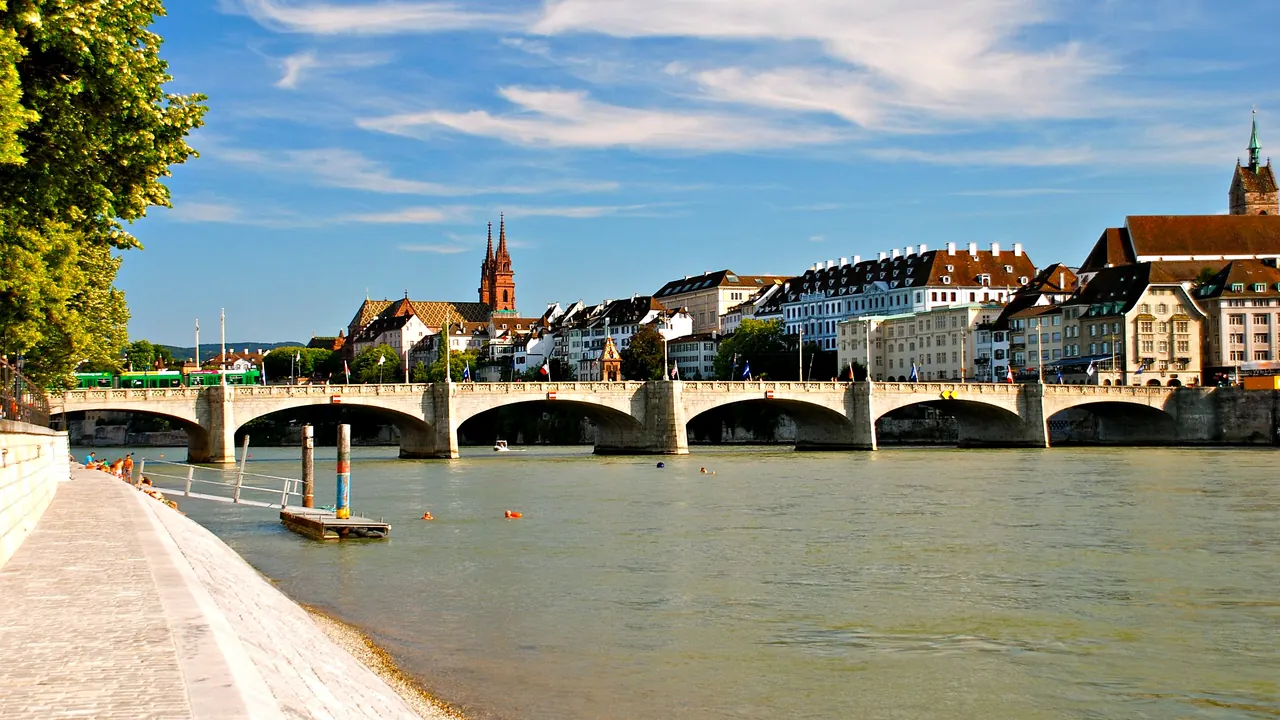
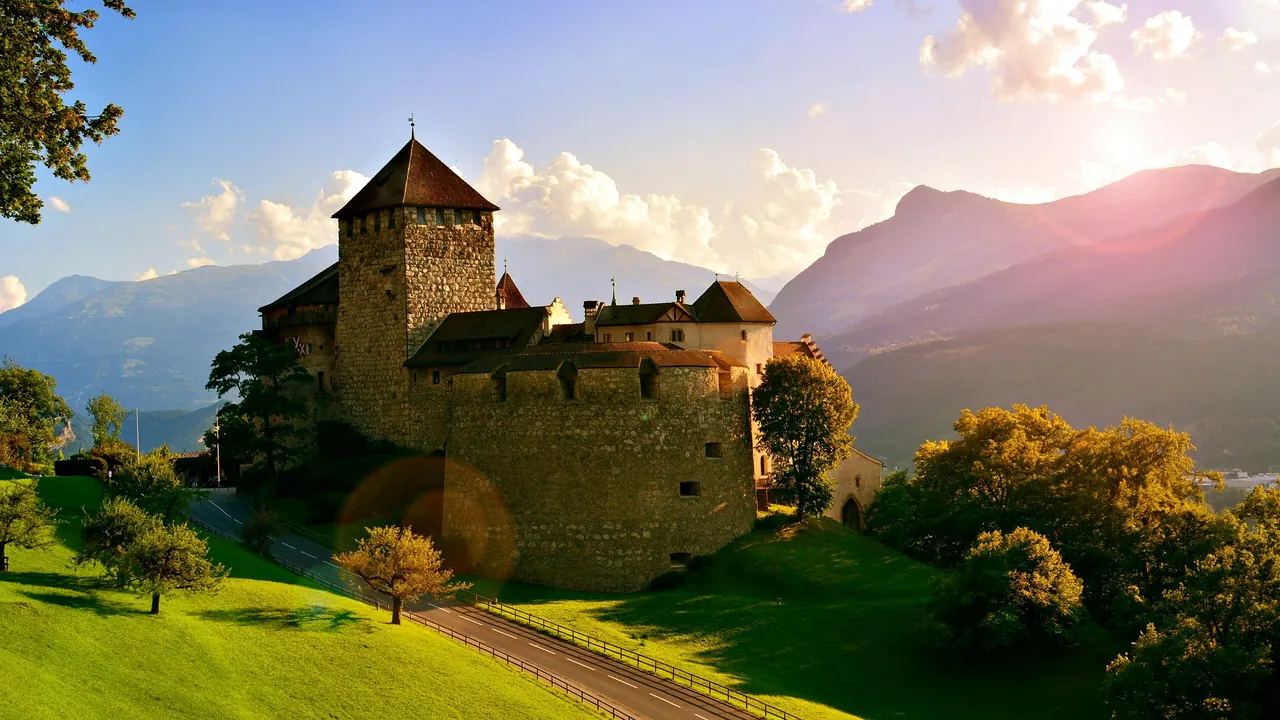
Photos: Basel by Lucazzitto, CC BY-SA 3.0, cropped; Vaduz by Justin LaBerge, CC BY 2.0, cropped.
Basel or Vaduz?
Our verdict in twelve categories, each scored against the same fixed benchmark cities, and the climate month by month, so you can choose for your trip.
Choose Basel for
- culture and sights
- live music and the arts
- shopping
Basel is the better choice if you want a city with plenty to do. It has a run of serious art museums and a real opera and concert season. There's a river to swim in on summer afternoons, and trams and fast trains bring Alsace, the Black Forest and much of Switzerland within easy reach for day trips. It works for a long weekend of galleries or for a week spent in one hotel with a rail map to hand.
Choose Vaduz for
- nature and the outdoors
Pick Vaduz if the mountains are the point. Trails start at the edge of town, the alpine villages of Triesenberg and Malbun are half an hour up the road, and the Rätikon ridges offer proper high walking, with small-scale skiing in winter. In return you give up most of what a city offers: a single day of sights, almost nothing after dinner and a region that is easier to explore by car. It suits walkers and anyone who wants quiet.
Scoreboard
Twelve categories on one fixed scale from 0 to 100. The shaded stretch is the gap between the two.
Your match
Pick a travel style or drag the sliders, and both match scores follow your weighting.
Wins on culture and sights and live music and the arts with your weighting.
Wins on nature and the outdoors with your weighting.
What matters to you?
Category by category
What the scores mean for a trip.
Beaches & swimming
Neither has a beach, but Basel has something Vaduz lacks: a river you can swim in, right in the middle of town. On summer afternoons people walk up the Kleinbasel bank, float back down past the old town and dry off on the gravel. For confident swimmers it becomes a real part of a summer stay.
In Vaduz the Rhine is not for swimming, so on a hot day you go to the municipal open-air pools or drive to the Walensee or Lake Constance. The lakes are lovely, but getting there is an outing, not something on your doorstep.
Food & drink
Basel eats better and with far more range. Its kitchens borrow from Alsace and Baden as well as Swiss-German cooking, there is a small but very good fine-dining tier, and the Markthalle and the Marktplatz market are easy for casual meals.
Vaduz has hotel dining rooms, a few restaurants on the Städtle and hearty inns in the hills, where Käsknöpfle is the dish to try. Its best feature is the wine from the vineyards below the castle, including the prince's own estate. Beyond that there is little variety and no market life.
Culture & sights
This is where the two differ most. Basel's museums reward several days: the Kunstmuseum's Holbeins and Old Masters, the Fondation Beyeler in its Renzo Piano building, the Tinguely and the Vitra campus just over the German border. On top of that comes an old town with the sandstone Münster, the painted Rathaus and the Spalentor.
Vaduz takes one unhurried day. The Kunstmuseum Liechtenstein and the Hilti Art Foundation, standing side by side, hold more modern art than you might expect, and the National Museum and the stamp museum explain the principality. The castle is closed to visitors, though, and the list ends there.
Nightlife
Basel has a modest but genuine night out, and Vaduz barely has one. In summer the drinking moves to the riverside kiosks and steps of Kleinbasel, and through the year the bars cluster around the Kaserne and the Rheingasse, with a few weekend clubs in old harbour and industrial buildings. For three days in late winter, Fasnacht fills the streets with drums and lanterns from four in the morning.
Vaduz winds down after dinner, with a few wine bars and hotel lounges on the Städtle and no clubs to speak of. Younger locals cross to Feldkirch or go to Zurich when they want a real night out.
Nature & outdoors
Vaduz wins clearly if you want mountains. Paths climb through vineyards and beech woods from the town centre, and Triesenberg and Malbun are half an hour up the road. The Rätikon offers high walks such as the Fürstensteig, and in winter there is Malbun's small ski area, with bigger Swiss resorts within an hour.
Basel's outdoors is gentler and further away. The Jura ridges, the Black Forest summits around the Feldberg and the Vosges all give good walking, and the flat Rhine paths make easy cycling into France and Germany. The real Alps are a couple of hours away.
Day trips
Both sit on borders, but Basel opens on to more places and reaches them more easily. Colmar and the Alsace wine villages, Freiburg, Lucerne, Bern and Zurich are each about an hour away, Strasbourg is a little further, and Augusta Raurica and Rheinfelden are almost on the doorstep.
Vaduz has a good list of its own: Feldkirch twenty minutes away, the abbey library at St Gallen, painted Appenzell, Chur, and Bregenz and Lindau on Lake Constance. The catch is that going by train usually means a change at Buchs or Sargans, so you can reach more with a car.
Good for families
Basel has far more for children. The Zolli, a short walk from the station, is one of Europe's best zoos, the Natural History Museum and the toy museum fill a wet morning, and the ferries pulled across by the current are a small adventure. Europa-Park is about an hour away by car.
Vaduz is just as safe and easy with a pushchair, but nothing there is made for children. Days go on the open-air pools, gentle walks above Triesenberg or Malbun's beginner slopes, so it suits older children who like hiking more than little ones.
Getting around
Basel is much easier without a car. Its trams cover the whole city and some lines cross into France and Germany, hotel guests ride for free, and the main station has direct trains to all three countries.
Vaduz is pleasant on foot, since everything on the Städtle is a few minutes apart, and buses reach every village and climb to Malbun. It has no station of its own, though, so longer trips involve a change and many visitors hire a car.
Shopping & style
Basel is no shopping capital, but it has a proper retail centre along Freie Strasse and Gerbergasse, small design shops on the Spalenberg and in St Johann, and a pretty Christmas market around the Münster. Vaduz has a handful of shops on the Städtle selling watches, souvenirs and collectable stamps, and a bottle of local wine is the best thing to take home. Serious shoppers staying in Vaduz end up in Zurich.
Affordability
Both are among the most expensive places to visit in Europe, and there is little to choose between them on cost.
What differs is how you can soften the bill. In Basel, hotel guests get free trams, and cheaper meals and rooms are a tram ride away in Germany and France, though rooms are scarce during big trade fairs such as Art Basel. Vaduz has only a few hotels and little at the budget end, so travellers saving money stay across the border in Austria.
Live music & performing arts
Basel has a real season. Theater Basel stages bold opera, ballet and drama, and the Stadtcasino, a hall with fine acoustics, is home to the Sinfonieorchester Basel. Early-music concerts and small jazz venues add more, though July and August are quiet.
Liechtenstein's main stage is in neighbouring Schaan rather than Vaduz. Add a short orchestral season, a summer classical festival in Vaduz and the odd church concert, and you will find something to see during a week, but nothing to plan a trip around.
Wellness & relaxation
Neither is a spa town, and both depend on baths nearby. Basel has more choice: the saline baths at Rheinfelden twenty minutes away, the German spa towns of southern Baden such as Badenweiler and Bad Krozingen, and Baden-Baden for a longer day. In summer you can add slow afternoons on the riverbank.
Vaduz has one excellent option in Bad Ragaz, whose warm spring water from the Tamina gorge has drawn bathers for centuries. With its quiet streets, mountain views and walks in the hills, it is a restful base, just with fewer baths to choose from.
When should you go?
Pick your month. The climate figures are measured averages, not a forecast.
Basel in July
Vaduz in July
Daytime high, °C
Rainfall in the month, mm
Where the figures come from
Vaduz's temperatures are measured 51 km from the centre, at Sigmarszell-Zeisertsweiler.
Vaduz has no rain gauge within 25 km of the centre, so its rainfall comes from a gridded climate dataset read at the destination rather than from a gauge further away.
Temperature and rainfall are climate normals, averaged over the years shown. Basel: 1991-2020 (sunshine 1961-1990) normals, Basel / Binningen (1.9 km from centre). Vaduz: 1991-2020 normals, Sigmarszell-Zeisertsweiler (51.3 km from centre).
Both are at their best in summer, and for much the same months. Basel is a little warmer, reaching about 26°C in July against 24°C in Vaduz, and its Rhine is good for swimming from June to early September. May to September is the wettest part of the year in both, but Vaduz gets noticeably more rain, around 126mm in August against roughly 90mm in Basel. Vaduz also gets a little more sunshine from spring into early summer.
For walking the streets, May, June and September are the comfortable months in Basel. In Vaduz the high trails are at their best from June into early autumn, though in late autumn the valley can sit under fog while the heights stay sunny. Winters are cold in both, with daytime highs only a few degrees above freezing. That weather suits Basel's museums and the beginner ski slopes at Malbun better than sightseeing outdoors.
Which traveller are you?
For a culture and arts trip, Basel is the clear choice. The Kunstmuseum, the Fondation Beyeler and the Vitra campus fill several days, and evenings go to Theater Basel or the Stadtcasino. Vaduz offers one fine pair of modern art museums.
On an outdoors trip, Vaduz makes the better base. Walks start from the town centre, the high Rätikon trails are half an hour away and Malbun has skiing in winter. From Basel, the Alps take a couple of hours.
For a food and nightlife trip, Basel wins easily. Alsatian and Baden cooking, the Markthalle and late evenings on the Kleinbasel riverbank give it real range. Vaduz offers hearty Alpine inns, the prince's Pinot Noir and an early night.
Before you go
| Measure | Basel | Vaduz |
|---|---|---|
| Official language | French, German, Italian, Romansh | German |
| Currency | Swiss Franc (CHF) | Swiss Franc (CHF) |
| Sockets | CJ230 V, 50 Hz | CJ230 V, 50 Hz |
| Driving side | Right | Right |
| Time zone | UTC+1, UTC+2 in summer | UTC+1, UTC+2 in summer |
| Emergency number | 112 | 112 |
| Elevation | 247 m | 455 m |
| Main airport | EuroAirport Basel–Mulhouse–Freiburg (BSL)7 km from centre112 non-stop destinations | Zürich Airport (ZRH)81 km from centre226 non-stop destinations |
| Public holidays this year | 10 days | 21 days |
By the numbers
| Measure | Basel | Vaduz |
|---|---|---|
| Population | 176,329 | 5,668 |
| People per km² | 7,378 | 328 |
| Museums within 10 km | 61 | 7 |
| UNESCO World Heritage sites within 50 km | 2 | 3 |
Where else could you go?
Every comparison below shares a destination with this one, so you can follow Basel or Vaduz somewhere new.