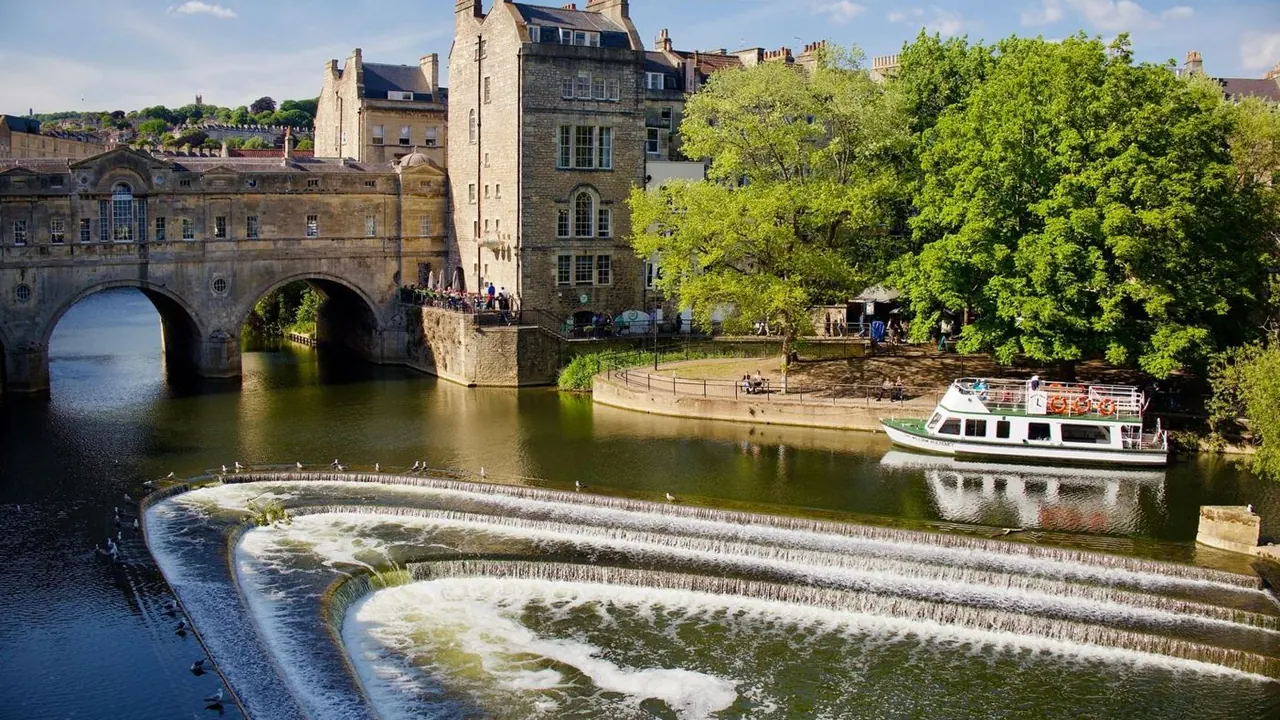
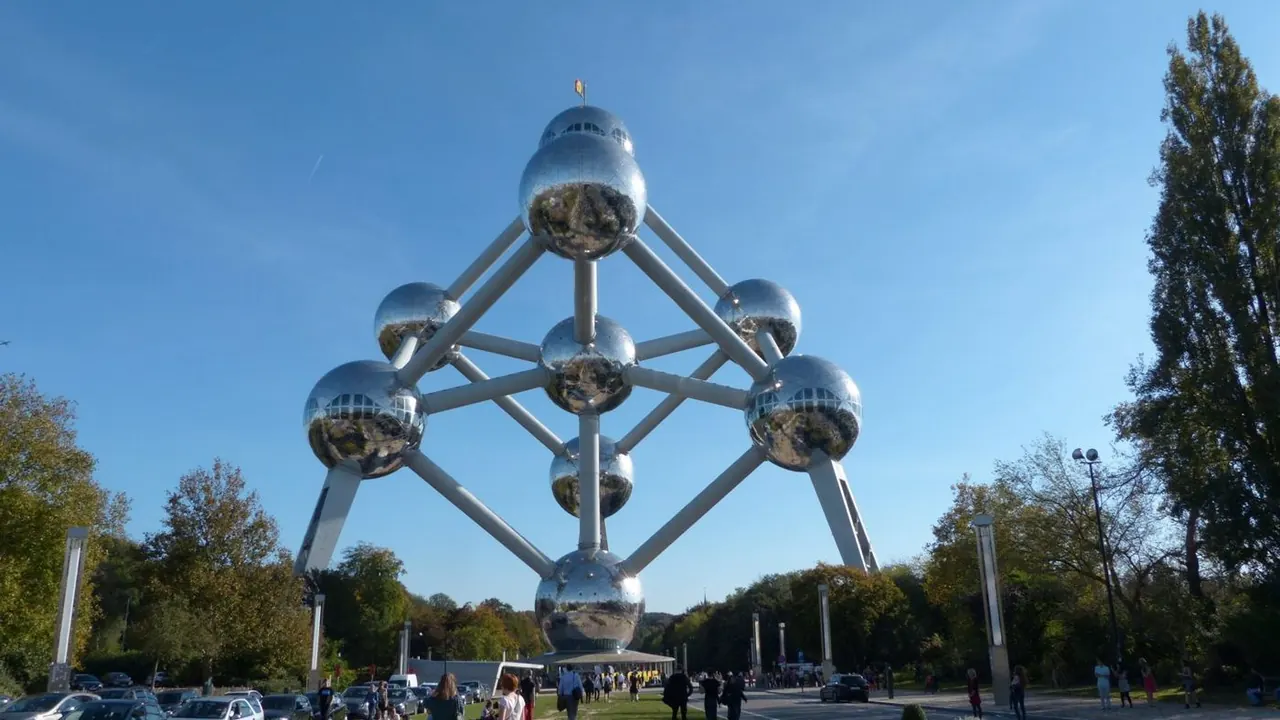
Photos: Bath by Lucas Carlini, Pexels License; Brussels by Ettanghe, CC BY-SA 4.0, cropped.
Bath or Brussels?
Our verdict in twelve categories, each scored against the same fixed benchmark cities, and the climate month by month, so you can choose for your trip.
Choose Bath for
- wellness
- nature and the outdoors
Bath suits a slower, gentler trip. Its Georgian streets are intact, its hot springs are the only natural ones in Britain, and green hills start at the edge of town. It is best for couples and travellers who want architecture, afternoon tea, a long soak and quiet evenings, and who are happy to pay for a pretty bed in a small, popular city.
Choose Brussels for
- nightlife
- food and drink
- live music and the arts
Choose Brussels if you want a city with more appetite. It eats and drinks far better, with lambic beer, mussels and frites alongside Congolese and Moroccan cooking. It has a serious opera house and concert life, stays lively later at night, and puts Ghent, Antwerp and Bruges within about an hour by train. It is also the easier of the two on the wallet, especially at weekends.
Scoreboard
Twelve categories on one fixed scale from 0 to 100. The shaded stretch is the gap between the two.
Your match
Pick a travel style or drag the sliders, and both match scores follow your weighting.
Wins on wellness and nature and the outdoors with your weighting.
Wins on nightlife and food and drink with your weighting.
What matters to you?
Category by category
What the scores mean for a trip.
Beaches & swimming
Neither city is for beach life, but Brussels has the better seaside within reach. The Belgian coast at Ostend or De Haan is a little over an hour by train, with wide sandy beaches and promenades that make a breezy day out.
Bath's nearest sea is the brown, shallow Bristol Channel at Weston-super-Mare, where the tide retreats a long way. Clean sand means two hours or more to Dorset or Devon. In return, Bath has summer river swimming in the Avon, while Brussels offers indoor and open-air pools.
Food & drink
Brussels is much the better city to eat in. It has a deep native cuisine of mussels, carbonnade and waterzooi, a beer culture with lambics brewed nowhere else, and praline makers around the Sablon. Congolese, Moroccan and Turkish kitchens in Matonge, Saint-Josse and Schaerbeek give it real range.
Bath eats well within narrower limits: West Country cheese, cider and lamb in gastropubs, the Sally Lunn bun, afternoon tea and the farmers' market at Green Park. There is little cooking from other cuisines and almost no street food.
Culture & sights
Bath's main sight is the city itself. Its Georgian townscape survives whole, so the Circus, the Royal Crescent, Pulteney Bridge and the Assembly Rooms are a short walk apart, with the Roman Baths and the Abbey at the centre. Its museums are small, and two or three days cover it well.
Brussels has more to see and richer collections. The Grand-Place, with its gilded guild houses, is one of Europe's great squares. The other sights are spread across the city: Bruegel, Rubens and a museum devoted to Magritte in the upper town, the Cinquantenaire museums further east, and Horta's UNESCO-listed Art Nouveau houses in Saint-Gilles and Ixelles. All of that fills a longer stay, though office blocks break up the old city between the sights.
Nightlife
After dark Brussels is livelier by a wide margin. Bars fill Saint-Géry and the streets by the Bourse, and Flagey and Châtelain draw a local crowd. The Marolles has a techno club of European standing, and there is a queer scene around Rue du Marché au Charbon.
In Bath, evenings mean the pub: coaching inns and real-ale houses on Walcot Street and around Kingsmead. Outside student term and weekends the city goes quiet early, and anyone wanting more takes the train to Bristol.
Nature & outdoors
Bath is the better choice for getting outdoors, because the countryside starts at the edge of the city. The Skyline loop follows the ridges above town and the Kennet and Avon towpath leads into the Limpley Stoke valley. The Cotswolds and the Mendips, with Cheddar Gorge, are within an hour.
Brussels has one fine asset in the tall beech stands of the Sonian Forest, plus city parks such as the Bois de la Cambre, but the land around it is flat. For hills, rivers and kayaking you need the Ardennes valleys near Dinant, up to two hours away.
Day trips
Both are excellent bases, but Brussels wins on ease. Ghent, Antwerp, Bruges, Leuven and Mechelen are all within about an hour on frequent trains, and Paris, Lille and Cologne work for a long day, so nearly everything is a train ride away.
Bath's excursions are just as rewarding: Stonehenge and Avebury, Wells and Glastonbury, Lacock and the Cotswold villages, with Bristol fifteen minutes away. The difference is that most of them, apart from Bristol and Cardiff, are far easier by car or on a tour.
Good for families
Brussels keeps children busier. The Atomium and Mini-Europe stand side by side, the Natural Sciences museum has its herd of Iguanodons, and the comic murals turn a walk into a treasure hunt. The Walibi and Pairi Daiza parks are easy outings. Cobbles, traffic and rain are the trade-off.
Bath is safe and compact, and children enjoy the steaming Roman Baths and the playground in Royal Victoria Park. Beyond those it is a grown-up town with steep streets, and most of its family days out are in Bristol or at Longleat.
Getting around
Both centres are compact and best explored on foot, and in both a car is more trouble than help. What differs is the support around the walking. You can cross Bath's core in about twenty minutes, much of it pedestrianised, and you only need buses for the hills and the park-and-ride on the edge.
Brussels is larger and relies on metro, trams and buses that take a tapped bank card. Trams are the pleasant way to Ixelles and Saint-Gilles, and trains run direct to the airport. Expect a steep climb between the lower and upper town, and rough pavements.
Shopping & style
Brussels has more to buy. Chocolatiers line the Galeries Royales Saint-Hubert and the Sablon, which is also the centre of the antiques trade, and the Marolles has its daily flea market. Rue Antoine Dansaert carries Belgian designers, and Avenue Louise has the luxury brands that Bath lacks.
Bath offers pleasant browsing on a smaller scale: independent bookshops and jewellers in the lanes by the Abbey, antiques on Bartlett Street, makers and salvage dealers on Walcot Street, and the centuries-old Guildhall Market.
Affordability
Neither is cheap, but Brussels makes a budget go further, and weekends pull the two in opposite directions. In Brussels the business hotels empty on Friday, and frites, sandwiches and cooking in the immigrant neighbourhoods keep daily costs down.
Bath is a small city with many visitors, so beds are dear, most of all on summer weekends and at Christmas, and the Roman Baths and the spa add up. Walking everywhere and eating pub lunches help, and sleeping in Bristol saves the most.
Live music & performing arts
Brussels is a real music city. La Monnaie stages adventurous opera, Bozar is home to the national orchestra and Flagey is prized for its acoustics. The city is also strong in contemporary dance and theatre in French and Dutch, and its concert halls are on every European rock and pop tour.
Bath's stage life revolves around the gilded Georgian Theatre Royal, with touring drama, opera and pantomime. There are also concerts in the Abbey and the Assembly Rooms, and long-running festivals. With no resident orchestra, though, most nights offer little choice.
Wellness & relaxation
Here Bath is in another league. It sits on Britain's only natural hot springs, so you can soak in thermal water in a rooftop pool facing the Abbey or in the small Georgian Cross Bath, then take tea in the Pump Room.
Brussels has no bathing tradition. A few hammams, day spas and Art Deco pools are what it offers. Its calm comes from long lunches, café terraces in Ixelles and the Sonian Forest, set against heavy traffic and a busy working pace.
When should you go?
Pick your month. The climate figures are measured averages, not a forecast.
Bath in July
Brussels in July
Daytime high, °C
Rainfall in the month, mm
Where the figures come from
Bath's temperatures are measured 29 km from the centre, at Lyneham.
Bath has no rain gauge within 25 km of the centre, so its rainfall comes from a gridded climate dataset read at the city rather than from a gauge further away.
Temperature and rainfall are climate normals, averaged over the years shown. Bath: 1991-2020 normals, Lyneham (29.2 km from centre). Brussels: 1991-2020 normals, Uccle (5.2 km from centre).
Both cities have a mild, damp northern European climate, and neither is a beach destination. Late May to September is the best time for either. Bath reaches about 21°C in high summer and Brussels a couple of degrees more, which is comfortable for long days on foot and never too hot. The sea at Bath's nearest coast peaks at only 18°C, so a swim there is for the hardy.
The rain falls at different times. Bath is fairly dry through spring and summer, then turns wet from October to January, with October the wettest month at 87mm, so in winter its appeal rests on the hot springs. Brussels gets its heaviest rain in high summer and December, with 90mm in August, which makes April and May often its driest, brightest spell. Winter in both is cold and grey, with little sunshine.
Which traveller are you?
On a relaxing and wellness trip, Bath is the clear choice. Its natural hot springs, Georgian gardens and slow pace are made for unwinding. Brussels has no bathing tradition, and its rhythm is that of a busy working capital.
For a food and nightlife trip, Brussels is far stronger. You get mussels, carbonnade and lambic in wood-panelled taverns, Congolese and Moroccan cooking in Matonge and Schaerbeek, then bars around Saint-Géry until late. Bath's cooking is good but narrow, and its evenings end early.
On an outdoors trip, Bath gives you more. The Skyline loop, the canal towpath and the Two Tunnels Greenway all start from town, with the Cotswolds and Cheddar Gorge close by. Brussels has the Sonian Forest, but beyond it the land is flat farmland.
Before you go
| Measure | Bath | Brussels |
|---|---|---|
| Official language | English | French, German, Dutch |
| Currency | Pound Sterling (GBP) | Euro (EUR) |
| Sockets | G230 V, 50 Hz | CE230 V, 50 Hz |
| Driving side | Left | Right |
| Time zone | UTC, UTC+1 in summer | UTC+1, UTC+2 in summer |
| Emergency number | 112 or 999 | 112 |
| Elevation | 132 m | 70 m |
| Main airport | Bristol Airport (BRS)25 km from centre117 non-stop destinations | Brussels Airport (BRU)11 km from centre191 non-stop destinations |
| Public holidays this year | 8 days | 14 days |
By the numbers
| Measure | Bath | Brussels |
|---|---|---|
| City population | 94,092 | 195,546 |
| People per km² | 3,245 | 5,908 |
| Museums within 10 km | 17 | 106 |
| UNESCO World Heritage sites within 50 km | 2 | 10 |
| Swim season, months above 21 °C | None | - |
Where else could you go?
Every comparison below shares a destination with this one, so you can follow Bath or Brussels somewhere new.