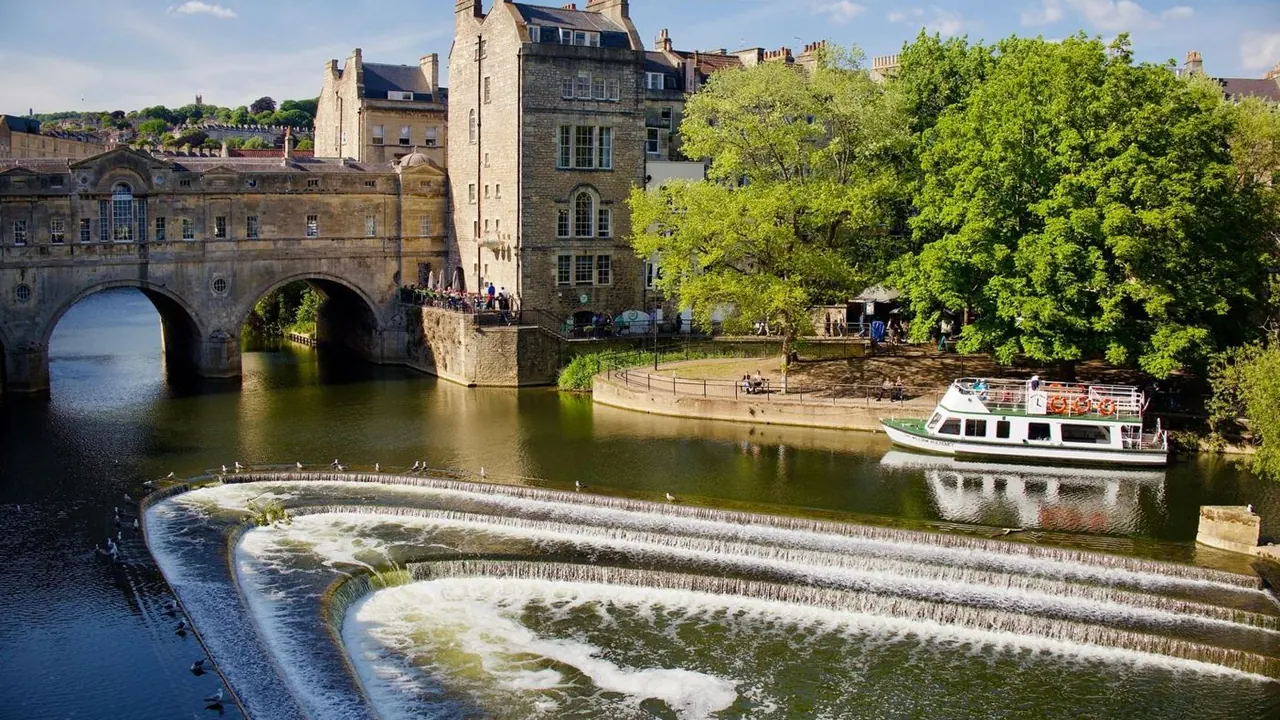
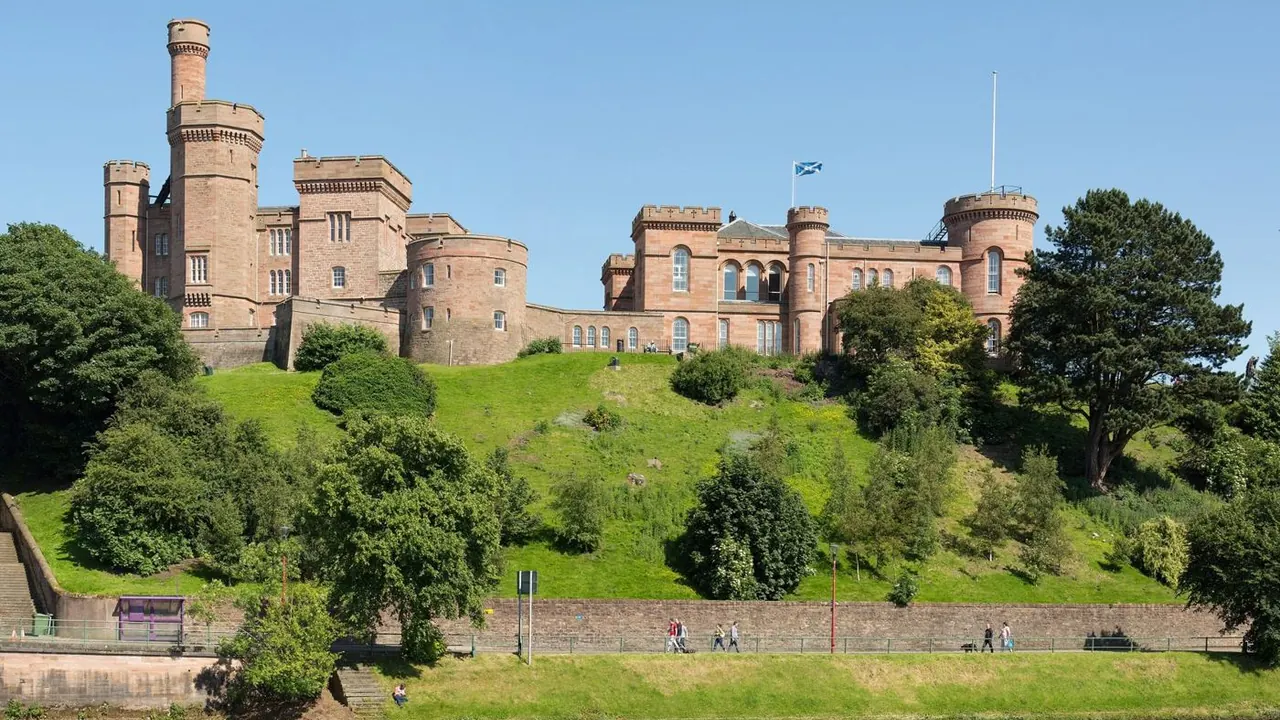
Photos: Bath by Lucas Carlini, Pexels License; Inverness by Diliff, CC BY-SA 3.0, cropped.
Bath or Inverness?
Our verdict in twelve categories, each scored against the same fixed benchmark cities, and the climate month by month, so you can choose for your trip.
Choose Bath for
- wellness
- culture and sights
- day trips
Bath suits travellers who want the place itself to be the point of the trip. A Georgian city in honey-coloured stone, Roman Baths beneath it, a rooftop thermal pool, a proper theatre and shops worth browsing all sit within a short walk. With Bristol, Stonehenge, Wells and the Cotswolds close by, it also works as a comfortable base for a week of varied outings, as long as you accept a high bill for rooms.
Choose Inverness for
- nature and the outdoors
- prices
- beaches
Inverness is the better pick for anyone who comes for landscape rather than streets. The town is modest and quiet, but Loch Ness, Glen Affric, the Cairngorms and the dolphins at Chanonry Point are all within easy reach. Choose it for walking, wildlife, castles and whisky country, and plan on a car or tours, because the Highlands only open up once you leave town.
Scoreboard
Twelve categories on one fixed scale from 0 to 100. The shaded stretch is the gap between the two.
Your match
Pick a travel style or drag the sliders, and both match scores follow your weighting.
Wins on wellness and culture and sights with your weighting.
Wins on nature and the outdoors and prices with your weighting.
What matters to you?
Category by category
What the scores mean for a trip.
Beaches & swimming
Neither is a beach destination, but Inverness has the better shore within reach. Nairn's long sands are about twenty-five minutes away, and Rosemarkie and Chanonry Point on the Black Isle make a fine breezy afternoon, even if the firth stays too cold for most people to swim.
Bath is inland, and its nearest seaside at Weston-super-Mare offers brown, shallow water and a distant tide. Summer swimmers there head for river spots on the Avon instead, and good sand means a long day out to Dorset or Devon.
Food & drink
Bath comes out ahead on the strength of its independents and its local identity. Gastropubs and independent restaurants fill the lanes around the Abbey and up Walcot Street. They cook with West Country cheese, Somerset cider and lamb, and the city has its own baking in the Bath bun, the Bath Oliver and the Sally Lunn bun. The Green Park farmers' market and the Georgian tearooms serving afternoon tea add to it, though the choice of other cuisines is thin and there is hardly any street food.
Inverness eats more narrowly but has a fine larder. West coast langoustines and mussels, Moray Firth seafood, venison and smoked salmon star at a handful of serious tables by the river, and the pubs fall back on Cullen skink and haddock. Choice thins quickly beyond the centre, and in summer the best places need booking ahead.
Culture & sights
This is where the two differ most within the city limits. Bath is an architectural set piece: the Circus, the Royal Crescent, Pulteney Bridge and the Assembly Rooms in Georgian stone, with the Roman Baths and the fan-vaulted Abbey at the centre and museums such as the Holburne and No. 1 Royal Crescent to fill a second or third day.
Inverness offers a castle on its bluff, a cathedral across the river and a compact museum of Highland and Pictish history. Its one weighty site is Culloden battlefield, a short drive east, and most other heritage lies out in the country rather than in town.
Nightlife
Both are pub towns that go quiet early, so neither suits anyone after a big night. The difference is in the glass: Bath has old coaching inns, real-ale houses and a few cocktail bars, livened by students in term, with Bristol fifteen minutes away by train for something bigger. Inverness is about whisky bars and a slow dram around Church Street and the riverside, often with a fiddle session in the corner.
Nature & outdoors
Inverness is the place for real landscape. Loch Ness and the Great Glen start just south of town, Glen Affric's pine forest and the Cairngorms' high plateau are about an hour away, and Torridon and the road to Skye lie within two hours. The weather is changeable and winter days are short, but the scale is genuinely wild.
Bath offers gentler country you can walk out to from the centre: the Skyline loop, the Kennet and Avon towpath, the Two Tunnels Greenway and the Cotswolds edge, with Cheddar Gorge in the Mendips within an hour. It is lovely, rolling and tame by comparison.
Day trips
Bath has far more variety on the doorstep. Bristol is fifteen minutes by train, Cardiff a little over an hour, and Stonehenge, Avebury, Wells, Glastonbury, Lacock, Salisbury and the Cotswold villages make a week of quite different outings.
From Inverness the trips are mostly to single sites: Urquhart Castle, Cawdor, Fort George, the Clava Cairns and Speyside distilleries, with Pitlochry or Eilean Donan on a long day. With no other city in reach, the week becomes castles and whisky rather than a change of towns.
Good for families
The two are broadly level for children, but the appeal differs in kind. Bath's star is the steaming Roman Baths, with Royal Victoria Park's playground nearby, though its steep streets are hard on pushchairs and the bigger attractions are in Bristol or at Longleat.
Inverness leans outdoors: Loch Ness boat trips and monster hunting, dolphins at Chanonry Point, and the Highland Wildlife Park with its snow leopards and polar bears under an hour away. The weather means keeping the Aquadome pool in reserve for wet days.
Getting around
Bath is the easier city to be in without a car. Its pedestrianised centre packs the Abbey, Baths, Circus and Crescent into a short walk, direct trains run to Bristol and London, and park-and-ride keeps traffic out, though the hills are steep and country villages still need a car or tour.
Inverness has a small, flat centre and a central station with scenic lines to Kyle of Lochalsh, Thurso and Aviemore. But the glens, castles and distilleries lie down single-track roads with sparse buses, so the trip depends much more on hiring a car or booking tours.
Shopping & style
Bath is a proper shopping day out. Fashion and British brands line Milsom Street, chains gather at SouthGate, and the real pleasure is the independents: bookshops in the Abbey lanes, antiques on Bartlett Street, the makers and salvage dealers of Walcot Street, and the old Guildhall Market.
Inverness is more about souvenirs with substance: tartan, tweed, knitwear, Celtic silver and malt whisky, plus the Victorian Market and a much-loved bookshop in a former church. An hour or two covers it.
Affordability
Neither is cheap, but Bath is the heavier on the wallet. Central rooms are dear and very dear on summer weekends and at Christmas, and the Roman Baths and spa add up, so sleeping midweek or in Bristol makes the biggest saving.
Inverness eases the bill somewhat because its main attraction, the landscape, costs nothing to walk in, and rooms drop well outside summer. Car hire and tours are the costs to budget for there, and July and August need booking well ahead.
Live music & performing arts
Bath has the fuller stage calendar. The gilded Georgian Theatre Royal brings touring drama, West End-bound plays, opera and dance, with concerts in the Abbey and Assembly Rooms and long-running literature, music and Mozart festivals.
Inverness relies on Eden Court for touring theatre, comedy and concerts, but its distinctive side is traditional: fiddle and accordion sessions in pubs most nights, Gaelic song at festivals and the Highland Games in summer.
Wellness & relaxation
Bath was built on its hot springs, and that gives it a decisive lead. Water rising at about 46°C fills the rooftop pool at Thermae Bath Spa, with views over the Abbey, and the small Georgian Cross Bath, and the Pump Room and riverside gardens set an unhurried pace.
Inverness has no bathing tradition, only country-house hotel spas and the Aquadome's sauna. Its calm comes instead from long summer evenings, walks round the Ness Islands and a dram by the fire.
When should you go?
Pick your month. The climate figures are measured averages, not a forecast.
Bath in July
Inverness in July
Daytime high, °C
Rainfall in the month, mm
Where the figures come from
Bath's temperatures are measured 29 km from the centre, at Lyneham.
Bath has no rain gauge within 25 km of the centre, so its rainfall comes from a gridded climate dataset read at the city rather than from a gauge further away.
Inverness has no rain gauge within 25 km of the centre, so its rainfall comes from a gridded climate dataset read at the city rather than from a gauge further away.
Inverness's sunshine is measured 43 km from the centre, at Kinloss.
Temperature and rainfall are climate normals, averaged over the years shown. Bath: 1991-2020 normals, Lyneham (29.2 km from centre). Inverness: 2005-2020 (sunshine 1991-2020, rainfall 1991-2020) normals, Inverness / Dalcross (11.9 km from centre).
Neither city is warm, and Bath is the softer of the two for most of the year. Its summer days reach about 21°C against 19°C in Inverness, and Bath gets clearly more sun from May to August, so walking the streets and sitting out in the parks is pleasant from late spring to early autumn. Late autumn and winter are grey and chilly in both, and in Bath that is also the wettest stretch, with December the peak at around 90mm.
Inverness is about as dry as Bath in late spring, with April and May among its lightest months for rain, and summer brings the long light evenings that suit the hills. Rain picks up from June through October, so waterproofs matter in every month. The sea is cold off both, peaking near 18°C on the Bristol Channel and only 14°C in the Moray Firth, so beach weather in the swimming sense never really arrives in either.
Which traveller are you?
For a culture and arts trip, Bath is the clear choice. The whole city is a World Heritage townscape, with the Roman Baths, the Abbey, the Royal Crescent and a string of smaller museums, plus the Theatre Royal for an evening, all within a walk.
On an outdoors trip, Inverness wins comfortably. Loch Ness is twenty minutes away, Glen Affric and the Cairngorms about an hour, and the Black Isle offers shore-based dolphin watching. Bath's ridge walks and canal towpaths are pleasant but gentle by comparison.
On a relaxing and wellness trip, Bath has what no other British city has: natural hot springs you can bathe in. The rooftop pool at Thermae Bath Spa, the Cross Bath and tea in the Pump Room make an unhurried break; Inverness offers only hotel spas.
Before you go
| Measure | Bath | Inverness |
|---|---|---|
| Official language | English | English |
| Currency | Pound Sterling (GBP) | Pound Sterling (GBP) |
| Sockets | G230 V, 50 Hz | G230 V, 50 Hz |
| Driving side | Left | Left |
| Time zone | UTC, UTC+1 in summer | UTC, UTC+1 in summer |
| Emergency number | 112 or 999 | 112 or 999 |
| Elevation | 132 m | 7 m |
| Main airport | Bristol Airport (BRS)25 km from centre117 non-stop destinations | Inverness Airport (INV)12 km from centre15 non-stop destinations |
| Public holidays this year | 8 days | 10 days |
By the numbers
| Measure | Bath | Inverness |
|---|---|---|
| City population | 94,092 | 47,380 |
| People per km² | 3,245 | 2,289 |
| Museums within 10 km | 17 | 3 |
| UNESCO World Heritage sites within 50 km | 2 | 0 |
| Swim season, months above 21 °C | None | None |
Where else could you go?
Every comparison below shares a destination with this one, so you can follow Bath or Inverness somewhere new.