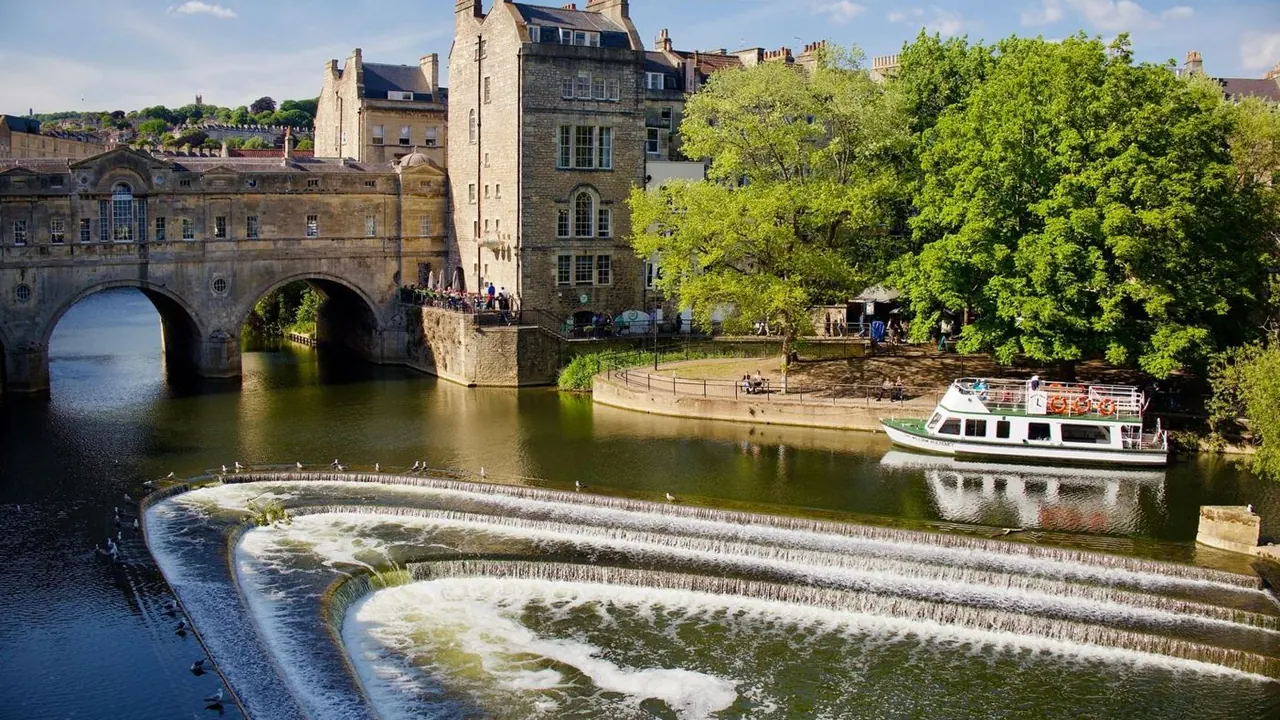
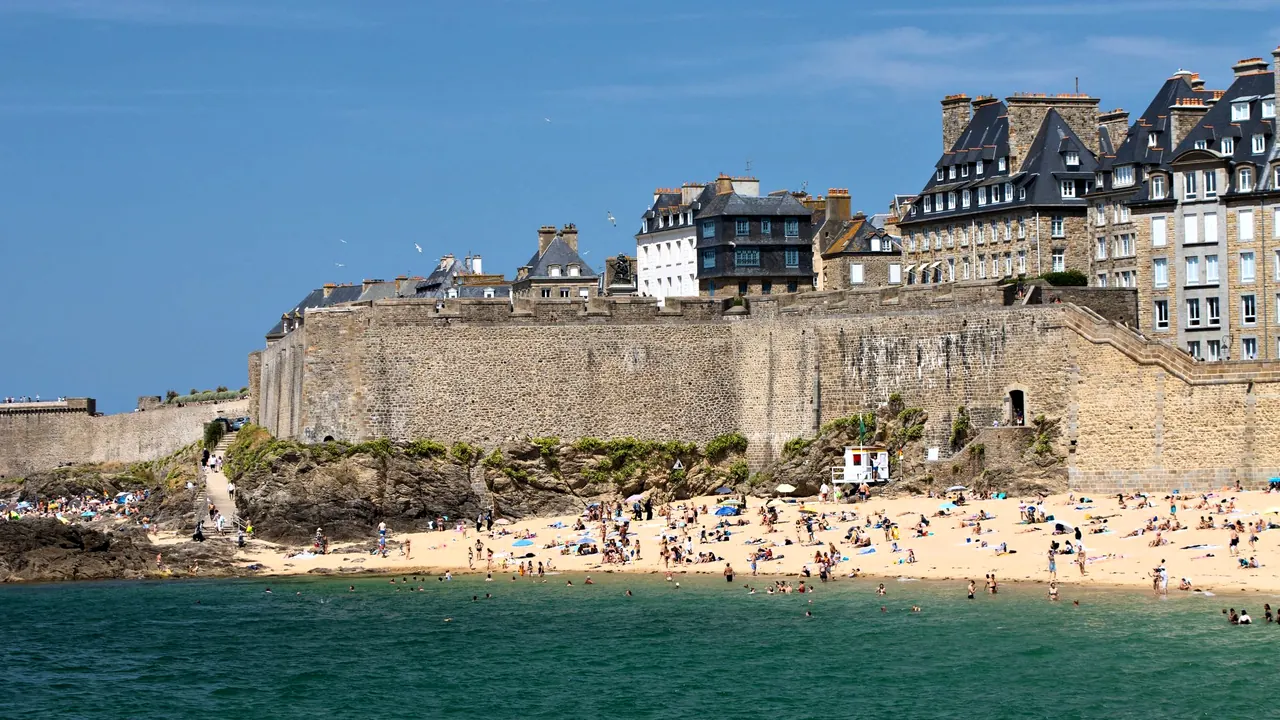
Photos: Bath by Lucas Carlini, Pexels License; Saint-Malo by Efrem Efre, Pexels License.
Bath or Saint-Malo?
Our verdict in twelve categories, each scored against the same fixed benchmark cities, and the climate month by month, so you can choose for your trip.
Choose Bath for
- culture and sights
- wellness
- shopping
Bath suits travellers who come for buildings, history and an unhurried pace. The Roman Baths, the Abbey, the Circus and the Royal Crescent sit within a short walk of each other, the Theatre Royal fills the evenings, and the natural hot springs make it the stronger choice for a restorative break, even in the depths of winter. It also has more to offer for browsing small independent shops.
Choose Saint-Malo for
- beaches
- families
- prices
Saint-Malo is the pick if you want the sea right at the door. Sand starts at the foot of the ramparts, the coastal path heads off in both directions, and children have rock pools, a tidal swimming pool and island forts to walk out to at low tide. It is mostly a summer town, a little easier on the budget than Bath, and lighter on museums, theatre and shopping.
Scoreboard
Twelve categories on one fixed scale from 0 to 100. The shaded stretch is the gap between the two.
Your match
Pick a travel style or drag the sliders, and both match scores follow your weighting.
Too close to call, 2 points apart
Wins on culture and sights and wellness with your weighting.
Wins on beaches and families with your weighting.
What matters to you?
Category by category
What the scores mean for a trip.
Beaches & swimming
Bath is inland and has no beach. In summer, locals swim in the Avon near a weir, and the nearest seaside is the shallow, brown water at Weston-super-Mare, about an hour away. The clean sand of Dorset and Devon is two hours or more each way.
Saint-Malo has the beach right at the city walls, with the Grand Plage du Sillon running about 3km east and smaller coves below the ramparts. The tidal pool at Bon-Secours means you can swim even at low water. The sea is cold, so time here is spent more on the sand and walking out to the forts than in the water.
Food & drink
The two are much alike for eating out: both are good on local produce, narrow in range and short on international cooking. In Bath, that means gastropubs, bakeries, West Country cheese and Somerset cider, the city's own Sally Lunn and Bath buns, afternoon tea and the farmers' market in the old Green Park station.
Saint-Malo is a place for buckwheat galettes, Breton cider, salted-butter caramel and shellfish, with Cancale oysters eaten by the harbour wall along the bay. The tourist crêperies inside the walls vary a lot, and the better tables are in Saint-Servan and towards Cancale.
Culture & sights
Bath is the far richer place for sightseeing. The entire city is a World Heritage Site, and its Georgian crescents, the Assembly Rooms and Pulteney Bridge sit over Roman bathing halls that still steam. A string of museums, from the Holburne to No. 1 Royal Crescent, and the Jane Austen connection will fill two or three days.
Saint-Malo's great sight is the walk around its ramparts. Inside them is a granite town rebuilt after 1944, with its cathedral and castle keep, and Chateaubriand's grave lies out on the Grand Bé. Its history of corsairs shows in statues and street names more than in museums, so one full day covers it.
Nightlife
Neither is a place for a big night, and both go quiet early. Bath's evenings run on old coaching inns and real-ale pubs around Walcot Street and Kingsmead, and student clubs add some life in term time. Bristol is fifteen minutes away by train if you want more.
Saint-Malo's nights are more seasonal. Pubs and wine bars inside the walls fill with sailors and young visitors in July and August, then empty for the rest of the year. The nearest clubs are in Rennes.
Nature & outdoors
Saint-Malo has the more striking outdoors. The GR34 coastal path runs to Pointe du Grouin in one direction and to the cliffs of the Emerald Coast in the other. The tides are among Europe's largest and expose vast flats, and there is kayaking on the Rance, sailing in the bay and kitesurfing off the long beaches. Inland, though, the country is flat farmland.
Bath offers gentler, hillier country. The Skyline loop circles the ridges above town, the Kennet and Avon towpath and the Two Tunnels Greenway lead out into Somerset, and the Cotswolds and Cheddar Gorge are close by. In winter, expect grey skies and mud.
Day trips
Both make an excellent base for day trips, and the difference is in what you go out to see. From Bath, there are prehistoric stones at Stonehenge and Avebury, the cathedral towns of Wells and Salisbury, Cotswold villages such as Castle Combe and Lacock, and the cities of Bristol and Cardiff, both easy by train.
Saint-Malo's big trip is Mont-Saint-Michel. Medieval Dinan, Belle Époque Dinard across the estuary and the Breton capital Rennes are all close, and summer ferries run to Jersey and the Chausey islands. In both regions, the villages are much easier to reach by car.
Good for families
Saint-Malo is the easier choice with children. There are wide beaches for sandcastles, a sea pool to jump into, pirate stories on the ramparts, low-tide walks to the forts and the Grand Aquarium for wet days. Parents do need to keep an eye on the fast-rising tide.
Bath has the Roman Baths, which children usually enjoy, and the playground in Royal Victoria Park, but little else is aimed at them, and the steep streets are hard work with a pushchair. Most family days out from Bath lead to Bristol or to the safari park at Longleat.
Getting around
Bath is the simpler city on foot. Its centre is largely pedestrianised and takes about twenty minutes to cross, with the main sights close together and direct trains to Bristol and London from the station at the bottom of town.
In Saint-Malo, the walled town is just as compact, but the town spreads out along the seafront to Paramé and Saint-Servan, so you will use local buses more. There is also a passenger boat to Dinard. In both places a car is a burden in the centre and almost essential for the countryside.
Shopping & style
Bath gives you a proper shopping day. There are British fashion brands on Milsom Street, chains at SouthGate, antiques on Bartlett Street, makers and salvage dealers along Walcot Street, the old Guildhall Market and little shops lining Pulteney Bridge.
Shopping in Saint-Malo is mostly for Breton things to take home: striped sailor tops, oilskins, salted butter and caramels, cider and faience, along with some galleries and food markets. For fashion or department stores, you have to go to Rennes.
Affordability
Neither is cheap, but Saint-Malo is the easier on the budget. Its rooms are dear in July and August, but prices ease noticeably in spring and autumn, and a galette with cider or a set lunch costs little. The seafood platters are where the bill grows.
In Bath, central hotels are expensive all year and very expensive on summer weekends and at Christmas, and the Roman Baths and the spa both cost a lot. Pub lunches help, and so does staying midweek or sleeping in Bristol.
Live music & performing arts
Bath has much more on stage. The gilded Georgian Theatre Royal runs drama, opera, dance and pantomime all year and has its own children's theatre, while concerts fill the Abbey and the Assembly Rooms and the Art Deco Forum books bands and comedy. Festivals of literature, music and Mozart round out the calendar.
Saint-Malo's town theatre has only a modest season, so its cultural life is mostly in its festivals: indie rock at La Route du Rock, travel writing at Étonnants Voyageurs and comics at Quai des Bulles. Outside those dates there is little on.
Wellness & relaxation
For a slow few days of doing very little, Bath has more to offer. Its springs rise from deep underground at about 46°C, and there are two quite different ways to bathe in them: the large Thermae Bath Spa, which fills up at weekends and is calmer midweek, and the small open-air Cross Bath across the lane, where a soak is quieter and more private. Between sessions, tea in the Pump Room beside the Roman Baths and an hour in the Parade Gardens by the river keep the pace gentle.
Saint-Malo's way of resting is built around the sea itself. Its thalassotherapy uses warmed seawater for pools and treatments, a habit it shares with Dinard across the estuary, and some locals start the day with a cold swim in the sea pools. How restful it feels depends on the season: the walls and beaches are loud and packed at the height of summer, so this is a calmer place for a quiet break in spring, autumn or winter.
When should you go?
Pick your month. The climate figures are measured averages, not a forecast.
Bath in July
Saint-Malo in July
Daytime high, °C
Rainfall in the month, mm
Where the figures come from
Bath's temperatures are measured 29 km from the centre, at Lyneham.
Bath has no rain gauge within 25 km of the centre, so its rainfall comes from a gridded climate dataset read at the city rather than from a gauge further away.
Saint-Malo has no rain gauge within 25 km of the centre, so its rainfall comes from a gridded climate dataset read at the city rather than from a gauge further away.
Saint-Malo's sunshine is measured 68 km from the centre, at Rennes.
Temperature and rainfall are climate normals, averaged over the years shown. Bath: 1991-2020 normals, Lyneham (29.2 km from centre). Saint-Malo: 2002-2020 (sunshine 1991-2020, rainfall 1991-2020) normals, Dinard (7.9 km from centre).
The two share a mild, damp Atlantic climate, but Saint-Malo is a touch warmer and clearly sunnier through the year. Both are at their warmest in July and August, with Bath reaching about 21°C and Saint-Malo about 22°C. Neither ever gets too hot for walking the streets. In summer Saint-Malo is also the drier of the two, at around 45mm a month, while Bath gets steadier showers. The Channel at Saint-Malo only warms to about 18°C in August and September, so beach days are for July to early September, and even then most swims are short.
From October the rain picks up in both places and the days turn grey. Winter is colder in Bath, where highs drop to about 7°C, which is good weather for an evening in the rooftop thermal pool and poor weather for the muddy hill paths. Spring arrives a little earlier and brighter on the Breton coast, so April and May suit coastal walks there, while Bath's countryside is at its best from late spring to early autumn.
Which traveller are you?
On a beach and sun trip, Saint-Malo is the only real option. The long Sillon sand and the coves under the ramparts are a short walk from town, while from Bath the nearest worthwhile beaches are a full day's round trip away.
For a culture and arts trip, Bath is the better choice. A whole Georgian city, the Roman Baths, a run of small museums and a year-round programme at the Theatre Royal will fill several days, while Saint-Malo's ramparts and cathedral take one day.
On a relaxing and wellness trip, Bath has the edge with Britain's only natural thermal bathing, in a rooftop pool overlooking the Abbey. Saint-Malo offers a different kind of cure: seawater thalassotherapy pools on the seafront and long, empty low-tide beaches outside August.
Before you go
| Measure | Bath | Saint-Malo |
|---|---|---|
| Official language | English | French |
| Currency | Pound Sterling (GBP) | Euro (EUR) |
| Sockets | G230 V, 50 Hz | CE230 V, 50 Hz |
| Driving side | Left | Right |
| Time zone | UTC, UTC+1 in summer | UTC+1, UTC+2 in summer |
| Emergency number | 112 or 999 | 112 |
| Elevation | 132 m | 0 m |
| Main airport | Bristol Airport (BRS)25 km from centre117 non-stop destinations | Rennes-Saint-Jacques Airport (RNS)68 km from centre15 non-stop destinations |
| Public holidays this year | 8 days | 11 days |
By the numbers
| Measure | Bath | Saint-Malo |
|---|---|---|
| City population | 94,092 | 47,439 |
| People per km² | 3,245 | 1,296 |
| Museums within 10 km | 17 | 3 |
| UNESCO World Heritage sites within 50 km | 3 | 2 |
| Swim season, months above 21 °C | None | None |
Where else could you go?
Every comparison below shares a destination with this one, so you can follow Bath or Saint-Malo somewhere new.