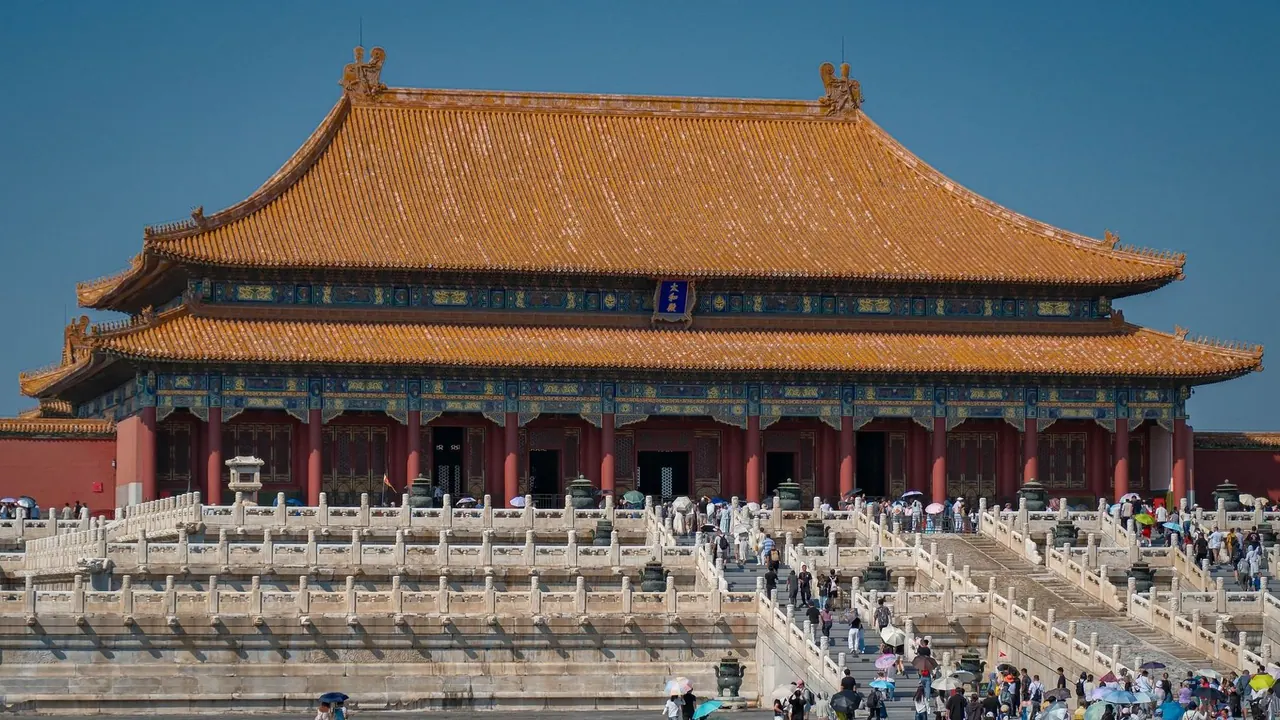
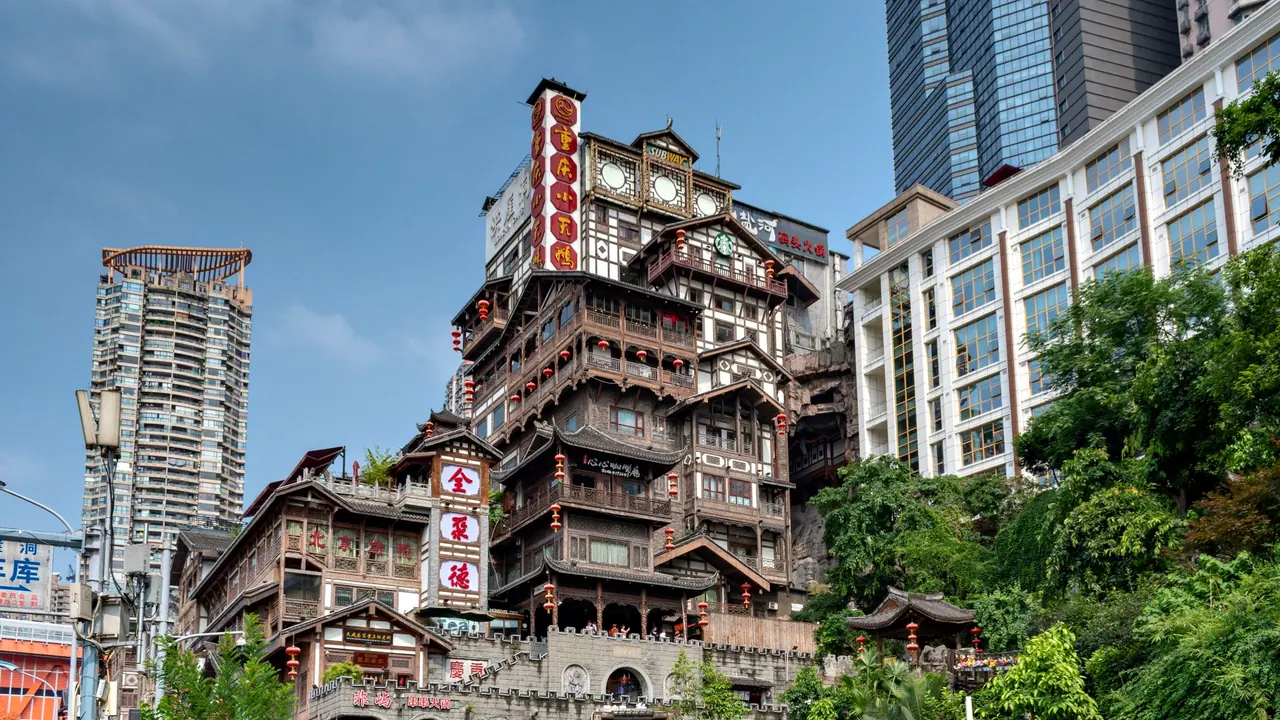
Photos: Beijing by BI ravencrow, Pexels License; Chongqing by xiquinhosilva, CC BY 2.0, cropped.
Beijing or Chongqing?
Our verdict in twelve categories, each scored against the same fixed benchmark cities, and the climate month by month, so you can choose for your trip.
Choose Beijing for
- culture and sights
- live music and the arts
- day trips
Beijing is the trip for anyone who wants China's imperial history at full scale. The Forbidden City, the Temple of Heaven and the Summer Palace sit within the city, and the Great Wall is an easy day out. In the evenings there is Peking opera and the National Centre for the Performing Arts. It suits first-time visitors and culture lovers who don't mind long transfers between huge sights.
Choose Chongqing for
- prices
- nature and the outdoors
- wellness
Travellers who mostly want to eat should look at Chongqing. It is the home of hotpot, it eats late into the night, and it is built on steep ridges where two rivers meet, so the city itself is the spectacle. It costs less day to day, and it puts mountains, hot springs and the Wulong karst within reach. History is thinner, though, and a few days cover the main sights.
Scoreboard
Twelve categories on one fixed scale from 0 to 100. The shaded stretch is the gap between the two.
Your match
Pick a travel style or drag the sliders, and both match scores follow your weighting.
Wins on culture and sights and live music and the arts with your weighting.
Wins on prices and nature and the outdoors with your weighting.
What matters to you?
Category by category
What the scores mean for a trip.
Beaches & swimming
Neither city is a beach destination. Beijing at least has a coast within reach: Beidaihe on the Bohai Sea is about two hours away by fast train, though the water there is grey and crowded. Chongqing is more than 1,000km from the sea, and its muddy rivers are not for swimming, so in either city a swim means a pool.
Food & drink
Both are serious food cities, but they cook very differently. Beijing's kitchen is broad and northern: roast duck carved at the table, wheat noodles, dumplings and lamb. The capital also draws good regional cooking from all over China and has proper fine dining and cocktail bars.
Chongqing does one thing with total commitment. Its hotpot of beef tallow, chilli and numbing pepper, fiery xiaomian noodles and late-night skewers are the reason many people come. If you can't take spice, you'll find your choices shrink quickly, and international food is scarce.
Culture & sights
Here the gap is wide. Beijing has six centuries of imperial building along its central axis: the Forbidden City, the Temple of Heaven, the Summer Palace and the Lama Temple. The National Museum holds one of the great collections of Chinese art. You could fill a week and still miss things.
Chongqing's main sight is its own vertical skyline, lit up at night above the river confluence. Add the Three Gorges Museum, the wartime-capital sites and the rebuilt stilt houses of Hongyadong. Much of the old city has been replaced, so a few days are enough.
Nightlife
The two are close, but a night out looks different in each. Beijing's nightlife is spread across separate districts: cocktail bars and big clubs in Sanlitun, and small courtyard and rooftop bars in the Gulou hutongs. The distances between them are long.
In Chongqing, eating is the night out. It starts with river views, carries on through hotpot and skewers past 2am, and ends in the loud table-service clubs of Jiujie. You'll be almost entirely among locals.
Nature & outdoors
Chongqing has more nature close at hand. Nanshan's forest rises straight across the Yangtze from downtown, Jinyun Mountain is a half-day away, and the gorges and natural bridges of Wulong make one of the most striking landscapes in the region. Fog and fierce summer heat limit the good walking seasons.
Beijing's outdoors centres on the Yanshan ridges, where hiking the unrestored Great Wall between watchtowers is the highlight. The Fragrant Hills turn red in autumn, and there is skiing at Yanqing in winter.
Day trips
Beijing has the stronger set of day trips, led by the Great Wall at Mutianyu or along the steep ridges at Jinshanling. The Ming and Qing tombs are close by too, and fast trains reach Tianjin's concession waterfront and the imperial summer retreat at Chengde.
From Chongqing, the high points are the Buddhist cliff carvings at Dazu and a fast train to Chengdu for its teahouses and pandas. Old stilt-house towns such as Zhongshan make quieter outings.
Good for families
Beijing is easier with children. Universal Beijing Resort, the zoo's pandas, the science museum, boating on Beihai lake and the Mutianyu toboggan give plenty of easy wins. Even so, the sights are huge and far apart.
Chongqing has pandas, theme parks and that monorail through a building, all of which children love. But the stairs and steep lanes defeat a pushchair, the summer is punishing, and most food needs to be ordered mild.
Getting around
Both have huge, cheap metro systems with English signs, so the difference lies in the terrain. In Beijing the problem is distance. Long transfers, bag checks and wide ring-road avenues mean an hour between sights is normal, although the hutong quarters are pleasant on foot.
In Chongqing the problem is height. A short hop on the map can mean dozens of flights of stairs or a lift down twenty floors, and map apps often lose you between levels. Cable cars, escalators and cheap taxis help.
Shopping & style
Beijing gives a shopper more to hunt for. Panjiayuan antiques market is the place for porcelain and calligraphy, Liulichang sells brushes and paper, and Dashilar has tea and cloth shoes. Add the silk market and the big malls of Guomao and Sanlitun.
Chongqing's shopping is mostly malls around Jiefangbei and Guanyinqiao, much like any large Chinese city. The local things worth taking home are hotpot base, Sichuan pepper and spicy snacks.
Affordability
Chongqing is the cheaper of the two. Street food and hotpot cost very little, and mid-range or even upscale hotels sit well below what the big coastal cities charge. The extras are Yangtze cruises and paid viewpoints. Beijing is good value for a capital if you eat locally and ride the metro. Duck banquets, Sanlitun cocktails and private drivers to the Wall add up much faster.
Live music & performing arts
Beijing is far better for an evening at the theatre. Peking opera is staged nightly in old guild halls, often in short, subtitled programmes. Acrobatics shows need no language, and the National Centre for the Performing Arts has full opera, ballet and orchestral seasons.
Chongqing's highlight is Sichuan opera, with its face-changing and fire-spitting routines. The Grand Theatre hosts touring shows, but beyond that the live scene is small and in Chinese.
Wellness & relaxation
Neither city is restful, but each has its own way to unwind. Chongqing's speciality is its centuries-old hot springs, with outdoor pools in wooded valleys at Beiwenquan and Nanwenquan. Many evenings end in a cheap foot massage after hotpot.
Beijing's version is urban. It has round-the-clock bathhouses, massage and traditional medicine clinics, tai chi at dawn in the Temple of Heaven park, and long pots of tea in hutong teahouses. Its nearest hot springs are at Xiaotangshan.
When should you go?
Pick your month. The climate figures are measured averages, not a forecast.
Beijing in July
Chongqing in July
Daytime high, °C
Rainfall in the month, mm
Temperature and rainfall are climate normals, averaged over the years shown. Beijing: 1991-2020 normals, Beijing (11.1 km from centre). Chongqing: 1991-2020 normals, Chongqing (10.2 km from centre).
Beijing has a dry continental climate with sharp seasons. Winters are freezing and almost rainless but sunny, with January highs barely above zero. Summer is hot and sticky, and most of the year's rain falls between June and August, peaking in July at about 163mm. The best months for walking the palaces and the Wall are late April, May, September and early October, when it is warm, fairly dry and clear.
Chongqing has milder winters, with January highs around 10°C, but they are grey and the sun barely appears from November to February. Rain builds through spring to a June peak of about 211mm. July and August reach 34°C with heavy humidity, which makes the city's stairs hard going. March, April and October are the most comfortable months there. Both cities are inland, so neither has a beach month at any time of year.
Which traveller are you?
For a culture and arts trip, Beijing is the clear choice. It has the Forbidden City, the Temple of Heaven, the National Museum and the hutong lanes, and in the evenings Peking opera and orchestral seasons. Chongqing's history fills two or three days at most.
On a trip with a tight budget, Chongqing goes further. Noodle breakfasts, street skewers and hotpot cost little, and even comfortable hotels are cheaper than in the coastal cities. Beijing can be cheap too, but its duck restaurants and Great Wall drivers add up.
On an outdoors trip, Chongqing has the edge. Nanshan's forest paths start just across the Yangtze, the Wulong karst bridges and sinkholes make a long day out, and Three Gorges cruises leave from the city. Beijing's best walking is on the wild stretches of the Great Wall.
Before you go
| Measure | Beijing | Chongqing |
|---|---|---|
| Official language | Putonghua | Putonghua |
| Currency | Yuan Renminbi (CNY) | Yuan Renminbi (CNY) |
| Sockets | ACI220 V, 50 Hz | ACI220 V, 50 Hz |
| Driving side | Right | Right |
| Time zone | UTC+8 | UTC+8 |
| Emergency number | Police 110, ambulance 120, fire 119 | Police 110, ambulance 120, fire 119 |
| Elevation | 43 m | 237 m |
| Main airport | Beijing Capital International Airport (PEK)25 km from centre109 non-stop destinations | Chongqing Jiangbei International Airport (CKG)19 km from centre167 non-stop destinations |
| Public holidays this year | 6 days | 6 days |
By the numbers
| Measure | Beijing | Chongqing |
|---|---|---|
| City population | 21,893,095 | 32,054,159 |
| People per km² | 1,334 | - |
| Museums within 10 km | 83 | 7 |
| UNESCO World Heritage sites within 50 km | 6 | 0 |
Where else could you go?
Every comparison below shares a destination with this one, so you can follow Beijing or Chongqing somewhere new.
- Chengduvs Chongqing
- Zhangjiajievs Chongqing
- Xi'anvs Chongqing
- Guilinvs Chongqing
- Yangshuovs Chongqing
- Lijiangvs Chongqing