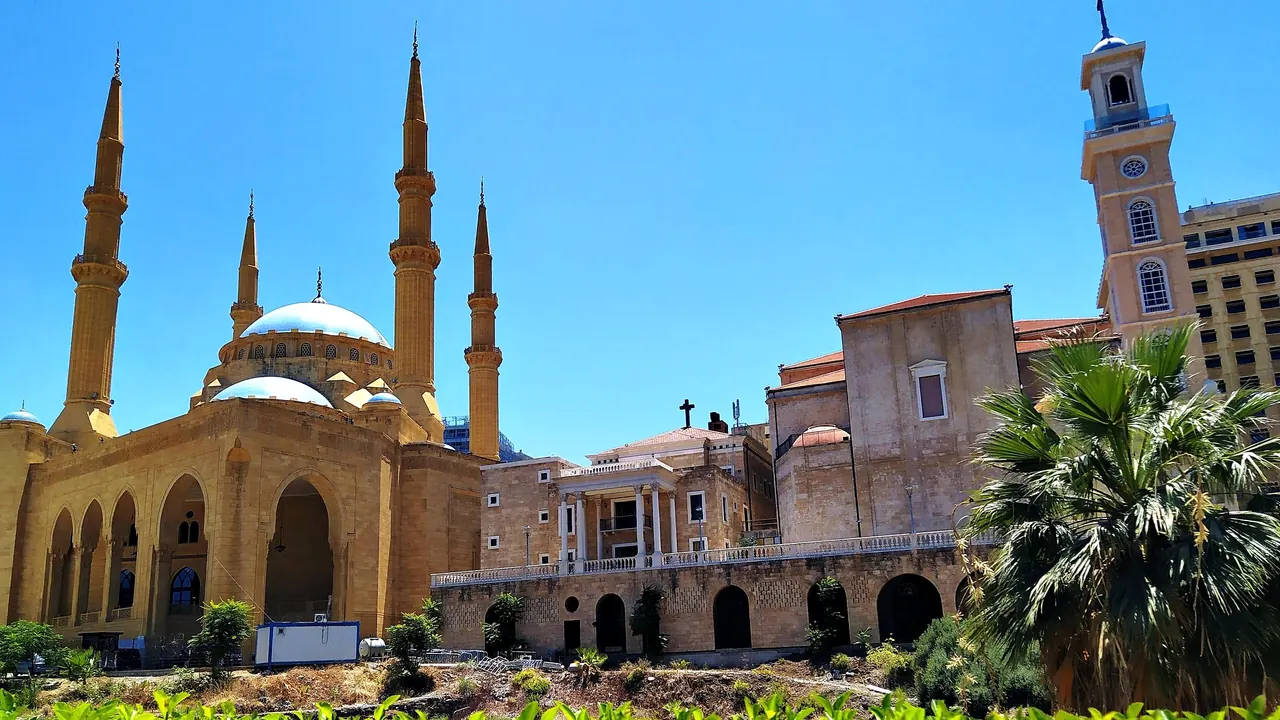
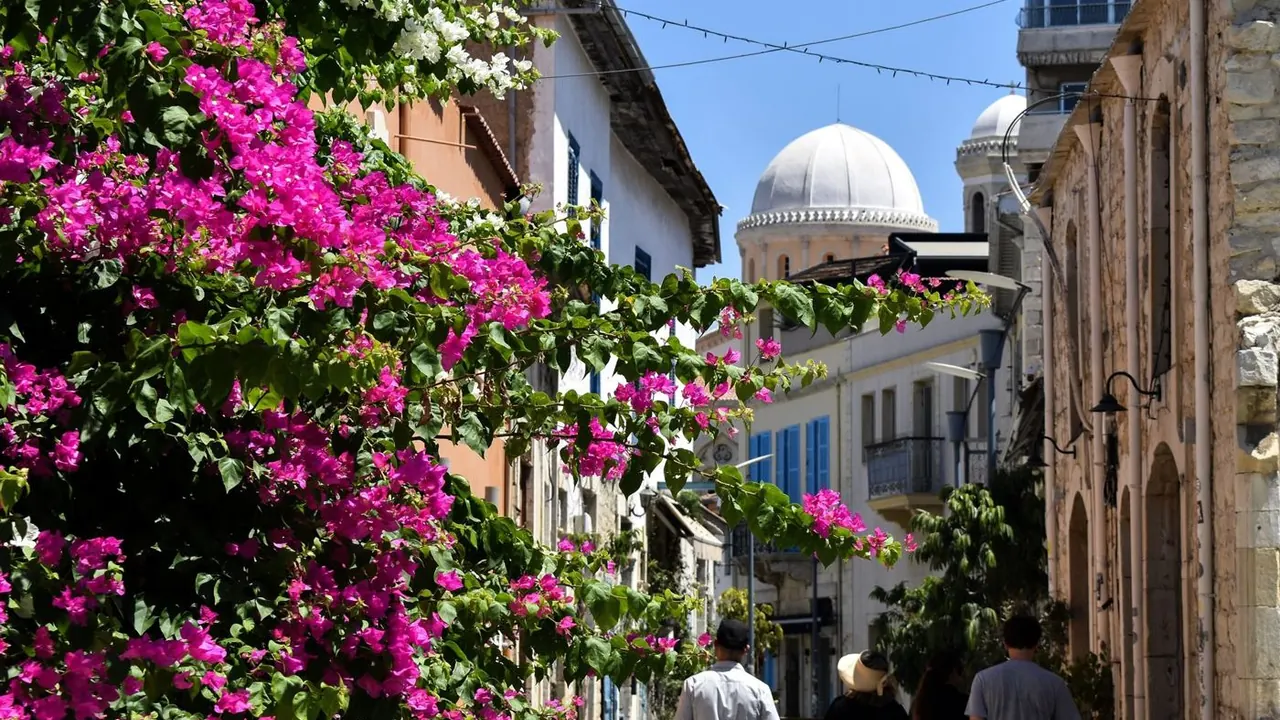
Photos: Beirut by Radosław Botev, CC BY 3.0 PL, cropped; Limassol by Julian Lupyan, CC0.
Beirut or Limassol?
Our verdict in twelve categories, each scored against the same fixed benchmark cities, and the climate month by month, so you can choose for your trip.
Choose Beirut for
- nightlife
- food and drink
- culture and sights
Beirut is for travellers who plan their days around the table and their nights around the bar. Long mezze lunches, Armenian grills in Bourj Hammoud and late nights moving between Mar Mikhael and Gemmayzeh are the core of a stay. The country around it is small, so Baalbek, Byblos, Tyre and the mountain villages are all within a day out. It rewards adults who can handle noise, traffic and taxis, and who want a city with real intensity.
Choose Limassol for
- families
- beaches
- wellness
Limassol suits a slower trip built around the sea. Its own seafront has calm, shallow beaches and a long promenade, resort hotels take care of children and spa time, and evenings are drinks in the old town rather than dawn finishes. Kourion, the Troodos wine villages and Paphos make easy outings by hire car. Choose it for a family beach week or a restful break with some ruins and mountain air on the side.
Scoreboard
Twelve categories on one fixed scale from 0 to 100. The shaded stretch is the gap between the two.
Your match
Pick a travel style or drag the sliders, and both match scores follow your weighting.
Wins on nightlife and food and drink with your weighting.
Wins on families and beaches with your weighting.
What matters to you?
Category by category
What the scores mean for a trip.
Beaches & swimming
In Beirut the shore is mostly rock. Locals swim off the platforms along the Corniche, and Ramlet al-Baida, the one long sand beach, has unreliable water. A proper beach day means paying into a private club or driving to Byblos, Batroun or the Jiyeh coast.
Limassol is the better place to swim. Grey sand and fine shingle run along its own seafront from Dasoudi to Amathus, with calm, shallow water you can walk to. Lady's Mile, Governor's Beach under its chalk cliffs and the cove at Pissouri are all a short drive away. The sea is similarly warm off both cities, but only in Limassol can the beach be the whole plan.
Food & drink
Both cities eat from the same mezze tradition, but Beirut takes it much further. It has parsley-heavy tabbouleh and raw kibbeh, manakish and falafel for breakfast, knafeh shops, Armenian sausage grills in Bourj Hammoud and polished modern Lebanese dining in Achrafieh. Eating could be the reason for the trip on its own.
Limassol's strengths are narrower: kleftiko, souvla and halloumi in family tavernas inland and in the hill villages, and simply grilled fish near the old port. Its real distinction is wine, with Xynisteri, Maratheftiko and sweet Commandaria from the slopes towards Troodos. Avoid the seafront, where resort cooking takes over.
Culture & sights
Beirut has more to see, although war has left its old city fragmented. The National Museum's Phoenician sarcophagi and Roman mosaics, the Sursock Museum's modern art, and the Roman baths, mosque and cathedral around Place de l'Etoile fill two or three days. Gemmayzeh's stairways and the bullet-marked buildings add a sense of recent history.
Limassol's own sights take a day: the medieval castle and its museum, a few streets of the old mixed Greek and Turkish quarter, and the ruins of Amathus at the city's edge. Its heritage mostly lies out of town.
Nightlife
Going out is part of Beirut's identity. Pavement cocktail bars line Mar Mikhael and Gemmayzeh, Hamra has cheaper student bars, and clubs by the port and on summer rooftops play until dawn. People dress up, and bottle service matters at the bigger venues.
Limassol is pleasant after dark rather than a destination for it. Bars fill the lanes around Saripolou Square, the marina has lounge bars, and in summer a few clubs on the tourist strip stay open past midnight. It suits an evening of drinks, not a weekend of clubbing.
Nature & outdoors
Both cities have mountains rising behind the coast, but Lebanon's are steeper and offer more. From Beirut you reach pine forests above 1,000m within an hour, the Jeita Grotto's caverns, paragliding over Jounieh Bay, ski slopes at Faraya and Mzaar, and the Qadisha Valley and the cedar forests further out. Traffic makes every outing slower.
Limassol's version is gentler and easier to reach. There are marked trails under black pine around Mount Olympos and to the Caledonia waterfall, flamingos on the Akrotiri salt lake in winter, and cliff walks at Cape Aspro. In both places the coast is too hot for hiking in summer.
Day trips
Both are strong bases, and Beirut has the edge in sheer weight of history. Baalbek's huge Roman temples, Byblos above its harbour, the sea castle at Sidon, Tyre's ruins by the water and the Beiteddine palace are all within two hours. Trips to the south and the Bekaa call for an early start and a check on local conditions.
Limassol's list is shorter but simpler to manage with a hire car. It includes cliff-top Kourion, the mosaics at Paphos, the painted churches and wine villages of Troodos, and Nicosia, where you can cross the Green Line on foot.
Good for families
Beirut welcomes children warmly, but little in the city is made for them. Narrow, broken pavements and aggressive driving make pushchairs a struggle, so the Corniche, the beach-club pools, the Jeita Grotto and the Harissa cable car carry most of the load. It suits older children who are happy with long meals.
Limassol is much easier with young families. The beaches shelve gently, the promenade is good for scooters, resort hotels have pools and kids' clubs, and there is a waterpark nearby. Midsummer heat still pushes outings into the early morning.
Getting around
Neither city has rail, but Limassol is the easier of the two. In Beirut you rely on ride-hailing apps, taxis and shared 'service' taxis. Hamra, Downtown and Mar Mikhael are each walkable, but steep streets, few crossings and heavy traffic separate them.
Limassol is long and thin rather than compact. Still, its old town, port and marina sit close together, the seafront promenade connects much of the city for walking and cycling, and buses run along the coast road. A car remains the practical way to reach the mountains, and driving is on the left.
Shopping & style
Beirut is the more rewarding city to shop in. It has couture and bridal houses, Lebanese designers' jewellery and furniture in the boutiques of Gemmayzeh and Saifi Village, and the jewellers, leather workers and spice sellers of Bourj Hammoud. It has no historic bazaar of its own, though.
Limassol offers chain stores on Anexartisias, a few upmarket boutiques at the marina, and ceramics from old-town workshops. Its best buys are halloumi, carob syrup, Commandaria and Lefkara lace.
Affordability
Overall costs are much the same, and the difference lies in where the money goes. In Beirut, street food, neighbourhood mezze and short taxi rides are cheap, while cocktail bars, clubs and beach-club entry fees push the bill up quickly.
In Limassol the coast and the summer season are expensive. Generous taverna meze inland, cheap buses and a visit outside peak months all bring costs down noticeably.
Live music & performing arts
Beirut offers more to plan around. The Lebanese Philharmonic plays in churches and university halls, and small theatres in Hamra stage Arabic plays and music-hall cabaret. Jazz and Arabic fusion fill small venues, and the summer festivals at Baalbek, Beiteddine and Byblos bring major stars to Roman and palace settings.
Limassol's scene is local. Greek-language drama runs at the Rialto and Pattihio theatres, and the highlights are ancient plays at sunset in the theatre at Kourion and the pre-Lenten carnival.
Wellness & relaxation
Limassol is the more restful choice. Large resort hotels along its coast have well-equipped spas with pools and steam rooms, and the promenade walks and slow pace outside midsummer help you unwind. Troodos is close when you want cool pine air.
Beirut is loud and fast, its hammam tradition has nearly gone, and spa time means hotel spas and salons. Real quiet means a night or two in a Shouf village guesthouse, with sunset on the Corniche as the city's gentler moment.
When should you go?
Pick your month. The climate figures are measured averages, not a forecast.
Beirut in July
Limassol in July
Daytime high, °C
Rainfall in the month, mm
Where the figures come from
Limassol has no rain gauge within 25 km of the centre, so its rainfall comes from a gridded climate dataset read at the city rather than from a gauge further away.
Limassol's sunshine is measured 59 km from the centre, at Larnaca Airport.
Temperature and rainfall are climate normals, averaged over the years shown. Beirut: 1991-2020 (sunshine 1961-1990) normals, Beyrouth Aeroport (8.3 km from centre). Limassol: 1998-2020 (sunshine 1991-2020, rainfall 1991-2020) normals, Akrotiri (11.6 km from centre).
Summer is much the same in both. From June to September the two cities are dry, with highs around 31°C. That is too hot for walking the streets at midday but right for the beach. The sea off both is warm enough to swim from June through October, and Beirut's water stays a little warmer at the end of summer, reaching 28°C in August and September. Limassol has more sunshine than Beirut in every month of the year.
The cooler months are where the two differ. In Beirut the rains begin in October and build through the winter to 178mm in January, nearly twice Limassol's wettest month. For sightseeing and hiking around Beirut, go in April and May, or early in October while the rains are only starting, before the much wetter weather of November. Limassol stays fairly dry well into November and has brighter winters, so it is the more reliable choice outside summer, with spring and autumn the best walking seasons.
Which traveller are you?
For a food and nightlife trip, Beirut is the clear choice. Its mezze, street manakish and Bekaa wines go far deeper than Limassol's tavernas, and its bars and clubs run until dawn where Limassol's evenings wind down over relaxed drinks.
On a family trip with young children, Limassol is far easier. It has gentle, shallow city beaches, a promenade suited to pushchairs, resort kids' clubs and a waterpark. In Beirut, broken pavements, heavy traffic and a lack of children's attractions make most days harder work.
For a culture and arts trip, Beirut gives more. It has the National Museum, the Sursock Museum, a Roman and Ottoman downtown and summer festivals at Baalbek and Beiteddine, with Byblos and Tyre close by. Limassol's own sights fill a day, and its stage scene is small.
Before you go
| Measure | Beirut | Limassol |
|---|---|---|
| Official language | Arabic | Turkish, Greek, Modern Greek |
| Currency | Lebanese Pound (LBP) | Euro (EUR) |
| Sockets | ABCG220 V, 50 Hz | G240 V, 50 Hz |
| Driving side | Right | Left |
| Time zone | UTC+2, UTC+3 in summer | UTC+2, UTC+3 in summer |
| Emergency number | Police 112/160, ambulance 140, fire 175 | 112 |
| Elevation | 0 m | 10 m |
| Main airport | Beirut Rafic Hariri International Airport (BEY)8 km from centre54 non-stop destinations | Larnaca International Airport (LCA)58 km from centre112 non-stop destinations |
| Public holidays this year | - | 17 days |
By the numbers
| Measure | Beirut | Limassol |
|---|---|---|
| City population | 2,421,354 | 107,970 |
| People per km² | - | 2,405 |
| Museums within 10 km | 15 | 2 |
| UNESCO World Heritage sites within 50 km | 2 | 3 |
| Swim season, months above 21 °C | 7 months | 6 months |
Where else could you go?
Every comparison below shares a destination with this one, so you can follow Beirut or Limassol somewhere new.
- Paphosvs Limassol
- Tel Avivvs Beirut
- Ammanvs Beirut
- Alanyavs Limassol
- Jerusalemvs Beirut
- Antalyavs Limassol