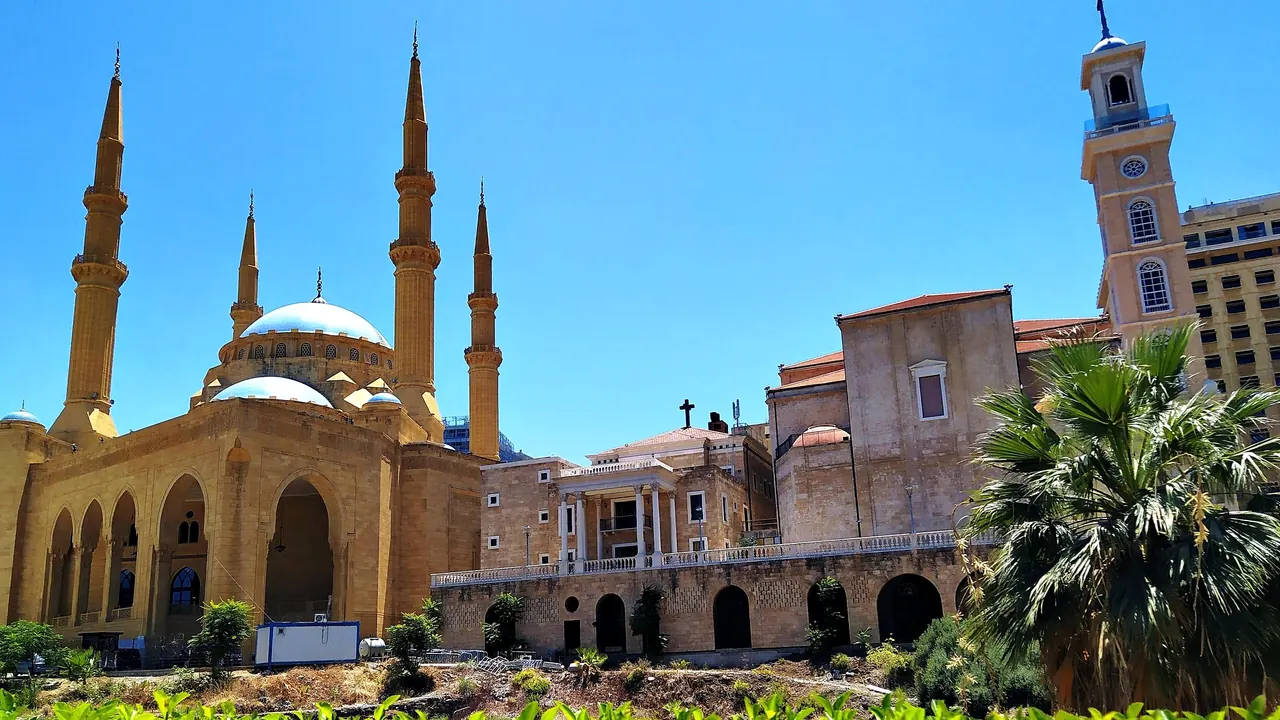
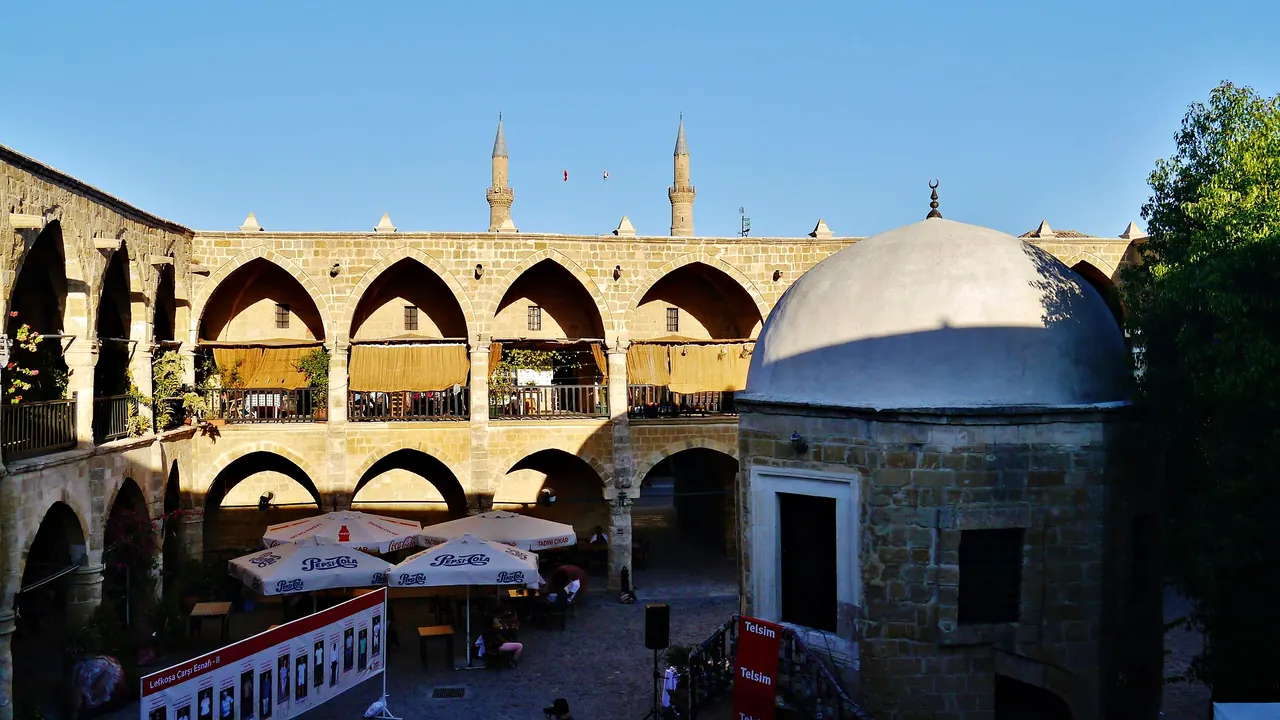
Photos: Beirut by Radosław Botev, CC BY 3.0 PL, cropped; Nicosia by Zairon, CC BY-SA 4.0, cropped.
Beirut or Nicosia?
Our verdict in twelve categories, each scored against the same fixed benchmark cities, and the climate month by month, so you can choose for your trip.
Choose Beirut for
- nightlife
- food and drink
- nature and the outdoors
Beirut suits travellers who plan a trip around the table and the late night: long mezze lunches, an evening moving between the bars of Mar Mikhael and Gemmayzeh, and clubs that close at dawn. It also makes a strong base for a small country with a lot in it. Byblos, Baalbek, pine-covered mountains and winter ski slopes are all within a drive, provided you can live with taxis, traffic and very little calm.
Choose Nicosia for
- wellness
- getting around
- prices
Nicosia is the choice for a slower, more compact trip. Its walled old town is easy on foot, and the Green Line running through it puts two halves of a divided capital and their museums, mosques and caravanserais within one walk. A restored Ottoman hammam and a sleepy afternoon pace give it a quiet that Beirut lacks, and daily costs are a little lower. In return, the sea, the mountains and any real nightlife all lie outside town.
Scoreboard
Twelve categories on one fixed scale from 0 to 100. The shaded stretch is the gap between the two.
Your match
Pick a travel style or drag the sliders, and both match scores follow your weighting.
Wins on nightlife and food and drink with your weighting.
Wins on wellness and getting around with your weighting.
What matters to you?
Category by category
What the scores mean for a trip.
Beaches & swimming
Neither city is a beach destination on its own, but Beirut at least sits on the water. Locals swim off the rocks and concrete platforms of the Corniche, and private beach clubs with pools line the coast on either side. Cleaner water and better shores at Byblos, Batroun and Jiyeh are under an hour away.
Nicosia is inland, so every swim starts with a drive of about 45 minutes, to Larnaca or over the hills to Kyrenia. In town, a pool is all there is. The sea is just as warm at both, but in Beirut a summer swim can fit into an ordinary day, while from Nicosia it is a planned outing.
Food & drink
Both cities eat around a table of meze, but Beirut takes it much further. Its range runs from za'atar manakish and falafel counters in Hamra, through the Armenian grills and sausage places of Bourj Hammoud, to refined modern Lebanese cooking in Achrafieh. Add arak, Bekaa wines and knafeh shops, and food alone can justify the trip.
Nicosia's strength is a slow taverna meal of halloumi, souvla and kleftiko in the lanes around Faneromeni. You can also walk across the Green Line for kebab and lahmacun near the Selimiye Mosque. It is satisfying, but the choice beyond Cypriot cooking is narrow.
Culture & sights
Nicosia has the more rewarding old town to explore. Its Venetian walls enclose Lusignan, Ottoman and British layers, and a single walk takes in the Cyprus Museum on one side of the Green Line and the Gothic Selimiye Mosque and Büyük Han on the other.
Beirut's history goes back as far, but war and rebuilding have broken up its old centre. Its National Museum, with Phoenician sarcophagi, is the single best collection of the two cities. Otherwise its interest is more scattered: the restored streets around Place de l'Etoile, the Sursock villa, and the scarred buildings and stairways of Gemmayzeh.
Nightlife
This is where the two cities differ most. In Beirut, going out is part of who the city is. Packed bar streets in Mar Mikhael and Gemmayzeh lead on to clubs by the port and summer rooftop clubs that run until dawn, and on weekends people dress up for it.
A night out in Nicosia means drinking on the pavements around Faneromeni Square and Ledra Street with students and young professionals, then perhaps a lounge bar outside the walls. It is friendly and low-key, and anyone looking for big clubs heads for the coast.
Nature & outdoors
Both cities have little green space within them, so what counts is how quickly you can get out. Beirut wins on that. Steep mountains rise straight behind the coast, so within an hour you can be walking a section of the Lebanon Mountain Trail, inside the Jeita caverns or, in winter, skiing at Mzaar. The Qadisha Valley and the cedar forests are further away.
Nicosia sits on a flat plain that is brown and scorching in summer. The Kyrenia ridge and the Troodos pines, where Mount Olympos rises to nearly 2,000m, both mean a drive. They are at their best in spring, when the wildflowers are out.
Day trips
The sights within a day of Beirut are on a far grander scale. Baalbek's Roman temples are among the largest ever built, Byblos stacks millennia of ruins above its harbour, and Tyre and Sidon add seafront remains and a sea castle. Beiteddine and the Qadisha monasteries are also within reach. The catch is the logistics: check conditions before heading south or into the Bekaa, and leave early to beat the traffic.
Nicosia's outings are smaller and more intimate, and the roads are easier. Kyrenia's harbour, Bellapais Abbey and the crags of St Hilarion are a short drive north, Roman Salamis lies to the east, and the painted churches of the Troodos are about an hour away. A hire car with insurance to cross the Green Line covers most of the island without much trouble.
Good for families
Neither city is much better for children than the other. Both welcome them warmly at restaurant tables, and neither has much built for them. What differs is the obstacle. In Beirut it is the streets, where broken pavements and aggressive drivers make pushchairs hard work, though the Corniche, the beach-club pools and the Harissa cable car make good outings.
In Nicosia the problem is the heat. Summer afternoons often go well above 35°C, and the beaches need a car. Spring or autumn, with the moat gardens and a day trip to the coast, works best there.
Getting around
Nicosia is the easier city to get around. The whole old town inside the walls is a short walk, the Ledra Street crossing takes you north in minutes, and intercity buses run to the coast and to Larnaca airport.
Beirut has no rail and no bus routes a visitor can follow, so moving between districts means ride-hailing apps or shared service taxis in heavy traffic. Hamra or Gemmayzeh are pleasant on foot once you are there. For day trips from either city, plan on a car, a driver or a tour.
Shopping & style
Beirut is the better place to shop for style. Lebanese designers, couture and bridal houses fill the boutiques of Saifi Village and Mar Mikhael, while the jewellers, leather workers and spice sellers of Bourj Hammoud supply the local character.
Nicosia offers mostly chain stores along Ledra Street and brands on Makarios Avenue. It does have something Beirut lacks within the city, though: a covered market, the Bandabulya, with copperware, textiles and Turkish delight in the lanes around it.
Affordability
Nicosia is slightly easier on the budget. A generous meze or souvla lunch costs little, and the northern half of the city is cheaper again. The extra costs are mid-range hotels and a hire car.
In Beirut, spending depends on how you travel. Cocktail bars, clubs and smart restaurants in Achrafieh cost about what they would in Southern Europe, and beach-club entrance fees mount up. Street food and neighbourhood mezze in Hamra, however, are some of the best cheap eating anywhere.
Live music & performing arts
Beirut has more on, and its summer is the big draw. Concerts among the temples of Baalbek and in the palace courtyard at Beiteddine bring in major Arab and international stars. During the rest of the year there is jazz, Arabic fusion and old music-hall cabaret in Hamra and Mar Mikhael.
Nicosia has the island's symphony orchestra and state theatre, but most plays are in Greek. For a visitor, the rebetiko and folk nights in old-town bars and the open-air concerts in the moat are the better choices. Neither city offers much opera.
Wellness & relaxation
Nicosia is the more restful city. The domed Omeriye Hammam still offers steam and massage, the Büyük Hamam does the same in the north, and on summer afternoons the old town goes quiet for a long siesta.
Beirut's hammam tradition has nearly disappeared, so relaxing there means a hotel spa or a sunset walk along the Corniche, against a constant background of traffic and generators. To slow down properly, people from both cities head for the mountains, the Shouf villages from Beirut and the Troodos from Nicosia.
When should you go?
Pick your month. The climate figures are measured averages, not a forecast.
Beirut in July
Nicosia in July
Daytime high, °C
Rainfall in the month, mm
Where the figures come from
Nicosia's temperatures are measured 40 km from the centre, at Larnaca Airport.
Nicosia's station stands 218 m below the city centre, so the centre is likely a little cooler than the figures say.
Nicosia has no rain gauge within 25 km of the centre, so its rainfall comes from a gridded climate dataset read at the city rather than from a gauge further away.
Temperature and rainfall are climate normals, averaged over the years shown. Beirut: 1991-2020 (sunshine 1961-1990) normals, Beyrouth Aeroport (8.3 km from centre). Nicosia: 1991-2020 normals, Larnaca Airport (40.4 km from centre).
Both cities have long, rainless summers and wet winters, but Beirut's winter is far wetter, with about 178mm of rain in January against 67mm in Nicosia's wettest month. In Beirut the rain comes back in October and stays heavy until March. The sea is warm enough to swim from June to October and reaches 28°C in late summer. April, May and October are the most pleasant months for walking the streets, either side of the humid heat of high summer.
Inland Nicosia gets hotter, with afternoons around 33°C in July and August, so sightseeing then means early mornings and a long break in the middle of the day. Its winter, from November to February, still brings regular rain, though much less of it than Beirut's, along with more sunshine. On the coast within reach of Nicosia, the sea warms up on much the same timetable as Beirut's. Spring and autumn are the best seasons in both cities. In winter, Nicosia is the safer choice for a sightseeing trip.
Which traveller are you?
For a food and nightlife trip, choose Beirut. Here eating well and staying out late are the reason for the visit, and one evening can run from a long dinner into the small hours. After that, Nicosia's nights would feel pleasant but quiet.
On an outdoors trip, Beirut is better placed. The mountains begin almost at the edge of the city, so a spring hike or a day in the snow fits easily around time in town. From Nicosia, every walk starts with a drive off the plain.
For a relaxing and wellness trip, Nicosia is the better pick. Its old town moves at an unhurried pace, and the Ottoman bathing tradition that Beirut has almost lost survives there. Beirut rewards energy rather than rest, and real calm means leaving town.
Before you go
| Measure | Beirut | Nicosia |
|---|---|---|
| Official language | Arabic | Turkish, Greek, Modern Greek |
| Currency | Lebanese Pound (LBP) | Euro (EUR) |
| Sockets | ABCG220 V, 50 Hz | G240 V, 50 Hz |
| Driving side | Right | Left |
| Time zone | UTC+2, UTC+3 in summer | UTC+2, UTC+3 in summer |
| Emergency number | Police 112/160, ambulance 140, fire 175 | 112 |
| Elevation | 0 m | 220 m |
| Main airport | Beirut Rafic Hariri International Airport (BEY)8 km from centre54 non-stop destinations | Larnaca International Airport (LCA)41 km from centre112 non-stop destinations |
| Public holidays this year | - | 17 days |
By the numbers
| Measure | Beirut | Nicosia |
|---|---|---|
| City population | 2,421,354 | 56,848 |
| People per km² | - | 1,112 |
| Museums within 10 km | 15 | 19 |
| UNESCO World Heritage sites within 50 km | 2 | 2 |
| Swim season, months above 21 °C | 7 months | 6 months |
Where else could you go?
Every comparison below shares a destination with this one, so you can follow Beirut or Nicosia somewhere new.