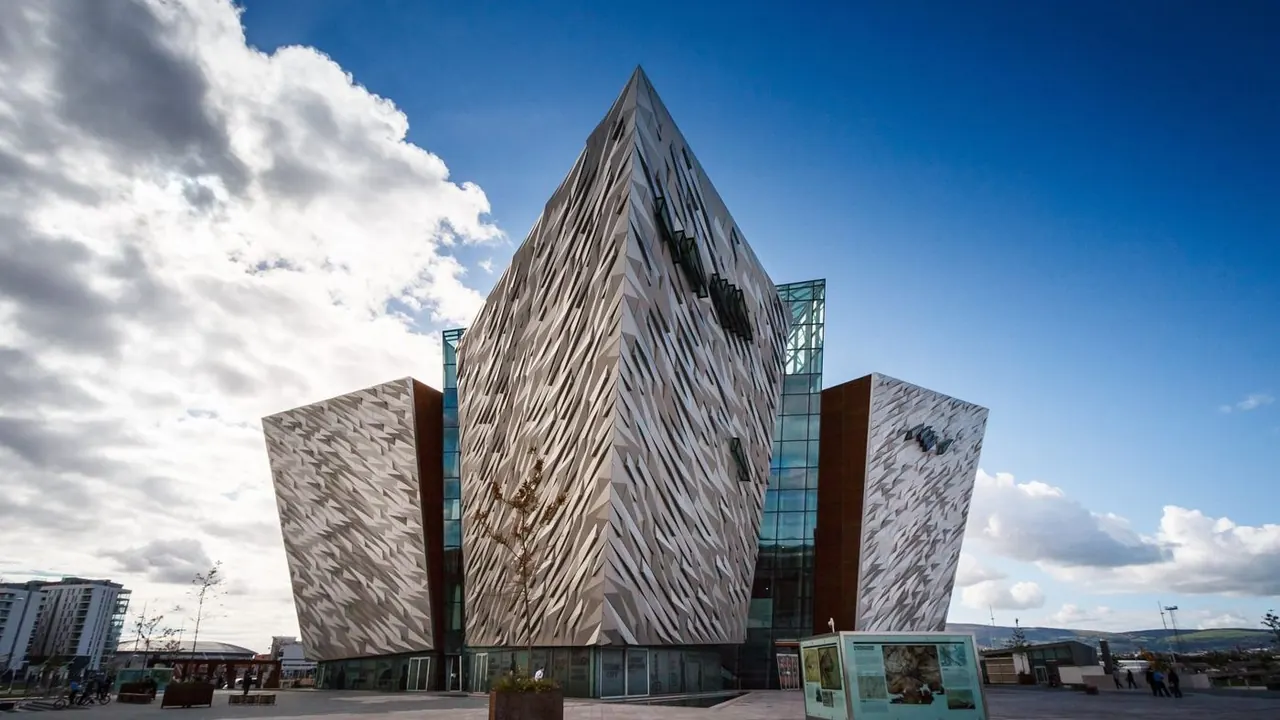
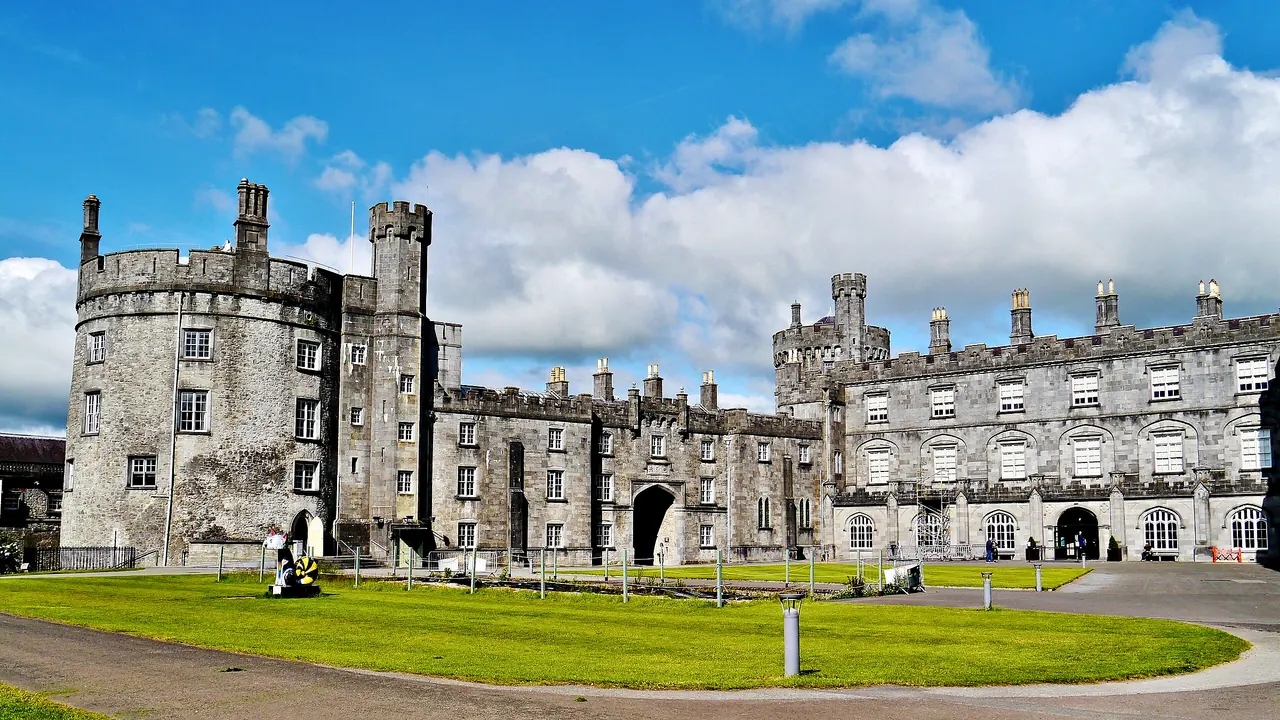
Photos: Belfast by Nico Kaiser, CC BY 2.0, cropped; Kilkenny by Zairon, CC BY 4.0, cropped.
Belfast or Kilkenny?
Our verdict in twelve categories, each scored against the same fixed benchmark cities, and the climate month by month, so you can choose for your trip.
Choose Belfast for
- nature and the outdoors
- families
- nightlife
Belfast is the more rounded choice for a stay of several days. It is a real city with a strong maritime and political story, from the slipways at Titanic Belfast to the murals of the Falls and Shankill, plus pubs with music most nights and the Causeway Coast and the Mournes within reach. It suits travellers who want hill walks and a city evening on the same trip, and it is the easier of the two on the budget.
Choose Kilkenny for
- wellness
Kilkenny rewards a slower, smaller trip built around medieval Ireland. The castle, St Canice's Cathedral and its round tower sit at either end of one walkable street, the old pubs are a stroll from your bed, and Cashel, Jerpoint and Kells are a short drive away. It works best as a stop of two or three days, or timed for the August arts festival, for travellers happy to drive.
Scoreboard
Twelve categories on one fixed scale from 0 to 100. The shaded stretch is the gap between the two.
Your match
Pick a travel style or drag the sliders, and both match scores follow your weighting.
Wins on nature and the outdoors and families with your weighting.
Wins on wellness with your weighting.
What matters to you?
Category by category
What the scores mean for a trip.
Beaches & swimming
Neither is a beach destination, but Belfast is at least close to the sea. Helen's Bay and Crawfordsburn are a short train ride along the County Down shore, so a bracing afternoon on the sand is easy without a car.
Kilkenny is inland, and Tramore or the coves of the Copper Coast are about an hour away by car. In both places a swim is a brisk dip for hardy swimmers, and most visitors go to the coast to walk, not to lie on the beach.
Food & drink
Belfast has more to offer at the table. Seasonal tasting menus in the Cathedral Quarter and on the Lisburn Road are built around Strangford oysters, Mourne lamb and dry-aged beef, and St George's Market is a good weekend place to graze. Pubs pour careful stout and stock plenty of Irish whiskey.
Kilkenny makes good use of the county's dairy, lamb and cheese, but its most ambitious cooking is in country-house kitchens outside town. In the centre you mostly eat in gastropubs. Its drinking story is red ale and the old brewery by St Francis Abbey, and there is little street food or cooking from abroad.
Culture & sights
The two tell very different stories, and Belfast gives you more to fill several days. Its heritage is industrial and recent: the shipyard cranes and Titanic Belfast, the domed City Hall, the Ulster Museum and Crumlin Road Gaol. The political murals and peace walls of the Falls and Shankill, best seen with a local guide, show a side of Irish history that Kilkenny has nothing to match.
Kilkenny is medieval and all in one place. The Medieval Mile links the castle on the Nore with St Canice's Cathedral, with Rothe House, the Black Abbey and the narrow slips in between. It is lovely and coherent, but most visitors have seen it in a day or two.
Nightlife
Both are pub towns, but Belfast has more range and more people out. The Cathedral Quarter's cobbled entries, the Victorian Crown Liquor Saloon and the student bars around Botanic Avenue give you several areas to choose from, though clubs are few and closing times early.
In Kilkenny the low-ceilinged bars on High Street and Parliament Street are full on Fridays and Saturdays, often with wedding and birthday groups. Midweek and out of season the town goes quiet early.
Nature & outdoors
This is where Belfast pulls furthest ahead. Cave Hill's basalt cliffs and the Black Mountain are a bus ride from the centre, and the Lagan towpath runs south for walking and cycling. The granite Mournes are about an hour south, and the Causeway Coast, with its columns and cliff paths, is one of the finest coastlines in these islands.
Around Kilkenny the country is softer: the wooded Nore Valley Way, modest climbs on Brandon Hill and the Blackstairs, and forest trails at Castlecomer. For real mountains you drive an hour to the Comeraghs.
Day trips
Both make good bases, with Belfast offering a slightly wider mix. From Belfast you can take the train to Dublin, follow the Antrim coast past Dunluce and Bushmills, or visit Carrickfergus Castle, Armagh's cathedrals and the walled city of Derry.
Kilkenny's day trips centre on monastic and Norman ruins: the Rock of Cashel, Jerpoint's carved cloister, Kells Priory and Glendalough, with Waterford's Viking quarter under an hour south. Apart from Dublin and Waterford, you need a car to reach them.
Good for families
Belfast has more for children to do. W5's hands-on science and Titanic Belfast fill a rainy day, the zoo sits on Cave Hill, and the Ulster Folk and Transport Museum has trams and steam engines.
Kilkenny is relaxed and safe, with castle lawns and a playground. Its best family outings, the tree-top courses near Castlecomer and Dunmore Cave, need a drive, and busy weekend nights in the centre are best avoided with small children.
Getting around
Both centres are walkable, but Belfast backs its walkable centre with the Glider rapid buses and suburban trains along the lough. That makes Holywood or Carrickfergus easy without a car, though buses thin out in the evening.
In Kilkenny everything is on foot along a 1km spine, and the station is close by. Beyond the town, rural buses are sparse, so a hire car or a tour is close to essential.
Shopping & style
Belfast has the wider range: high-street chains around Donegall Place, the glass-domed Victoria Square, independents on the Lisburn Road, and Irish linen as the souvenir to look for.
Kilkenny's strength is craft. The old castle stables and studios around the county sell pottery, glass, silver and woollens made locally. Beyond that, a stroll along High Street fills an afternoon.
Affordability
Belfast is the easier of the two on the budget, because the everyday costs stay moderate: pub food, buses and taxis. The money goes on the headline paid attractions and coach tours up the coast, on restaurant meals and drinks at UK prices, and on rooms during big concert and event weekends.
The cheapest way to do Kilkenny is a guesthouse or B&B on the edge of town midweek. Walking the Medieval Mile costs nothing, and the castle and heritage sites charge only modest entry. The bill climbs with each pint and dinner in town, and with any day spent exploring the county beyond it.
Live music & performing arts
Belfast has music and theatre all year round. Traditional sessions play in pubs most nights, the Ulster Orchestra performs at the Ulster Hall, and the Grand Opera House, the Lyric and the MAC cover musicals, Irish drama and mixed arts.
Kilkenny's pubs also have fiddles and bodhráns most evenings, but its stage life centres on its festivals. The August arts festival brings classical concerts to St Canice's Cathedral, and there are comedy and roots music weekends in early summer. Outside those weeks there is far less on.
Wellness & relaxation
Neither has a bathing tradition, so the difference is in setting. Belfast offers hotel spas, cold dips with the lough-shore swimmers and slow walks in the Botanic Gardens.
In Kilkenny the best option is a country-house estate on the edge of town, with a pool set in parkland. The centre itself is noisy on weekend nights.
When should you go?
Pick your month. The climate figures are measured averages, not a forecast.
Belfast in July
Kilkenny in July
Daytime high, °C
Rainfall in the month, mm
Where the figures come from
Kilkenny has no rain gauge within 25 km of the centre, so its rainfall comes from a gridded climate dataset read at the city rather than from a gauge further away.
Kilkenny's sunshine is measured 77 km from the centre, at Rosslare.
Temperature and rainfall are climate normals, averaged over the years shown. Belfast: 1991-2020 normals, Belfast / Aldergrove Airport (19.4 km from centre). Kilkenny: 1991-2020 normals, Kilkenny (2.1 km from centre).
Both are at their best from May to September, when daytime highs reach the upper teens and the long evenings suit walking. Neither ever gets too hot, so the limits are rain and short winter days. May is a good month in both, fairly dry and among the sunniest, and Kilkenny gets noticeably more sunshine through spring and summer. Neither sea is warm. Belfast's water only reaches about 14°C in early autumn, while the southeast coast near Kilkenny warms to around 16°C in July and August.
Rain builds through autumn in both, but the pattern differs. Belfast has a wet August, a drier September, then steady rain from October to December. Kilkenny's wettest stretch comes later and is heavier, with November passing 100mm and October and December not far behind. Winter highs sit around 7°C to 9°C. That is fine for museums and pubs but grey for touring the countryside.
Which traveller are you?
On an outdoors trip, Belfast is the clear pick. Cave Hill and Divis rise straight behind the city, the Mournes give serious hill walking about an hour south, and the Causeway Coast cliff paths make a full day out. Kilkenny's riverside and farmland walks are gentler.
For a trip on a tight budget, Belfast makes the money go further. Hotel rooms are easier to find at fair prices, the Ulster Museum and Botanic Gardens are free, and buses and trains cover the basics. Kilkenny brings Irish prices, expensive weekend rooms and usually a hire car.
On a relaxing and wellness trip, Kilkenny has a slight edge, as long as you stay outside the town. Country-house estates on its edge have pools and treatment rooms set in parkland, and the Nore villages are quiet. Belfast's calm comes mainly from hotel spas and garden walks.
Before you go
| Measure | Belfast | Kilkenny |
|---|---|---|
| Official language | English | English, Irish |
| Currency | Pound Sterling (GBP) | Euro (EUR) |
| Sockets | G230 V, 50 Hz | G230 V, 50 Hz |
| Driving side | Left | Left |
| Time zone | UTC, UTC+1 in summer | UTC, UTC+1 in summer |
| Emergency number | 112 or 999 | 112 |
| Elevation | 3 m | 60 m |
| Main airport | George Best Belfast City Airport (BHD)4 km from centre25 non-stop destinations | Dublin Airport (DUB)109 km from centre200 non-stop destinations |
| Public holidays this year | 10 days | 11 days |
By the numbers
| Measure | Belfast | Kilkenny |
|---|---|---|
| City population | 345,006 | 22,179 |
| People per km² | 3,000 | 828 |
| Museums within 10 km | 8 | 4 |
| UNESCO World Heritage sites within 50 km | 1 | 0 |
| Swim season, months above 21 °C | None | None |
Where else could you go?
Every comparison below shares a destination with this one, so you can follow Belfast or Kilkenny somewhere new.