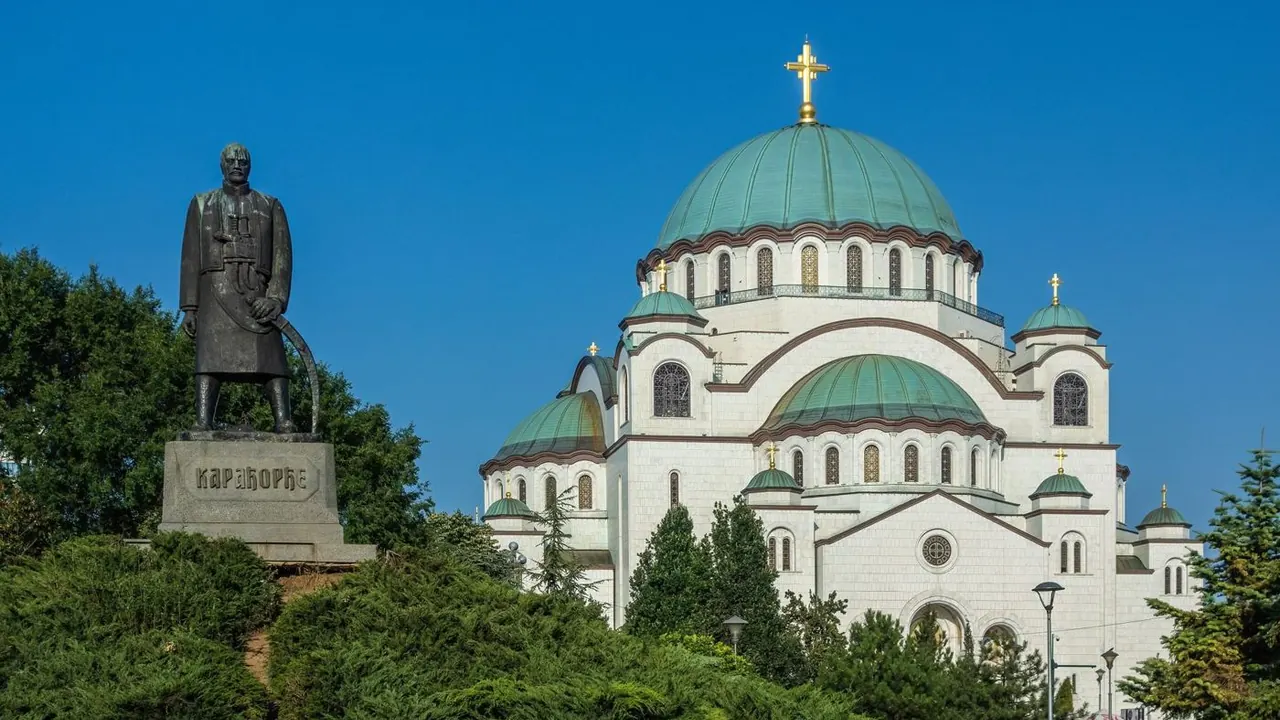
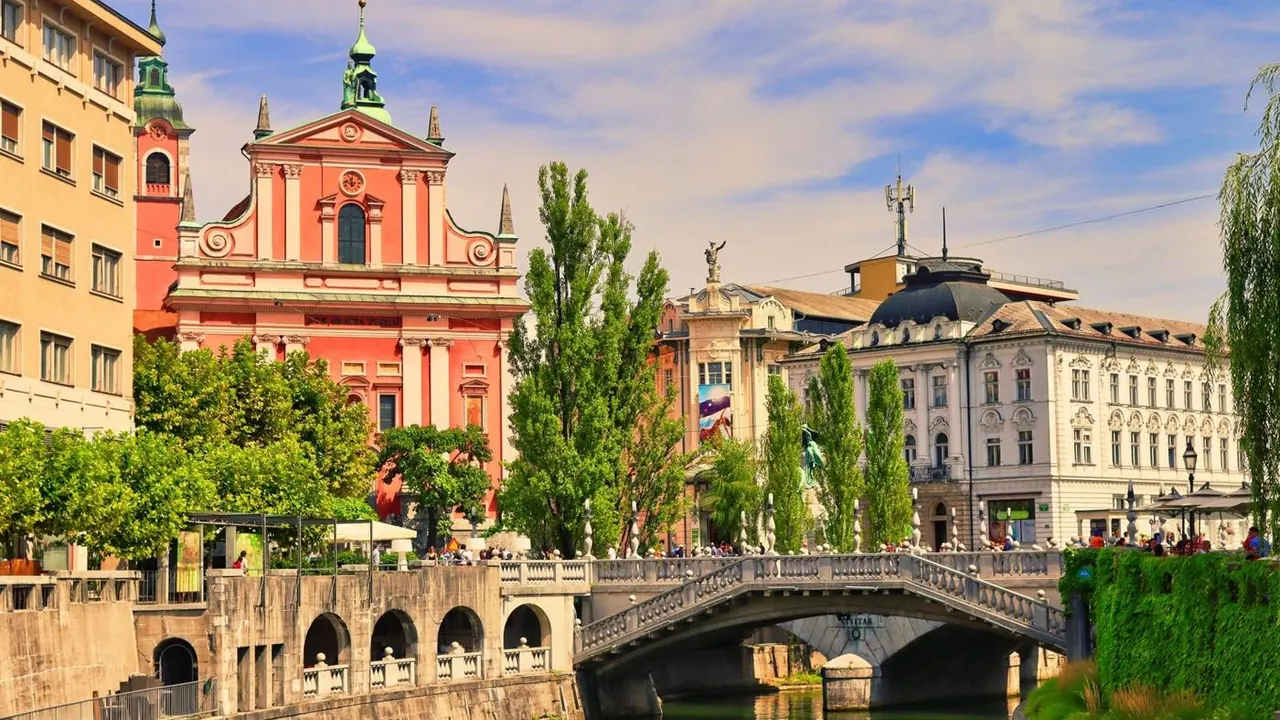
Photos: Belgrade by Petar Milošević, CC BY-SA 4.0, cropped; Ljubljana by detait, Pexels License.
Belgrade or Ljubljana?
Our verdict in twelve categories, each scored against the same fixed benchmark cities, and the climate month by month, so you can choose for your trip.
Choose Belgrade for
- nightlife
- beaches
- prices
Belgrade suits travellers who want the evenings to be the point of the trip. Clubs float on the Sava and Danube, kafana tables fill with rakija and tamburica, and nights run until dawn. It is also the cheaper of the two, with filling grills and taxis cheap enough to use without thinking. Groups of friends and anyone watching their spending will get more out of it.
Choose Ljubljana for
- nature and the outdoors
- getting around
- day trips
If you want the mountains, lakes and caves close by and a calm base to come back to, choose Ljubljana. Its small, car-free centre takes minutes to cross on foot, and Bled, the Julian Alps, the karst caves and the coast all make easy day trips. That makes it a better fit for walkers, couples and families with small children than Belgrade, with its traffic and late nights.
Scoreboard
Twelve categories on one fixed scale from 0 to 100. The shaded stretch is the gap between the two.
Your match
Pick a travel style or drag the sliders, and both match scores follow your weighting.
Too close to call, level with your weighting
Wins on nightlife and beaches with your weighting.
Wins on nature and the outdoors and getting around with your weighting.
What matters to you?
Category by category
What the scores mean for a trip.
Beaches & swimming
Neither city is a beach destination, but Belgrade has proper swimming inside the city. Ada Ciganlija has about 7km of gravel shore on a lifeguarded lake, with shallow water, sports courts and crowds after work, much like a large city lido. In summer a boat takes you over to the quieter sandy Lido on Great War Island.
In Ljubljana, a swim is a trip out of town. Locals use the Sava on the northern edge, Bled is about an hour away, and the Adriatic is farther still, where the shore is mostly concrete platforms and narrow pebble strips.
Food & drink
The two are about level for eating, but the food is very different. Belgrade cooks over the grill: ćevapi, pljeskavica and roast meats with kajmak and ajvar. Fruit brandy matters as much as wine, and the evening kafana with its long menu and band is central to eating out.
Ljubljana's food is more Alpine and quieter in tone, with štruklji, Carniolan sausage and jota bought or eaten around the Central Market. Wine is its real strength, especially the orange wines from the west of the country, poured by the glass on the river. In both cities, vegetarians and anyone after variety will run out of options fairly quickly.
Culture & sights
You need two or three days for the sights in either city, but they reward different interests. Belgrade is a history lesson in layers. The Kalemegdan walls run from Roman to Austrian, the Museum of Yugoslavia holds Tito's mausoleum, and the gold-mosaic Saint Sava is one of the largest Orthodox churches in the world. Its old buildings are scattered, though, a patchwork of Habsburg, Ottoman and socialist pieces left by repeated destruction.
Ljubljana works the other way round. Its museums are modest, but the cityscape hangs together: Plečnik's UNESCO-listed bridges, colonnades and library sit among baroque and Secession streets beneath a castle reached by funicular.
Nightlife
Belgrade has some of the most famous nightlife in Europe, and on this count Ljubljana is not a real rival. In summer the splavs moored along the Sava and Danube play everything from turbo-folk to house until morning. In winter the action moves to basements and old industrial spaces. At the bigger clubs people book tables, order by the bottle and dress up.
A night out in Ljubljana usually means a drink on the Ljubljanica embankments. Metelkova's small, scruffy clubs keep going late at weekends, but on weekdays the riverside goes quiet after midnight.
Nature & outdoors
Ljubljana has far more landscape within reach. Locals climb Šmarna Gora before work, Velika Planina's herders' huts are on high pasture about 40 minutes away, and Triglav National Park, the emerald Soča, the Vintgar gorge and the Postojna and Škocjan caves all make a day out. Small ski resorts open in winter.
Belgrade's outdoors is mostly about its rivers. You can walk or cycle the long promenades, watch herons on Great War Island within sight of the fortress, or walk easy trails through the vineyards of Fruška Gora. The dramatic Iron Gates gorge is too far for a comfortable day trip.
Day trips
Slovenia is small and Ljubljana sits in the middle of it, so the choice of day trips is far wider. Bled's island church, the painted façades of Radovljica, Predjama Castle in its cliff, the Lipizzaner stud at Lipica and Venetian Piran are all close. Trieste and Zagreb are about two hours away.
Belgrade has one excellent outing: the fast train to Novi Sad and Petrovaradin, combined with the wine cellars of Sremski Karlovci or the Fruška Gora monasteries. Smederevo, Viminacium and Oplenac are rewarding too, but for most of them you will need a car or a tour.
Good for families
Ljubljana is the easier city with small children. The centre is flat and largely closed to cars, so a pushchair is easy. The castle funicular, the dragons on the bridge and the puppet theatre, whose shows need no language, are what young children enjoy.
In Belgrade, families are warmly welcomed and eat out late without fuss, but the streets are harder work, with heavy traffic, uneven pavements and parked cars blocking the way. Children who like history will enjoy the tanks and ramparts at Kalemegdan, and in summer Ada Ciganlija's shallow lake makes a relaxed day. It suits older children better than toddlers.
Getting around
In Ljubljana you will hardly use transport at all. The old town, market, museums and Tivoli Park are all within about 20 minutes of each other on foot, bike-share covers the flat districts, and electric shuttles run through the pedestrian centre.
Belgrade's core around Kalemegdan, Knez Mihailova and Skadarlija is also walkable, though the streets climb steeply up from the rivers. Zemun and the districts across the Sava need a bus or a taxi. The trams and trolleybuses are crowded and hard for a visitor to work out, so most visitors use taxis or ride-hailing, which are plentiful.
Shopping & style
Neither city is worth a dedicated shopping trip, but Belgrade has a bit more choice. Knez Mihailova and the big malls cover the usual chains, young designers have boutiques in Dorćol and Vračar, and Kalenić market is good for jars of ajvar, honey and bottles of rakija to take home.
Ljubljana's shopping is smaller and more about crafts: Idrija lace, gingerbread hearts, salt from the coastal pans and pumpkin-seed oil from the Central Market. The Sunday flea market on the embankment is the most enjoyable browse of the week.
Affordability
Your money goes noticeably further in Belgrade. Grills, kafana evenings, terrace coffees and taxis all cost far less than in Western Europe, and only the river clubs and international restaurants push the bill up.
Ljubljana costs about the middle for Europe. You will save by walking everywhere and eating the inns' set lunch menus, but central summer rooms cost about as much as in Western Europe. In both cities accommodation is the biggest expense, though it is easier to absorb in Belgrade.
Live music & performing arts
The two are about level for a night at the opera or a concert, and in both most theatre is in the local language, so music and dance are easier for visitors. Belgrade's arts calendar is busiest in autumn, with the BITEF experimental theatre festival and BEMUS. Its formal stages range from the National Theatre on Republic Square to the historic Kolarac hall and the Madlenianum in Zemun. What sets it apart is the kafana, where tamburica and old-town bands play between the tables in Skadarlija and Zemun.
Ljubljana is at its best in summer, when the Ljubljana Festival brings orchestras to Plečnik's open-air Križanke courtyard. For the rest of the year, the Philharmonic, whose roots go back to 1701, the neo-Renaissance opera and ballet house and Cankarjev dom share the programme. Metelkova and the smaller venues add rock, jazz and alternative music.
Wellness & relaxation
Ljubljana is the more restful choice. The green, largely car-free centre is quiet, the water park on the eastern edge has a large sauna complex, and several thermal spa towns are within about an hour's drive.
Belgrade's spa towns are hours to the south. Its centre is loud, smoking indoors is common and nights run late. You can still find calm in an unhurried terrace coffee or an afternoon on the Danube promenade, but this is a city to enjoy with energy rather than to rest in.
When should you go?
Pick your month. The climate figures are measured averages, not a forecast.
Belgrade in July
Ljubljana in July
Daytime high, °C
Rainfall in the month, mm
Temperature and rainfall are climate normals, averaged over the years shown. Belgrade: 1991-2020 normals, Beograd (2.1 km from centre). Ljubljana: 1991-2020 normals, Ljubljana / Bezigrad (1.9 km from centre).
The two cities follow a similar pattern, with cold, grey winters and warm summers, but Belgrade is a little hotter and much drier. In July and August its afternoons reach about 30°C. That is ideal for the lake beaches on Ada Ciganlija but too hot for long walks in the middle of the day, so May and September are the better months for sightseeing. June is its wettest month at around 95mm, but the rest of the year is fairly dry, and from spring to late autumn Belgrade gets more sunshine than Ljubljana every month.
Ljubljana stays slightly cooler in summer at about 28°C, and July and August are when the Alpine lakes are warm enough to swim in. It is wet all year, and wettest at the times visitors most want to be outdoors. Rain builds through late spring and summer and peaks in September and October at up to 159mm, so bring waterproofs for autumn hiking. Late spring and early summer bring the long, warm, sunny days that suit the mountains best, but expect showers then too. The driest weather comes in winter, when both cities are cold and get little sun.
Which traveller are you?
For a food and nightlife trip, choose Belgrade. Its splavs on the rivers, late cocktail bars in Dorćol and long kafana evenings over grilled meat and rakija go on until dawn. Ljubljana's riverside terraces and Metelkova are much quieter by comparison.
On an outdoors trip, Ljubljana is clearly better. The Kamnik-Savinja Alps are about 40 minutes away, and Triglav National Park, the Soča valley and the karst caves are an easy drive. Belgrade's gentle river paths and the low ridge of Fruška Gora can't compare.
On a tight budget, Belgrade goes further. Kafana meals, terrace coffees, rounds of beer and taxis all cost little, and the fortress park is free. In Ljubljana, summer rooms in the old town cost about as much as in Western Europe.
Before you go
| Measure | Belgrade | Ljubljana |
|---|---|---|
| Official language | Serbian | Slovene |
| Currency | Serbian Dinar (RSD) | Euro (EUR) |
| Sockets | CF230 V, 50 Hz | CF230 V, 50 Hz |
| Driving side | Right | Right |
| Time zone | UTC+1, UTC+2 in summer | UTC+1, UTC+2 in summer |
| Emergency number | Police 92/192, ambulance 94/194, fire 93/193 | 112 |
| Elevation | 117 m | 309 m |
| Main airport | Belgrade Nikola Tesla Airport (BEG)12 km from centre125 non-stop destinations | Ljubljana Jože Pučnik Airport (LJU)20 km from centre32 non-stop destinations |
| Public holidays this year | 11 days | 21 days |
By the numbers
| Measure | Belgrade | Ljubljana |
|---|---|---|
| City population | 1,197,714 | 284,293 |
| People per km² | 3,327 | 1,736 |
| Museums within 10 km | 65 | 14 |
| UNESCO World Heritage sites within 50 km | 0 | 3 |
Where else could you go?
Every comparison below shares a destination with this one, so you can follow Belgrade or Ljubljana somewhere new.