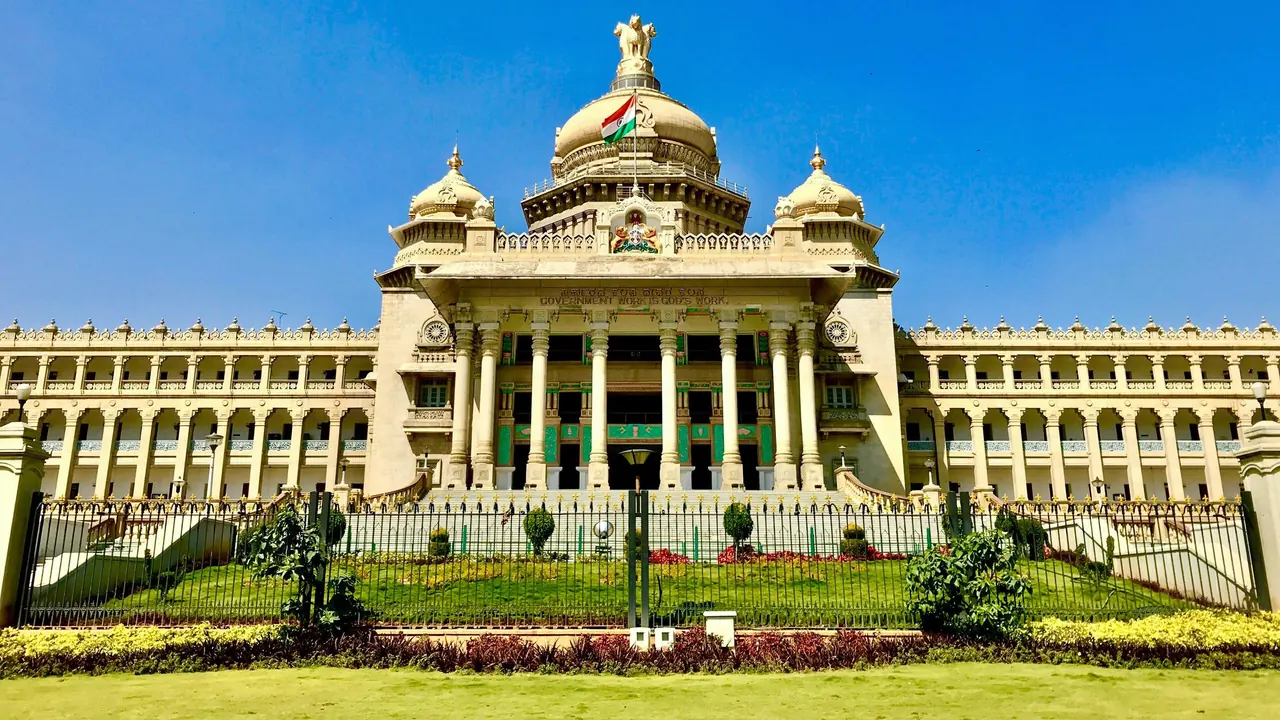
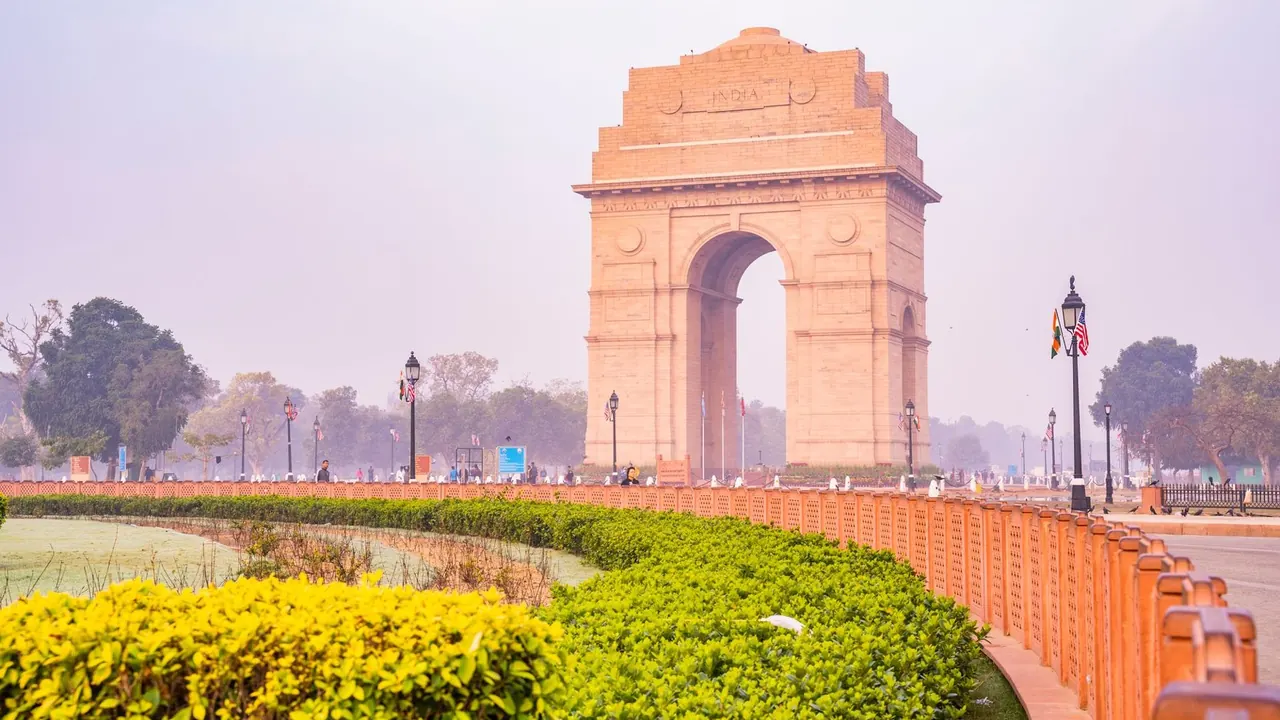
Photos: Bengaluru by IM3847, CC BY-SA 4.0, cropped; Delhi by shalender kumar, Pexels License.
Bengaluru or Delhi?
Our verdict in twelve categories, each scored against the same fixed benchmark cities, and the climate month by month, so you can choose for your trip.
Choose Bengaluru for
- nature and the outdoors
- wellness
- families
Bengaluru suits a slower, more comfortable trip. It has a mild plateau climate, old gardens to walk in early, granite hills for a sunrise outing, an easy pub culture and South Indian breakfasts worth getting up for. It is also the better base for families and for anyone who wants Ayurveda or yoga as part of the stay. In return you accept a short list of sights and traffic that shapes every day.
Choose Delhi for
- culture and sights
- shopping
- getting around
For a first proper look at India's history, Delhi is the stronger choice. It has Mughal tombs, the Red Fort and the lanes of Old Delhi, a deeper food scene, far better shopping, and a metro that reaches most of the monuments. The Taj Mahal is a train ride away. The cost is a harsher climate and a city that rarely lets you rest.
Scoreboard
Twelve categories on one fixed scale from 0 to 100. The shaded stretch is the gap between the two.
Your match
Pick a travel style or drag the sliders, and both match scores follow your weighting.
Wins on nature and the outdoors and wellness with your weighting.
Wins on culture and sights and shopping with your weighting.
What matters to you?
Category by category
What the scores mean for a trip.
Beaches & swimming
Neither city is a beach destination. Bengaluru is on the Deccan plateau and Delhi is on the northern plains, so in both of them swimming means a hotel pool, and in Delhi you will be glad of one in the heat before the monsoon. The real difference is how far the sea is afterwards. From Bengaluru the Karnataka coast is a day's travel or an overnight trip, while from Delhi you would normally fly on to Goa or Kerala.
Food & drink
Bengaluru eats best in the morning. Masala dosa and filter coffee are taken standing at the counter of a darshini, the old vegetarian houses of Basavanagudi and Malleswaram have had breakfast queues for generations, and the military hotels serve biryani from dawn. It is also the place for southern cooking that is hard to find in the north, from ragi mudde to Mangalorean seafood and Kodava pork, and the food lanes of VV Puram take over in the evening.
Delhi is still the stronger city for food overall. Its cooking is richer and meatier, built on Mughlai and Punjabi traditions, and a walk through Old Delhi around Chandni Chowk and Jama Masjid makes a meal of nihari, stuffed parathas and grilled kebabs. Butter chicken and dal makhani were first made here, and chaat carts are everywhere. At the top end, South Delhi has polished modern Indian cooking of a kind Bengaluru does not really match.
Culture & sights
This is where the two cities differ most. Delhi has centuries of capitals built one on top of another: the Red Fort, Humayun's Tomb, the Qutb Minar, Jama Masjid and the Lodi tombs. Add the imperial axis of New Delhi and the national collections, and there is easily a week of sightseeing.
Bengaluru is a modern city whose sights fill two or three days. The best are Tipu Sultan's wooden summer palace, Bangalore Palace, the Vidhana Soudha and the Bull Temple. The region's great heritage lies outside the city, at Mysuru and beyond.
Nightlife
Bengaluru is the better city for an evening out, as long as the evening is about drinking rather than dancing. Its brewpubs, rooftop terraces and cocktail bars are packed into 100 Feet Road, Koramangala and the streets around Church Street. The easygoing crowd starts arriving straight after work.
Delhi's nightlife is split into separate pockets, Hauz Khas Village, Connaught Place and the towers of Gurugram, and you travel between them by taxi. Gurugram does have the bigger clubs. In both cities the night ends early by big-city standards.
Nature & outdoors
Bengaluru has much more to offer outdoors. Cubbon Park and Lalbagh are pleasant to walk in the mild plateau air. Beyond the city, the granite country of Nandi Hills, Savandurga and Ramanagara offers sunrise drives, hikes and rock climbing, and Bannerghatta has a safari on the edge of town.
Delhi's flat, dry plain gives you gardens and the scrubby Ridge forest. Its real draw is winter birdwatching at Okhla and Sultanpur. Fierce heat, a heavy monsoon and winter smog make outdoor plans difficult for much of the year.
Day trips
Delhi has by far the stronger day out. The Taj Mahal and Agra Fort are a little under two hours away by express train. Fatehpur Sikri, the Krishna towns of Mathura and Vrindavan, and the hilltop fort at Neemrana are further choices.
Bengaluru's best day out is to Mysuru's palace and Srirangapatna, also about two hours by train, and Lepakshi's painted temple lies to the north. Its finest heritage, Hampi and the Hoysala temples of Belur and Halebidu, needs an overnight stay.
Good for families
Children are warmly welcomed in both, but Bengaluru is the easier city to visit with them. The mild climate is a real advantage. Bannerghatta has a zoo, a butterfly park and a safari, there is a technology museum and a planetarium near Cubbon Park, and the park's lawns give children room to run.
Delhi has steam locomotives at the Rail Museum, the zoo by Purana Qila and the Akshardham water show. But summer heat, winter smog and stomach bugs weigh more heavily there, so late winter and early spring are the comfortable times to go. In both cities, traffic and broken pavements make pushchairs hard work.
Getting around
Delhi is the easier of the two to get around, thanks to a large air-conditioned metro with English signs, an airport express line and stations near most of the major monuments. Distances are still huge, but you can cross the city without sitting in traffic.
Bengaluru's Namma Metro is clean but reaches fewer of the places a visitor wants. Most days depend on auto-rickshaws and app taxis through some of India's most notorious jams, so planning each day by area and avoiding rush hour matters even more there.
Shopping & style
Delhi is one of India's best places to buy crafts from across the country. There are the state stalls of Dilli Haat and the emporiums on Baba Kharak Singh Marg, the specialist bazaars of Old Delhi and the spice market at Khari Baoli. Khan Market, Shahpur Jat and Hauz Khas add Indian designers, and Janpath and Sarojini Nagar cover cheap clothes.
Bengaluru's shopping is more regional. The lanes of Chickpet sell Mysore silk, and you will also find sandalwood carvings and Channapatna's lacquered toys, plus Commercial Street and the malls. It has no fashion district to match Delhi's.
Affordability
Both are inexpensive for a foreign visitor, but Delhi makes a budget go further, with plenty of guesthouses and mid-range hotels and street food everywhere. Bengaluru is one of India's pricier cities. Its hotels are geared to business travel and alcohol is heavily taxed, so brewpub evenings become the biggest expense, though darshini meals and auto rides still cost very little.
Live music & performing arts
Delhi has the fuller stage. Through the cooler months there are Hindustani recitals and Kathak around Mandi House, the National School of Drama is based there, and free qawwali is sung in the courtyard of the Nizamuddin shrine, traditionally on Thursday evenings.
Bengaluru answers with the southern tradition. Carnatic music is heard at the sabhas and Chowdiah Memorial Hall, with most concerts around the Ramanavami season, and Ranga Shankara stages theatre in Kannada, English and Hindi. Its rock and indie gig scene is livelier than Delhi's.
Wellness & relaxation
Neither city is calm, but Bengaluru is the better place for wellness. Ayurvedic clinics and drop-in yoga schools are spread across the city. Residential retreats on the rural outskirts let you spend a week or more in treatment without travelling far.
In Delhi, relief comes mostly from hotel spas and a few centres in South Delhi, and the winter air is heavy. Travellers who want a proper retreat usually move on to Rishikesh or Kerala. In both cities the quiet moments are early mornings in the old gardens.
When should you go?
Pick your month. The climate figures are measured averages, not a forecast.
Bengaluru in July
Delhi in July
Daytime high, °C
Rainfall in the month, mm
Temperature and rainfall are climate normals, averaged over the years shown. Bengaluru: 1991-2020 normals, Bangalore (1.6 km from centre). Delhi: 1991-2020 normals, New Delhi / Safdarjung (9.4 km from centre).
Bengaluru sits high on the plateau, so it stays mild all year. Daytime highs are in the high 20s for most months and peak at 34°C in April. December to March is the best stretch, dry and the sunniest time of year. Rain builds from April and is heaviest in September and October, at around 200mm a month, when the sun is often hidden. Even then it is rarely too hot to walk the streets.
Delhi's seasons swing much further. November to February is the time to go. These months are cool and dry, with January highs of about 20°C, but they are also the greyest of the year, with little sunshine and frequent smog haze. From April to June the heat climbs to 40°C, which makes sightseeing exhausting, and the monsoon that follows is wettest in August at 236mm. Both cities are at their best in the dry winter months, but Bengaluru's winter is warmer and sunnier, while Delhi's is cooler and hazier.
Which traveller are you?
For a culture and arts trip, Delhi is the clear pick. It has three UNESCO sites, the mosques and bazaars of Old Delhi, the national collections and a dense cool-season programme of classical music and dance. Bengaluru offers a palace, a temple and a couple of museums.
On an outdoors trip, Bengaluru wins. Sunrise at Nandi Hills, climbing on the Ramanagara boulders and a safari at Bannerghatta are all within reach, and the mild climate allows walking most of the year. Delhi's dry plain offers little beyond winter birdwatching.
On a shopping trip, Delhi has far more to offer. Dilli Haat and the state emporiums bring together crafts from the whole country, Old Delhi has a bazaar for every trade, and Khan Market holds Indian designers. Bengaluru's strengths are mainly Mysore silk and Channapatna toys.
Before you go
| Measure | Bengaluru | Delhi |
|---|---|---|
| Official language | Hindi, English | Hindi, English |
| Currency | Indian Rupee (INR) | Indian Rupee (INR) |
| Sockets | CM230 V, 50 Hz | CM230 V, 50 Hz |
| Driving side | Left | Left |
| Time zone | UTC+5:30 | UTC+5:30 |
| Emergency number | 108 or 112 | 108 or 112 |
| Elevation | 920 m | 221 m |
| Main airport | Kempegowda International Airport Bengaluru (BLR)27 km from centre98 non-stop destinations | Indira Gandhi International Airport (DEL)17 km from centre144 non-stop destinations |
By the numbers
| Measure | Bengaluru | Delhi |
|---|---|---|
| City population | 12,327,000 | 26,495,000 |
| People per km² | 16,636 | 18,962 |
| Museums within 10 km | 9 | 23 |
| UNESCO World Heritage sites within 50 km | 0 | 4 |
Where else could you go?
Every comparison below shares a destination with this one, so you can follow Bengaluru or Delhi somewhere new.
- Mysorevs Bengaluru
- Agravs Delhi
- Rishikeshvs Delhi
- Jaipurvs Delhi
- Pondicherryvs Bengaluru
- Chennaivs Bengaluru