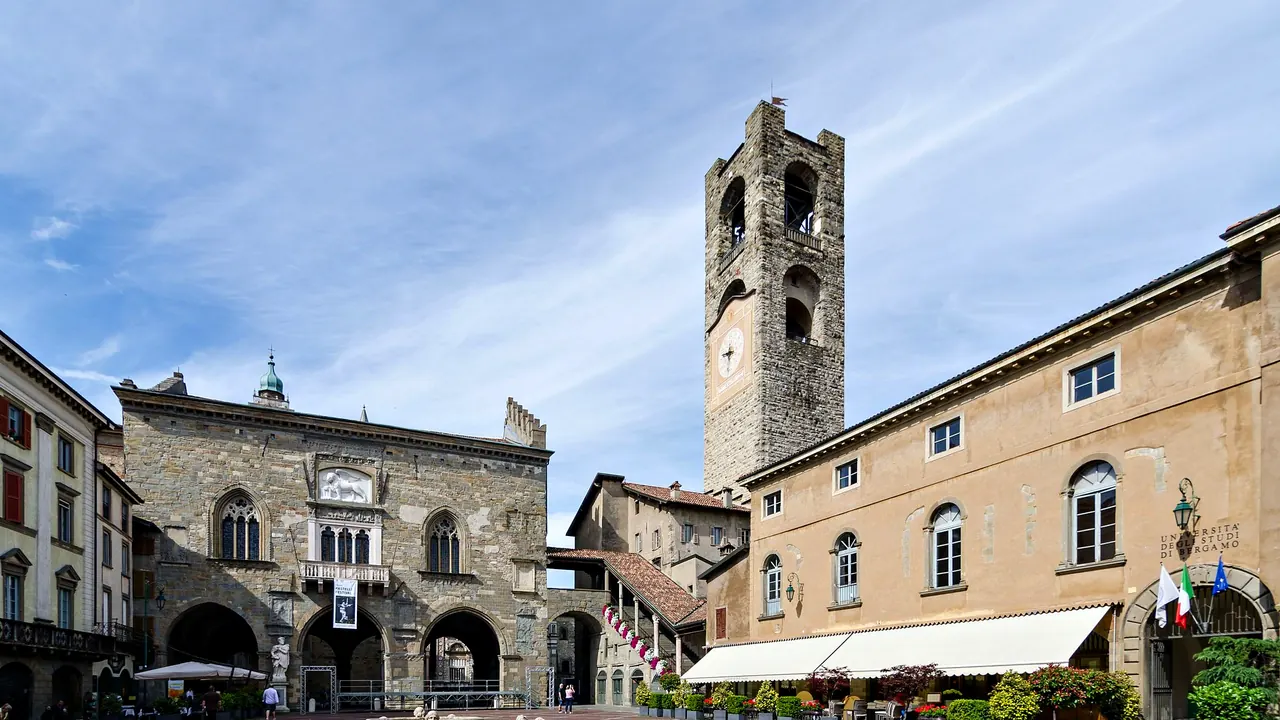
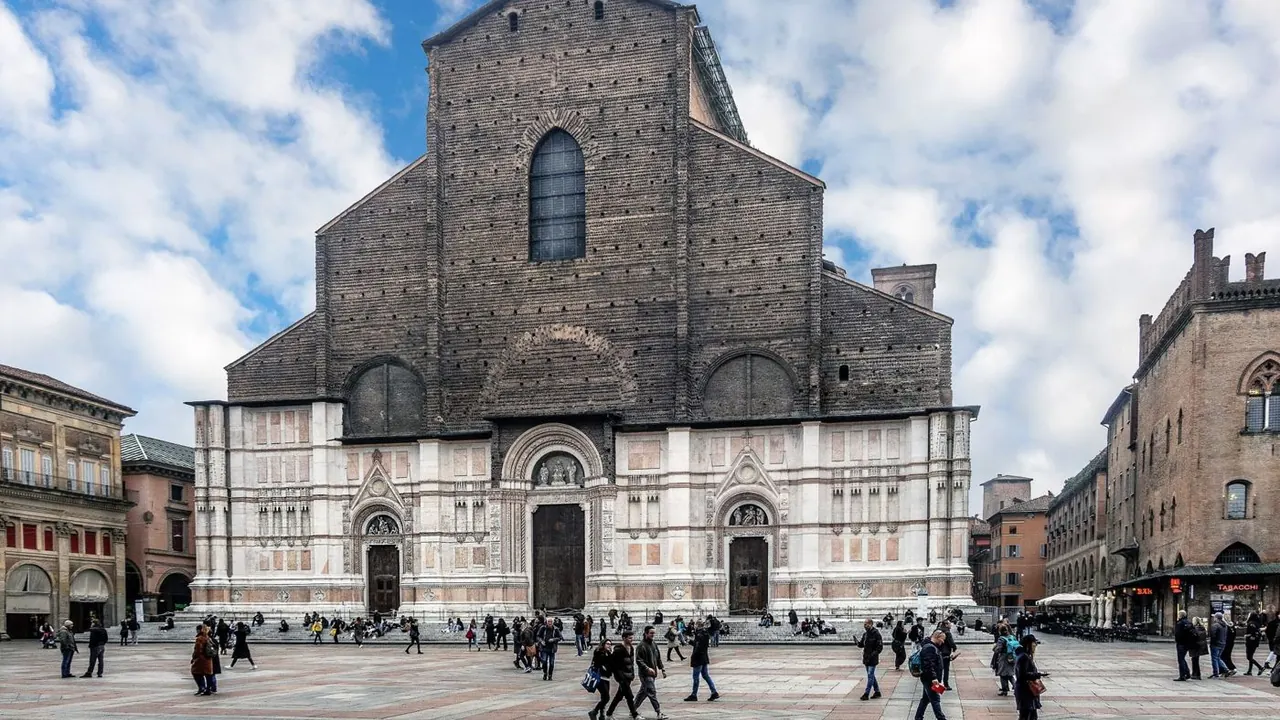
Photos: Bergamo by Steffen Schmitz, CC BY-SA 4.0, cropped; Bologna by Vanni Lazzari, CC BY-SA 4.0, cropped.
Bergamo or Bologna?
Our verdict in twelve categories, each scored against the same fixed benchmark cities, and the climate month by month, so you can choose for your trip.
Choose Bergamo for
- nature and the outdoors
- wellness
- families
Bergamo suits travellers who want a smaller, quieter base with mountains and lakes close by. The walled Città Alta takes a day or so to see. After that, the Orobie valleys, Lake Iseo and the spa at San Pellegrino are all near. It works best for walkers, cyclists and anyone happy with evenings that end early in a quiet square.
Choose Bologna for
- nightlife
- food and drink
- live music and the arts
Choose Bologna if your trip is about eating well and taking the train. Its trattorias and the market lanes of the Quadrilatero are reason enough to come. The student quarters keep the evenings going well past Bergamo's bedtime, and the station puts Florence, Ravenna and Venice within easy reach. It is the better choice for food lovers, for a busier city stay and for touring northern Italy without a car.
Scoreboard
Twelve categories on one fixed scale from 0 to 100. The shaded stretch is the gap between the two.
Your match
Pick a travel style or drag the sliders, and both match scores follow your weighting.
Wins on nature and the outdoors and wellness with your weighting.
Wins on nightlife and food and drink with your weighting.
What matters to you?
Category by category
What the scores mean for a trip.
Beaches & swimming
Neither city has a coast, so in both a swim means a day out, but the water you reach is quite different. From Bergamo you swim in the lakes: Iseo at Sarnico or Lovere, or the Lecco arm of Como. The shores are grass, pebble or concrete platforms, and the water is around 23°C in midsummer.
From Bologna you go to the Adriatic at Rimini or Cervia, about an hour by train. The sea there is warmer and shallow, and the long sandy shore is lined with rented umbrellas in organised lidos. Choose Bergamo for the mountain scenery around the water and Bologna if you want proper sand.
Food & drink
Food is where Bologna pulls clearly ahead. This is the home of tagliatelle al ragù, tortellini in brodo and mortadella. Pasta is still rolled by hand in shop windows, and Parmigiano, Parma ham and balsamic vinegar come from towns nearby. The Quadrilatero market lanes make eating a reason to come in their own right.
Bergamo eats well too, but more narrowly: casoncelli with butter and sage, polenta with braised meats and game, and an outstanding choice of valley cheeses such as Taleggio and Strachitunt. It is satisfying mountain cooking rather than a food destination, and neither city offers much beyond its own region's kitchen.
Culture & sights
Bologna has more to see, and most of it is the city itself. It has kilometres of UNESCO-listed porticoes, Piazza Maggiore with San Petronio, the Two Towers, Santo Stefano and the Archiginnasio of Europe's oldest university. Seeing it properly takes two or three days.
Bergamo's Città Alta is a tighter, more complete picture: a hilltop town inside its Venetian walls, with the Cappella Colleoni and Santa Maria Maggiore at its heart. The Accademia Carrara below adds Raphael, Bellini and Mantegna. It all fits into a day or two, while Bologna rewards a longer stay.
Nightlife
Bologna goes out far more. Its large student population fills Piazza Verdi and Via Petroni with crowds standing outside cheap bars, and the taverns along Via del Pratello stay open late. The exception is August, when the students leave and the city goes quiet.
An evening in Bergamo is an unhurried aperitivo, then a wine bar in Borgo Santa Caterina or a drink on the walls of the Città Alta, and it is mostly over by midnight. In both cities the clubs are out on the edge of town, and anyone in Bergamo after a big night heads to Milan.
Nature & outdoors
Bergamo is the stronger choice for time outdoors. The Colli di Bergamo park rises straight from the upper town. Val Brembana and Val Seriana lead into the Orobie Alps for serious hiking, and Lake Iseo and Lake Como offer sailing and lakeside walks.
Bologna's countryside is gentler. There are easy walks up to San Luca and through the Colli Bolognesi, gypsum caves in the Parco dei Gessi, and the Via degli Dei to Florence if you have several days. The higher Apennines are further off, and the plain to the north is flat farmland.
Day trips
Both make excellent bases, but Bologna has the edge thanks to its rail junction. Florence is barely half an hour away and Ravenna's mosaics about an hour. Ferrara, Modena and Parma are short rides along the Via Emilia, with Venice, Padua and Verona further out.
Bergamo's strengths are Lombardy and the lakes. Milan is under an hour by train, and Lake Iseo with Monte Isola, Lecco, Crespi d'Adda and Brescia are all close. Verona and Mantua can be reached from either city, so the real choice is the lakes and Milan against Tuscany and Emilia.
Good for families
Neither city is built around children, and they are about even here, but the help comes in different forms. Bergamo has the funicular rides, the walk along the walls and two proper outings nearby: Leolandia, about twenty minutes by car, and the Le Cornelle wildlife park. The cobbled lanes of the upper town are hard work with a buggy, though.
Bologna is easier to get around, flat and largely car-free, with shady porticoes, and climbing the Asinelli tower suits older children. Its big theme park, Mirabilandia near Ravenna, is further away, and the summer heat in the city is harder on small children.
Getting around
Bologna is the simpler city to move around. The centre is flat, compact and largely closed to cars, and the porticoes keep you in shade or out of the rain as you walk. The station at the edge of the old town connects to the whole of the north.
Bergamo is built on two levels, joined by funiculars, with buses up the hill and a short ride to the airport. Each level is easy to walk, but the slope between them is steep. For the valleys and lake shores a car saves a good deal of time, whereas in Bologna a car is mostly a burden.
Shopping & style
Bologna offers more to browse. Beyond the Quadrilatero delicatessens there are high-street chains on Via dell'Indipendenza and a small luxury cluster around Via Farini and the Galleria Cavour. The Montagnola market and the vintage and book shops of the university quarter add more.
Bergamo has mid-range chains along the Sentierone and Via XX Settembre, and its real pleasure is the cheese shops, bakeries and wine sellers of the Città Alta. In both cities the best things to take home are edible, and serious fashion shopping from Bergamo means a trip to Milan.
Affordability
Overall costs are much the same, comfortable rather than cheap, but the money goes in different places. In Bergamo the lower-town hotels are fair value, which is why many travellers use it as a base. Rooms inside the Città Alta and summer weekends cost more.
In Bologna, eating out is the bargain, with honest trattorias and aperitivo that comes with food, and the free churches and walkable centre keep other spending low. Hotels are priced like the rest of prosperous northern Italy, and rooms become scarce during the big trade fairs.
Live music & performing arts
Bologna has the richer stage life. The Teatro Comunale is one of Italy's historic opera houses, and the city is a UNESCO City of Music. Small jazz clubs play most nights, student venues host a steady run of indie and rock gigs, and in summer there are concerts in Piazza Maggiore.
Bergamo's programme centres on Donizetti, the composer born there: opera at the Teatro Donizetti, an autumn festival of his works, and the long-running Bergamo Jazz festival in spring. Beyond these it is quieter, but La Scala in Milan is close enough for an evening.
Wellness & relaxation
Bergamo is the better place to slow down. San Pellegrino Terme, a Belle Époque resort about forty minutes up Val Brembana, has a grand historic thermal spa, and the old sulphur springs of Trescore Balneario are close by. The walls and squares of the Città Alta are quiet early and late in the day.
From Bologna you can reach the spa pools at Castel San Pietro Terme and the old valley spa town of Porretta Terme, and both make a pleasant half day. The city itself is noisier around the university and heavy in the summer heat, so relaxing there mostly means a long lunch under the porticoes.
When should you go?
Pick your month. The climate figures are measured averages, not a forecast.
Bergamo in July
Bologna in July
Daytime high, °C
Rainfall in the month, mm
Where the figures come from
Bergamo has no rain gauge within 25 km of the centre, so its rainfall comes from a gridded climate dataset read at the city rather than from a gauge further away.
Bergamo's sunshine is measured 64 km from the centre, at Lugano.
Bologna has no rain gauge within 25 km of the centre, so its rainfall comes from a gridded climate dataset read at the city rather than from a gauge further away.
Bologna's sunshine is measured 82 km from the centre, at Cervia.
Temperature and rainfall are climate normals, averaged over the years shown. Bergamo: 1991-2020 normals, Bergamo / Orio Al Serio (3.9 km from centre). Bologna: 1991-2020, 14 years observed normals, Bologna / Borgo Panigale (5.5 km from centre).
Both cities have the cold, grey winters of the Po plain, with highs of only 7°C in January. The comfortable months for walking the streets are April to June and September to October. Summer is where they part. Bologna gets hotter, around 32°C in July and August, which makes afternoon sightseeing hard work, although it is also the sunnier and drier of the two in those months. Bergamo stays a few degrees cooler and has the mountains on hand as an escape, but its late spring and summer are noticeably wetter.
Autumn brings rain to both. Bergamo is clearly the wetter, with around 125mm a month from September to November. Bologna's wettest months, October and November, are lighter. July and August are the months for lake swimming near Bergamo or a seaside day out from Bologna.
Which traveller are you?
For a food and nightlife trip, Bologna is the clear choice. Its old osterie take real care over fresh pasta, mortadella and Parmigiano. After aperitivo, the student streets around Piazza Verdi and Via del Pratello keep going long after Bergamo has gone quiet.
On an outdoors trip, Bergamo is the better base. Wooded paths climb from the upper town to San Vigilio, and Val Brembana and Val Seriana lead into the Orobie Alps, with rifugi and high lakes. Bologna's hills are gentler, and the plain north of it is mostly farmland.
For a relaxing and wellness trip, Bergamo is the calmer stay. The Belle Époque spa at San Pellegrino Terme is under an hour up the valley, the Città Alta is quiet in the mornings and evenings, and the summers are less heavy than on Bologna's plain.
Before you go
| Measure | Bergamo | Bologna |
|---|---|---|
| Official language | Italian | Italian |
| Currency | Euro (EUR) | Euro (EUR) |
| Sockets | CFL230 V, 50 Hz | CFL230 V, 50 Hz |
| Driving side | Right | Right |
| Time zone | UTC+1, UTC+2 in summer | UTC+1, UTC+2 in summer |
| Emergency number | 112 | 112 |
| Elevation | 249 m | 54 m |
| Main airport | Il Caravaggio International Airport (BGY)4 km from centre146 non-stop destinations | Bologna Guglielmo Marconi Airport (BLQ)6 km from centre98 non-stop destinations |
| Public holidays this year | 13 days | 13 days |
By the numbers
| Measure | Bergamo | Bologna |
|---|---|---|
| City population | 119,534 | 387,971 |
| People per km² | 2,973 | 2,754 |
| Museums within 10 km | 21 | 68 |
| UNESCO World Heritage sites within 50 km | 6 | 3 |
Where else could you go?
Every comparison below shares a destination with this one, so you can follow Bergamo or Bologna somewhere new.