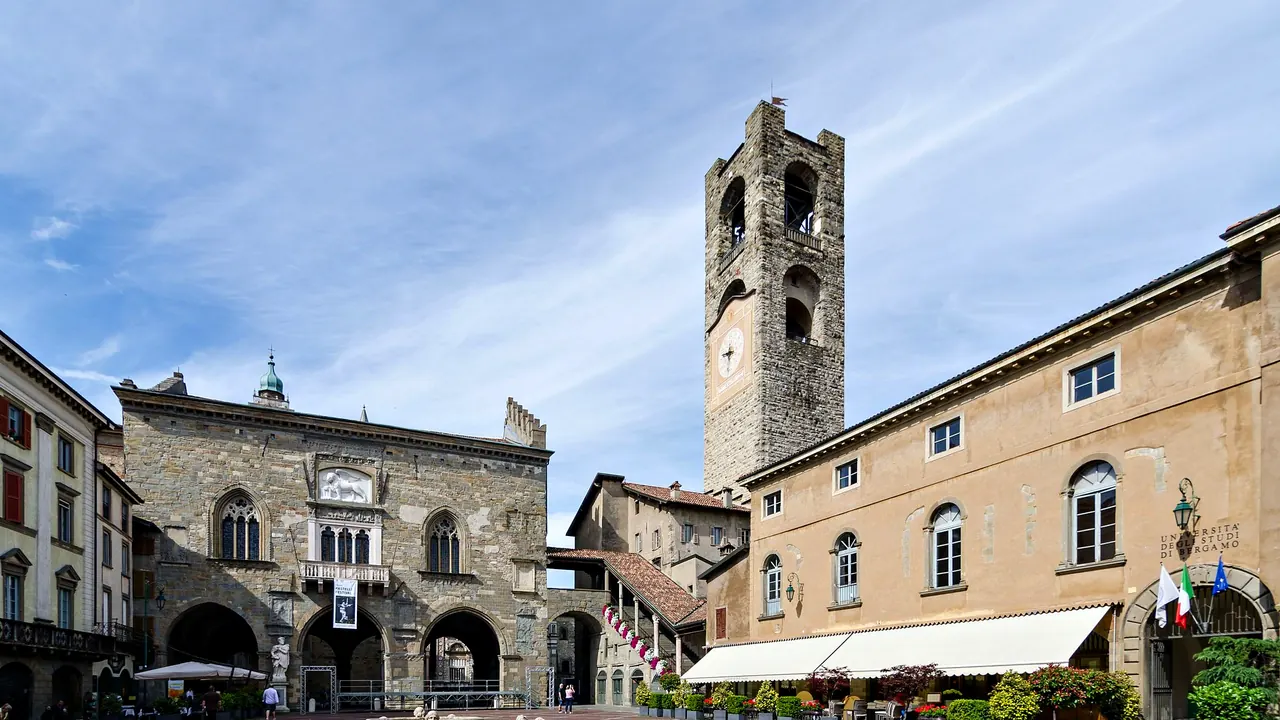
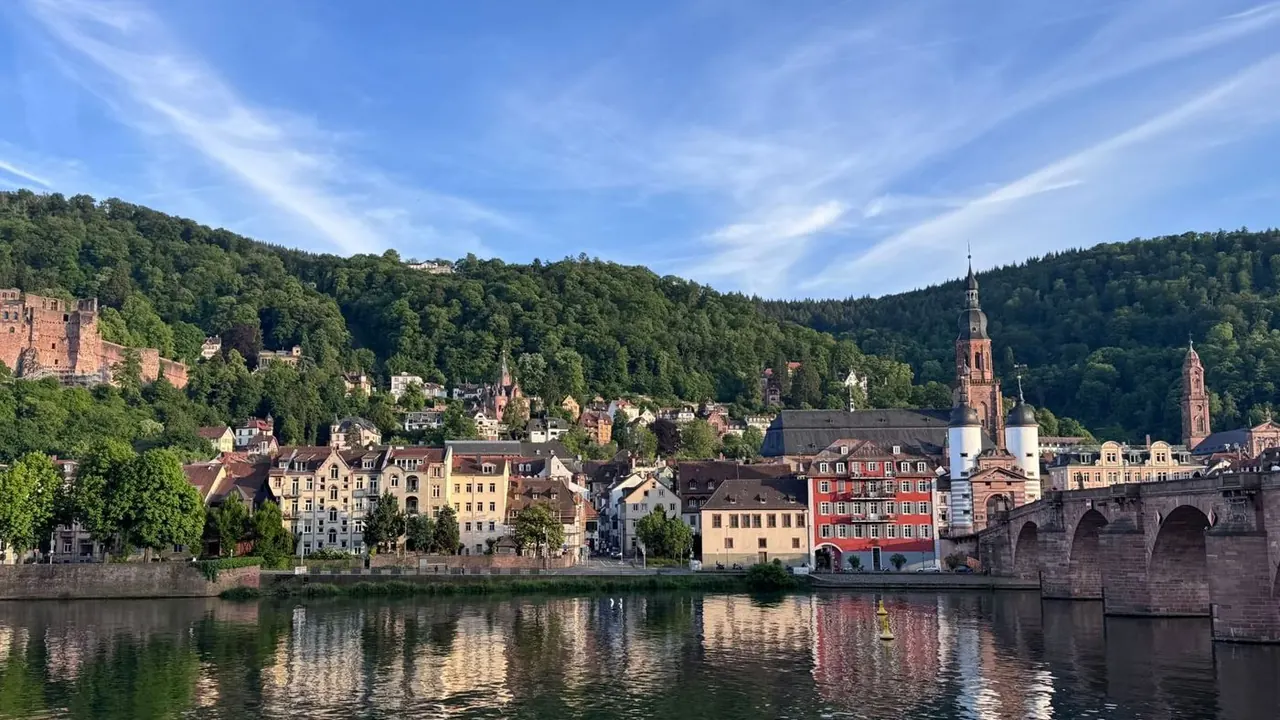
Photos: Bergamo by Steffen Schmitz, CC BY-SA 4.0, cropped; Heidelberg by Kuanling Chen, Pexels License.
Bergamo or Heidelberg?
Our verdict in twelve categories, each scored against the same fixed benchmark cities, and the climate month by month, so you can choose for your trip.
Choose Bergamo for
- beaches
- food and drink
- nature and the outdoors
Bergamo suits travellers who want a beautiful base and plenty to do beyond it. The walled Città Alta and the Accademia Carrara fill a day or two, the Lombard table of casoncelli, polenta and valley cheeses is the stronger of the two, and then the lakes, Milan and the Orobie Alps are all within an hour. Walkers, food lovers and anyone touring a whole region will get more from it, and it is a little kinder on the budget.
Choose Heidelberg for
- families
- nightlife
- getting around
Heidelberg is the gentler, more student-flavoured choice. A red sandstone castle ruin looks down on a riverside old town that Germany's oldest university has shaped for centuries, and wine country starts at the edge of town. Families have more on the doorstep here, with the zoo, the Königstuhl funicular and the Speyer technology museum close by. In term time, evenings along the Untere Strasse also run a little later than Bergamo's aperitivo hour.
Scoreboard
Twelve categories on one fixed scale from 0 to 100. The shaded stretch is the gap between the two.
Your match
Pick a travel style or drag the sliders, and both match scores follow your weighting.
Wins on beaches and food and drink with your weighting.
Wins on families and nightlife with your weighting.
What matters to you?
Category by category
What the scores mean for a trip.
Beaches & swimming
Neither city is a beach destination, but Bergamo has the better summer swimming. Lake Iseo's lidos around Sarnico and Lovere, and the Lecco arm of Lake Como, make a proper day out on grass or pebble shores, with clear lake water warm enough by July.
Heidelberg has much less to offer. The Neckar is not for swimming, so on hot afternoons the choice is the town's outdoor pools or the gravel-pit lakes on the Rhine plain, about half an hour away.
Food & drink
Bergamo is the better place to eat. Its mountain cooking has real identity: casoncelli in butter and sage, polenta with braised game, and cheese counters in the upper town stocked with Taleggio, Branzi and Strachitunt from the valleys. Franciacorta sparkling wine comes from just over the provincial border, and there is serious fine dining in the province if you want it.
Heidelberg's kitchen is heartier and less distinctive: Maultaschen, Schäufele, Flammkuchen, and white asparagus in spring. Its strength is the glass, with Riesling and Pinot from the Bergstrasse and the Palatinate. The best meals are found in Neuenheim or the village wine taverns rather than along the Hauptstrasse, where much of the food is aimed at day-trippers.
Culture & sights
Bergamo has more to see. The Città Alta is a nearly complete walled hilltop town inside UNESCO-listed Venetian walls, with Piazza Vecchia, Santa Maria Maggiore and the marble front of the Cappella Colleoni grouped together. Below the hill, the Accademia Carrara holds Raphael, Bellini and Mantegna, a collection Heidelberg has nothing to match.
Heidelberg's appeal is more about atmosphere and story than great art. The castle ruin with its Great Tun, the Old Bridge, and the graffiti-covered Student Prison of the old university make a compact, very photogenic town. Both take a day or two to see properly.
Nightlife
Both are quiet places for going out, and Heidelberg is a little livelier. In term time the small pubs on the Untere Strasse fill up late, old student taverns sit nearby, and a few clubs and late bars stand out towards the station.
Bergamo's evening centres on a long aperitivo, then wine bars around Via XX Settembre and Borgo Santa Caterina, or drinks on the walls in summer. It usually winds down around midnight, and anyone wanting a club goes to Milan.
Nature & outdoors
Bergamo is the place for serious outdoor days. The Alps start almost at the city's edge, and Val Seriana and Val Brembana lead to high Orobie lakes, rifugi and real summer hiking, with small ski areas such as Foppolo in winter. Lake Iseo and Lake Como add sailing and lakeside cycling, though for most of the mountains a car makes life much easier.
Heidelberg's countryside is gentler but easier to reach. You can walk from the Altstadt into the forest via the Philosophers' Walk, take the funicular up the 568m Königstuhl, or follow the Neckar cycle path past castles. It suits easy walking and cycling rather than mountain days.
Day trips
Both make excellent bases, and Bergamo's surroundings are the more famous. Milan's Duomo and Last Supper are under an hour away by train, Lake Como and Lake Iseo with car-free Monte Isola are closer still, and Verona and Cremona are each about an hour and a half away.
Heidelberg's outings are quieter but rich in history. Speyer's Romanesque cathedral, Schwetzingen's palace gardens, Worms, Lorsch and Maulbronn are all easy trips, and the Palatinate wine villages or a long day in Strasbourg add variety. Few of them are as well known as what Bergamo has within reach.
Good for families
Heidelberg has a little more for children close to town. The zoo by the Neckar, river boat trips, and the funicular up to a small fairy-tale park on the Königstuhl are all easy outings. The Technik Museum Speyer, where children can climb into a space shuttle and a submarine, is only half an hour away.
Bergamo is just as calm and safe, and children love its two funiculars and a gelato on the walls. Its biggest draws, Leolandia and the Le Cornelle wildlife park, are outside the city, though. Both old towns are cobbled and hard work with a pushchair.
Getting around
The two are about equally easy to get around, but in different ways. Bergamo is built on two levels: funiculars link the lower town to the Città Alta and on up to San Vigilio, and the airport is only a short bus ride away. To reach the upper valleys or the lake shores, though, a car saves real time.
Heidelberg is one long walkable strip along the Hauptstrasse, although the station is far enough west that most visitors take a tram in. Its advantage is a single fare system for trams, buses and S-Bahn across the Rhine-Neckar area, so day trips without a car are simpler here.
Shopping & style
Shopping is modest in both, and what you take home differs. In Bergamo, the narrow main lane of the Città Alta is full of cheese shops, delicatessens and wine sellers, and Milan is close for fashion.
Heidelberg's long pedestrian Hauptstrasse goes from department stores to souvenir shops selling cuckoo clocks and Studentenkuss chocolates, with independent bookshops in the side lanes. Frankfurt is the nearby city for luxury shopping.
Affordability
Bergamo is the cheaper stay. Hotels in the lower town are fairly priced, which is why many people use it as a base for touring Lombardy by train, and only rooms inside the Città Alta cost noticeably more.
In Heidelberg, rooms are the expense: there are not many of them, and congresses and graduations fill them, so visitors often sleep in Mannheim instead. Meals in student cafés and the regional travel ticket help to balance this.
Live music & performing arts
Both have a solid programme for their size, with different strengths. Bergamo is the town for opera lovers: Donizetti was born here, the Teatro Donizetti holds an autumn festival of his works, Bergamo Jazz runs each spring, and La Scala is an easy evening trip.
Heidelberg offers a broader mix through its season: opera, drama and dance at the municipal theatre, chamber music at the Heidelberger Frühling, and summer plays and concerts in the castle courtyard.
Wellness & relaxation
Bergamo has the better spa trips. San Pellegrino Terme, a Belle Époque resort about forty minutes up Val Brembana, has a thermal spa in grand historic surroundings, and the sulphur springs at Trescore Balneario have been used since Roman times.
Heidelberg's thermal baths are further out, in the Kraichgau, and Baden-Baden is about an hour away. In town, slowing down means evenings on the Neckar meadows in Neuenheim or forest paths above the Philosophers' Walk.
When should you go?
Pick your month. The climate figures are measured averages, not a forecast.
Bergamo in July
Heidelberg in July
Daytime high, °C
Rainfall in the month, mm
Where the figures come from
Bergamo has no rain gauge within 25 km of the centre, so its rainfall comes from a gridded climate dataset read at the city rather than from a gauge further away.
Bergamo's sunshine is measured 64 km from the centre, at Lugano.
Temperature and rainfall are climate normals, averaged over the years shown. Bergamo: 1991-2020 normals, Bergamo / Orio Al Serio (3.9 km from centre). Heidelberg: 1991-2020 (sunshine 1971-2000) normals, Heidelberg (4.5 km from centre).
Bergamo is the warmer of the two. July and August reach 29°C, warm enough for a lake day at Iseo or Como, though middays in the lower town can feel heavy for walking. Rain is the catch. From May right through to November it is a wet city, and autumn is the wettest stretch, so June and early September give the best warmth only if you pack for showers. March and April are milder and noticeably drier, good for walking the walls and the Città Alta. Winter is cold but the driest season, and still fairly bright.
Heidelberg peaks nearer 26°C, so midsummer stays comfortable for the Philosophers' Walk and the Neckar cycle path. Its rain is lighter and spread more evenly through the year. The two differ most in winter: Heidelberg gets only about 37 hours of sunshine in January, against Bergamo's 124, so a cold-season visit there is much greyer. From May to September Heidelberg is the more settled of the two, while Bergamo has the brighter winter and early spring.
Which traveller are you?
On an outdoors trip, Bergamo wins clearly. The Colli di Bergamo climb straight from the upper town, and Val Brembana and Val Seriana run into the Orobie Alps, with rifugi and high lakes. Heidelberg's Odenwald and Neckar paths are wooded hills rather than mountains.
On a family trip with children, Heidelberg is the easier choice. The zoo by the Neckar, the fairy-tale park on the Königstuhl and the climb-in aircraft at Speyer are all close by. Bergamo's best children's outings, Leolandia and Le Cornelle, mean driving out of town.
On a trip on a tight budget, your money goes further in Bergamo. Lower-town hotels are fairly priced, and the buses and funicular cost little. Heidelberg's small stock of rooms pushes many visitors to stay in Mannheim, although its student cafés keep meals cheap.
Before you go
| Measure | Bergamo | Heidelberg |
|---|---|---|
| Official language | Italian | German |
| Currency | Euro (EUR) | Euro (EUR) |
| Sockets | CFL230 V, 50 Hz | CF230 V, 50 Hz |
| Driving side | Right | Right |
| Time zone | UTC+1, UTC+2 in summer | UTC+1, UTC+2 in summer |
| Emergency number | 112 | 112 |
| Elevation | 249 m | 114 m |
| Main airport | Il Caravaggio International Airport (BGY)4 km from centre146 non-stop destinations | Frankfurt Main Airport (FRA)69 km from centre281 non-stop destinations |
| Public holidays this year | 13 days | 12 days |
By the numbers
| Measure | Bergamo | Heidelberg |
|---|---|---|
| City population | 119,534 | 156,092 |
| People per km² | 2,973 | 1,433 |
| Museums within 10 km | 21 | 17 |
| UNESCO World Heritage sites within 50 km | 6 | 4 |
Where else could you go?
Every comparison below shares a destination with this one, so you can follow Bergamo or Heidelberg somewhere new.
- Milanvs Bergamo
- Comovs Bergamo
- Luganovs Bergamo
- Frankfurtvs Heidelberg
- Stuttgartvs Heidelberg
- Baden-Badenvs Heidelberg