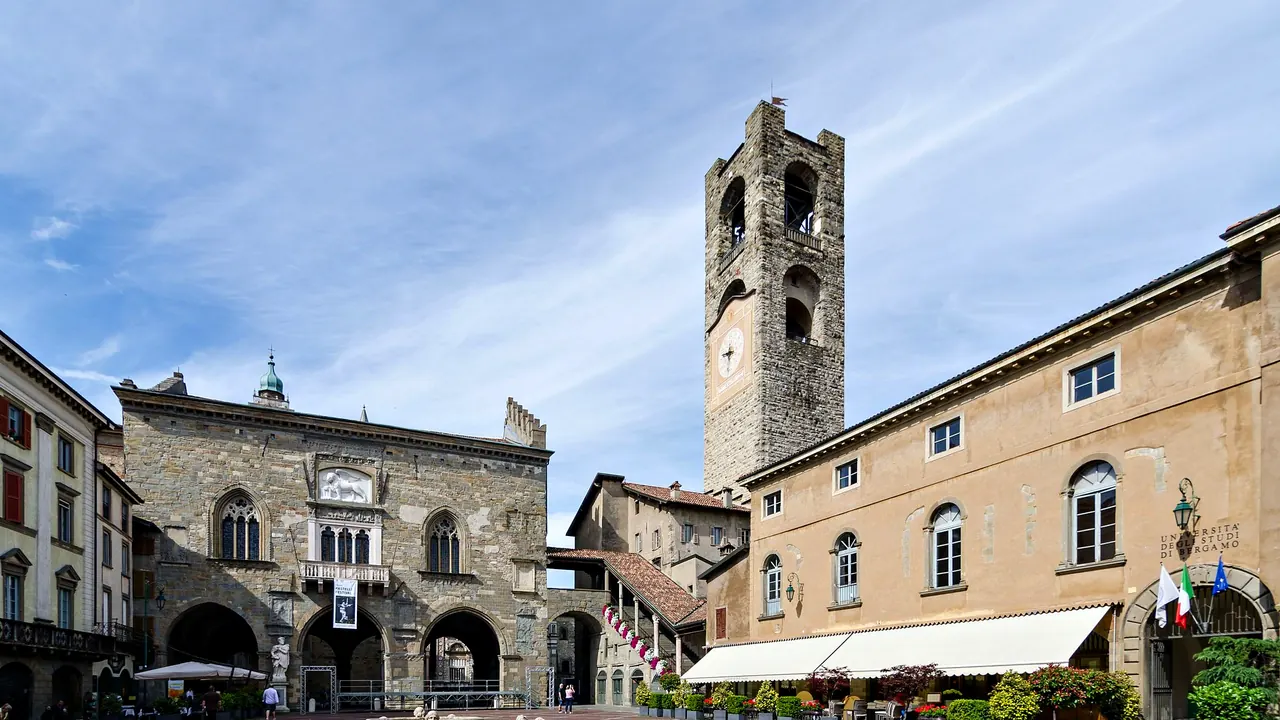
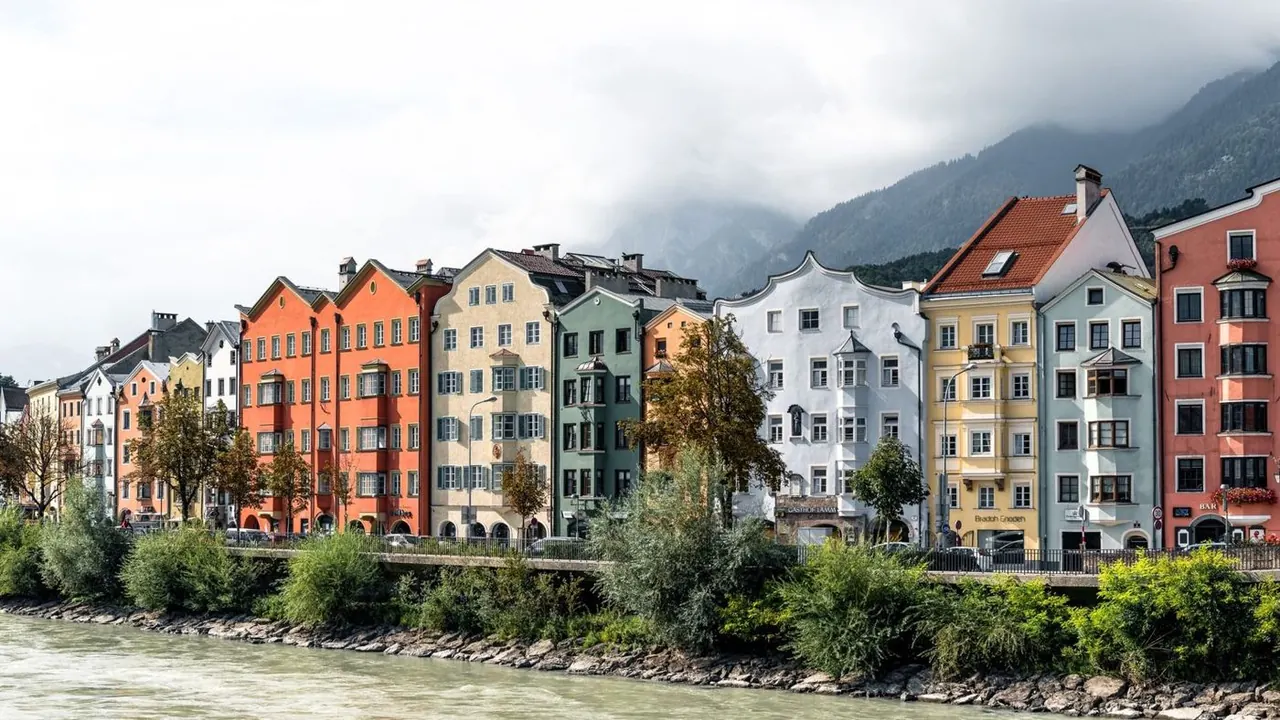
Photos: Bergamo by Steffen Schmitz, CC BY-SA 4.0, cropped; Innsbruck by Wolfgang Weiser, Pexels License.
Bergamo or Innsbruck?
Our verdict in twelve categories, each scored against the same fixed benchmark cities, and the climate month by month, so you can choose for your trip.
Choose Bergamo for
- food and drink
- day trips
- prices
Bergamo suits a traveller who wants a walled hilltop town, a serious picture gallery and good Lombard cooking, and who plans to spend part of the trip elsewhere. Milan, the lakes, Brescia and Verona are all within easy train reach. Lower-town hotels also cost less than an Alpine resort, so it works well as a base for a week in northern Italy.
Choose Innsbruck for
- nature and the outdoors
- getting around
- families
Choose Innsbruck if the mountains are the point. Ridges, huts and ski slopes start a short ride from the old town, you can get around the compact centre without a car, and children get an Alpine zoo and gentle trails rather than museums. The food and sights are plainer than Bergamo's, but nowhere in Lombardy puts you on a high ridge before lunch with so little effort.
Scoreboard
Twelve categories on one fixed scale from 0 to 100. The shaded stretch is the gap between the two.
Your match
Pick a travel style or drag the sliders, and both match scores follow your weighting.
Too close to call, 2 points apart
Wins on food and drink and day trips with your weighting.
Wins on nature and the outdoors and getting around with your weighting.
What matters to you?
Category by category
What the scores mean for a trip.
Beaches & swimming
Neither city has a sea, so in both of them swimming means a lake. Bergamo does a little better. Lake Iseo has lidos around Sarnico and Lovere, the Lecco arm of Como is close as well, and its warmer summers give a longer bathing season, though the shores are pebble, grass and concrete rather than sand.
Innsbruck has small, shallow lakes on the plateaus, such as the Lanser See, which are fine for an afternoon in July and August. The Achensee is lovely but stays too cold for most swimmers, and the mountain season is short.
Food & drink
Both cities cook mountain food, but Bergamo's is the richer table. Casoncelli with butter and sage, polenta with braised game, and valley cheeses such as Taleggio and Strachitunt give it real depth. Valcalepio and Franciacorta fill the glass, and the province has a serious fine-dining tier.
In Innsbruck the best meals are often Gröstl or Kaspressknödel at a hut up the mountain, where the view does much of the work. In town the pleasure is strudel in the coffee houses. The inns around the Golden Roof cater mostly to tour groups, and there is less choice overall.
Culture & sights
Bergamo has the finer historic ensemble. The Città Alta is an almost complete walled town inside UNESCO-listed Venetian ramparts, with Piazza Vecchia, Santa Maria Maggiore and the Cappella Colleoni side by side. Below the hill, the Accademia Carrara holds Italian painting of real weight.
Innsbruck's heritage is Habsburg rather than Renaissance: the Golden Roof, the Hofburg, and Maximilian's tomb in the Hofkirche with its bronze giants. Ambras Castle adds a cabinet of curiosities and an armour collection, and the Bergisel ski jump brings modern architecture that Bergamo does not have.
Nightlife
Neither is a nightlife city, but Innsbruck stays out later. Bars and small clubs fill the brick arches under the railway viaduct and stay open late at weekends, the university keeps them busy, and in winter visitors also have après-ski in the resorts.
In Bergamo, an evening is a long aperitivo followed by wine bars around Via XX Settembre and Borgo Santa Caterina, or summer drinks on the walls of the Città Alta. Most of it is over by midnight, and anyone who wants clubs goes to Milan.
Nature & outdoors
Bergamo has good mountains on its doorstep. The Colli di Bergamo park climbs straight up from the upper town, and the Orobie valleys have rifugi and high lakes, though you need a car for most of them. Lakes Iseo and Como add sailing and cycling.
Innsbruck is in another league. A funicular and cable cars take you from the old town to the Nordkette ridge, at about 2,300m, in under half an hour, and the Karwendel opens up behind it. Glaciers, via ferratas, paragliding and rafting are all close, and the Stubai Glacier has snow for most of the year.
Day trips
Bergamo is the better base. Milan is under an hour away, Lake Iseo and the Lecco arm of Como are even closer, and Crespi d'Adda, Brescia, Cremona and Verona all make easy days out. You can fill a week without repeating a theme.
Innsbruck reaches into three countries, but the bigger trips take longer. Hall in Tirol and Rattenberg are nearby, while Munich and Salzburg each take a little under two hours by train. Bolzano and Merano lie over the Brenner Pass, and the Bavarian castles are best reached by car.
Good for families
Both cities are calm, safe and small. Innsbruck has the edge because the outdoors itself entertains children. The Alpenzoo, with its ibex and bears, is on the funicular line, summer brings adventure trails, playgrounds by the huts and family swims in the plateau lakes, and winter has gentle slopes and ski schools.
In Bergamo, children enjoy the funicular rides and walks along the walls, but the steep cobbles are hard work with a buggy. The best outings, a long-established theme park near the Adda and the Le Cornelle wildlife park, are outside the city.
Getting around
Innsbruck is easier to get around. The centre is flat and compact, so the old town, the Hofburg and the river are minutes apart on foot. Trams reach Igls and the Stubai valley, and the funicular from the old town connects straight to the Nordkette lifts, so you rarely need a car.
Bergamo works well too, but it is built on two levels. Funiculars and buses carry you between the lower town and the Città Alta, because the climb on foot is steep. Trains serve Milan and Brescia directly, but the upper valleys and lake shores are easier by car.
Shopping & style
In Bergamo, what you take home is mostly food. The main lane of the Città Alta is lined with cheese shops, delicatessens and wine sellers, so Taleggio, salumi and Valcalepio fill the bag. Milan's fashion streets are under an hour away for anything more.
Innsbruck sells the Tyrol instead: loden jackets, dirndls, woodcarvings and schnapps in the old-town arcades, with Speck to bring home too. Its outdoor and ski shops are excellent, so it is the better place to buy boots or a jacket for the mountains.
Affordability
Bergamo is the cheaper place to stay. Lower-town hotels and trattorias are fairly priced for northern Italy, and the funicular and buses cost little, although rooms inside the Città Alta are dearer.
Innsbruck carries an Alpine premium, which is highest in the ski season and around the Christmas markets, and cable car tickets add up quickly on an active trip. Guest cards that bundle lifts with transport help, and spring and autumn are noticeably cheaper.
Live music & performing arts
The two cities have evenly matched provincial stages, each with its own speciality. Bergamo's is opera, rooted in Donizetti, who was born there. The Teatro Donizetti's autumn festival of his works draws devoted opera lovers, Bergamo Jazz fills the spring, and La Scala is an easy evening trip away.
Innsbruck's strength is early music. Its summer festival uses historic settings such as the Spanish Hall at Ambras Castle, and the Landestheater adds opera, operetta and dance, with folk evenings of yodelling and brass on the side.
Wellness & relaxation
Bergamo has the edge because historic spa towns are close by. San Pellegrino Terme is a Belle Époque resort up Val Brembana, and Trescore Balneario has sulphur springs used since Roman times. The quiet early mornings in the Città Alta help you slow down as well.
Innsbruck has no springs of its own, so relaxing there means a hotel sauna with a mountain view up in Igls, or a day at the large thermal complexes in the Ötztal or Zillertal, about an hour away.
When should you go?
Pick your month. The climate figures are measured averages, not a forecast.
Bergamo in July
Innsbruck in July
Daytime high, °C
Rainfall in the month, mm
Where the figures come from
Bergamo has no rain gauge within 25 km of the centre, so its rainfall comes from a gridded climate dataset read at the city rather than from a gauge further away.
Bergamo's sunshine is measured 64 km from the centre, at Lugano.
Temperature and rainfall are climate normals, averaged over the years shown. Bergamo: 1991-2020 normals, Bergamo / Orio Al Serio (3.9 km from centre). Innsbruck: 1991-2020 normals, Innsbruck-Flughafen (3.3 km from centre).
Bergamo is warmer and sunnier in high summer, reaching 29°C in July and August. That is good lake weather but sticky for climbing the lanes of the Città Alta, so May and late September are kinder for walking, though both bring showers. The wettest stretch is autumn, when September to November each bring well over 100mm. Winters are cool and grey but fairly dry.
Innsbruck is a few degrees cooler all year and peaks around 26°C, so summer hiking stays comfortable. July and August are its wettest months, though, with 144mm in August. Autumn is the reverse of Bergamo's: much drier, and October is also sunnier, which makes September and October good months for walking. The cold winters, with highs of about 4°C, belong to skiers.
Which traveller are you?
For an outdoors trip, Innsbruck is the stronger choice by a distance. Cable cars from the old town reach the Nordkette ridge with the Karwendel behind it, and you can go skiing, climb via ferratas or hike from hut to hut without a car. Bergamo's Orobie valleys are good but harder to reach.
On a culture and arts trip, Bergamo has more to offer. The walled Città Alta, the Cappella Colleoni and the Raphael and Bellini paintings in the Accademia Carrara outweigh Innsbruck's Habsburg sights. Milan's Last Supper and the Brera are also less than an hour away by train.
For a trip on a tight budget, Bergamo is easier on the wallet. Its lower-town hotels and trattorias are fairly priced and the funicular costs little. Innsbruck adds an Alpine resort premium, and cable car tickets mount up quickly on active days.
Before you go
| Measure | Bergamo | Innsbruck |
|---|---|---|
| Official language | Italian | German, Austrian Sign Language |
| Currency | Euro (EUR) | Euro (EUR) |
| Sockets | CFL230 V, 50 Hz | CF230 V, 50 Hz |
| Driving side | Right | Right |
| Time zone | UTC+1, UTC+2 in summer | UTC+1, UTC+2 in summer |
| Emergency number | 112 | 112 |
| Elevation | 249 m | 574 m |
| Main airport | Il Caravaggio International Airport (BGY)4 km from centre146 non-stop destinations | Innsbruck Airport (INN)4 km from centre40 non-stop destinations |
| Public holidays this year | 13 days | 16 days |
By the numbers
| Measure | Bergamo | Innsbruck |
|---|---|---|
| City population | 119,534 | 132,499 |
| People per km² | 2,973 | 1,263 |
| Museums within 10 km | 21 | 28 |
| UNESCO World Heritage sites within 50 km | 6 | 1 |
Where else could you go?
Every comparison below shares a destination with this one, so you can follow Bergamo or Innsbruck somewhere new.
- Milanvs Bergamo
- Comovs Bergamo
- Luganovs Bergamo
- Munichvs Innsbruck
- Cortina d'Ampezzovs Innsbruck
- Veronavs Bergamo