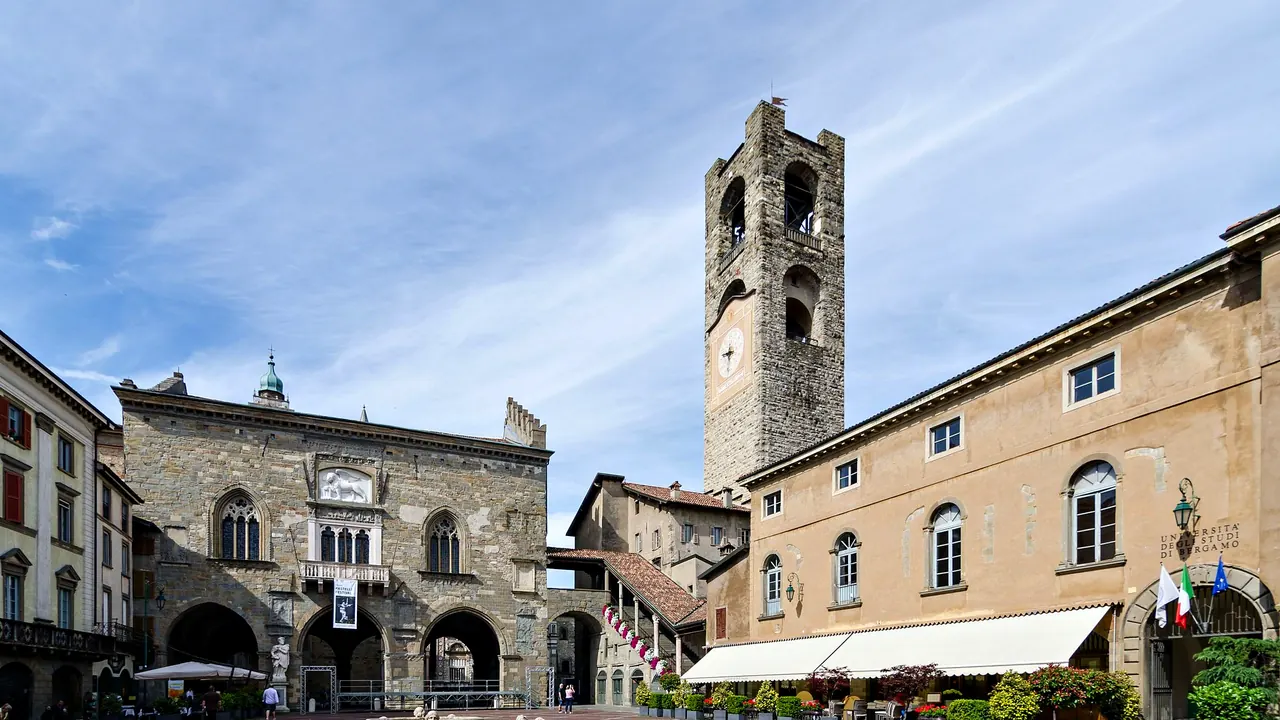
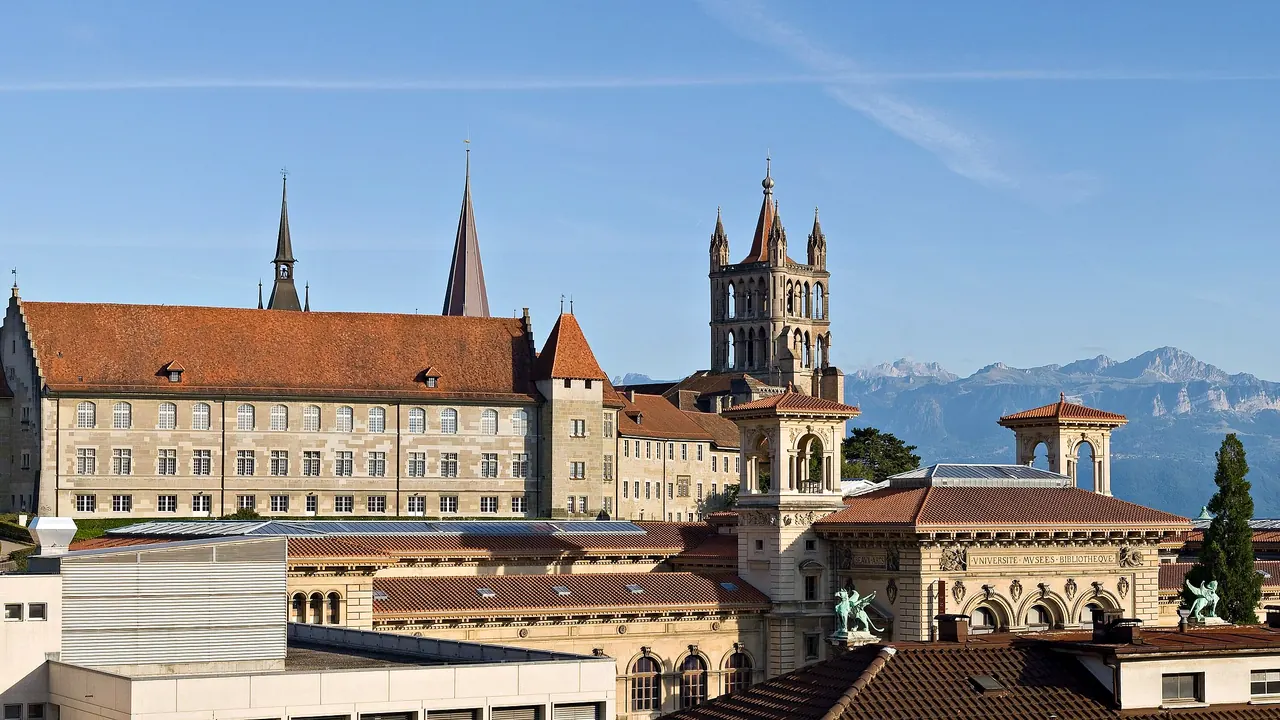
Photos: Bergamo by Steffen Schmitz, CC BY-SA 4.0, cropped; Lausanne by Christian Mehlführer, CC BY-SA 3.0, cropped.
Bergamo or Lausanne?
Our verdict in twelve categories, each scored against the same fixed benchmark cities, and the climate month by month, so you can choose for your trip.
Choose Bergamo for
- prices
- culture and sights
- food and drink
Bergamo suits travellers who want an old walled town to wander, Lombard cooking and a base for rail trips to Milan, Verona and the lakes. The Città Alta gives it the stronger set of sights, and staying, eating and getting about cost far less than across the Alps.
Choose Lausanne for
- live music and the arts
- nature and the outdoors
- families
Lausanne is the pick when the landscape matters most. You get the lake, the Lavaux vineyard terraces and the Alps within an hour, and an excellent train network means you never need a car. It also has more for children, more going on after dark and a much stronger stage for dance and theatre, as long as the budget can take Swiss prices.
Scoreboard
Twelve categories on one fixed scale from 0 to 100. The shaded stretch is the gap between the two.
Your match
Pick a travel style or drag the sliders, and both match scores follow your weighting.
Too close to call, 1 point apart
Wins on prices and culture and sights with your weighting.
Wins on live music and the arts and nature and the outdoors with your weighting.
What matters to you?
Category by category
What the scores mean for a trip.
Beaches & swimming
Neither city has a real beach, but Lausanne's swimming starts right on the waterfront. The Bellerive lido and the lawns at Vidy and towards Lutry are a short ride from the centre, so a swim fits easily into a summer afternoon.
From Bergamo, swimming means a day out to the lidos of Lake Iseo or the Lecco arm of Lake Como. The shores at both are pebble, grass and concrete rather than sand, and the season is short.
Food & drink
The two are level, but they suit different appetites. Bergamo is mountain pasta and cheese: casoncelli with butter and sage, polenta with braised meats, and the cheese counters of the upper town selling Taleggio and Strachitunt. Lower-town trattorias make it easy to eat well without spending much.
Lausanne's table is lake perch, papet vaudois and winter fondue, and wine is what makes it special: tasting Chasselas with the growers in the Lavaux caveaux. Both cities have a strong fine-dining tier, but in Lausanne a cheap, ordinary meal takes more finding.
Culture & sights
Bergamo has the richer set of sights, because the walled Città Alta is itself the attraction. Its Venetian walls are UNESCO-listed, and Piazza Vecchia, Santa Maria Maggiore and the marble front of the Cappella Colleoni sit close together. Below the hill, the Accademia Carrara holds Raphael, Bellini and Mantegna.
Lausanne's old town is smaller and steeper, centred on the Gothic cathedral and its painted portal. Its strength lies in the museums: the Olympic Museum at Ouchy, the cluster at Plateforme 10 and the unusual Collection de l'Art Brut.
Nightlife
Lausanne has more of a night out, thanks to its large student population and the Flon, a valley of old warehouses that now holds clubs and late bars, busiest at weekends. Ouchy's waterfront fills up on summer evenings.
Bergamo's evenings are calmer. A long aperitivo around Borgo Santa Caterina or drinks on the walls of the upper town usually end near midnight, and anyone after clubs takes the train to Milan.
Nature & outdoors
Both cities have mountains close by, but Lausanne makes them easier to reach and adds the lake. The Alps rise across the water, and the Lavaux terraces offer one of Switzerland's loveliest vineyard walks. Trains reach skiing and hiking at Villars and Les Diablerets, or the Jura ridges, in about an hour.
Bergamo starts well, with the wooded Colli park climbing from the upper town to San Vigilio. The Orobie valleys beyond have rifugi and serious summer hiking, but they are best reached by car, and its ski areas are small.
Day trips
Both make excellent bases, so the choice comes down to what you want to see. From Bergamo, the trips are to Italian cities of art: Milan's Last Supper, Verona, Cremona's violin workshops, Brescia and Mantua, plus Lake Iseo's car-free Monte Isola.
From Lausanne, the outings are lakeside towns and Swiss old towns: Montreux and the Château de Chillon, Bern, Gruyères and Murten. Boats also cross to Évian on the French shore, and almost none of these trips needs a car.
Good for families
In Bergamo, the main event for children is the ride up the hill. One funicular climbs to the Città Alta and a second goes on to San Vigilio, and the ramparts make a good place to run about between the two. Beyond that, the city has little made for children, so bigger days out mean driving to the theme park by the Adda or the wildlife park below the hills. The cobbled slopes of the upper town are tiring with a buggy.
Lausanne has more for children within the city itself, which makes it easier to fill several days without a car. On a wet day there are the hands-on displays at Ouchy or the river and lake creatures on the northern edge of town. On a dry one there is the wooden lookout tower in the Sauvabelin woods, and in summer the pools and lawns at Bellerive. The metro takes most of the strain out of the hills, though pushing a buggy up the stepped streets is still hard work.
Getting around
Lausanne is easier to get around. The m2 metro climbs more than 300m from the lakeshore to the upper town, so the steep slopes stop being a problem, and punctual Swiss trains and lake boats reach the wider region without a car.
Bergamo works well within the city, with a funicular linking the lower town and the Città Alta and a short bus ride to the airport. Direct trains run to Milan and Brescia, but the upper valleys and most lake shores are much quicker by car.
Shopping & style
Neither is a shopping destination, and each has its own speciality. In Bergamo, the best buys are edible: the delicatessens and cheese shops along the main lane of the Città Alta, with fashion chains below on the Sentierone.
In Lausanne, Rue de Bourg is the place for Swiss watches, jewellery and chocolate. Serious fashion shoppers do better elsewhere, and from Bergamo that means Milan, under an hour away.
Affordability
This is the biggest gap between the two. Bergamo is a moderately priced Italian city, where lower-town hotels and trattorias are fair value and the funicular and buses cost little. Only the Città Alta and summer weekends push prices up.
Lausanne is very expensive. Hotels, meals, wine and taxis all cost far more, so a stay of the same length costs much more, and budget travellers end up picnicking by the lake.
Live music & performing arts
Lausanne has the stronger stage, and dance leads it. It is home to the Béjart Ballet and the Prix de Lausanne, and the Théâtre de Vidy is internationally known for contemporary work. A full opera season and a respected chamber orchestra add to it, and the Montreux Jazz Festival is a short train ride away in July.
Bergamo is built around opera and Donizetti, who was born there. The autumn Donizetti festival at the Teatro Donizetti and the spring Bergamo Jazz festival are its highlights, and La Scala in Milan is close enough for an evening.
Wellness & relaxation
Bergamo's spa outings lead to historic resort towns, while in Lausanne wellness centres more on the grand lakeside hotels and the region's private retreats. From Bergamo, San Pellegrino Terme is a Belle Époque spa town about forty minutes up Val Brembana, and Trescore Balneario has sulphur springs that have been used since Roman times. Back in town, the Città Alta is at its quietest in the early morning and evening.
Lausanne has thermal water within easy reach too: Yverdon-les-Bains is under half an hour by train, and Lavey-les-Bains up the Rhône valley has the hottest springs in Switzerland. The centre is busier and steeper than Bergamo's upper town, so for calm you head to the edges, along the promenades at Ouchy and Vidy.
When should you go?
Pick your month. The climate figures are measured averages, not a forecast.
Bergamo in July
Lausanne in July
Daytime high, °C
Rainfall in the month, mm
Where the figures come from
Bergamo has no rain gauge within 25 km of the centre, so its rainfall comes from a gridded climate dataset read at the city rather than from a gauge further away.
Bergamo's sunshine is measured 64 km from the centre, at Lugano.
Lausanne's temperatures are measured 40 km from the centre, at Payerne.
Lausanne has no rain gauge within 25 km of the centre, so its rainfall comes from a gridded climate dataset read at the city rather than from a gauge further away.
Temperature and rainfall are climate normals, averaged over the years shown. Bergamo: 1991-2020 normals, Bergamo / Orio Al Serio (3.9 km from centre). Lausanne: 1991-2020 (sunshine 1961-1990) normals, Payerne (39.7 km from centre).
Bergamo has the hotter summer. Highs reach 29°C in July and August, which is warm enough for long lake days but can be heavy for climbing the lanes of the upper town at midday. Lausanne peaks around 26°C, so walking is comfortable all summer. Both are good for lake swimming in July and August. Late spring and September are the best months for sightseeing in both cities, though Bergamo's rain builds through autumn to about 129mm in October.
Winter is where the two differ most. Bergamo is cold but fairly bright. Lausanne is a little colder and much greyer, with only about 44 hours of sunshine in January against Bergamo's 124, though the mountains above it often sit in sun above the fog. Lausanne's rain is spread evenly through the year rather than bunched into autumn.
Which traveller are you?
On a trip on a tight budget, Bergamo wins clearly. Lower-town hotels, trattorias, aperitivo bars and the funicular are all fairly priced, while in Lausanne even a simple lunch adds up and many visitors fall back on supermarket picnics.
For an outdoors trip, Lausanne is the better base. The Lavaux vineyard paths begin at the edge of town, and there is sailing on the lake. The Vaud Alps and the Jura are both within an hour by train, whereas Bergamo's mountain valleys work best with a car.
On a family trip with children, Lausanne offers more within the city. It has the hands-on Olympic Museum, an aquarium, pedal boats and animals at Sauvabelin, and paddle steamers on the lake. Bergamo's best children's outings, Leolandia and Le Cornelle, lie outside town.
Before you go
| Measure | Bergamo | Lausanne |
|---|---|---|
| Official language | Italian | French, German, Italian, Romansh |
| Currency | Euro (EUR) | Swiss Franc (CHF) |
| Sockets | CFL230 V, 50 Hz | CJ230 V, 50 Hz |
| Driving side | Right | Right |
| Time zone | UTC+1, UTC+2 in summer | UTC+1, UTC+2 in summer |
| Emergency number | 112 | 112 |
| Elevation | 249 m | 495 m |
| Main airport | Il Caravaggio International Airport (BGY)4 km from centre146 non-stop destinations | Geneva International Airport (GVA)52 km from centre150 non-stop destinations |
| Public holidays this year | 13 days | 9 days |
By the numbers
| Measure | Bergamo | Lausanne |
|---|---|---|
| City population | 119,534 | 144,873 |
| People per km² | 2,973 | 3,499 |
| Museums within 10 km | 21 | 31 |
| UNESCO World Heritage sites within 50 km | 6 | 3 |
Where else could you go?
Every comparison below shares a destination with this one, so you can follow Bergamo or Lausanne somewhere new.