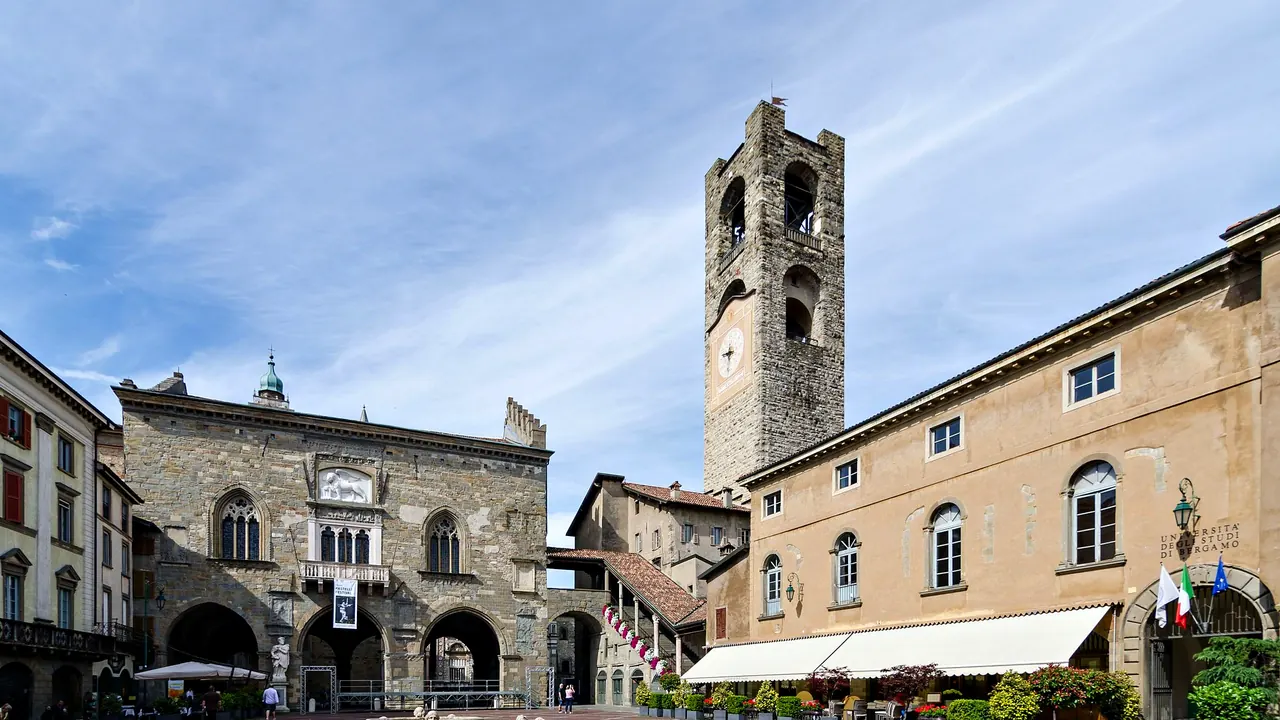
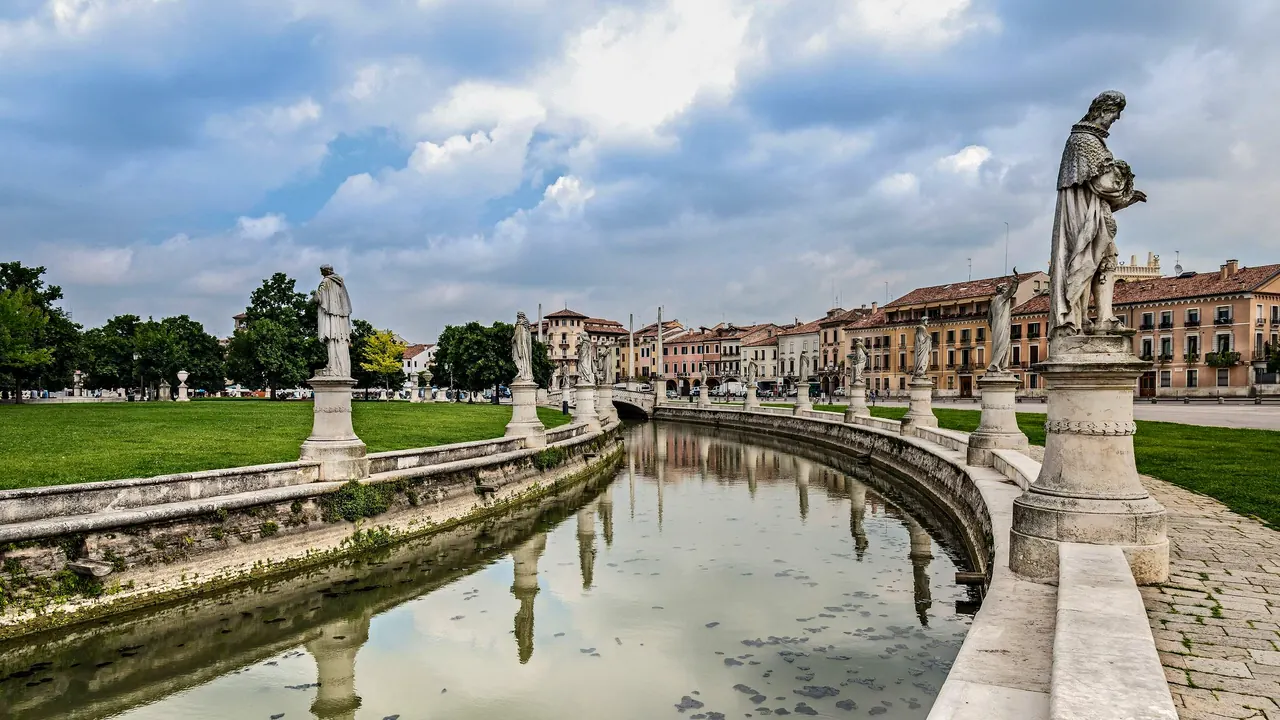
Photos: Bergamo by Steffen Schmitz, CC BY-SA 4.0, cropped; Padua by Didier Descouens, CC BY-SA 4.0, cropped.
Bergamo or Padua?
Our verdict in twelve categories, each scored against the same fixed benchmark cities, and the climate month by month, so you can choose for your trip.
Choose Bergamo for
- nature and the outdoors
- families
- live music and the arts
Bergamo suits travellers who want the mountains and the lakes close at hand. The walled Città Alta gives it one of the most complete old townscapes in Lombardy, the Orobie valleys start just north of town, and families get funiculars, a long-established theme park nearby and plenty of open air. Opera lovers have the added pull of Donizetti's home town.
Choose Padua for
- wellness
- nightlife
- day trips
Padua is the better pick for art and for touring the Veneto by train. Giotto's Scrovegni Chapel and the city's fresco cycles carry more weight than anything in Bergamo, and Venice, Vicenza, Verona and Bologna are all easy rail trips from a flat, walkable centre. The thermal spas of Abano and the livelier student evenings in the squares make it the more relaxed and sociable base.
Scoreboard
Twelve categories on one fixed scale from 0 to 100. The shaded stretch is the gap between the two.
Your match
Pick a travel style or drag the sliders, and both match scores follow your weighting.
Too close to call, 2 points apart
Wins on nature and the outdoors and families with your weighting.
Wins on wellness and nightlife with your weighting.
What matters to you?
Category by category
What the scores mean for a trip.
Beaches & swimming
Neither city is a beach destination, but the water on offer is different. From Bergamo you swim in lakes, at the lidos of Lake Iseo or on the Lecco arm of Como, from pebble, grass or concrete platforms with mountains behind.
From Padua the Adriatic is about an hour away at Sottomarina or the Lido of Venice. There you get real sand and warmer, shallow water that suits small children, but it comes as long flat rows of umbrellas rather than scenery.
Food & drink
Both eat well, and the difference is in the cooking. Bergamo serves mountain food: casoncelli in butter and sage, polenta with game and mushrooms, and valley cheeses such as Taleggio and Strachitunt. It also has a serious fine-dining tier that Padua lacks.
Padua's table is Venetian, with bigoli in duck sauce, baccalà and risotto with peas. Its real draw is the twin morning markets under the Palazzo della Ragione, and the standing spritz in the squares that goes with them.
Culture & sights
Padua has the greater individual masterpieces. Giotto's Scrovegni Chapel and the UNESCO-listed fresco cycles around it, Donatello's work at the Basilica of Saint Anthony, the anatomical theatre at Palazzo Bo and the Orto Botanico add up to a centre of real art-historical weight. The chapel's timed visits are worth booking ahead.
Bergamo's strength is the whole of the Città Alta, a walled hilltop town inside its Venetian ramparts, where Piazza Vecchia, Santa Maria Maggiore and the Cappella Colleoni sit together. The Accademia Carrara below adds a fine collection of paintings. Both cities can be seen in a day or two.
Nightlife
Padua has the livelier evenings, thanks to its large university. During term the squares around Piazza delle Erbe and Piazza dei Signori stay full of spritz drinkers until late, and wine bars fill the lanes of the old ghetto, although the city empties in high summer.
Bergamo's night tends to end around midnight, after aperitivo on Via XX Settembre or drinks on the walls in summer. In both cities clubs are few and sit on the outskirts.
Nature & outdoors
Bergamo has much the better outdoors. The Colli di Bergamo park rises straight out of the upper town, and the Orobie Alps to the north offer serious summer hiking, high lakes and small ski areas such as Foppolo in winter. Lake Iseo and Lake Como add sailing and cycling.
Padua sits on the flat plain. Its nearest hills, the volcanic Euganean cones, are about 15km away, with vineyards and road cycling, and the Brenta towpaths make gentle bike rides. Real mountain walking means a drive to Monte Grappa or the Asiago plateau.
Day trips
Both are excellent bases, but Padua's position is hard to beat. Venice is under half an hour by train and Vicenza a quarter of an hour, and Verona, Treviso, Bologna and Ferrara are all an easy rail ride. The Brenta villas and the walled towns of Este and Montagnana are closer still.
Bergamo's range is more Lombard, with lakes and countryside. Milan is under an hour away, Lake Iseo and Lake Como are nearer, and Crespi d'Adda, Brescia, Cremona and the Franciacorta wine country are easy outings.
Good for families
Bergamo gives children more to do. Riding the funiculars up to the Città Alta and San Vigilio is a treat in itself, and Leolandia and Le Cornelle are both close enough for an easy outing. Its weak point is the steep cobbled lanes, which are hard going with a buggy.
Padua turns that around: the centre is flat, largely pedestrianised and easy with a pushchair, but beyond Prato della Valle and the botanical garden there is little aimed at children. Gardaland and the sea mean an hour or more of travel.
Getting around
Padua is the easier city to get around. Its small, flat centre has arcades that shelter you from the weather, a tram runs to the station and Prato della Valle, and the station's main lines put a string of cities within quick reach without a car.
Bergamo is split over two levels, linked by funiculars and buses, and the climb between them is steep on foot. Its airport is only a short bus ride from the centre, but the upper valleys and the lake shores really need a car.
Shopping & style
Neither is a shopping destination. Both send fashion shoppers to Milan, and Padua's also go to Venice. In Bergamo, chain stores line Via XX Settembre and the Sentierone, while the Città Alta's main lane is the place for cheeses, salumi and Valcalepio wine.
Padua has more independent boutiques and university bookshops, food stalls at its daily markets and a large antiques market in Prato della Valle one Sunday a month.
Affordability
The two cost about the same: moderate for northern Italy, and good value as a base for touring the region. In Bergamo, staying in the lower town keeps costs down, while rooms inside the Città Alta cost more and summer weekends fill up.
Padua's hotel prices jump around its big trade fairs and graduation season. A night there also costs much less than a night in nearby Venice.
Live music & performing arts
Bergamo has the stronger stage life, built around Donizetti, who was born there. The Teatro Donizetti runs an opera season and an autumn festival of his works, the Teatro Sociale stages smaller productions up in the Città Alta, and Bergamo Jazz brings a spring festival with a long history.
Padua's programme is smaller: prose theatre and some opera at Teatro Verdi, plus chamber concerts in the Sala dei Giganti. For major opera, visitors go to the Fenice in Venice or the Arena in Verona.
Wellness & relaxation
Padua is the place for a spa break. Abano Terme and Montegrotto Terme, about 12km away, form one of Europe's largest thermal districts, with hot mineral pools and mud treatments, and many spa hotels take day visitors, so a soak fits easily into an afternoon.
Bergamo's spas are a longer trip away: the Belle Époque spa at San Pellegrino Terme up Val Brembana, or the old sulphur springs at Trescore Balneario. In town, the quiet walls of the Città Alta are its best way to unwind.
When should you go?
Pick your month. The climate figures are measured averages, not a forecast.
Bergamo in July
Padua in July
Daytime high, °C
Rainfall in the month, mm
Where the figures come from
Bergamo has no rain gauge within 25 km of the centre, so its rainfall comes from a gridded climate dataset read at the city rather than from a gauge further away.
Bergamo's sunshine is measured 64 km from the centre, at Lugano.
Padua's temperatures are measured 35 km from the centre, at Treviso / Istrana.
Padua has no rain gauge within 25 km of the centre, so its rainfall comes from a gridded climate dataset read at the city rather than from a gauge further away.
Padua's sunshine is measured 36 km from the centre, at Treviso / S. Angelo.
Temperature and rainfall are climate normals, averaged over the years shown. Bergamo: 1991-2020 normals, Bergamo / Orio Al Serio (3.9 km from centre). Padua: 1991-2020 normals, Treviso / Istrana (35.4 km from centre).
The two cities follow a similar pattern, but Bergamo sits closer to the Alps and runs a little cooler. Midsummer peaks at about 29°C there against 31°C in Padua, which is hot and humid on the plain and the sunnier of the two in July. That makes Padua's summer good for a day at the Adriatic, where the sea reaches about 25°C in July and August, though less comfortable for walking around the centre at midday. For Bergamo, high summer is the season for lake swimming and the mountain valleys.
The rain falls differently. Bergamo is wet in late spring and again from September to November, with October the wettest month at about 129mm, while Padua's rain is spread more evenly through the year. Both are cold and grey in winter. For walking the streets, April, May and early autumn suit Padua best, and May, June and September suit Bergamo if you don't mind the odd wet day.
Which traveller are you?
For an outdoors trip, Bergamo is the clear choice. Woodland paths climb straight from the upper town to San Vigilio, and Val Brembana and Val Seriana lead into the Orobie Alps, with rifugi and high lakes. Padua's flat plain sends hikers out of town.
On a relaxing and wellness trip, Padua comes out ahead. Abano Terme and Montegrotto Terme are a short ride away, with thermal pools and mud treatments open to day visitors, and the arcades and botanical garden keep the pace slow between soaks.
On a family trip with children, Bergamo gives them more to enjoy. The two funiculars are an outing in themselves, Leolandia and the Le Cornelle wildlife park are close by, and the lakes are near. Padua is flat and easy but has little made for children.
Before you go
| Measure | Bergamo | Padua |
|---|---|---|
| Official language | Italian | Italian |
| Currency | Euro (EUR) | Euro (EUR) |
| Sockets | CFL230 V, 50 Hz | CFL230 V, 50 Hz |
| Driving side | Right | Right |
| Time zone | UTC+1, UTC+2 in summer | UTC+1, UTC+2 in summer |
| Emergency number | 112 | 112 |
| Elevation | 249 m | 12 m |
| Main airport | Il Caravaggio International Airport (BGY)4 km from centre146 non-stop destinations | Venice Marco Polo Airport (VCE)39 km from centre103 non-stop destinations |
| Public holidays this year | 13 days | 13 days |
By the numbers
| Measure | Bergamo | Padua |
|---|---|---|
| City population | 119,534 | 206,496 |
| People per km² | 2,973 | 2,220 |
| Museums within 10 km | 21 | 29 |
| UNESCO World Heritage sites within 50 km | 6 | 5 |
| Swim season, months above 21 °C | - | 4 months |
Where else could you go?
Every comparison below shares a destination with this one, so you can follow Bergamo or Padua somewhere new.