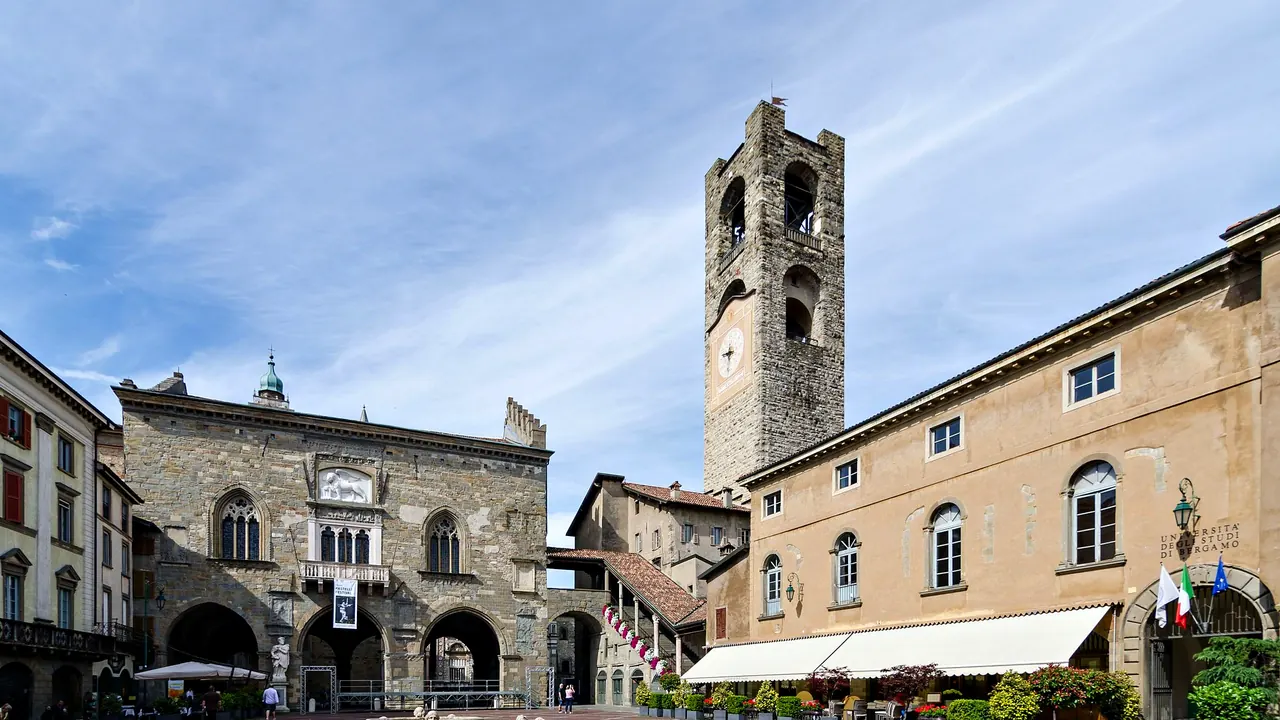
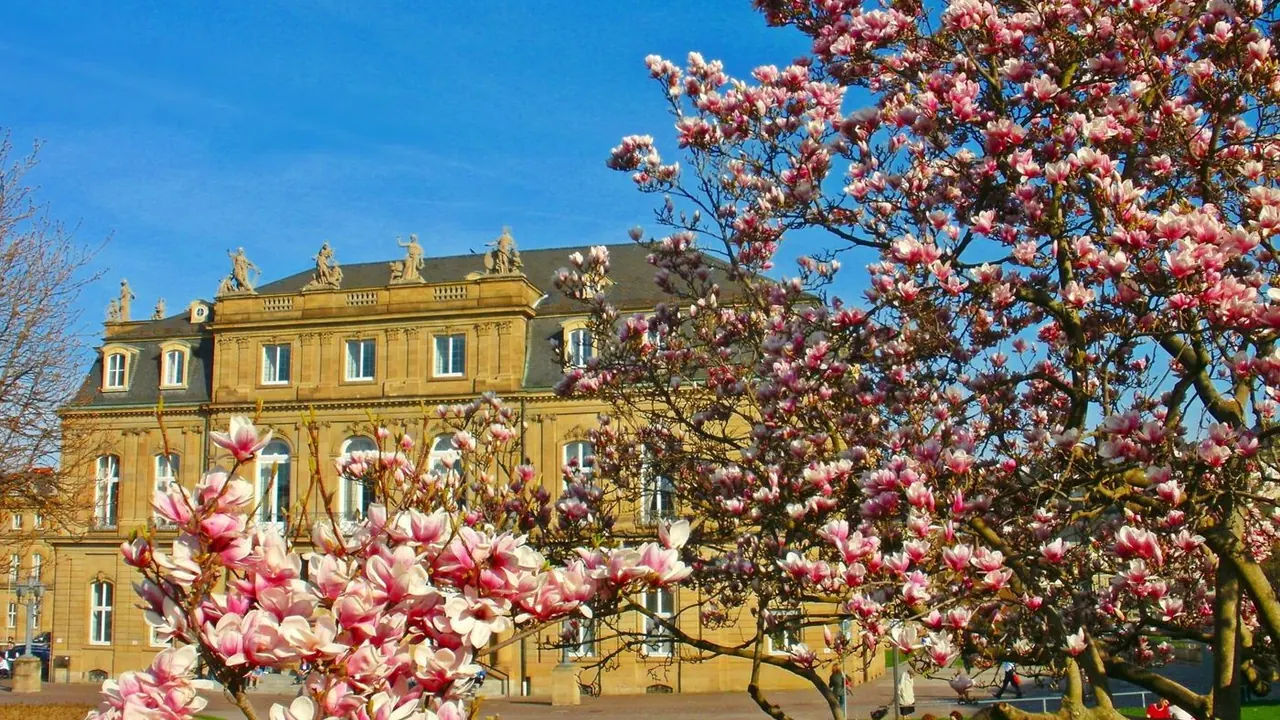
Photos: Bergamo by Steffen Schmitz, CC BY-SA 4.0, cropped; Stuttgart by Baden de, CC BY 3.0, cropped.
Bergamo or Stuttgart?
Our verdict in twelve categories, each scored against the same fixed benchmark cities, and the climate month by month, so you can choose for your trip.
Choose Bergamo for
- beaches
- nature and the outdoors
- prices
Bergamo suits travellers who want an old Italian hill town with the mountains and lakes close by. The walled Città Alta, the Accademia Carrara and the Orobie valleys give it more historic atmosphere and better walking country than Stuttgart, and Milan and the lakes make it the stronger base for day trips. It is also a little easier on the budget, though evenings stay quiet and the shopping is modest.
Choose Stuttgart for
- live music and the arts
- shopping
- wellness
Stuttgart is the better pick for a city vacation built around evenings out and comfort. Its opera and ballet are of European standing, it has more nightlife and better shopping, and its mineral baths are right in the city. Families have Wilhelma and an easy integrated transport network. What it lacks is an intact old centre and real mountains.
Scoreboard
Twelve categories on one fixed scale from 0 to 100. The shaded stretch is the gap between the two.
Your match
Pick a travel style or drag the sliders, and both match scores follow your weighting.
Too close to call, 2 points apart
Wins on beaches and nature and the outdoors with your weighting.
Wins on live music and the arts and shopping with your weighting.
What matters to you?
Category by category
What the scores mean for a trip.
Beaches & swimming
Neither city has a beach, but Bergamo at least has good summer swimming. The lidos and grassy shores of Lake Iseo, and the Lecco arm of Lake Como, are within an hour and warm up well by July, though the shores are pebble or concrete rather than sand.
From Stuttgart, swimming means the city's outdoor pools, some of them fed by its mineral springs. Lake Constance, the nearest real open water, is more than two hours away.
Food & drink
The two are evenly matched, and both serve hearty regional food rather than much from elsewhere. Bergamo cooks Lombard mountain dishes: casoncelli with butter and sage, polenta with braised meats, and valley cheeses such as Taleggio and Strachitunt, with Franciacorta sparkling wine from next door.
Stuttgart's Swabian kitchen gives you Maultaschen, Käsespätzle and Zwiebelrostbraten. Its vineyards lie inside the city, so you can drink Trollinger at a grower's seasonal Besen tavern. Both have a serious fine-dining scene.
Culture & sights
Bergamo has the stronger historic core: an almost intact walled hilltop town, with Piazza Vecchia, Santa Maria Maggiore and the marble Cappella Colleoni all close together, and Raphael and Bellini at the Accademia Carrara below.
Stuttgart's strengths are industry and modern design. The Mercedes-Benz and Porsche museums, the Staatsgalerie and the Le Corbusier houses on the Weissenhof Estate are the highlights, while wartime bombing left its old centre only in pockets around Schlossplatz.
Nightlife
Stuttgart offers more of a night out. The bars and lounges along Theodor-Heuss-Strasse fill at weekends, and there are basement clubs with a loyal electronic music crowd. The Cannstatter Volksfest beer tents liven up the autumn.
Bergamo's evenings are about a long aperitivo in Borgo Santa Caterina, or a drink on the walls in summer, and they are usually over by midnight. For clubs, people go to Milan.
Nature & outdoors
Bergamo has the bigger landscape. Woodland paths climb from the upper town to San Vigilio, and Val Brembana and Val Seriana lead into the Orobie Alps, with rifugi, high lakes and serious summer hiking. A car makes most of it easier.
Stuttgart's countryside is gentler and closer to hand: vineyard trails above the Neckar, deer in the Rotwildpark, and the cliffs and caves of the Swabian Jura about an hour away. It is good walking and cycling country, but it is not high mountains.
Day trips
Both make excellent bases, but they lead to different kinds of trips. From Bergamo you reach the big names: Milan in under an hour, the shores of Como and Iseo, and Verona and Cremona further out.
From Stuttgart the trips are to palaces and small historic towns: baroque Ludwigsburg, Tübingen's lanes, Heidelberg's castle and Hohenzollern on its hilltop, with Strasbourg possible for a long day. Bergamo just edges ahead, because its lakes add a whole type of day out that Stuttgart cannot match.
Good for families
Stuttgart is easier with children. Wilhelma's zoo and gardens fill a day, Killesberg has a narrow-gauge railway and a lookout tower, older children enjoy the car museums, and there are plenty of outdoor pools and beer gardens with play areas.
Bergamo charms children with its funiculars and walks along the walls, but its cobbled lanes are hard going with a buggy. Its biggest draws are outside the city: Leolandia, a proper theme park of the kind Stuttgart lacks, and the Le Cornelle wildlife park.
Getting around
The two are close, and both are built on slopes. In Bergamo, a funicular links the lower town to the Città Alta, the airport is a short bus ride away, and a car is needed only for the valleys and lakes.
Stuttgart has the fuller network. One ticket covers the Stadtbahn, S-Bahn, buses and a rack railway, and the public stairways called Stäffele give walkers shortcuts up the hillsides.
Shopping & style
Stuttgart is the better shopping city. Königstrasse is a long pedestrian street of big brands, Breuninger covers designer fashion, and the outlet town of Metzingen is half an hour away.
Bergamo has mid-range chains under the arcades of Via XX Settembre, and the best things to take home come from the cheese, salumi and wine shops of the Città Alta. For fashion, Milan is the place to go.
Affordability
Bergamo costs a little less. Hotels in the lower town are fairly priced, and trattorias and aperitivo bars are reasonable, though staying inside the Città Alta costs more.
Stuttgart's hotel prices follow the business calendar: they are expensive during trade fairs and better value at weekends. Meals in Swabian taverns give good value for the portions.
Live music & performing arts
Stuttgart is far ahead here. The Stuttgart Ballet, one of Europe's most respected companies, shares the state theatre with a bold opera company, and the Liederhalle adds orchestras and a strong Bach tradition. There are also long-running musicals and live jazz through the week.
Bergamo's stage life centres on Donizetti, its native composer. The Teatro Donizetti holds an autumn festival of his works, and there is the Bergamo Jazz festival in spring. Otherwise its programme is provincial, and La Scala in Milan is within reach for an evening.
Wellness & relaxation
Stuttgart has its bathing culture inside the city. At the Mineralbad Cannstatt and the Mineralbad Leuze, you soak in naturally carbonated warm water indoors and out, with saunas in the larger baths.
From Bergamo, a spa day means a trip out: to the Belle Époque baths of San Pellegrino Terme, about forty minutes up Val Brembana, or to the old sulphur springs at Trescore Balneario. Its own calm is the quiet of the Città Alta early in the morning.
When should you go?
Pick your month. The climate figures are measured averages, not a forecast.
Bergamo in July
Stuttgart in July
Daytime high, °C
Rainfall in the month, mm
Where the figures come from
Bergamo has no rain gauge within 25 km of the centre, so its rainfall comes from a gridded climate dataset read at the city rather than from a gauge further away.
Bergamo's sunshine is measured 64 km from the centre, at Lugano.
Temperature and rainfall are climate normals, averaged over the years shown. Bergamo: 1991-2020 normals, Bergamo / Orio Al Serio (3.9 km from centre). Stuttgart: 1991-2020 normals, Stuttgart / Neckartal (2.8 km from centre).
Bergamo is the warmer and wetter of the two. July and August reach about 29°C there, warm enough for the lakes but hot for climbing the lanes of the Città Alta at midday. Stuttgart peaks around 26°C, which is pleasant for walking the city and the vineyard slopes but too cool to plan a water trip around. Both are cold and grey from December to February, and Stuttgart gets noticeably less winter sunshine.
Rain should decide when you go. Bergamo is wet from May through November, and autumn is its wettest stretch, with about 129mm in October, so it is a poor time for long walks. April is the driest of its mild months and the best for sightseeing. For the lakes, choose July and August: they are a little drier than May and June and the sunniest months of the year. Stuttgart is drier all year, with most of its rain in early summer. April and September are mild and fairly dry there, which makes them its best months for exploring on foot.
Which traveller are you?
For an outdoors trip, Bergamo is the clear choice. The Colli park starts at the upper town, the Orobie Alps have rifugi and high lakes, and Lakes Iseo and Como add sailing and cycling. Stuttgart's Jura and Black Forest walks are lower and gentler, better for easy rambles than for mountain days.
On a family trip with children, Stuttgart works better. Wilhelma fills a whole day, Killesberg has its little railway and animals, and one transport ticket covers everything. Bergamo has its funiculars and Leolandia nearby, but its best outings need a car.
For a shopping trip, Stuttgart is the better base. In a weekend you can spend one day shopping on foot in the centre and another at the outlets, both by public transport, and hotel rooms there cost less at weekends. Bergamo mainly suits shoppers who want food and wine to take home.
Before you go
| Measure | Bergamo | Stuttgart |
|---|---|---|
| Official language | Italian | German |
| Currency | Euro (EUR) | Euro (EUR) |
| Sockets | CFL230 V, 50 Hz | CF230 V, 50 Hz |
| Driving side | Right | Right |
| Time zone | UTC+1, UTC+2 in summer | UTC+1, UTC+2 in summer |
| Emergency number | 112 | 112 |
| Elevation | 249 m | 245 m |
| Main airport | Il Caravaggio International Airport (BGY)4 km from centre146 non-stop destinations | Stuttgart Airport (STR)10 km from centre124 non-stop destinations |
| Public holidays this year | 13 days | 12 days |
By the numbers
| Measure | Bergamo | Stuttgart |
|---|---|---|
| City population | 119,534 | 609,365 |
| People per km² | 2,973 | 2,938 |
| Museums within 10 km | 21 | 42 |
| UNESCO World Heritage sites within 50 km | 6 | 3 |
Where else could you go?
Every comparison below shares a destination with this one, so you can follow Bergamo or Stuttgart somewhere new.
- Milanvs Bergamo
- Comovs Bergamo
- Luganovs Bergamo
- Baden-Badenvs Stuttgart
- Heidelbergvs Stuttgart
- Veronavs Bergamo