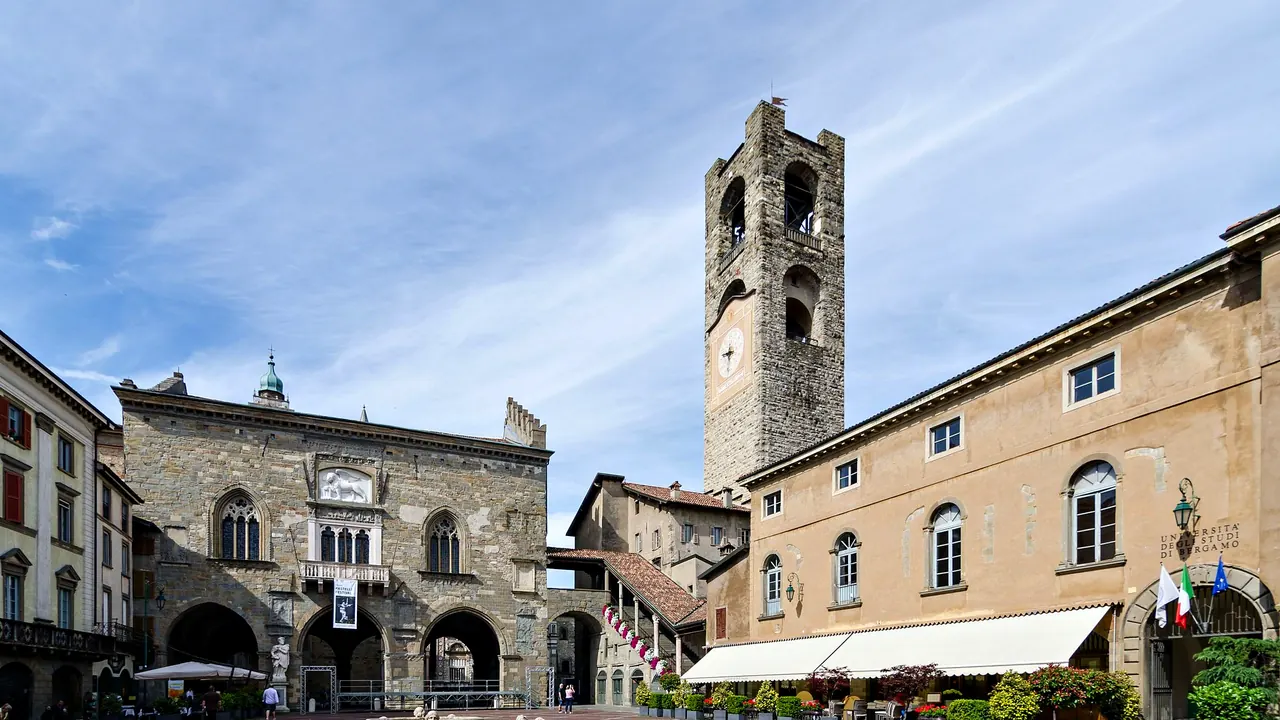
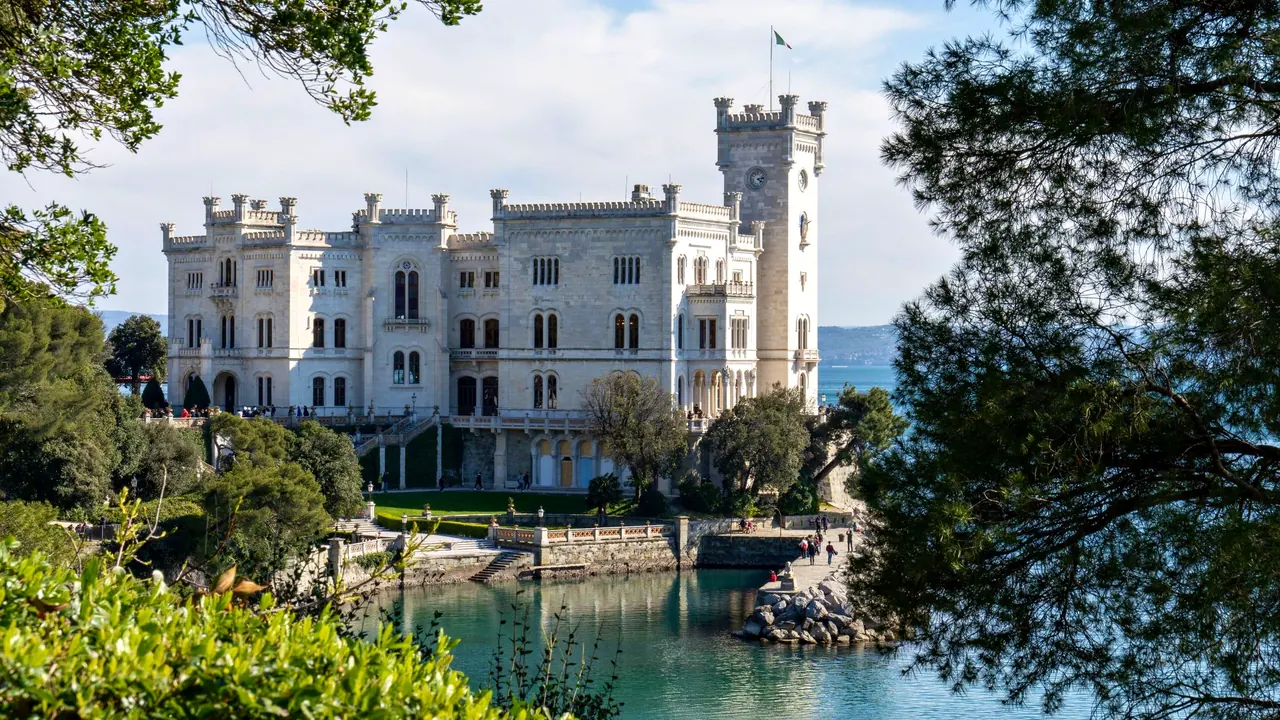
Photos: Bergamo by Steffen Schmitz, CC BY-SA 4.0, cropped; Trieste by Tibor Szabo, Pexels License.
Bergamo or Trieste?
Our verdict in twelve categories, each scored against the same fixed benchmark cities, and the climate month by month, so you can choose for your trip.
Choose Bergamo for
- wellness
- day trips
- culture and sights
Bergamo suits the traveller who wants a compact old town and a lot within reach of it. The walled Città Alta and the Accademia Carrara fill a day or two. After that the city works as a base, with Milan, the lakes of Como and Iseo, Verona and the Orobie valleys all easy to reach. It is the better pick if you plan to fill a week with outings, want a thermal spa nearby, or care more about Renaissance painting than about the sea.
Choose Trieste for
- beaches
- live music and the arts
- food and drink
Trieste is for people who want the sea to be part of every day. You can swim off the Barcola promenade before dinner, spend long mornings in Habsburg coffee houses, and see opera or operetta at the waterfront Teatro Verdi. It sits on the edge of three countries, so Slovenia's coast and caves are close. It is quieter and less polished than Lombardy and feels more like Central Europe, which suits a slow summer trip by the water.
Scoreboard
Twelve categories on one fixed scale from 0 to 100. The shaded stretch is the gap between the two.
Your match
Pick a travel style or drag the sliders, and both match scores follow your weighting.
Too close to call, 2 points apart
Wins on wellness and day trips with your weighting.
Wins on beaches and live music and the arts with your weighting.
What matters to you?
Category by category
What the scores mean for a trip.
Beaches & swimming
Bergamo is inland, so summer swimming means going to a lake. The nearest are the lidos and grassy shores of Lake Iseo and the Lecco arm of Lake Como. They make a pleasant day out, not a reason to choose the city.
Trieste has the sea on its doorstep. There is no sand, but the stepped concrete and pine-shaded lawns of Barcola and the old bathing establishments with changing cabins are a short bus ride from the centre. Prettier pebble coves lie below the cliffs at Sistiana and Duino. If you are happy to climb down a ladder into the water, swimming becomes part of the daily routine here, which never happens in Bergamo.
Food & drink
Both cities eat well, but differently. Bergamo cooks Lombard mountain food: casoncelli in butter and sage, polenta with braised meats and game, and a remarkable range of valley cheeses such as Taleggio and Strachitunt. Franciacorta sparkling wine is made next door, and the province has a proper fine-dining tier.
Trieste's food draws on Austria and the Slavic world. You eat boiled pork carved at an old buffet counter, jota soup and marinated sardoni, and coffee comes with its own local vocabulary. The farmhouse osmize on the Karst, pouring Vitovska and Terrano, have no equivalent in Bergamo, though Trieste has less fine dining.
Culture & sights
The two are close in depth but differ in era and mood. Bergamo is a Renaissance hill town inside UNESCO-listed Venetian walls. The marble front of the Cappella Colleoni and the Baroque interior of Santa Maria Maggiore stand a few steps apart, and the Accademia Carrara below the hill holds paintings by Raphael, Bellini and Mantegna.
Trieste's appeal is a whole imperial port city: the sea-facing Piazza Unità, the neoclassical grid of the Borgo Teresiano and the Serbian Orthodox dome by the Canal Grande. Miramare Castle stands on the coast, a large synagogue in town, and the Risiera di San Sabba memorial is a sobering visit. Come to Bergamo for great painting, and to Trieste for a layered townscape shaped by many peoples.
Nightlife
Neither city is built for a big night out. In both, the evening is an aperitivo that ends around midnight. Bergamo's evenings centre on wine bars around Borgo Santa Caterina and, in summer, drinks along the upper-town walls. For clubs, people take the train to Milan.
Trieste has its own summer pleasure in the kiosks and bars along the Barcola seafront, open late on warm nights. Otherwise it is spritz on the Canal Grande and quiet streets in winter.
Nature & outdoors
Both cities have serious outdoors close by, but of very different kinds. Bergamo's is Alpine. Woodland paths climb from the upper town through the Colli di Bergamo to San Vigilio, and beyond them Val Brembana and Val Seriana lead into the Orobie Alps, with rifugi, high lakes, long summer hikes and small ski areas such as Foppolo in winter. The lakes add sailing and cycling, but for the high mountains a car makes things far easier.
Trieste offers limestone and sea instead of high peaks, and much of it starts at the edge of town. The Strada Napoleonica runs along the Karst high above the gulf, Val Rosandra offers hiking and climbing on the southern fringe, and the Grotta Gigante opens underground. Where Bergamo has lakes, Trieste has open water: the gulf is made for sailing and the Miramare reserve for snorkelling and kayaking. Choose Bergamo for proper mountain days, and Trieste for cliff walks and time on the sea that a city bus can reach.
Day trips
Bergamo has the edge as a base. Milan is under an hour by train, and Lake Como and Lake Iseo are closer still. Crespi d'Adda, Brescia, Cremona and Verona can all be reached without a car, so a week of outings needs very little planning.
Trieste's range is wider across borders but more spread out. Aquileia's mosaic floor, the star-shaped Palmanova and the Collio vineyards are about an hour away in Friuli, Piran and the Postojna cave are in Slovenia, and the Istrian towns of Croatia can be reached by car. Venice, at about two hours each way, makes a long day.
Good for families
Both are calm, safe and steep in places, and neither has much in the centre designed for children. Bergamo's advantage is just outside town. Leolandia, built for younger children, is about twenty minutes away, Le Cornelle wildlife park makes an easy half day, and the funicular rides are a treat in themselves.
Trieste suits older children better. They tend to love the vast Grotta Gigante, the castle and gardens at Miramare and the boats across the bay. Toddlers will find swimming off rocks and concrete steps hard going.
Getting around
Both cities have a flat lower part and a steep upper one, but they deal with the climb differently. In Bergamo, a funicular lifts you from the lower town to the Città Alta and a second carries on to San Vigilio, so the hill takes little effort. A light-rail line runs up Val Seriana and direct trains reach Milan, Brescia and Lecco, though the upper valleys and lake shores are quicker by car.
In Trieste the main sights are closer together on flat ground by the water, so Piazza Unità, the Canal Grande and the museums are an easy walk from one another. Above them, San Giusto and the districts behind it climb steeply in long flights of steps, and there is no funicular to help. Buses follow the coast to Barcola and Miramare, and boats cross the bay to Muggia, which makes Trieste the easier of the two to explore without a car.
Shopping & style
Neither city is a shopping destination, and the best buys in both are things to eat and drink. Bergamo's arcaded Sentierone has mid-range chains, and the upper town's main lane is lined with cheese shops and salumi counters. Milan is close for fashion.
Trieste's browsing is more unusual: antique and second-hand shops in the old town lanes, plus coffee from local roasters and Karst honey to take home.
Affordability
Costs are much the same, comfortable rather than cheap. In Bergamo, a room in the lower town is the sensible choice, as staying inside the Città Alta costs more and summer weekends fill up.
In Trieste, the cheap pleasures are part of local life: a coffee standing at the bar, a plate at a buffet, and free swimming at Barcola. Rooms tighten in high summer and around the autumn regatta.
Live music & performing arts
Trieste has the fuller stage life. The Teatro Verdi on the waterfront runs a proper season of opera and ballet, and the city keeps up an operetta tradition inherited from the Habsburgs that is rare in Italy. There is also a Slovenian-language theatre, and in summer there are concerts in the castle courtyard on San Giusto.
Bergamo's highlight is narrower but distinguished. The Donizetti festival each autumn at the Teatro Donizetti draws opera lovers to the composer's birthplace, and Bergamo Jazz fills the spring. Outside those dates, an evening at La Scala in Milan is the stronger option.
Wellness & relaxation
Bergamo is the better choice for actual spa time. San Pellegrino Terme, a grand Belle Époque spa town, is about forty minutes up Val Brembana, and Trescore Balneario's sulphur springs have been in use since Roman times.
Trieste offers rest of a different kind: an unhurried city of newspapers in old coffee houses and sunset walks on the Molo Audace. Its spas are limited to hotels and day spas, and thermal baths mean leaving town.
When should you go?
Pick your month. The climate figures are measured averages, not a forecast.
Bergamo in July
Trieste in July
Daytime high, °C
Rainfall in the month, mm
Where the figures come from
Bergamo has no rain gauge within 25 km of the centre, so its rainfall comes from a gridded climate dataset read at the city rather than from a gauge further away.
Bergamo's sunshine is measured 64 km from the centre, at Lugano.
Temperature and rainfall are climate normals, averaged over the years shown. Bergamo: 1991-2020 normals, Bergamo / Orio Al Serio (3.9 km from centre). Trieste: 1991-2020 normals, Trieste (1.6 km from centre).
The two cities share almost the same summer, with highs around 29°C in July and August, but they feel different. Trieste is the sunnier and drier of the two from May to August, and its sea is warm enough for daily swimming from June to September, reaching about 25°C at its peak. Bergamo has no sea and gets more rain in late spring, with May and June noticeably wetter. Its hot weeks are best spent up in the valleys or by the lakes.
For walking the streets, May and September suit both cities, with highs in the low to mid twenties. October and November are the wettest months in both. Winter is mild by northern Italian standards in both, but Trieste can be raw when the Bora blows. Bergamo is a little colder, around 7°C in January, which still makes a crisp day on the walls pleasant.
Which traveller are you?
On a beach and sun trip, choose Trieste. You can swim in the clear Adriatic straight from the Barcola platforms or from the pebble coves at Sistiana and Duino, and summers there are sunnier. From Bergamo, swimming means a day out at a lake.
For a relaxing and wellness trip, Bergamo is the better choice. San Pellegrino Terme's Belle Époque spa and the old sulphur springs at Trescore Balneario are both close. Trieste offers a slow pace and coffee houses, but for real thermal baths you have to leave the city.
For a short city break, Bergamo has the edge. The airport is a short bus ride from the centre, and the Città Alta, the walls and the Accademia Carrara fit neatly into a weekend, with the funicular doing the climbing for you.
Before you go
| Measure | Bergamo | Trieste |
|---|---|---|
| Official language | Italian | Italian |
| Currency | Euro (EUR) | Euro (EUR) |
| Sockets | CFL230 V, 50 Hz | CFL230 V, 50 Hz |
| Driving side | Right | Right |
| Time zone | UTC+1, UTC+2 in summer | UTC+1, UTC+2 in summer |
| Emergency number | 112 | 112 |
| Elevation | 249 m | 2 m |
| Main airport | Il Caravaggio International Airport (BGY)4 km from centre146 non-stop destinations | Trieste Airport (TRS)31 km from centre32 non-stop destinations |
| Public holidays this year | 13 days | 13 days |
By the numbers
| Measure | Bergamo | Trieste |
|---|---|---|
| City population | 119,534 | 198,417 |
| People per km² | 2,973 | 2,332 |
| Museums within 10 km | 21 | 33 |
| UNESCO World Heritage sites within 50 km | 6 | 5 |
| Swim season, months above 21 °C | - | 4 months |
Where else could you go?
Every comparison below shares a destination with this one, so you can follow Bergamo or Trieste somewhere new.