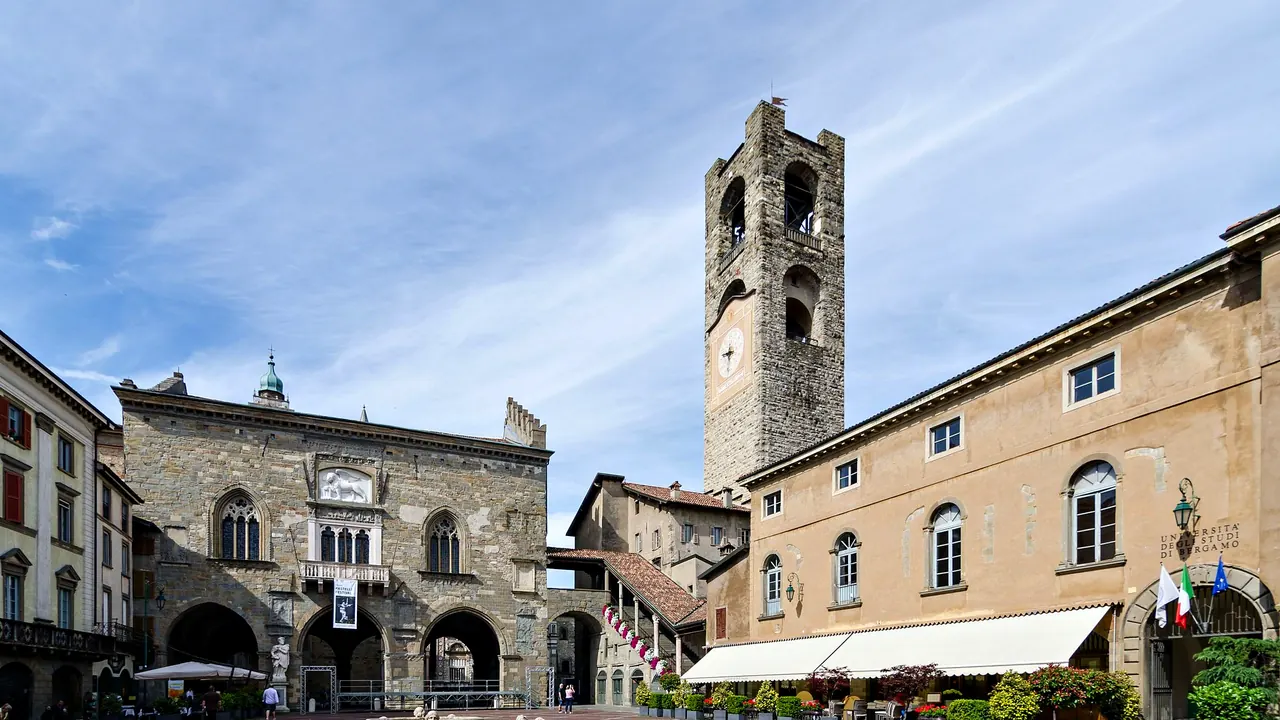
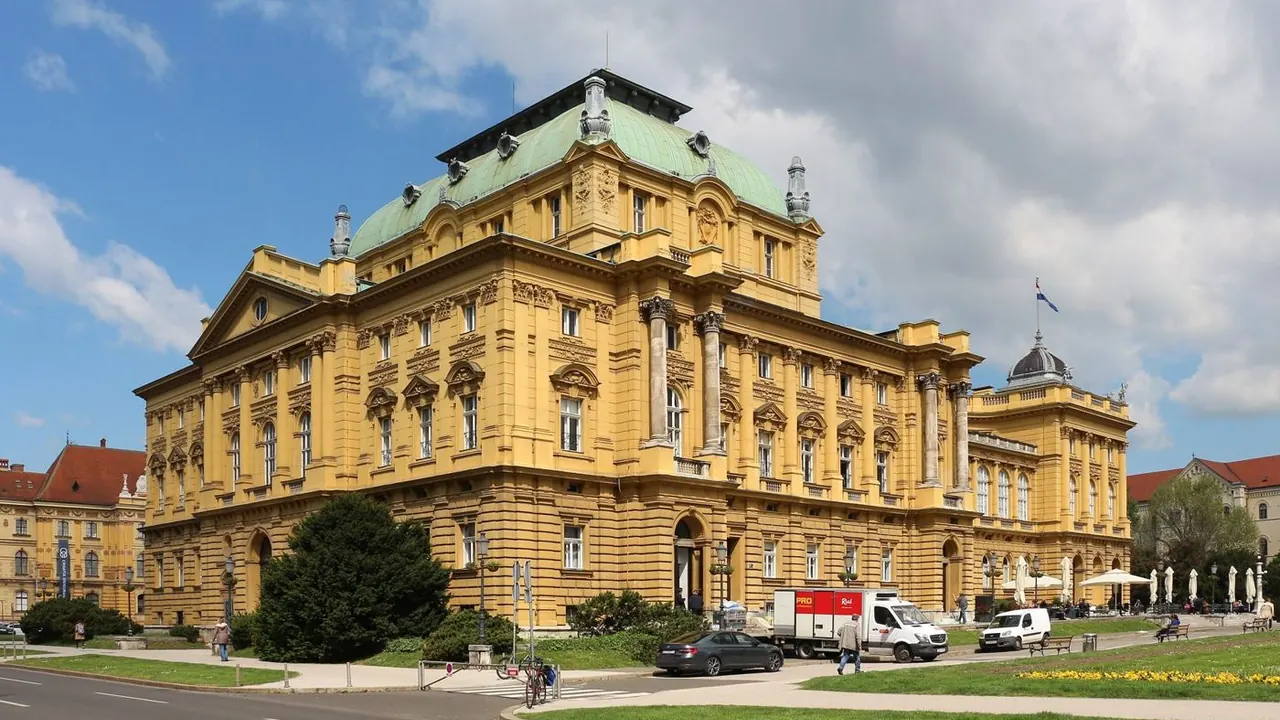
Photos: Bergamo by Steffen Schmitz, CC BY-SA 4.0, cropped; Zagreb by Bernard Gagnon, CC BY-SA 4.0, cropped.
Bergamo or Zagreb?
Our verdict in twelve categories, each scored against the same fixed benchmark cities, and the climate month by month, so you can choose for your trip.
Choose Bergamo for
- day trips
- beaches
- wellness
Bergamo suits the traveller who wants a beautiful old town and a great deal within reach of it. The walled Città Alta on its hill is one of the most complete historic centres in northern Italy. From the station, Milan, Lake Como, Lake Iseo and the Orobie Alps are all easy days out. Choose it for art, mountain walking, lake days and Lombard cheese, and don't expect late nights.
Choose Zagreb for
- nightlife
- prices
- live music and the arts
Zagreb is the better pick for a relaxed capital where your money goes further and the evenings last longer. Its café terraces, the bars along Tkalčićeva and a full season of opera, ballet and concerts give it more going on after dark. The sights are fewer and less famous, and the countryside around it is gentler, but it is an easy, good-value city for a few unhurried days.
Scoreboard
Twelve categories on one fixed scale from 0 to 100. The shaded stretch is the gap between the two.
Your match
Pick a travel style or drag the sliders, and both match scores follow your weighting.
Wins on day trips and beaches with your weighting.
Wins on nightlife and prices with your weighting.
What matters to you?
Category by category
What the scores mean for a trip.
Beaches & swimming
Neither city has a coast, but Bergamo's lake swimming is a proper day out. The lidos and grassy shores of Lake Iseo around Sarnico and Lovere, and the Lecco arm of Lake Como, come with mountain scenery, and the water reaches about 23°C in July.
Zagreb only has its city lakes, Jarun and Bundek, which are pebbly spots for cooling off after sightseeing. The Adriatic is about two hours away, so sea and sand mean a separate stay.
Food & drink
Both cities serve hearty inland food rather than seafood, and neither offers much range beyond its own cuisine. In Bergamo the draw is Lombard mountain cooking: casoncelli in butter and sage, polenta, and valley cheeses such as Taleggio and Strachitunt, with Franciacorta sparkling wine from next door and a serious fine-dining tier.
Zagreb's food is more Central European, with štrukli, turkey with mlinci and Zagorje sausages. Its real pleasures are the morning stalls at Dolac market and the long coffee ritual on Lower Town terraces.
Culture & sights
Bergamo has the stronger sights. The Città Alta is an almost complete walled hilltop town inside its UNESCO-listed Venetian ramparts. Piazza Vecchia, Santa Maria Maggiore and the marble front of the Cappella Colleoni are all within a few steps of each other. Down the hill, the Accademia Carrara holds Raphael, Bellini and Mantegna.
Zagreb's Upper Town, with St Mark's tiled roof and the Stone Gate, is charming but smaller in scale. Its museums, from the Strossmayer old masters to the Museum of Naive Art, are good rather than famous. The arcaded Mirogoj cemetery is its most memorable sight.
Nightlife
Zagreb is the livelier place after dark. Tkalčićeva is lined with terraces that fill on warm nights, and smaller cocktail and craft beer bars hide in Lower Town courtyards. In summer the crowd moves out to the clubs by the lake at Jarun, and students keep alternative venues going all year.
Bergamo's evenings are a long aperitivo, then wine bars around Borgo Santa Caterina or drinks on the walls of the upper town. Most nights end around midnight, and anyone wanting clubs goes to Milan.
Nature & outdoors
Bergamo has the bigger landscapes. Paths through the Colli di Bergamo park climb straight from the old town. Further north, Val Brembana and Val Seriana lead into the Orobie Alps, with rifugi and high lakes, and the two big lakes add sailing and lakeside cycling. You need a car for most of the mountains.
Zagreb's nature is greener and gentler. Medvednica's beech woods are a tram and bus ride away, and Maksimir park and the Sava embankments are good for running. Plitvice's waterfalls make a long day trip, but there is no high mountain country nearby.
Day trips
Bergamo is the far better base. Milan's Duomo and the Last Supper are under an hour away by train. Lake Como and Lake Iseo, with its car-free island Monte Isola, are even closer. Brescia, Cremona, Verona and the factory village of Crespi d'Adda can all be done without a car.
From Zagreb, the best outings are the castles and baroque churches of Zagorje, such as Trakošćan and Marija Bistrica, plus Varaždin's moated castle and little Samobor. Ljubljana is a long day away. These are pleasant, but none is a headline destination, and several are much easier with a car.
Good for families
Both are calm, safe cities that suit a few relaxed days with children. Bergamo has the bigger outings: the Leolandia theme park and the Le Cornelle wildlife park are both close by, and the funicular rides are a treat. Its steep upper-town cobbles are hard work with a buggy, though.
Zagreb is easier to get around with small children, thanks to its flat Lower Town and trams that take pushchairs. Its zoo in Maksimir and the Tesla technical museum, with old trams and a mock mine, fill a day, but there is no theme park.
Getting around
Once you arrive, you can get round either city without a car, but the two work in different ways. In Bergamo the old town sits on its hill above the modern one, so the funicular becomes part of every day, and a second line carries on up to San Vigilio. Its real strength is its links further out: direct trains to Milan, Brescia and Lecco, a light-rail line up Val Seriana, and Orio al Serio airport right on the city's edge.
Zagreb works best within the city itself. The main square, Dolac market and the Lower Town galleries are a short, level walk apart, and blue trams run all over the city. Its funicular, one of the shortest anywhere, only saves the last climb to the Upper Town, where the cobbles turn steep, though the trams slow to a crawl at rush hour.
Shopping & style
Neither city is worth the trip for shopping, and both have little luxury. Bergamo's best buys are edible: cheeses, salumi and Valcalepio wine from the delicatessens on the upper town's main lane. Milan is close for serious fashion.
Zagreb has more distinctive souvenirs. You can buy red licitar honey hearts, lace and neckties, a nod to the cravat's Croatian origin, along with truffle products from Dolac and finds at the Britanski trg flea market.
Affordability
Zagreb is noticeably the cheaper stay. It is one of the more affordable capitals in the EU, and central apartments, tram fares, museum entry and simple market or bakery food are all easy on the budget. Smart restaurants and cocktails cost about what they would in Western Europe, though.
Bergamo is comfortable rather than cheap. Lower-town hotels and trattorias are fair, but rooms and meals inside the Città Alta cost more, and summer weekends book up.
Live music & performing arts
Zagreb has the fuller programme. Opera, ballet and drama run at the Croatian National Theatre, the Zagreb Philharmonic plays at the Lisinski hall, and in summer there are open-air concerts in Upper Town courtyards. Much of the spoken theatre is in Croatian.
Bergamo's stage life centres on its native composer. The Teatro Donizetti holds a season, and its autumn festival of his operas draws devoted fans. Bergamo Jazz comes in spring, and an evening at La Scala in Milan is easy to arrange.
Wellness & relaxation
Bergamo is better for a spa escape. San Pellegrino Terme, about forty minutes up Val Brembana, is a Belle Époque resort with a grand historic thermal spa, and Trescore Balneario's sulphur springs have been used since Roman times.
Zagreb's thermal resorts in Zagorje, such as Tuheljske and Stubičke Toplice, are about as close but are simpler places where locals go for a weekend soak. Both cities offer a slow pace on quiet old-town lanes in the early morning.
When should you go?
Pick your month. The climate figures are measured averages, not a forecast.
Bergamo in July
Zagreb in July
Daytime high, °C
Rainfall in the month, mm
Where the figures come from
Bergamo has no rain gauge within 25 km of the centre, so its rainfall comes from a gridded climate dataset read at the city rather than from a gauge further away.
Bergamo's sunshine is measured 64 km from the centre, at Lugano.
Temperature and rainfall are climate normals, averaged over the years shown. Bergamo: 1991-2020 normals, Bergamo / Orio Al Serio (3.9 km from centre). Zagreb: 1991-2020 (sunshine 1981-2010, rainfall 1981-2010) normals, Zagreb / Gric (0.6 km from centre).
The two cities have much the same temperatures through the year. Both are cold in winter, pleasant for walking in April, May and late September, and hot in July and August at about 29°C. That is fine for an afternoon at a lake but heavy going on steep cobbled lanes at midday. Spring and early autumn are the best times for sightseeing in either.
The difference is in the rain and the light. Bergamo's wettest stretch is autumn, with over 120mm a month from September to November as storms come off the Alps. Zagreb's autumn is drier, so October is the better month there. In winter it turns the other way: Zagreb is much greyer, with about 49 hours of sunshine in December against roughly twice that in Bergamo, so a winter city break is the brighter option in Bergamo.
Which traveller are you?
For an outdoors trip, Bergamo is the place, because the mountains can fill the whole stay: a morning on the paths above the old town, a full day up an Alpine valley, another on a lake. Zagreb's countryside is pleasant for gentle walks but soon runs out of challenge.
On a food and nightlife trip, Bergamo gives you long dinners of mountain cooking and then an early night. Zagreb is the better choice because its evenings keep going, with drinks moving from one terrace to the next and summer nights out by the lake.
On a tight budget, Zagreb is the easier trip. You can stay central and eat simply without watching every cost. In Bergamo, keeping costs down usually means staying in the lower town and riding up the hill to see the sights.
Before you go
| Measure | Bergamo | Zagreb |
|---|---|---|
| Official language | Italian | Croatian |
| Currency | Euro (EUR) | Euro (EUR) |
| Sockets | CFL230 V, 50 Hz | CF230 V, 50 Hz |
| Driving side | Right | Right |
| Time zone | UTC+1, UTC+2 in summer | UTC+1, UTC+2 in summer |
| Emergency number | 112 | 112 |
| Elevation | 249 m | 127 m |
| Main airport | Il Caravaggio International Airport (BGY)4 km from centre146 non-stop destinations | Zagreb Franjo Tuđman International Airport (ZAG)11 km from centre66 non-stop destinations |
| Public holidays this year | 13 days | 14 days |
By the numbers
| Measure | Bergamo | Zagreb |
|---|---|---|
| City population | 119,534 | 767,131 |
| People per km² | 2,973 | - |
| Museums within 10 km | 21 | 27 |
| UNESCO World Heritage sites within 50 km | 6 | 0 |
Where else could you go?
Every comparison below shares a destination with this one, so you can follow Bergamo or Zagreb somewhere new.