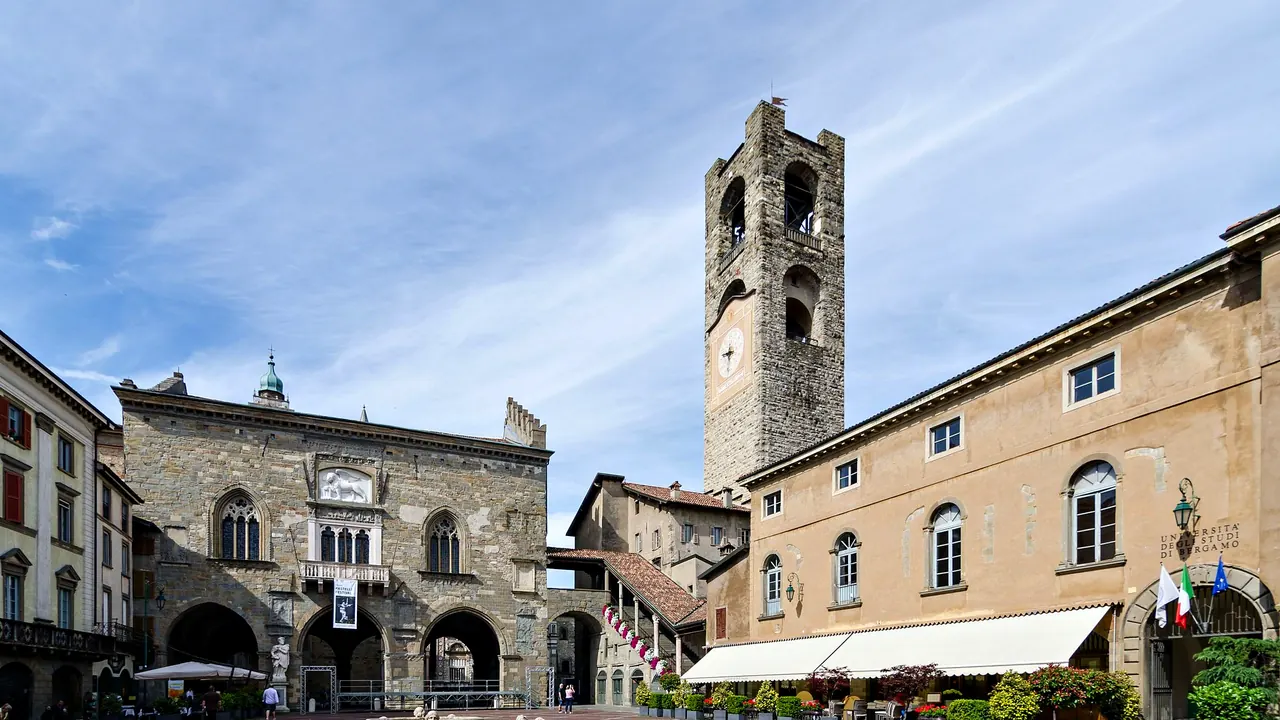
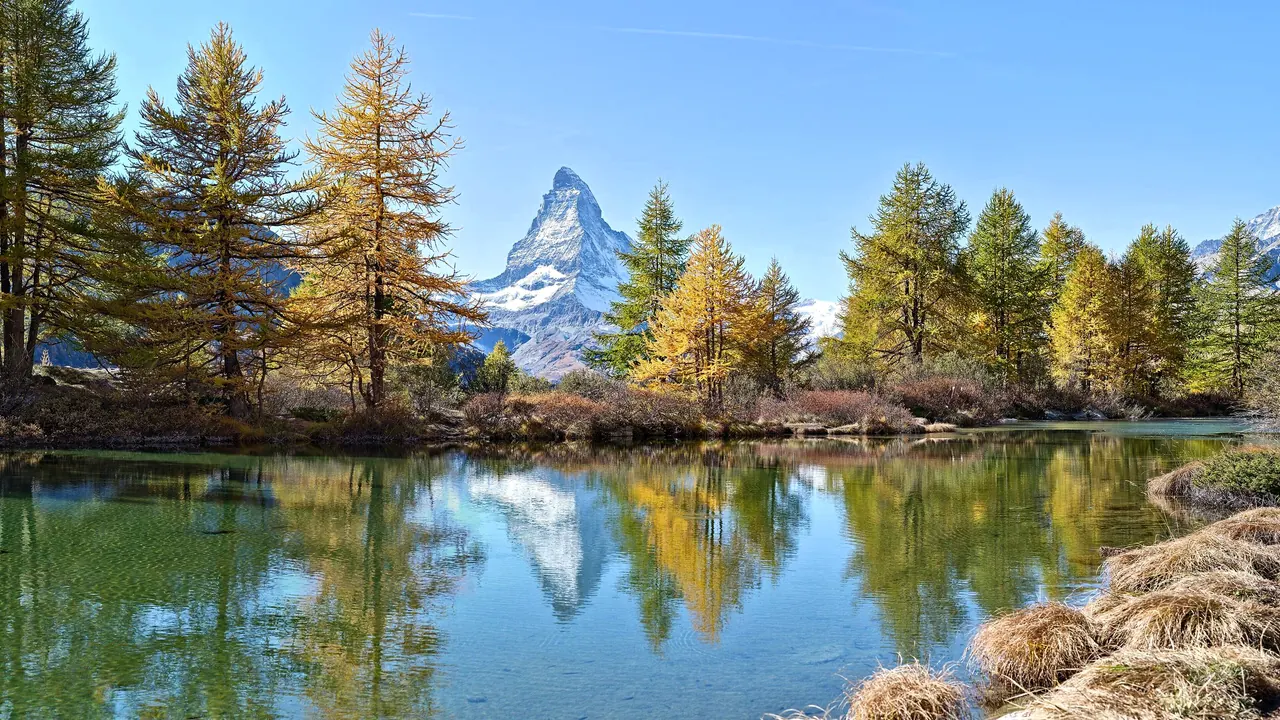
Photos: Bergamo by Steffen Schmitz, CC BY-SA 4.0, cropped; Zermatt by Roy Egloff, CC BY-SA 4.0, cropped.
Bergamo or Zermatt?
Our verdict in twelve categories, each scored against the same fixed benchmark cities, and the climate month by month, so you can choose for your trip.
Choose Bergamo for
- day trips
- culture and sights
- prices
Bergamo suits a traveller who wants history, art and good food with a lot of northern Italy close by. The walled Città Alta, the Accademia Carrara and the opera house are enough for a couple of full days. After that, Milan, the lakes, Brescia and Verona are all within reach by train, so a week passes easily without a hire car. It also costs far less, and it has proper restaurants and cheese counters rather than ski-resort dining.
Choose Zermatt for
- nature and the outdoors
- getting around
Zermatt is for people whose trip is about the mountains themselves. The Matterhorn stands above a car-free village, and lifts and cog railways go up to glaciers, high ski terrain in winter and marked trails in summer. Bergamo's Alps take a drive to reach, and they are not on this scale. The cost is very high, the culture fills a morning and there is little to do in town, so choose it for skiing, hiking or climbing and not for sightseeing.
Scoreboard
Twelve categories on one fixed scale from 0 to 100. The shaded stretch is the gap between the two.
Your match
Pick a travel style or drag the sliders, and both match scores follow your weighting.
Wins on day trips and culture and sights with your weighting.
Wins on nature and the outdoors and getting around with your weighting.
What matters to you?
Category by category
What the scores mean for a trip.
Beaches & swimming
Neither place has a coast, but Bergamo at least has a summer swim nearby. Lake Iseo's lidos at Sarnico and Lovere and the Lecco arm of Lake Como warm to about 23°C by July, though the shores are pebble, grass or concrete rather than sand.
Zermatt's tarns are glacier meltwater, there to photograph with the Matterhorn and too cold to swim in. A hotel pool is the only option there.
Food & drink
Bergamo is the better place to eat. It has its own dishes, casoncelli with butter and sage, polenta with braised meats and game, and valley cheeses such as Taleggio and Strachitunt. The upper town has trattorias and pastry shops, and the lower town has ordinary everyday restaurants, so eating out does not have to be an occasion.
Zermatt's best meals are long lunches at the chalets around Findeln and Furi, with raclette, air-dried beef and a Petite Arvine on a terrace facing the mountain. In the village there are few choices beyond hotel dining and a handful of high-end kitchens, and many places close between seasons.
Culture & sights
Here the gap is wide. Bergamo's upper town is an almost complete walled hilltop town, a UNESCO site, with Piazza Vecchia, Santa Maria Maggiore and the marble front of the Cappella Colleoni. The Accademia Carrara below adds Renaissance painting of real quality.
Zermatt's history is about climbing: the underground Matterhorn Museum, the climbers' graves by the church and the old larch barns of the Hinterdorf. These are interesting, but they fill a single morning.
Nightlife
Neither is a place for big nights out, and the evenings differ more in timing than in size. Bergamo's evenings are an unhurried aperitivo and wine bars around Borgo Santa Caterina, or summer drinks on the old walls, finishing around midnight all year. In Zermatt it is loud après-ski in ski boots from late afternoon, with a few clubs open late on winter weekends. In summer people turn in after dinner.
Nature & outdoors
Bergamo has good walking from the doorstep. Paths climb through the Colli di Bergamo to San Vigilio, and the Orobie valleys to the north have rifugi and high lakes, though you will want a car for most of the mountains.
Zermatt is in another class. The Matterhorn and a ring of four-thousanders stand over the village, and lifts reach the Gorner Glacier and terrain above 3,800m, with skiing that links into Italy. In summer the Five Lakes walk, the Europaweg bridge and the guided high climbs start straight from town.
Day trips
Bergamo is one of the best bases in northern Italy. Milan's Duomo and Last Supper are under an hour away, Lake Iseo's Monte Isola and the towns of Lake Como are closer still, and Brescia, Cremona and Verona all work as easy days out by train.
Zermatt is at the end of a long valley, so every outing starts with over an hour on the train. Sion's castle hills and vineyards make the best day out, but most visitors stay in the mountains.
Good for families
Both are calm, safe places for children, and they suit different kinds of family trip. In Bergamo the attractions are the funiculars, gelato on the walls, and outings to the Leolandia theme park and the Le Cornelle wildlife park, though the cobbled upper town is tiring with a buggy.
Zermatt's car-free streets mean no traffic worries, and there are nursery slopes at Sunnegga and marmots to spot in summer. There is little to do on a wet day, though, and the highest viewpoints can be too cold and thin-aired for small children.
Getting around
Zermatt is the simpler place to get around. Everything is on foot or by small electric taxi, and the cog railway, the underground funicular and the gondolas all start within walking distance of the centre. The only real effort is the train in from Täsch and a steep walk to hotels on the slopes.
Bergamo works on two levels joined by funiculars, with buses to the station and the airport and direct trains to Milan and Lecco. The lake shores and upper valleys are much easier by car.
Shopping & style
Bergamo gives you more to browse. Via XX Settembre and the Sentierone have mid-range fashion under arcades, and the upper town's main lane has cheese, salumi and Valcalepio wine to take home.
Zermatt has a single street of watch boutiques, souvenirs and outdoor outfitters. The outfitters are worth a visit if you need mountain gear, but that is all there is.
Affordability
Bergamo is comfortable rather than cheap, but it is good value for northern Italy. Lower-town hotels and trattorias are fairly priced, and the funicular and buses cost little.
Zermatt is among the most expensive places in the Alps. Rooms, a terrace lunch and the lifts you need every day all add up quickly. Staying down the valley in Täsch and self-catering soften the cost but do not change it.
Live music & performing arts
Bergamo has a real stage culture as Donizetti's home town. The Teatro Donizetti runs a season of opera and concerts and an autumn festival of his works, Bergamo Jazz has a long history, and La Scala is an evening's trip away.
Zermatt has no theatre or concert hall. Live music comes mainly from Zermatt Unplugged in spring and a late-summer chamber music festival in the church, so outside those weeks the evening centres on dinner.
Wellness & relaxation
Relaxing in Bergamo usually means a short trip out to a historic spa town. The Belle Époque thermal spa at San Pellegrino Terme is about forty minutes up Val Brembana, and the sulphur springs at Trescore Balneario have been in use since Roman times. Back in the city, the upper town is quiet early and late, and a slow walk along the walls is restful.
Zermatt keeps its relaxation inside the village. It has a dense cluster of excellent hotel spas with pools, saunas and mountain views, and a few of them sell day access to visitors. The car-free streets and clear air help, but in peak weeks the mood is active rather than slow.
When should you go?
Pick your month. The climate figures are measured averages, not a forecast.
Bergamo in July
Zermatt in July
Daytime high, °C
Rainfall in the month, mm
Where the figures come from
Bergamo has no rain gauge within 25 km of the centre, so its rainfall comes from a gridded climate dataset read at the city rather than from a gauge further away.
Bergamo's sunshine is measured 64 km from the centre, at Lugano.
Zermatt has no weather station within reach, so its figures come from a gridded climate model rather than a measured record, and read a broad area rather than the city itself.
Temperature and rainfall are climate normals, averaged over the years shown. Bergamo: 1991-2020 normals, Bergamo / Orio Al Serio (3.9 km from centre). Zermatt: 1991-2020 normals, TerraClimate 4 km grid at the town, no weather station within 90 km.
These two places have almost opposite climates. Bergamo is a warm lowland city. Spring and early autumn are best for walking the upper town, and July and August reach about 29°C. Those are also the sunniest months and the time for lake swimming, but the steep lanes can feel heavy in the afternoon heat. May is wet, and the heaviest rain comes from September to November, peaking around 129mm in October. Winter is cool and grey but rarely harsh.
Zermatt's daytime highs stay below freezing from December to February, which suits skiing and very little else. Summer is short and mild, peaking at about 14°C in July and August. That is good walking weather on the trails, but the air is chilly at altitude. November is the wettest month at around 130mm, and late autumn and spring are the in-between months, when much of the village is quiet.
Which traveller are you?
For a culture and arts trip, Bergamo is the clear pick. There is the Venetian-walled upper town, the Cappella Colleoni, Raphael and Bellini in the Accademia Carrara, and a Donizetti opera season. Zermatt has a mountaineering museum and a cemetery, and little more.
On an outdoors trip, Zermatt wins easily. Lifts climb above 3,800m beneath the Matterhorn, with summer glacier skiing, hundreds of kilometres of trails and guided four-thousanders. Bergamo's Orobie valleys offer good hiking, but you need a car and the peaks are smaller.
On a tight budget, choose Bergamo. Lower-town hotels and trattorias are fairly priced and the train to Milan or the lakes costs little. In Zermatt, rooms, terrace meals and lift passes are steep even with supermarket picnics.
Before you go
| Measure | Bergamo | Zermatt |
|---|---|---|
| Official language | Italian | French, German, Italian, Romansh |
| Currency | Euro (EUR) | Swiss Franc (CHF) |
| Sockets | CFL230 V, 50 Hz | CJ230 V, 50 Hz |
| Driving side | Right | Right |
| Time zone | UTC+1, UTC+2 in summer | UTC+1, UTC+2 in summer |
| Emergency number | 112 | 112 |
| Elevation | 249 m | 1,624 m |
| Main airport | Il Caravaggio International Airport (BGY)4 km from centre146 non-stop destinations | Geneva International Airport (GVA)128 km from centre150 non-stop destinations |
| Public holidays this year | 13 days | 9 days |
By the numbers
| Measure | Bergamo | Zermatt |
|---|---|---|
| City population | 119,534 | 6,023 |
| People per km² | 2,973 | 25 |
| Museums within 10 km | 21 | 2 |
| UNESCO World Heritage sites within 50 km | 6 | 2 |
Where else could you go?
Every comparison below shares a destination with this one, so you can follow Bergamo or Zermatt somewhere new.