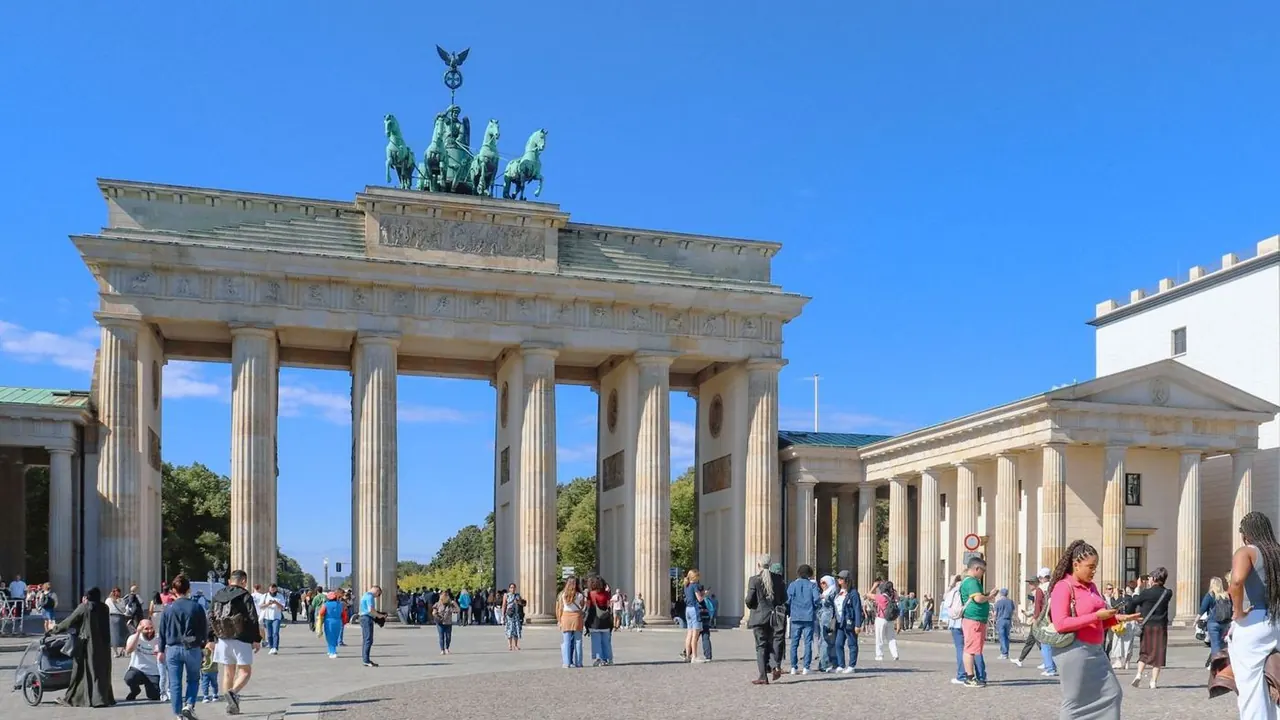
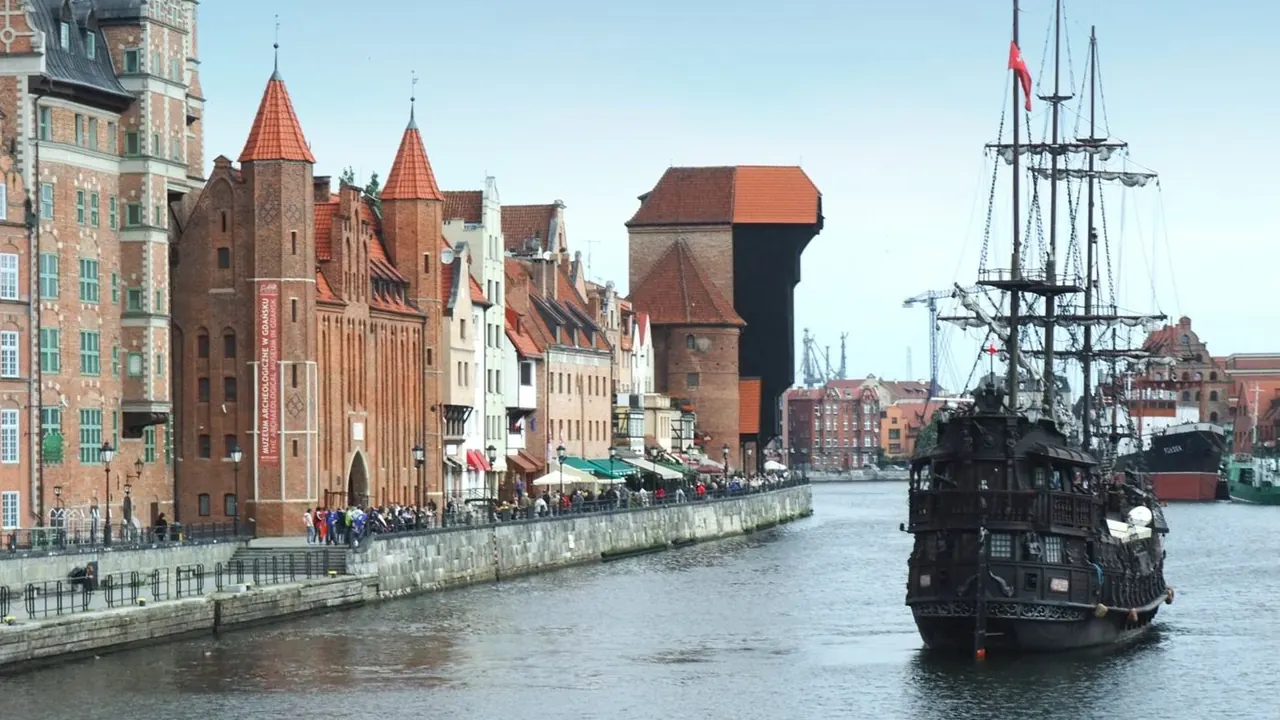
Photos: Berlin by Claudia Solano, Pexels License; Gdansk by Nikater, CC BY-SA 3.0, cropped.
Berlin or Gdansk?
Our verdict in twelve categories, each scored against the same fixed benchmark cities, and the climate month by month, so you can choose for your trip.
Choose Berlin for
- nightlife
- live music and the arts
- shopping
Berlin is the choice for a trip built around evenings and big institutions. It has world-class museums, three opera houses and the Philharmonie, and its clubs run from Saturday night into Monday, all in a city whose districts each feel like a town of their own. It suits travellers who want plenty to see by day and something on almost every night, and who don't mind riding the U-Bahn between neighbourhoods.
Choose Gdansk for
- prices
- nature and the outdoors
- beaches
Gdansk suits a slower, cheaper trip where the sea is never far away. The Hanseatic Main Town is compact enough to walk in an afternoon, the Baltic sand is a tram ride off and forested hills rise behind Oliwa and Sopot. Malbork castle and the Solidarity story give it real weight. Choose it for a summer vacation that mixes history, beach afternoons and walks in the woods without big-city prices.
Scoreboard
Twelve categories on one fixed scale from 0 to 100. The shaded stretch is the gap between the two.
Your match
Pick a travel style or drag the sliders, and both match scores follow your weighting.
Wins on nightlife and live music and the arts with your weighting.
Wins on prices and nature and the outdoors with your weighting.
What matters to you?
Category by category
What the scores mean for a trip.
Beaches & swimming
For swimming the two are about level, but the water is very different. Berlin has no coast, so in summer people head for its lakes: the sandy lido at Wannsee with its wicker beach chairs, the Müggelsee, and forest lakes such as Schlachtensee and Krumme Lanke. In high summer these lakes are actually warmer than the Baltic.
Gdansk has real sea beaches with fine, pale sand. They run from Brzeźno and Jelitkowo to Sopot, with quieter Stogi backed by pines, and the shallow water suits small children. The sea stays cool, though, and in both cities the swimming season lasts only a few summer weeks.
Food & drink
Berlin eats more widely and more interestingly. Decades of Turkish migration have filled Kreuzberg and Neukölln with bakeries and grill houses, and Vietnamese, Levantine and Korean cooking are easy to find. Add street-food nights in the market halls, beer gardens and a serious fine-dining tier, and the range goes well beyond currywurst.
Gdansk is more traditional and more uneven. Pierogi, żurek, Baltic herring and smoked fish are the staples, and milk bars serve simple Polish food very cheaply. The restaurants along Długa are aimed at visitors, so the better meals are in Wrzeszcz, Sopot and Gdynia, along with craft beer and a glass of gold-flecked Goldwasser.
Culture & sights
Berlin has far more to see. Museum Island alone, with Nefertiti and the Pergamon collections, could fill several days, and the Gemäldegalerie and Charlottenburg Palace come on top. Its twentieth-century sites, from the Reichstag dome to the Wall Memorial on Bernauer Strasse, tell the story of dictatorship and division where it happened.
Gdansk is more compact but has the prettier historic centre. The rebuilt Hanseatic Main Town, with Długa, Artus Court, the medieval crane and the brick bulk of St Mary's, is lovely to walk through. Its modern history is told at the Museum of the Second World War, at Westerplatte where the war began, and at the European Solidarity Centre in the shipyard.
Nightlife
This is the widest gap between the two cities. Berlin's techno clubs in old factories and power stations have no closing time, strict doors and weekend parties that run into Monday, and the corner Kneipen of Neukölln and Wedding keep the rest of the city going late.
Gdansk offers a good night out but not one worth travelling for. Pubs in the Main Town, student bars in Wrzeszcz and warehouse nights in the shipyard make for a pleasant evening. In summer the action moves to the clubs on Sopot's Monte Cassino street, and once the warm months end the scene goes quiet.
Nature & outdoors
Gdansk has the better outdoors, because it sits between the sea and wooded hills. Trails climb through beech woods and ravines in the Tricity Landscape Park, and a cycle path runs along the shore. The Kashubian lakes are about an hour away, and the dunes of the Hel Peninsula border one of the region's best kitesurfing bays.
Berlin's green space is flat and tamer. You can walk the Grunewald, sail on the Havel, cycle the runways at Tempelhof or follow the Berlin Wall Trail for a day or two.
Day trips
The two are about level for day trips, but the kind of day out differs. From Berlin you mostly visit other historic cities: Potsdam's Sanssouci palaces half an hour away, Wittenberg, Leipzig, the Bauhaus in Dessau and, on a long day, baroque Dresden.
From Gdansk the highlights are a castle and the coast. Malbork, the vast Teutonic fortress, is a short train ride, Sopot and Gdynia make easy half-days, and Gothic Torun and Copernicus's Frombork reward a longer journey.
Good for families
Berlin is the easier city with children, and it works in any season. It has two big zoos, an aquarium, a dinosaur skeleton at the Natural History Museum and the trains and planes of the Museum of Technology, plus playgrounds everywhere and flat streets for prams.
Gdansk is at its best for families in summer. Then there are shallow beaches, the forest zoo at Oliwa, Gdynia's aquarium, the Hevelianum and boat trips to Westerplatte. In the cold months the choice shrinks to indoor attractions, and many of the big museums deal with war.
Getting around
Berlin has the stronger network. U-Bahn, S-Bahn, trams and buses share one ticket, trains run all night at weekends and the flat streets suit cycling. You will use it a lot, because Mitte, Kreuzberg and Charlottenburg are separate centres.
In Gdansk you need transport less. The Main Town and its main museums are all on foot, trams run to the beaches, and the SKM trains link Oliwa, Sopot and Gdynia along about 30km of coast.
Shopping & style
Berlin is the better place to shop. The Sunday flea markets at Mauerpark and Boxhagener Platz are good for vinyl and East German curios, and you'll find concept stores around Hackescher Markt, vintage shops in Kreuzberg, and the Ku'damm brands and KaDeWe's food hall in the west.
Gdansk really has one thing to buy, which is Baltic amber, sold in the workshops along Mariacka Street. Beyond that it is mostly malls and chain stores, though the centuries-old St Dominic's Fair fills the old town with stalls each summer.
Affordability
Gdansk is clearly easier on the wallet. Transport, museum tickets, meals and especially beer and coffee all cost well below Western European levels. The exception is rooms in July and August, when Sopot and the Main Town charge seaside rates.
Berlin is mid-priced. Cheap döner and Vietnamese canteens help, but museum entries and good restaurants soon add up on a culture-heavy trip.
Live music & performing arts
Berlin is in another league for the stage. It has three opera houses, the Berlin Philharmonic in Scharoun's Philharmonie, the Berliner Ensemble and the Schaubühne, the Friedrichstadt-Palast revue and a deep circuit of jazz cellars, so there is something on every night.
Gdansk has a solid season on a smaller scale. The Baltic Opera, the Philharmonic in its converted power station on Ołowianka island and the Shakespeare Theatre with its opening roof all repay a visit, and the organ recitals in Oliwa Cathedral are a local tradition.
Wellness & relaxation
Berlin offers more for a restful break, thanks to German sauna culture. There are large, clothes-free sauna complexes with infusion rituals, the columned halls of the Stadtbad Neukölln, and thermal resorts in Brandenburg about an hour away.
In Gdansk, relaxation centres on Sopot, an old seaside spa whose grand shoreline hotels have treatment floors. Beyond that there are a few day spas and the hardy winter custom of dipping in the icy Baltic.
When should you go?
Pick your month. The climate figures are measured averages, not a forecast.
Berlin in July
Gdansk in July
Daytime high, °C
Rainfall in the month, mm
Where the figures come from
Gdansk has no rain gauge within 25 km of the centre, so its rainfall comes from a gridded climate dataset read at the city rather than from a gauge further away.
Gdansk's sunshine is measured 55 km from the centre, at Elblag.
Temperature and rainfall are climate normals, averaged over the years shown. Berlin: 1991-2020 normals, Berlin / Alexanderplatz (0.9 km from centre). Gdansk: 1991-2020 normals, Gdansk-Rebiechowo (12.7 km from centre).
Both cities are at their best from late May to early September, but they feel different through the summer. Berlin is the warmer of the two, with July and August afternoons around 25°C, when the lakes are good for swimming and the streets are comfortable for long walks. Gdansk peaks nearer 22°C, which is pleasant for sightseeing, and gets a little more sunshine than Berlin in early summer. The Baltic only reaches about 19°C in August, so a swim there is short and bracing.
Rain is the other difference. Berlin is fairly dry all year, with a wetter spell in July. In Gdansk the rain builds through late summer and stays heavy into autumn, peaking at 85mm in July. Winter is cold and dark in both, and harsher on the coast, where January highs hover around 1°C, so outside the warm months both work best as a museum and café trip.
Which traveller are you?
For a food and nightlife trip, Berlin wins easily. Its techno clubs in old power stations and warehouses draw people from around the world, and the bars of Kreuzberg and Friedrichshain sit among Turkish grill houses, Vietnamese canteens and market-hall food evenings.
On a tight budget, Gdansk stretches the money much further. Milk bars, cheap trams and SKM trains, modest museum tickets and inexpensive beer and coffee keep daily costs low, especially if you come in late spring or early autumn rather than at the height of summer.
For an outdoors trip, Gdansk offers more variety on its doorstep. You get beech-wood trails in the hills behind Oliwa, a coastal cycle path to Gdynia, canoeing in the Kashubian lakes and kitesurfing on the Bay of Puck, where flat Berlin has mostly forest walks and sailing.
Before you go
| Measure | Berlin | Gdansk |
|---|---|---|
| Official language | German | Polish |
| Currency | Euro (EUR) | Zloty (PLN) |
| Sockets | CF230 V, 50 Hz | CE50 Hz |
| Driving side | Right | Right |
| Time zone | UTC+1, UTC+2 in summer | UTC+1, UTC+2 in summer |
| Emergency number | 112 | 112 |
| Elevation | 34 m | 11 m |
| Main airport | Berlin Brandenburg Airport (BER)19 km from centre161 non-stop destinations | Gdańsk Lech Wałęsa Airport (GDN)13 km from centre72 non-stop destinations |
| Public holidays this year | 10 days | 14 days |
By the numbers
| Measure | Berlin | Gdansk |
|---|---|---|
| City population | 3,700,577 | 487,834 |
| People per km² | 4,153 | 714 |
| Museums within 10 km | 157 | 34 |
| UNESCO World Heritage sites within 50 km | 4 | 2 |
| Swim season, months above 21 °C | - | None |
Where else could you go?
Every comparison below shares a destination with this one, so you can follow Berlin or Gdansk somewhere new.