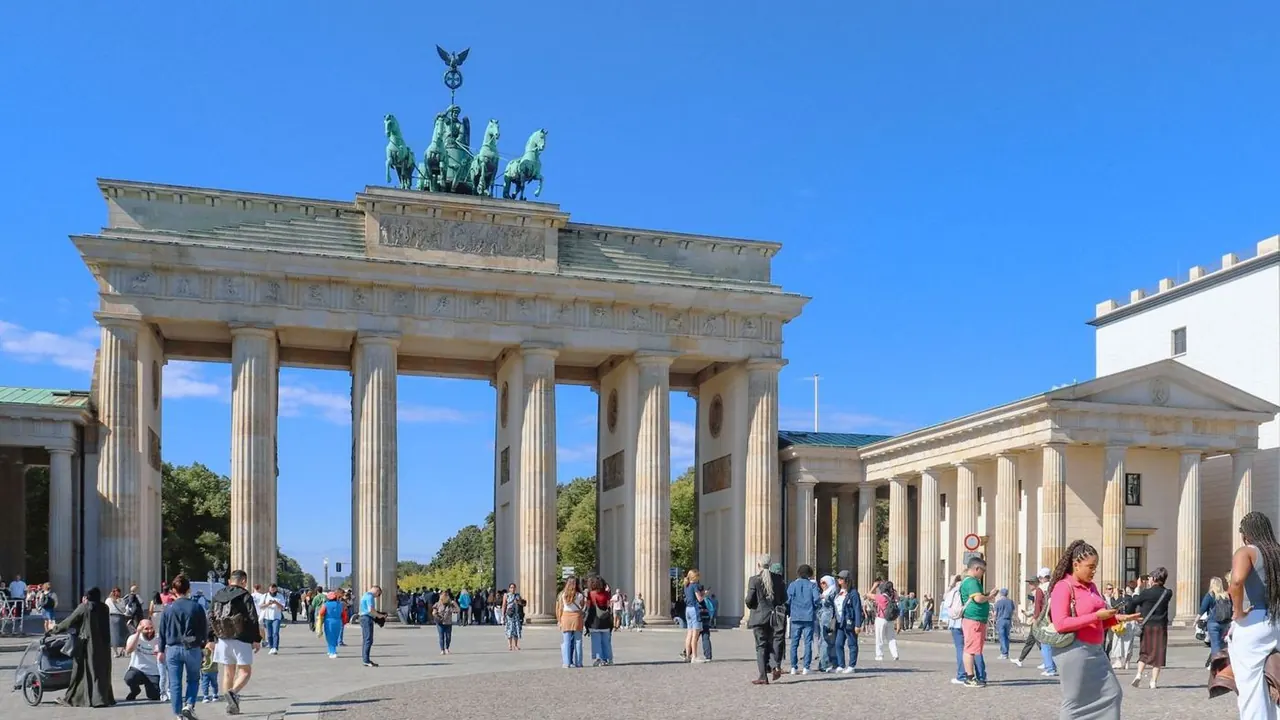
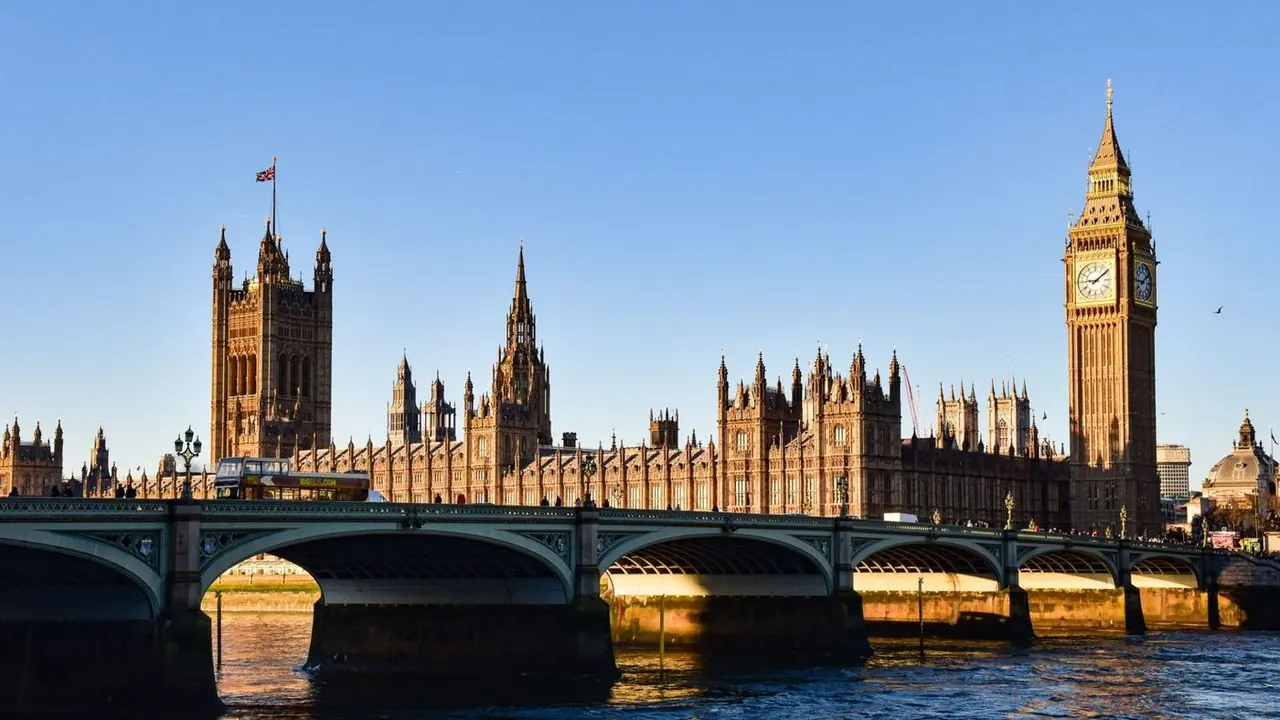
Photos: Berlin by Claudia Solano, Pexels License; London by AXP Photography, Pexels License.
Berlin or London?
Our verdict in twelve categories, each scored against the same fixed benchmark cities, and the climate month by month, so you can choose for your trip.
Choose Berlin for
- prices
- wellness
- beaches
Berlin suits travellers who want their evenings to run late and their days to cost less. It is the stronger pick for club culture, for twentieth-century history seen at the places where it happened, and for a relaxed pace with lake swimming in summer and saunas in winter. Expect a flat, spread-out city of separate neighbourhoods rather than one grand centre.
Choose London for
- shopping
- day trips
- food and drink
If you can live with the cost, London gives you more of nearly everything else. The free national museums run deeper, the theatre is in English and among the best anywhere, the shopping runs from Savile Row to Portobello Road, and the food covers half the world. Oxford, Bath and Canterbury are an easy train ride away, so a week there can take in far more than the city itself.
Scoreboard
Twelve categories on one fixed scale from 0 to 100. The shaded stretch is the gap between the two.
Your match
Pick a travel style or drag the sliders, and both match scores follow your weighting.
Too close to call, 2 points apart
Wins on prices and wellness with your weighting.
Wins on shopping and day trips with your weighting.
What matters to you?
Category by category
What the scores mean for a trip.
Beaches & swimming
Neither city is a beach destination, but Berlin's summer swimming is closer to hand. Strandbad Wannsee has a long sandy shore and wicker beach chairs, and the Müggelsee and forest lakes such as Schlachtensee are a short S-Bahn ride away, with water pleasantly warm in July and August.
London's nearest sea is the pebble beach at Brighton, about an hour by train, where the Channel stays bracing even in late summer. In town, swimming means the lidos at Brockwell Park and Parliament Hill or a cold dip in the Hampstead Heath ponds.
Food & drink
Both cities eat best through their immigrant communities, but London's range is wider and runs deeper. Berlin's strength is Turkish cooking in Kreuzberg and Neukölln, good Vietnamese and Korean food, street-food evenings at Markthalle Neun, and local classics as simple as currywurst. Eating there is cheap and casual.
London adds Bangladeshi cooking on Brick Lane, Punjabi food in Southall, Caribbean and West African cooking south of the river, and a large fine-dining scene with a modern British strand built on game and seasonal produce. Borough Market, the Sunday roast and afternoon tea give it rituals Berlin lacks, though you pay more for them.
Culture & sights
Berlin's draw is the twentieth century told on the spot. You can stand at the Wall Memorial on Bernauer Strasse, walk through the Holocaust memorial and the Topography of Terror, and walk Karl-Marx-Allee. Museum Island, with Nefertiti and the Pergamon collections, and the old masters of the Gemäldegalerie give it serious collections too.
London still goes further. The British Museum, the National Gallery, the V&A and both Tates are each worth a day, and most charge nothing. On top of that come landmarks spanning a thousand years, from the Tower and Westminster Abbey to Wren's St Paul's and Greenwich, which give it a historic depth that war-damaged Berlin cannot match.
Nightlife
Berlin is the city clubbers travel for. With no fixed closing hours, techno nights in former power stations and factories run from Saturday into Monday, behind strict doors and taped-over phone cameras. Around them sit smoky Kneipen in Neukölln and Wedding and canal-side drinking in summer, so a bar is open almost any time.
London's night out is excellent but keeps more conventional hours. Soho is the dense late core, Shoreditch and Dalston carry the warehouse scene, and Brixton and Peckham have big venues. But many pubs empty around eleven, and the real energy belongs to Friday and Saturday.
Nature & outdoors
Berlin's outdoors is about water and wheels. You can cycle or skate on the old Tempelhof runways, sail on the Havel beside the Grunewald, ride the Berlin Wall Trail or take a canoe through Brandenburg's lake country. The land is flat all the way.
London edges ahead for walkers. Inside the city you have Richmond Park's deer and ancient oaks, the skyline views from Hampstead Heath and the gardens at Kew. The Chilterns and South Downs are about an hour out by train, with marked footpaths, and the Seven Sisters cliffs make a longer day.
Day trips
Potsdam is a superb day out from Berlin, with Sanssouci and the Prussian palace gardens filling a whole day. Wittenberg, Leipzig and the Spreewald canals are easy too, and Dresden is a long but worthwhile trip, but the options thin out quickly after that.
London's rail network opens up far more. Oxford, Cambridge and Windsor are each about an hour away, and Bath, Canterbury, Salisbury with Stonehenge, and the Kent castles widen the choice. A week there can include several outings on quite different themes.
Good for families
Both work well with children, and London has slightly more to fill the days. Berlin has two zoos, including the vast, leafy Tierpark, plus the dinosaur skeleton at the Natural History Museum and the trains and planes of the Museum of Technology. Its flat streets make pushing a pram easy, though there is no big theme park.
In London, the Natural History Museum, the Science Museum and the Young V&A are free, and so is the pirate-ship playground in Kensington Gardens. Legoland, the Harry Potter studio tour and several theme parks are within reach. The downside is the stairs at many Tube stations if you have a buggy, and big crowds when schools are out.
Getting around
Neither city needs a car, and both are large enough that you will ride between neighbourhoods. Berlin is completely flat, with wide streets and plenty of bike lanes, so cycling comes naturally. Trains run all night at weekends, and Mitte, Kreuzberg and Charlottenburg are separate centres linked by a single ticket system.
London leans on the Tube, the Elizabeth line and double-decker buses, all paid with one contactless card, with riverboats down to Greenwich as a scenic extra. Its central strip from Westminster to the South Bank is a pleasure to walk, but expect stairs, long corridors and packed rush-hour trains.
Shopping & style
Berlin is best for browsing. Its Sunday flea markets at Mauerpark and Boxhagener Platz turn up vinyl, old furniture and East German curios, and there are young designers around Hackescher Markt and the KaDeWe food hall. Luxury is thin.
London covers every end of the market. It has the luxury houses of Bond Street, a living tradition of bespoke tailoring on Savile Row and Jermyn Street, and department stores such as Liberty and Fortnum & Mason. Portobello Road's antiques, Columbia Road's flower market and the bookshops of Charing Cross Road add character to match.
Affordability
Berlin is mid-priced for a Western European capital and clearly the cheaper of the two. Rooms cost less, döner, bakeries and Vietnamese canteens keep meals cheap, and a beer in a Kneipe stays reasonable. Paid museum entry is where costs creep up.
In London that pattern is reversed. Central hotel rooms are among the dearest in Europe and theatre and dining add up fast, but the great national museums and parks are free. Staying out along a good line and planning days around free collections helps, but London never becomes cheap.
Live music & performing arts
Berlin's stages are rich, with three opera houses and the Berlin Philharmonic in Scharoun's Philharmonie. For visitors who do not speak German, though, the famous theatre of the Berliner Ensemble and Volksbühne is hard to follow, so opera, dance and the Friedrichstadt-Palast revue are the easier picks.
London has the edge because so much of it is in English. The West End musicals, the National Theatre, Shakespeare's Globe and the pub fringe stages are open to any English-speaking visitor. Five major orchestras, the Wigmore Hall and the summer Proms at the Royal Albert Hall make it just as strong for classical music.
Wellness & relaxation
Berlin is the easier place to unwind. Its large sauna complexes follow the German tradition of ritual infusions, quiet rest rooms and mixed, clothes-free bathing, and the old Stadtbad Neukölln adds atmosphere. Thermal resorts in Brandenburg are about an hour away.
London's best bathing is in its surviving Victorian and Edwardian Turkish baths, such as Ironmonger Row, or in the Mayfair hotel spas. The city's pace is fast, and taking the waters properly means the train to Bath.
When should you go?
Pick your month. The climate figures are measured averages, not a forecast.
Berlin in July
London in July
Daytime high, °C
Rainfall in the month, mm
Temperature and rainfall are climate normals, averaged over the years shown. Berlin: 1991-2020 normals, Berlin / Alexanderplatz (0.9 km from centre). London: 1992-2020 (sunshine 1991-2020, rainfall 1991-2020) normals, London Weather Centre (1.3 km from centre).
Both cities are at their best from late spring to early September. July highs reach about 23°C in Berlin and a degree less in London. From April to September Berlin is the sunnier of the two, and July and August are the only months when its lakes are warm enough for a swim. July is also Berlin's wettest month, at 76mm. London's summers are milder and a little greyer. Its rain builds later in the year and peaks in October and November, so autumn there is damper than in Berlin.
Spring and winter are where the two pull apart. Berlin is still chilly in March, but by April it is already warmer and sunnier than London, and May there is very pleasant for walking. In winter Berlin turns hard, with highs of about 4°C from December to February and short, dark days. London rarely drops below 8°C, so a winter round of galleries and walks stays comfortable.
Which traveller are you?
On a trip on a tight budget, Berlin lets you stop counting. A cheaper room, a lunch from a weekly market and a bike on the flat streets keep the days simple. London can be done with careful planning, but every night's bed and every evening out takes a real bite.
For a shopping trip, London fills several days without repeating itself. You can spend a morning in the flagships of Oxford Street and Regent Street, an afternoon browsing Marylebone High Street or Seven Dials, and a weekend among the stalls of Spitalfields, Camden and Greenwich. Berlin rewards a slower hunt through its record shops and vintage rails.
On a relaxing and wellness trip, Berlin sets the easier rhythm. A day can begin with a long Sunday breakfast in a café garden and drift on to the Tiergarten or, in summer, a lakeside, at a pace the locals keep too. London takes more stamina, with crowded trains and a quick tempo even on a quiet day.
Before you go
| Measure | Berlin | London |
|---|---|---|
| Official language | German | English |
| Currency | Euro (EUR) | Pound Sterling (GBP) |
| Sockets | CF230 V, 50 Hz | G230 V, 50 Hz |
| Driving side | Right | Left |
| Time zone | UTC+1, UTC+2 in summer | UTC, UTC+1 in summer |
| Emergency number | 112 | 112 or 999 |
| Elevation | 34 m | 4 m |
| Main airport | Berlin Brandenburg Airport (BER)19 km from centre161 non-stop destinations | London Heathrow Airport (LHR)23 km from centre224 non-stop destinations |
| Public holidays this year | 10 days | 8 days |
By the numbers
| Measure | Berlin | London |
|---|---|---|
| City population | 3,700,577 | 8,799,728 |
| People per km² | 4,153 | 5,598 |
| Museums within 10 km | 157 | 216 |
| UNESCO World Heritage sites within 50 km | 4 | 4 |
Where else could you go?
Every comparison below shares a destination with this one, so you can follow Berlin or London somewhere new.