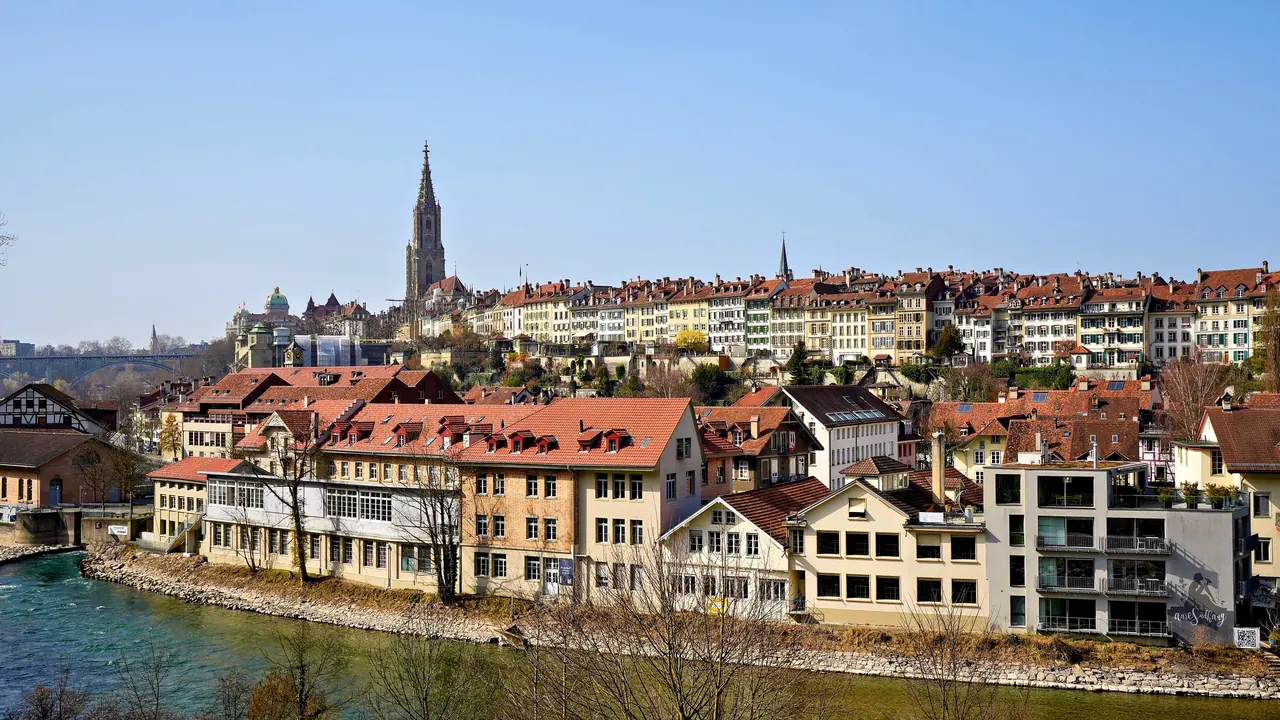
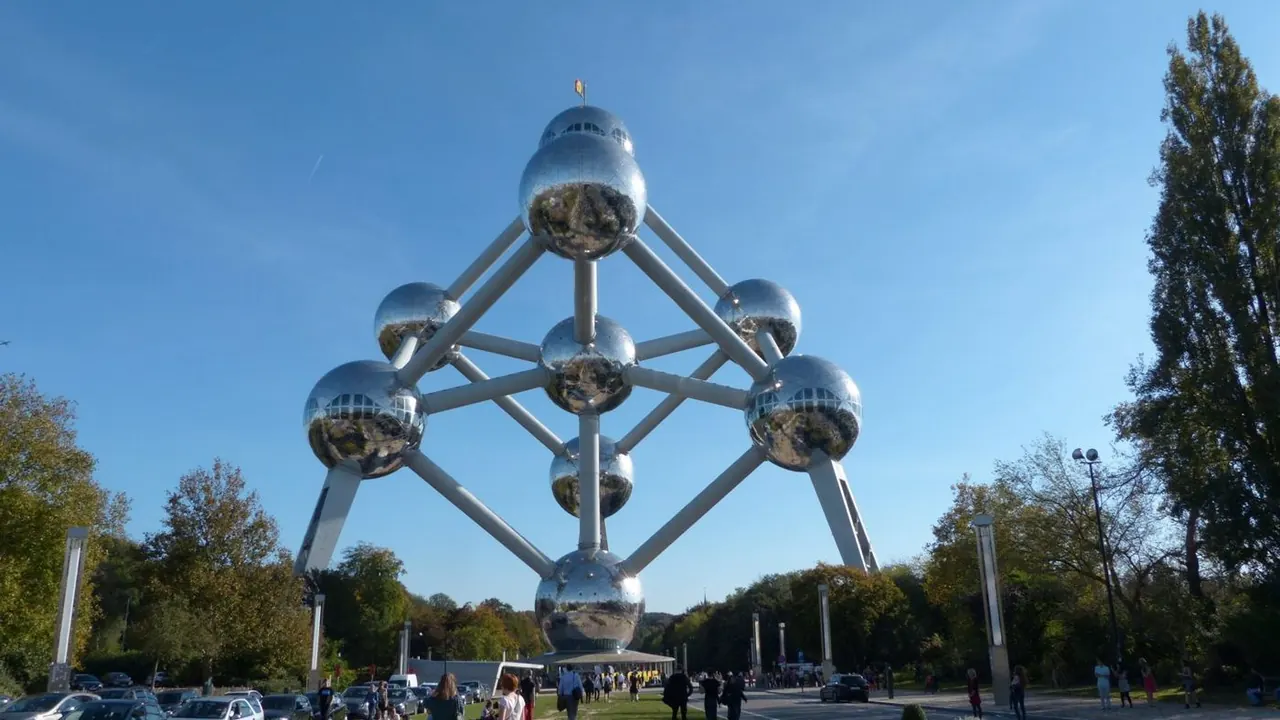
Photos: Bern by Beat Bieri, Pexels License; Brussels by Ettanghe, CC BY-SA 4.0, cropped.
Bern or Brussels?
Our verdict in twelve categories, each scored against the same fixed benchmark cities, and the climate month by month, so you can choose for your trip.
Choose Bern for
- nature and the outdoors
- beaches
- getting around
Bern suits a slower trip with the mountains in view. Its compact UNESCO old town is quick to walk, the Aare gives summer afternoons a swim, and Lake Thun and the Jungfrau peaks are close enough for hiking or skiing on most days. It is calm, safe and easy with children, but very expensive and quiet after dark.
Choose Brussels for
- food and drink
- prices
- nightlife
If you judge a trip by what you eat, drink and do in the evening, pick Brussels. Its beer culture, French-Belgian cooking and immigrant neighbourhoods give you far more choice at the table. The opera and concert halls are busier, and the Grand-Place and Horta's houses head a longer list of sights. It costs noticeably less than Bern, though the city is grittier and the countryside around it is flat.
Scoreboard
Twelve categories on one fixed scale from 0 to 100. The shaded stretch is the gap between the two.
Your match
Pick a travel style or drag the sliders, and both match scores follow your weighting.
Wins on nature and the outdoors and beaches with your weighting.
Wins on food and drink and prices with your weighting.
What matters to you?
Category by category
What the scores mean for a trip.
Beaches & swimming
Neither city has a sea, but Bern has a real summer swim. Locals walk up the Aare from the Marzili, jump in and float back down past the Federal Palace. There are also riverside lidos, and Lake Thun is twenty minutes away for calmer water. The river is cold and strong, so it suits confident swimmers.
Brussels has nothing like this in town, only indoor Art Deco pools and open-air basins in summer. The North Sea beaches at Ostend or Knokke are a little over an hour away. The sand is wide, but the water gets no warmer than about 18°C and the coast is often windy, so it makes a day out rather than a swim.
Food & drink
Bern eats well but within a narrow range. You get Berner Platte, rösti and fondue in old guildhall rooms and cellars under the arcades, Emmental cheese at the markets and excellent chocolate. The choice is limited and eating out is costly.
Brussels offers far more. Mussels, waterzooi and shrimp croquettes come with a beer culture built on lambics and Trappist ales. Matonge, Saint-Josse and Saint-Gilles add Congolese, Moroccan and Turkish cooking. Both cities take chocolate seriously, and in Brussels the makers cluster around the Sablon.
Culture & sights
Bern's strength is that its old town survives whole. The entire UNESCO-listed centre on its loop of the Aare is intact and arcaded, with the Minster and the Zytglogge. Add the Zentrum Paul Klee and the Einstein Museum and you have two good days.
Brussels has more to see, though it is less tidy. The Grand-Place, the Bruegel and Magritte collections, Horta's Art Nouveau houses and the Cinquantenaire museums make a longer and richer itinerary. Office blocks do break up the historic streets between them.
Nightlife
Bern goes quiet early during the week. Evenings mean cellar bars under the arcades, Aarbergergasse at weekends, riverside terraces in summer and the Reitschule for late, rough-edged parties.
Brussels has far more going on, mostly in its bars. Saint-Géry and the Bourse fill up on warm nights, Flagey and Châtelain draw a local crowd, and century-old taverns pour strong ales. A respected techno club in the Marolles and the queer scene around Rue du Marché au Charbon give it a club side that Bern lacks.
Nature & outdoors
Nature is Bern's clearest advantage. You can see the Eiger, Mönch and Jungfrau from the old town, and they are about an hour away for alpine hiking, cable cars and skiing. The Gurten funicular, the wooded Aare paths and the Emmental give easy outings without a train ride.
Brussels has the tall beeches of the Sonian Forest and good parks such as the Bois de la Cambre, but the land around it is flat. For hills and kayaking you have to go to the Ardennes valleys near Dinant, which makes a long day.
Day trips
Both cities are excellent bases, and the difference lies in where the trains take you. From Bern you reach Swiss lake and mountain towns: Thun, Murten, Fribourg and Gruyères close by, and Lucerne and Zurich in about an hour. On these trips the scenery matters as much as the towns.
From Brussels the destinations are art cities: Ghent with its Van Eyck altarpiece, Bruges, Antwerp's Rubens house, Leuven and Mechelen, plus the battlefield at Waterloo. High-speed trains also bring Paris, Lille and Cologne within a day, which reaches further across borders than Bern can.
Good for families
Bern is the easier city with children. It is calm, clean and compact, with the bear park, the wooded Dählhölzli zoo and a big playground on top of the Gurten. Just keep small children out of the fast Aare.
Brussels has the bigger attractions: the Iguanodon hall at the Natural Sciences museum, the Atomium, Mini-Europe and the Walibi amusement park. Heavy traffic, cobbles and frequent rain make the days harder work.
Getting around
Bern is about as simple as a city gets. The old town takes about twenty minutes to walk end to end, the arcades keep you dry, and the main station is at its top. Trams and short funiculars cover the rest.
Brussels is manageable but harder going. The main sights are close together, but the climb to the upper town is steep, pavements are uneven and traffic is heavy. The metro and trams, where you can pay by tapping a bank card, take you out to Ixelles and Saint-Gilles.
Shopping & style
In Bern, shopping is a pleasant walk under the arcades of Spitalgasse and Kramgasse, with watch and chocolate shops, then antiques and crafts in the cellar shops of Gerechtigkeitsgasse.
Brussels has more range and character. Belgian designers are on Rue Antoine Dansaert and luxury brands on Avenue Louise, the Sablon has chocolatiers and antiques, and the Marolles has a daily flea market on Place du Jeu de Balle.
Affordability
Neither city is cheap, but Bern costs far more. Hotels, dinners and even a beer on a terrace cost more than most visitors expect. The transport pass from your hotel, the free Federal Palace tours and supermarket lunches only go so far.
Brussels has Northern European prices, but hotel rates fall at weekends when the business travellers leave. Frites, beer and the cooking in the immigrant neighbourhoods keep daily spending reasonable.
Live music & performing arts
Bern covers the basics of a capital. There is German-language opera and drama at the Stadttheater, the symphony orchestra in the Casino, new dance at the Dampfzentrale, and the jazz festival and Gurtenfestival in their seasons.
Brussels gives you more reason to book ahead. La Monnaie stages adventurous opera, Bozar and Flagey host major orchestras, theatre and dance run in both French and Dutch, and big rock tours play here.
Wellness & relaxation
Bern is the easier place to slow down. Sundays are quiet and long lunches by the river are normal. There is a large thermal complex on the western edge of the city, and mountain spa hotels in the Bernese Oberland are within reach.
Brussels moves at the pace of a working capital, with heavy traffic, and offers only hammams, day spas and hotel spas. Its calmest moments are an afternoon on a café terrace in Ixelles or a walk in the Sonian Forest.
When should you go?
Pick your month. The climate figures are measured averages, not a forecast.
Bern in July
Brussels in July
Daytime high, °C
Rainfall in the month, mm
Where the figures come from
Bern has no rain gauge within 25 km of the centre, so its rainfall comes from a gridded climate dataset read at the city rather than from a gauge further away.
Bern's sunshine is measured 71 km from the centre, at Herten.
Temperature and rainfall are climate normals, averaged over the years shown. Bern: 2010-2020 (sunshine 1991-2020, rainfall 1991-2020) normals, Bern / Bern - Belp Airport (5.5 km from centre). Brussels: 1991-2020 normals, Uccle (5.2 km from centre).
From December to February both cities are cold and grey, with daytime highs of about 6°C and little sunshine, and November is only a little milder. This is the season for museums and markets, and in Bern for trips up into the mountains, which are often sunnier than the city. Spring warms up at much the same pace in both. April is pleasant for walking in either city, and in Brussels it is the driest month of the year.
The two part ways in summer. Bern gets warmer, about 26°C in July and August, and clearly sunnier, so June to early September is the season for river swimming and high-mountain walking. The catch is rain: May to August are Bern's wettest months, each with over 100mm. Brussels stays milder at about 23°C and never gets properly hot. Its rain is spread through the year, and August and December are the dampest months. The streets are comfortable for walking from May to September, though a Brussels summer is greyer than one in Bern.
Which traveller are you?
On an outdoors trip, Bern is the clear choice. The Jungfrau region is about an hour away by train and Lake Thun is nearer. The Gurten and the Aare paths start from town. Around Brussels, beyond the Sonian Forest, the land is mostly flat farmland.
For a food and nightlife trip, choose Brussels. You get lambics in wood-panelled taverns, mussels and carbonnade, Congolese cooking in Matonge, and late bars around Saint-Géry and Flagey. Bern's cellar bars and Berner Platte are pleasant but quiet by comparison.
On a trip on a tight budget, Brussels is far easier. Frites, cooking in the immigrant neighbourhoods, good-value beer and cheaper weekend hotels keep costs in check. Bern is very expensive, and supermarket lunches and the free bear park only soften the bill.
Before you go
| Measure | Bern | Brussels |
|---|---|---|
| Official language | French, German, Italian, Romansh | French, German, Dutch |
| Currency | Swiss Franc (CHF) | Euro (EUR) |
| Sockets | CJ230 V, 50 Hz | CE230 V, 50 Hz |
| Driving side | Right | Right |
| Time zone | UTC+1, UTC+2 in summer | UTC+1, UTC+2 in summer |
| Emergency number | 112 | 112 |
| Elevation | 542 m | 70 m |
| Main airport | Zürich Airport (ZRH)101 km from centre226 non-stop destinations | Brussels Airport (BRU)11 km from centre191 non-stop destinations |
| Public holidays this year | 10 days | 14 days |
By the numbers
| Measure | Bern | Brussels |
|---|---|---|
| City population | 136,988 | 195,546 |
| People per km² | 2,655 | 5,908 |
| Museums within 10 km | 30 | 106 |
| UNESCO World Heritage sites within 50 km | 2 | 10 |
Where else could you go?
Every comparison below shares a destination with this one, so you can follow Bern or Brussels somewhere new.