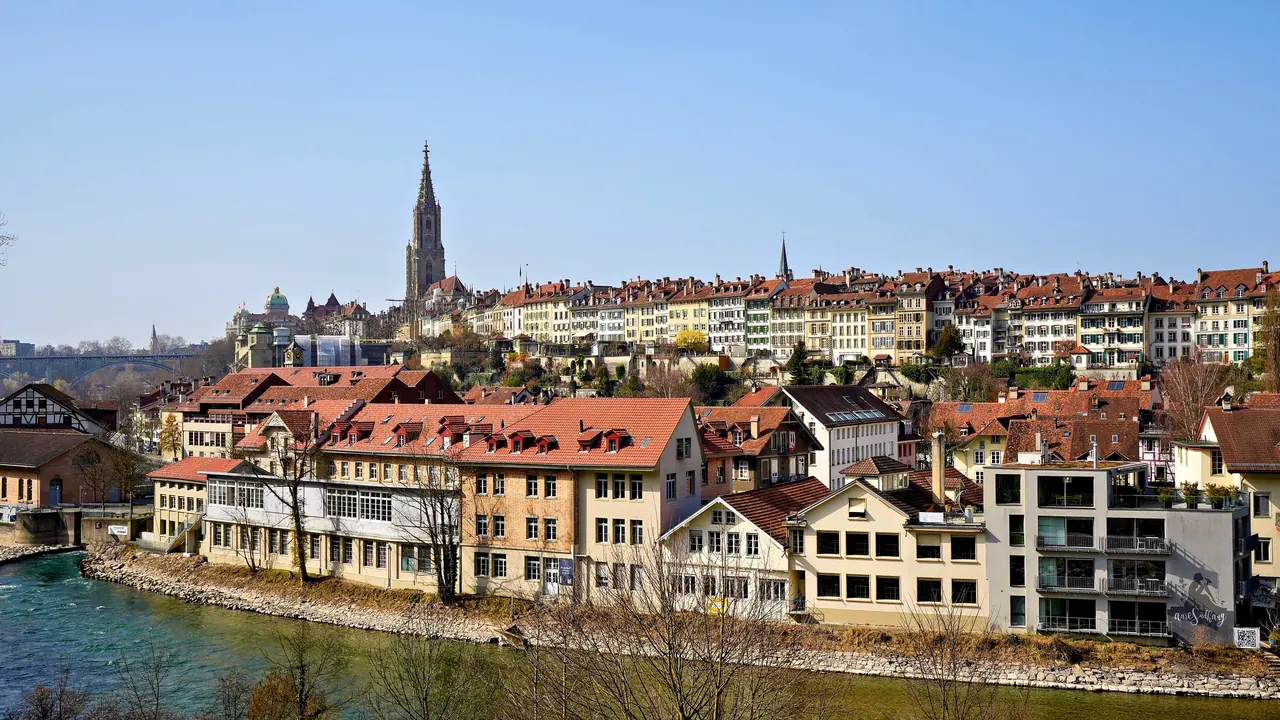
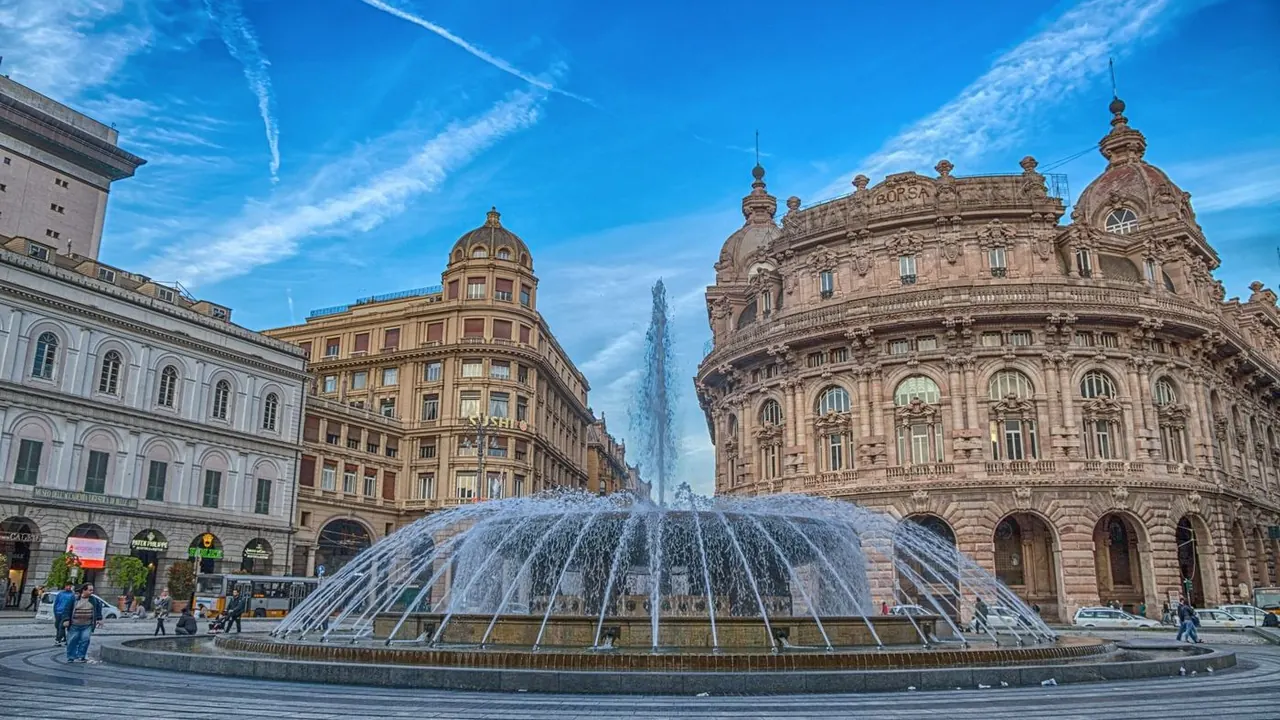
Photos: Bern by Beat Bieri, Pexels License; Genoa by Faber1893, CC BY-SA 4.0, cropped.
Bern or Genoa?
Our verdict in twelve categories, each scored against the same fixed benchmark cities, and the climate month by month, so you can choose for your trip.
Choose Bern for
- getting around
- wellness
- nature and the outdoors
Bern suits a traveller who wants a tidy, walkable base and a different Swiss town or Alpine valley every day. The UNESCO old town takes a couple of days, the trains do the rest, and the evenings are quiet. It is the better choice for mountains, lakes and calm, as long as the budget can take Swiss prices.
Choose Genoa for
- prices
- food and drink
- beaches
Anyone who wants to eat well, get lost in a huge medieval quarter and swim in the sea in the afternoon should look at Genoa. It costs far less, its palaces and caruggi give you more to explore, and the Riviera villages lie along the same railway. Expect steep lanes, slow buses and a louder, rougher centre than Bern's.
Scoreboard
Twelve categories on one fixed scale from 0 to 100. The shaded stretch is the gap between the two.
Your match
Pick a travel style or drag the sliders, and both match scores follow your weighting.
Wins on getting around and wellness with your weighting.
Wins on prices and food and drink with your weighting.
What matters to you?
Category by category
What the scores mean for a trip.
Beaches & swimming
Neither city is a beach destination, but Genoa has the sea and Bern does not. In Bern, swimming means jumping into the cold, fast Aare and drifting back down to the Marzili baths. That is for confident swimmers only. For calmer water you take the train to Lake Thun.
Genoa has clear Mediterranean water inside the city, at the Boccadasse cove, the bathing establishments along Corso Italia and the platforms at Nervi. Better pebble bays at Camogli and Sestri Levante are a short train ride away. Expect to rent a lounger and to find summer weekends crowded.
Food & drink
Genoa is much the better place to eat. It is the home of pesto, and the food runs from focaccia at breakfast to farinata and fried fish from the old-town friggitorie, and on to seafood with Vermentino in the harbour trattorias. The Mercato Orientale shows what the region grows.
Bern's cooking is hearty and traditional: the Berner Platte, rösti and fondue served in guildhall dining rooms and vaulted cellars, Emmental cheese at the markets and very good chocolate. It is filling but narrow in range, and every meal out costs a lot.
Culture & sights
Bern's whole old town is a UNESCO World Heritage Site. It is compact and handsome, with its arcades, painted fountains, the Zytglogge and the Minster. Its museums are better than you would expect in a city this size, above all the Zentrum Paul Klee and Einstein's flat on Kramgasse, but two days covers it.
Genoa has more to see. The UNESCO listing covers the Strade Nuove and the Rolli palaces on Via Garibaldi, where the painted halls hold Van Dyck and Rubens. Below them, the medieval caruggi make up one of Europe's largest historic quarters. With the striped cathedral, the Lanterna and the marble sculpture at Staglieno as well, you can fill several full days.
Nightlife
Neither city is for a big night out, but Genoa has a little more going on. Students fill the squares around Piazza delle Erbe for aperitivo until late at weekends, and in summer people head out to Corso Italia and the beach clubs.
Bern's evenings happen in the vaulted cellar bars under the arcades, the bars along Aarbergergasse and the terraces on the Aare. The Reitschule hosts rough-edged late parties. Weeknights are quiet in both cities.
Nature & outdoors
Both are excellent for the outdoors, and the difference is mountains against sea. From Bern, the Eiger, Mönch and Jungfrau are about an hour away by train for high-mountain hiking, cable cars and winter skiing. Closer in are the Gurten, the paths along the Aare and the Emmental farmland.
Genoa's hills drop straight into the Mediterranean. There is the fortress trail above Righi, the cliff paths of the Portofino park down to San Fruttuoso and the terraced Cinque Terre trails, plus whale watching, kayaking and diving. Pick Bern for snow and Alpine lakes, and Genoa for coastal walks in spring and autumn.
Day trips
Both make excellent bases, but the trips are very different. Bern sits at the centre of the Swiss rail network. Fribourg, Murten and Thun are close by, Lucerne, Basel and Zurich are each about an hour away, and from Fribourg you can go on to the castle and cheese dairies of Gruyères. Each day can bring a new town, and sometimes a new language.
Genoa's trips run along a single coastline: Camogli, Portofino and the Cinque Terre to the east, and Finale Ligure Borgo and Noli to the west. Milan and Turin are about an hour and a half inland. Bern gives you more variety, and Genoa gives you the sea.
Good for families
Both work well with children, in different ways. Bern is calm and easy. It has the bear park, the Dählhölzli zoo, the playground on the Gurten and trams that take pushchairs, though the Aare is too fast for young swimmers.
Genoa has the bigger single attraction in its aquarium, one of Europe's largest, along with the walk-through submarine at the Galata museum and the funiculars. Away from the Porto Antico, though, the steep, dark lanes and endless stairs make the days harder.
Getting around
Bern is much the easier city to get around. You can walk the centre from the station to the bear park in about twenty minutes, the arcades keep you dry, and punctual trams, funiculars and a public lift cover the rest on one fare system.
Genoa is a steep maze, and its single short metro line and slow buses in congested streets help only a little. The funiculars, the lifts and the coastal railway are the useful links, and you will still do a lot of climbing on foot.
Shopping & style
Neither is a shopping destination, and in both the best buys are local. Bern's arcaded run of Spitalgasse, Marktgasse and Kramgasse has Swiss watches and chocolate, and the cellar shops of Gerechtigkeitsgasse sell antiques, books and crafts.
Genoa has the Italian labels on Via XX Settembre and Via Roma. The better finds are candied fruit, olive oil and pesto from long-established old-town shops, and silver filigree and coral from small workshops.
Affordability
The gap here is wide. Bern is very expensive, from plain hotels to a beer on a terrace. Visitors on a budget eat supermarket takeaway lunches and lean on the free pleasures: the river paths, the bear park and the guided tours of the Federal Palace.
Genoa is mid-range and feels good value for Italy. Focaccia and farinata make cheap meals, trattoria lunches are fairly priced and the funiculars are inexpensive. Only the Riviera resorts and lounger hire on summer beach days push costs up.
Live music & performing arts
The two are on a similar scale, with enough for an evening or two in either. Bern has opera and drama in German at the Stadttheater, the symphony orchestra in the Casino, contemporary dance at the Dampfzentrale, a spring jazz festival and the Gurtenfestival in July.
Genoa has opera at the Teatro Carlo Felice on Piazza De Ferrari and concerts honouring Paganini, and small live-music clubs keep its singer-songwriter tradition going.
Wellness & relaxation
Bern is the more restful of the two. The pace is slow and Sundays are quiet. A large thermal bath complex on the western edge of the city has warm pools and saunas, and the mountain spa hotels of the Bernese Oberland are there for more serious spa time.
Genoa's centre is noisy with port traffic and crowded lanes, and its spas are mostly in hotels. Calm means the villa gardens at Nervi or a long lunch in a Riviera village. The thermal waters of Acqui Terme are over an hour away.
When should you go?
Pick your month. The climate figures are measured averages, not a forecast.
Bern in July
Genoa in July
Daytime high, °C
Rainfall in the month, mm
Where the figures come from
Bern has no rain gauge within 25 km of the centre, so its rainfall comes from a gridded climate dataset read at the city rather than from a gauge further away.
Bern's sunshine is measured 71 km from the centre, at Herten.
Genoa has no rain gauge within 25 km of the centre, so its rainfall comes from a gridded climate dataset read at the city rather than from a gauge further away.
Genoa's sunshine is measured 80 km from the centre, at Capo Mele.
Temperature and rainfall are climate normals, averaged over the years shown. Bern: 2010-2020 (sunshine 1991-2020, rainfall 1991-2020) normals, Bern / Bern - Belp Airport (5.5 km from centre). Genoa: 1991-2020 normals, Genova / Sestri (6.7 km from centre).
Bern has a short, clear summer. June to August reach about 26°C, which is warm enough for the Aare and the riverside lidos from June to early September. These are also the wettest months, though, so showers come with the sunshine. Winter is grey and cold at around 5°C, and the arcades keep the old town walkable. Late spring and September are pleasant for sightseeing and mountain trips.
Genoa's winter days are much milder, so city walks work in any month. The sea is warm enough for swimming from June and reaches about 25°C in August, when afternoons hit 28°C and the steep lanes become hard work. July is the driest month, but autumn brings heavy rain, with October at around 212mm. May, June and the first half of September are the safest months for walking and swimming in the same trip.
Which traveller are you?
On a trip on a tight budget, Bern asks for constant trade-offs, and saving money there mostly means doing without. Genoa lets you live off the old town's street counters and ride the coastal trains to a different village each day without counting every coin.
For a food and nightlife trip, Genoa is the stronger choice on both counts. Bern's cooking is hearty but narrow and its cellar bars empty early. In Genoa, Ligurian cooking and the late aperitivo crowds in the old-town squares make for long evenings.
On a relaxing and wellness trip, Bern makes the gentler base. A slow morning under the arcades, an afternoon on a Lake Thun boat and an early night suit its pace. Genoa is a city that rewards energy, with stairs, noise and crowds, unless you stay out on the coast.
Before you go
| Measure | Bern | Genoa |
|---|---|---|
| Official language | French, German, Italian, Romansh | Italian |
| Currency | Swiss Franc (CHF) | Euro (EUR) |
| Sockets | CJ230 V, 50 Hz | CFL230 V, 50 Hz |
| Driving side | Right | Right |
| Time zone | UTC+1, UTC+2 in summer | UTC+1, UTC+2 in summer |
| Emergency number | 112 | 112 |
| Elevation | 542 m | 20 m |
| Main airport | Zürich Airport (ZRH)101 km from centre226 non-stop destinations | Genoa Cristoforo Colombo Airport (GOA)7 km from centre25 non-stop destinations |
| Public holidays this year | 10 days | 13 days |
By the numbers
| Measure | Bern | Genoa |
|---|---|---|
| City population | 136,988 | 558,745 |
| People per km² | 2,655 | 2,325 |
| Museums within 10 km | 30 | 51 |
| UNESCO World Heritage sites within 50 km | 2 | 1 |
| Swim season, months above 21 °C | - | 4 months |
Where else could you go?
Every comparison below shares a destination with this one, so you can follow Bern or Genoa somewhere new.