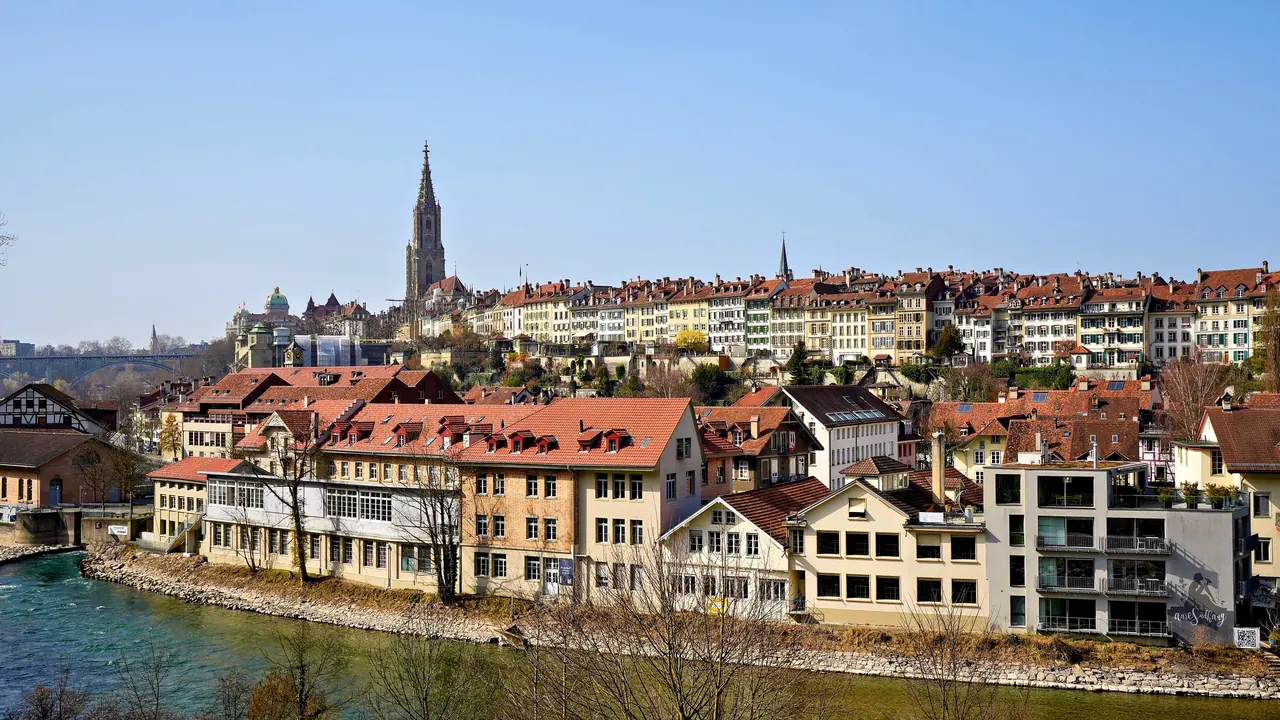
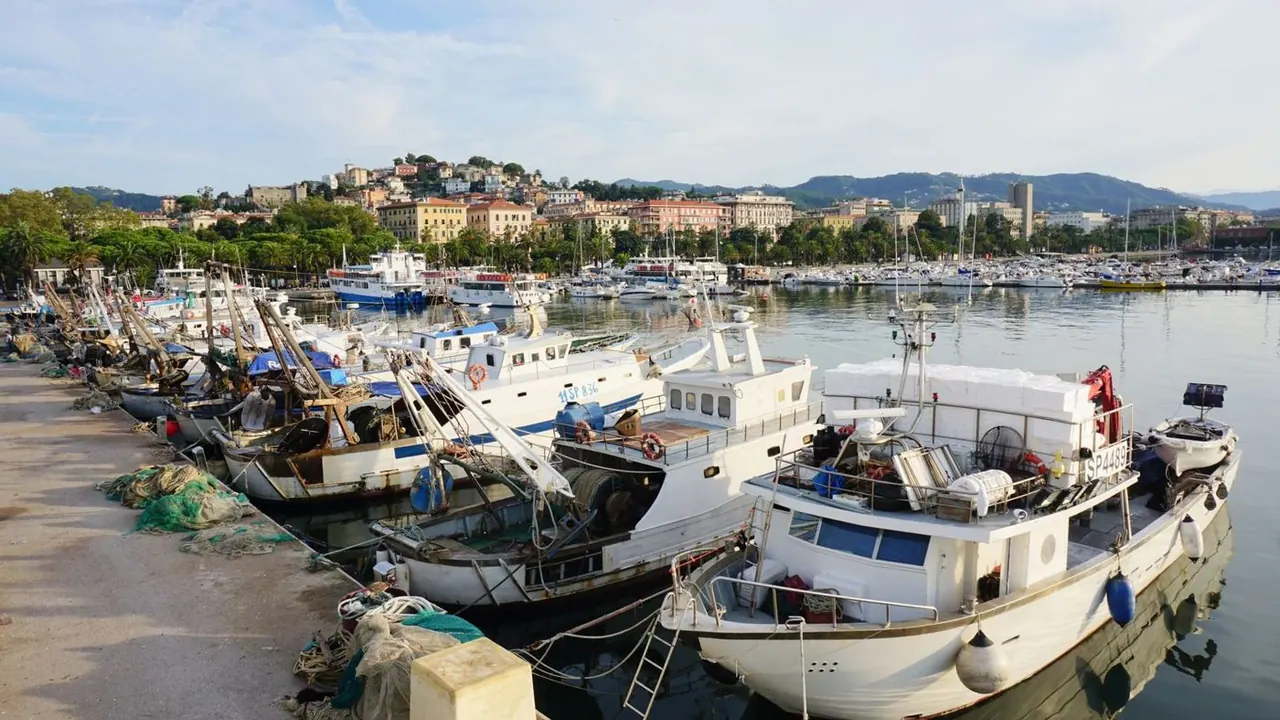
Photos: Bern by Beat Bieri, Pexels License; La Spezia by Irina Balashova, Pexels License.
Bern or La Spezia?
Our verdict in twelve categories, each scored against the same fixed benchmark cities, and the climate month by month, so you can choose for your trip.
Choose Bern for
- culture and sights
- getting around
- live music and the arts
Bern suits travellers who want an orderly, compact base with plenty to see. Its arcaded old town on the river loop is a World Heritage Site, the museums are strong for a small city, and the Alps are an hour away by train. It is also the easier choice with children and for anyone who wants smooth transport and calm evenings, as long as the budget can stand Swiss prices.
Choose La Spezia for
- prices
- beaches
- food and drink
If the trip is about the sea and the coast, La Spezia is the better fit. The Cinque Terre villages, Portovenere and the coves around the gulf are all within minutes, the Ligurian cooking has more character, and a stay costs far less. It is best for walkers and swimmers on a warm-weather trip, and less suited to anyone hoping for sights in the town itself.
Scoreboard
Twelve categories on one fixed scale from 0 to 100. The shaded stretch is the gap between the two.
Your match
Pick a travel style or drag the sliders, and both match scores follow your weighting.
Wins on culture and sights and getting around with your weighting.
Wins on prices and beaches with your weighting.
What matters to you?
Category by category
What the scores mean for a trip.
Beaches & swimming
Neither city has a beach in town, and the swimming is very different. In Bern it means the Aare: you walk upstream from the Marzili, jump in and let the cold green current carry you back. It is exciting for strong swimmers, and the season is over by early September. Lake Thun has calmer water.
La Spezia has the sea, though you go out of town to swim. Lerici and San Terenzo have sheltered sand and pebble, Palmaria has rocky spots with clear water, and Monterosso has a long sandy beach. The water is much warmer and the season longer, but August crowds and the many paid bathing establishments take some of the shine off.
Food & drink
La Spezia has the more interesting food. Farinata from wood ovens, mussels from the gulf, trofie with pesto and the white wines of the Cinque Terre all taste of the place, even if there is little fine dining or international choice.
Bern's cooking is hearty Swiss fare: the Berner Platte, rösti and fondue in old guildhall dining rooms and cellars under the arcades, with very good chocolate and Emmental cheese at the markets. It is reliable rather than exciting, and the bill is much higher.
Culture & sights
For sights in the city itself, Bern is the stronger choice. The whole old town on its loop of the river is a World Heritage Site, with the Zytglogge, the Minster tower and the Federal Palace. The museums are good for a city this size, from the Klee collection to the Einstein flat on Kramgasse.
La Spezia is a nineteenth-century naval town of straight avenues and Liberty-style facades. The Museo Amedeo Lia and the prehistoric stele statues in the Castello San Giorgio are worth seeing, but the region's history is mostly out along the coast, not in the city.
Nightlife
Neither is a city for a big night out, but Bern has a little more going on after dark: cellar bars under the arcades, busy weekend streets near the station and the Reitschule for late, rough-edged parties. In La Spezia the evening is the aperitivo on Via del Prione or the Lerici waterfront, and most people go to bed early before a day on the trails.
Nature & outdoors
Both are excellent bases for the outdoors, but the landscapes are very different. From Bern, the Eiger, Mönch and Jungfrau are about an hour away, with high-mountain hiking, cable cars and winter skiing. The Gurten, the Aare paths and the Emmental are there for gentler days.
La Spezia's outdoors is mostly the coast. There are the terraced cliffs and footpaths of the Cinque Terre national park, the loop walk on Palmaria and the pinewoods of Montemarcello, as well as kayaking and diving in the gulf. For mountains, the marble peaks of the Apuan Alps rise about an hour inland.
Day trips
Bern's day trips are mostly towns and cities, strung across the Swiss rail network in every direction. Lucerne, Basel and Zurich are each about an hour away, and the Lavaux vineyard terraces above Lake Geneva are a little further. Medieval Fribourg, lakeside Murten, baroque Solothurn and Gruyères with its cheese dairies make shorter outings.
From La Spezia the outings mostly follow the shore. The Cinque Terre villages are minutes away on the coastal train, Portovenere is a short boat ride, and inland there are walled Sarzana, the Roman ruins of Luni, and Pisa and Lucca about an hour away. A week based in Bern feels like a tour of a whole country, with a change of language halfway. A week in La Spezia stays around one gulf and its coastline, with Tuscany for a change of scene.
Good for families
Bern is the easier city with children. The bear park, the Dählhölzli zoo along the Aare, the animal dioramas at the Natural History Museum and the playground on the Gurten can fill several days. The Marzili has shallow pools for children, though the river itself is for strong swimmers only.
In La Spezia the best family days are on the water, with boat trips around Portovenere and calm beaches at San Terenzo and Lerici. There is no zoo or aquarium, and the main outings mean steep villages and crowded trains, so it suits older children better than toddlers.
Getting around
Bern is one of the easiest cities to get around. You can walk across the centre in about twenty minutes, under cover of the arcades, trams and buses run on one fare system, and funiculars and a lift take you up and down between the river and the old town.
La Spezia's flat centre is just as easy to walk, and trains, buses and seasonal ferries link it to the coast. The problem is summer, when the coastal trains and village platforms are packed, so getting about takes more patience than in Bern.
Shopping & style
Bern has the better shopping, though neither city is a place for fashion. The line of arcaded streets from Spitalgasse to Kramgasse has watch and chocolate shops, and the cellar shops of Gerechtigkeitsgasse sell antiques, design and crafts. La Spezia's Via del Prione is mostly everyday chains and shoe shops, and the best things to take home are edible: pesto, olive oil, Sciacchetrà and anchovies.
Affordability
This is the biggest difference between the two. Bern is very expensive for almost everything, from plain hotels to a beer on a terrace. The tram and bus pass that hotels usually give guests helps, and so do free pleasures such as the bear park and the river paths.
La Spezia is mid-priced, with cheap local trains, fair-value everyday food and rooms that cost less than in the Cinque Terre villages. Summer rates, trail passes and bathing establishments push costs up, but even then a stay costs far less than in Bern.
Live music & performing arts
Bern has more to see on any given evening. There is opera, ballet and German-language drama at the Stadttheater, the symphony orchestra at the Casino and new dance at the Dampfzentrale, plus a jazz festival in spring and the Gurtenfestival in July. La Spezia has the Teatro Civico's season and a summer of jazz and open-air concerts in piazzas and castle courtyards, but little the rest of the year, and for opera you have to go to Genoa or Pisa.
Wellness & relaxation
Bern is the better place for proper spa time. It has a large thermal bath complex with saunas and steam rooms on the western edge, a hammam-style spa in the old town and mountain spa hotels within reach in the Bernese Oberland, all in a city where Sundays are quiet.
La Spezia has no spa tradition of its own beyond hotel spas and the small thermal baths at Equi Terme an hour inland. Here the rest comes from the places, not from treatments: evenings on the seafront out of season, a long lunch in Tellaro and the quiet of Palmaria.
When should you go?
Pick your month. The climate figures are measured averages, not a forecast.
Bern in July
La Spezia in July
Daytime high, °C
Rainfall in the month, mm
Where the figures come from
Bern has no rain gauge within 25 km of the centre, so its rainfall comes from a gridded climate dataset read at the city rather than from a gauge further away.
Bern's sunshine is measured 71 km from the centre, at Herten.
La Spezia's temperatures are measured 65 km from the centre, at Pisa / S. Giusto.
La Spezia has no rain gauge within 25 km of the centre, so its rainfall comes from a gridded climate dataset read at the city rather than from a gauge further away.
Temperature and rainfall are climate normals, averaged over the years shown. Bern: 2010-2020 (sunshine 1991-2020, rainfall 1991-2020) normals, Bern / Bern - Belp Airport (5.5 km from centre). La Spezia: 1991-2020 normals, Pisa / S. Giusto (64.8 km from centre).
Bern is best from June to early September. Highs are around 26°C, the days are long and sunny, and the Aare is warm enough to swim. These are also its wettest months, though, with over 100mm of rain in most of them, so pack for showers. Winter highs stay in single figures and there is little sun, which makes December to February a time for museums and the covered arcades rather than the river.
La Spezia's year runs the other way. Summer is its dry season. July and August reach about 30°C, which is hot for the coastal paths, and the sea warms to 25°C. You can swim from June into early October. May, June and September are the best balance for walking and swimming in the same trip. October and November are the wet months, with up to 151mm of rain, but winters stay mild and noticeably sunnier than in Bern.
Which traveller are you?
For a beach and sun trip, La Spezia is the clear choice. In Bern swimming means a cold, fast river for a short summer season. From La Spezia the sea is warm from June into October, with sandy Monterosso and the clear water around Palmaria within easy reach.
On a culture and arts trip, Bern gives you more. The old town is a World Heritage Site, the Zentrum Paul Klee and the Kunstmuseum are strong, and in the evening there is opera, ballet and the symphony orchestra. La Spezia's naval-era centre fills a day or two.
On a tight budget, La Spezia makes your money go much further. Farinata, focaccia and simple trattorias are fair value and the local trains are cheap. In Bern even plain hotels and a beer on a terrace are expensive, so lunch often comes from a supermarket counter.
Before you go
| Measure | Bern | La Spezia |
|---|---|---|
| Official language | French, German, Italian, Romansh | Italian |
| Currency | Swiss Franc (CHF) | Euro (EUR) |
| Sockets | CJ230 V, 50 Hz | CFL230 V, 50 Hz |
| Driving side | Right | Right |
| Time zone | UTC+1, UTC+2 in summer | UTC+1, UTC+2 in summer |
| Emergency number | 112 | 112 |
| Elevation | 542 m | 3 m |
| Main airport | Zürich Airport (ZRH)101 km from centre226 non-stop destinations | Pisa International Airport (PSA)65 km from centre82 non-stop destinations |
| Public holidays this year | 10 days | 13 days |
By the numbers
| Measure | Bern | La Spezia |
|---|---|---|
| City population | 136,988 | 92,119 |
| People per km² | 2,655 | 1,792 |
| Museums within 10 km | 30 | 12 |
| UNESCO World Heritage sites within 50 km | 2 | 2 |
| Swim season, months above 21 °C | - | 4 months |
Where else could you go?
Every comparison below shares a destination with this one, so you can follow Bern or La Spezia somewhere new.