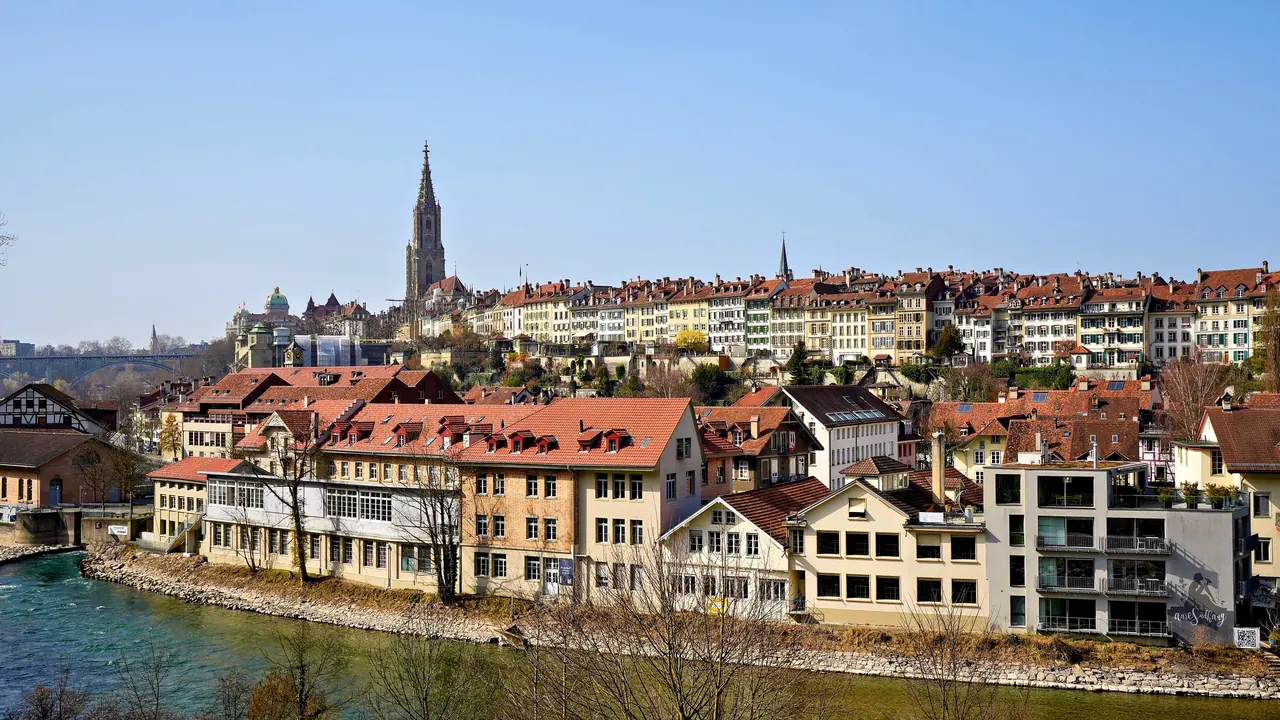
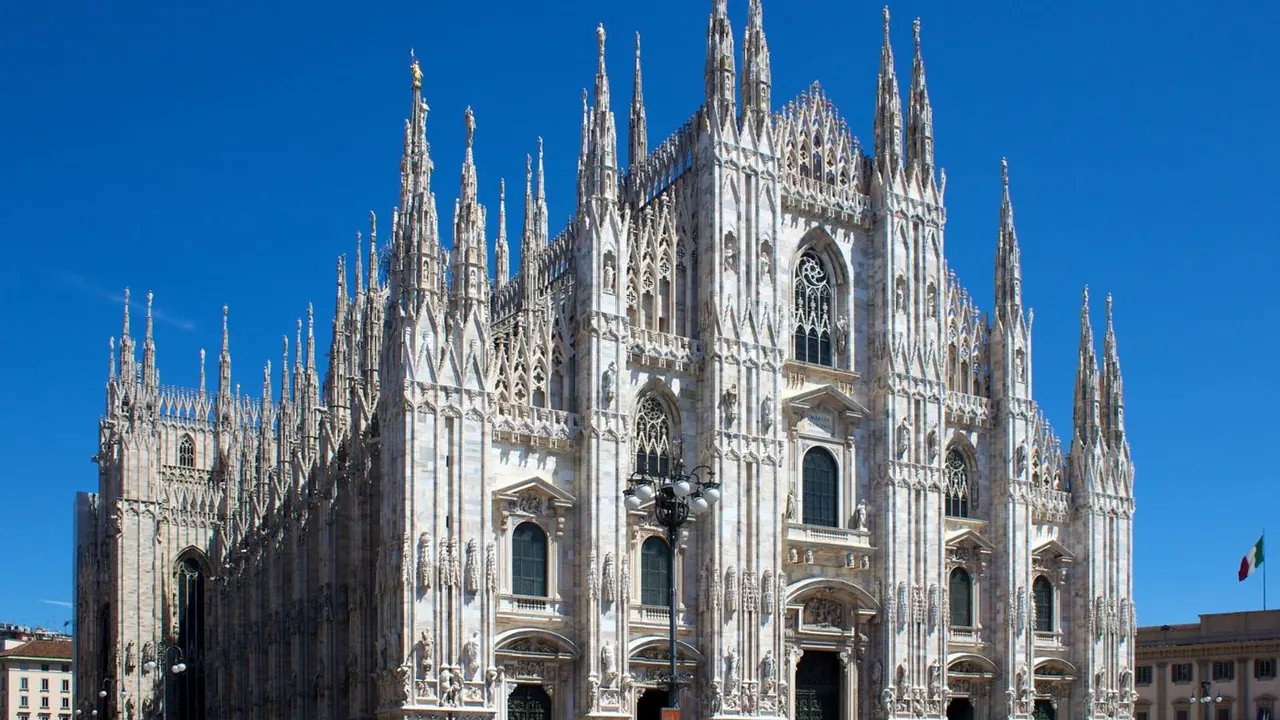
Photos: Bern by Beat Bieri, Pexels License; Milan by Jiuguang Wang, CC BY-SA 3.0, cropped.
Bern or Milan?
Our verdict in twelve categories, each scored against the same fixed benchmark cities, and the climate month by month, so you can choose for your trip.
Choose Bern for
- beaches
- nature and the outdoors
- families
Bern suits travellers who want a calm, walkable base with the Alps close by. The arcaded old town takes little time to learn. On summer afternoons you can swim in the Aare, which Milan has no answer to. The Jungfrau region and Lake Thun are close enough to make the mountains the main reason for the trip. It is the better pick for families and walkers, as long as you are ready for the high costs.
Choose Milan for
- shopping
- food and drink
- live music and the arts
Pick Milan if your evenings and your meals matter as much as your sightseeing. The cooking, the aperitivo hour along the Navigli, La Scala and the fashion houses of the Quadrilatero give it a depth of city life that Bern does not try to match. The Last Supper and the Brera collection put its sights in a higher league too. It is hotter and busier in summer, but it is easier on the wallet of the two, and the lakes are an easy day out.
Scoreboard
Twelve categories on one fixed scale from 0 to 100. The shaded stretch is the gap between the two.
Your match
Pick a travel style or drag the sliders, and both match scores follow your weighting.
Wins on beaches and nature and the outdoors with your weighting.
Wins on shopping and food and drink with your weighting.
What matters to you?
Category by category
What the scores mean for a trip.
Beaches & swimming
Neither city has a coast, but Bern makes swimming part of an ordinary summer day. Locals walk upstream from the Marzili, jump into the cold, fast Aare and let it carry them back past the Federal Palace. The riverside lidos add lawns and pools, and Lake Thun is about twenty minutes away for calmer water.
In Milan itself you have only the Idroscalo basin and the public pools, so a proper swim means an hour on the train to the pebbly lidos of Como or Maggiore. Those lakes are warmer, around 23°C in August, and gentler than the Aare, which is only for strong swimmers.
Food & drink
Milan is by far the better place to eat. Saffron risotto, ossobuco and cotoletta, good cooking from Italy's other regions and a serious fine-dining scene give it a depth that a small city like Bern cannot reach. The aperitivo hour in Brera, Isola and along the Navigli can also stand in for a light supper.
Bern's food is hearty and traditional: the Berner Platte, rösti and fondue in old guildhall dining rooms and vaulted cellars, Emmental cheese at the markets and excellent chocolate. It satisfies for a few days, but the choice is narrow and eating out is costly.
Culture & sights
Milan's sights carry more weight: the marble Duomo with its rooftop among the spires, Leonardo's Last Supper, the Brera paintings and Michelangelo's Rondanini Pietà in the Castello. The catch is that they come in clusters scattered across a modern, businesslike city.
Bern is the other way round. The whole old town on its loop of the Aare is a UNESCO site, with arcades, painted fountains and the Zytglogge, and the Zentrum Paul Klee and Einstein's flat add real interest. It is a more complete place to wander, but two days covers it.
Nightlife
Milan offers a real night out. Aperitivo leads on to the bars along the Navigli towpaths, calmer evenings in Brera, a mixed crowd and the gay scene around Porta Venezia, and clubs ranging from dressy Corso Como venues to warehouse nights. It thins out in August.
In Bern, going out means cellar bars under the arcades and the streets around Aarbergergasse at weekends. The Reitschule hosts rougher late parties, and the riverside terraces fill in summer. On weeknights the city goes quiet early.
Nature & outdoors
Bern has the Alps on its skyline and within easy reach. The Jungfrau region is about an hour away by train, with high-mountain hiking, cable cars and skiing, and Lake Thun is closer still. The Gurten funicular and the wooded Aare paths start from town, and the Emmental and the Jura offer gentler walking and cycling.
Milan's own green space is limited to Parco Sempione, the Giardini Pubblici and the canal towpaths out to the rice fields. Lake Como, Lake Maggiore and the Grigne ridges are about an hour away and very fine, but the ski resorts take a full day.
Day trips
Both are excellent rail hubs, so the difference is in where the trains take you. Bern's trips are short and Swiss: Lucerne, Basel and Zurich in about an hour, medieval Fribourg and Gruyères, and the lakeside towns of Murten, Thun and Neuchâtel. You can see a different small town each day with almost no planning.
Milan's high-speed lines reach bigger Italian cities, such as Verona with its arena, Turin with its palaces, and Bologna. Closer in are Bergamo, the Lake Como villages, the Certosa di Pavia and the Borromean Islands. Choose Milan for big names and variety, and Bern for easy trips and mountain scenery.
Good for families
Bern is the easier city with children. The bear park, the Dählhölzli zoo by the river, the animal dioramas at the Natural History Museum and the playground at the top of the Gurten funicular all make simple, calm outings. The mountains are close for bigger days, and the fast Aare is the only real hazard.
Milan has the Science and Technology Museum with its submarine and the small aquarium by Parco Sempione. Leolandia and Gardaland appeal to older children. Its main sights and its summer humidity are harder going for young ones.
Getting around
You can walk across Bern's centre, from the station to the bear park, in about twenty minutes under arcades that keep the rain off. The station sits at the top of the old town, so leaving for a day trip takes no effort. Trams, buses and short funiculars cover the rest, and only the climbs up from the river slow you down.
Milan is bigger and you will rely on its five metro lines and dense tram network, which are easy to use. Its centre is flat. The downsides are the heat underground in summer and the long transfer from Malpensa.
Shopping & style
Milan is worth visiting for the shopping alone. The Quadrilatero della Moda around Via Montenapoleone holds the flagships of the Italian fashion houses, and the Galleria and La Rinascente stand beside the Duomo. Corso Buenos Aires, the Brera boutiques, the design showrooms and the Navigli antique markets cover everything else.
Shopping in Bern is a pleasant stroll under the arcades of Spitalgasse, Marktgasse and Kramgasse for watches and chocolate, plus antiques and crafts in the cellar shops of Gerechtigkeitsgasse. There is very little fashion.
Affordability
Neither city is cheap, but Bern is much harder on a budget. Hotels, meals and even a beer on a terrace cost far more than in most of Europe. You can save by using the transit pass that hotels usually provide, enjoying free pleasures like the bear park and the Federal Palace tours, and eating supermarket lunches.
Milan is expensive by Italian standards, but less so than Bern. Aperitivo snacks can replace a light supper, set lunches for office workers are good value and public transport is fairly priced. Hotel rates jump during the big trade fairs and fashion weeks.
Live music & performing arts
Milan has La Scala, one of the world's great opera houses, with a season of opera, ballet and concerts and gallery seats for visitors who plan ahead. Add the Piccolo Teatro, a fine symphony orchestra and big stadium concerts at San Siro, and it is a city you can plan a trip around. Summer is quieter for classical music.
Bern has opera and drama in German at the Stadttheater, the Bern Symphony Orchestra at the Casino, contemporary dance at the Dampfzentrale, a spring jazz festival and the Gurtenfestival in July. That is enough for a good evening out, but not a reason to travel.
Wellness & relaxation
Bern is the more restful of the two, mainly because the city itself is calm. It is small and quiet enough that a few days of river views, easy strolls and slow meals unwind you without any planning. For a wet afternoon there is a thermal complex with saunas on the western edge and a hammam-style spa in the old town, and the mountain spa hotels of the Bernese Oberland are close enough for a night or two of proper treatment.
Milan sets a busier pace, driven by offices and traffic, so rest takes more effort. In summer its thermal spa near the centre and the 1930s Bagni Misteriosi pools make a good half-day off. For a real slowdown, though, you have to leave the city for the lakes, which turns relaxing into a day trip rather than part of the stay.
When should you go?
Pick your month. The climate figures are measured averages, not a forecast.
Bern in July
Milan in July
Daytime high, °C
Rainfall in the month, mm
Where the figures come from
Bern has no rain gauge within 25 km of the centre, so its rainfall comes from a gridded climate dataset read at the city rather than from a gauge further away.
Bern's sunshine is measured 71 km from the centre, at Herten.
Milan has no rain gauge within 25 km of the centre, so its rainfall comes from a gridded climate dataset read at the city rather than from a gauge further away.
Milan's sunshine is measured 41 km from the centre, at Novara / Cameri.
Temperature and rainfall are climate normals, averaged over the years shown. Bern: 2010-2020 (sunshine 1991-2020, rainfall 1991-2020) normals, Bern / Bern - Belp Airport (5.5 km from centre). Milan: 1991-2020 normals, Milano / Linate (8 km from centre).
Bern is at its best from June to early September. Highs reach about 26°C, the Aare is warm enough for a swim and the long days bring the most sunshine. Summer is also Bern's wettest time, with around 118mm in May and similar amounts through August, so expect showers, though the arcades keep you dry in the centre. Winters are cold and grey, around 5°C in the city with little sun, and are better for a mountain trip than for walking the streets.
Milan runs hotter. July and August reach about 30°C on the humid plain, which is heavy going for sightseeing but fine for a day at the lakes. May, June and September are the most comfortable months for walking the centre. The rain comes later in the year than in Bern and peaks in October and November at up to 128mm. That makes autumn Milan's wet season, while Bern's falls in late spring and summer.
Which traveller are you?
On an outdoors trip, Bern is the stronger base. The Eiger, Mönch and Jungfrau are about an hour away by train, Lake Thun is nearer still, and the Gurten and the Aare paths start in town. From Milan, the mountains mean a longer trip off the flat plain.
For a food and nightlife trip, Milan wins easily. Saffron risotto and cotoletta, cooking from every Italian region and real fine dining are followed by aperitivo on the Navigli and clubs around Corso Como. Bern offers hearty cellar restaurants and quiet weeknights.
On a shopping trip, Milan is the obvious choice. The Quadrilatero has the flagships of the great Italian fashion houses, and there are design showrooms, Brera boutiques and Navigli antique markets besides. Bern's arcades sell chocolate, watches and crafts but have little fashion.
Before you go
| Measure | Bern | Milan |
|---|---|---|
| Official language | French, German, Italian, Romansh | Italian |
| Currency | Swiss Franc (CHF) | Euro (EUR) |
| Sockets | CJ230 V, 50 Hz | CFL230 V, 50 Hz |
| Driving side | Right | Right |
| Time zone | UTC+1, UTC+2 in summer | UTC+1, UTC+2 in summer |
| Emergency number | 112 | 112 |
| Elevation | 542 m | 138 m |
| Main airport | Zürich Airport (ZRH)101 km from centre226 non-stop destinations | Milan Malpensa International Airport (MXP)40 km from centre208 non-stop destinations |
| Public holidays this year | 10 days | 13 days |
By the numbers
| Measure | Bern | Milan |
|---|---|---|
| City population | 136,988 | 1,354,196 |
| People per km² | 2,655 | 7,453 |
| Museums within 10 km | 30 | 88 |
| UNESCO World Heritage sites within 50 km | 2 | 4 |
Where else could you go?
Every comparison below shares a destination with this one, so you can follow Bern or Milan somewhere new.